


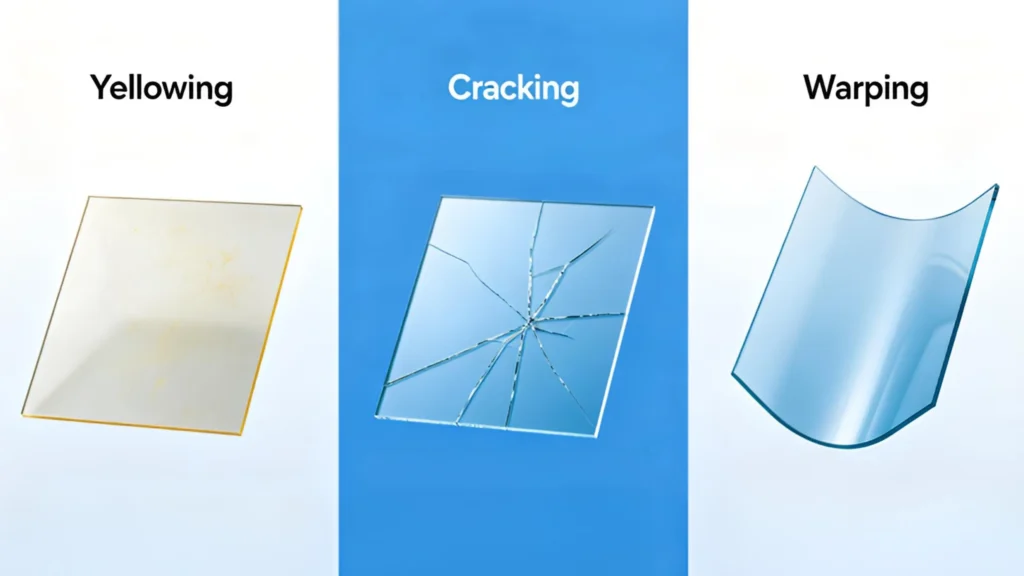
People who run outdoor sign shops, build canopies, make equipment enclosures, or install skylights have all faced the same frustrating problem. Acrylic sheet looks crystal clear in the first year after installation. Two or three years later, the sheet starts turning yellow, becoming brittle, and looking dull. Light transmission drops visibly. The sign looks old and dirty. Customers complain, and you have to tear it down and replace it. Labor cost, material cost, and downtime add up to real money.
Most people blame the material quality or think they bought a cheap defective sheet. The truth is that acrylic yellowing is half about the sheet’s weather-resistant formula and half about how you select and install it. Ordinary acrylic and UV-resistant weather-grade acrylic can differ by years, even a decade, in outdoor service life. In this article, we will explain acrylic weather resistance and UV protection completely: from the yellowing mechanism to real test methods, from material selection to installation, from common mistakes to maintenance. By the end, outdoor users will stop getting burned by yellowing.
Let me start with the conclusion: For outdoor projects, always choose weather-grade acrylic with a UV-resistant formula and UV stabilizers. Do not simply order “clear sheet” when you see it. True weather-resistant acrylic, when installed correctly and maintained properly, can stay clear and non-yellowing for many years outdoors.
As a manufacturer providing custom acrylic sheet processing for outdoor signage, equipment protection, and architectural decoration customers, YUCHENG Board Industry has accumulated a lot of hands-on experience here. Customers often bring in old yellowed and cracked sheets for consultation. When we examine them, most were originally ordinary indoor-grade acrylic, or “outdoor board” with insufficient UV protection. The selection tips and pitfalls shared in this article are exactly what we use daily when serving customers and handling outdoor projects.
1. Why Does Acrylic Turn Yellow? Understand the Mechanism First
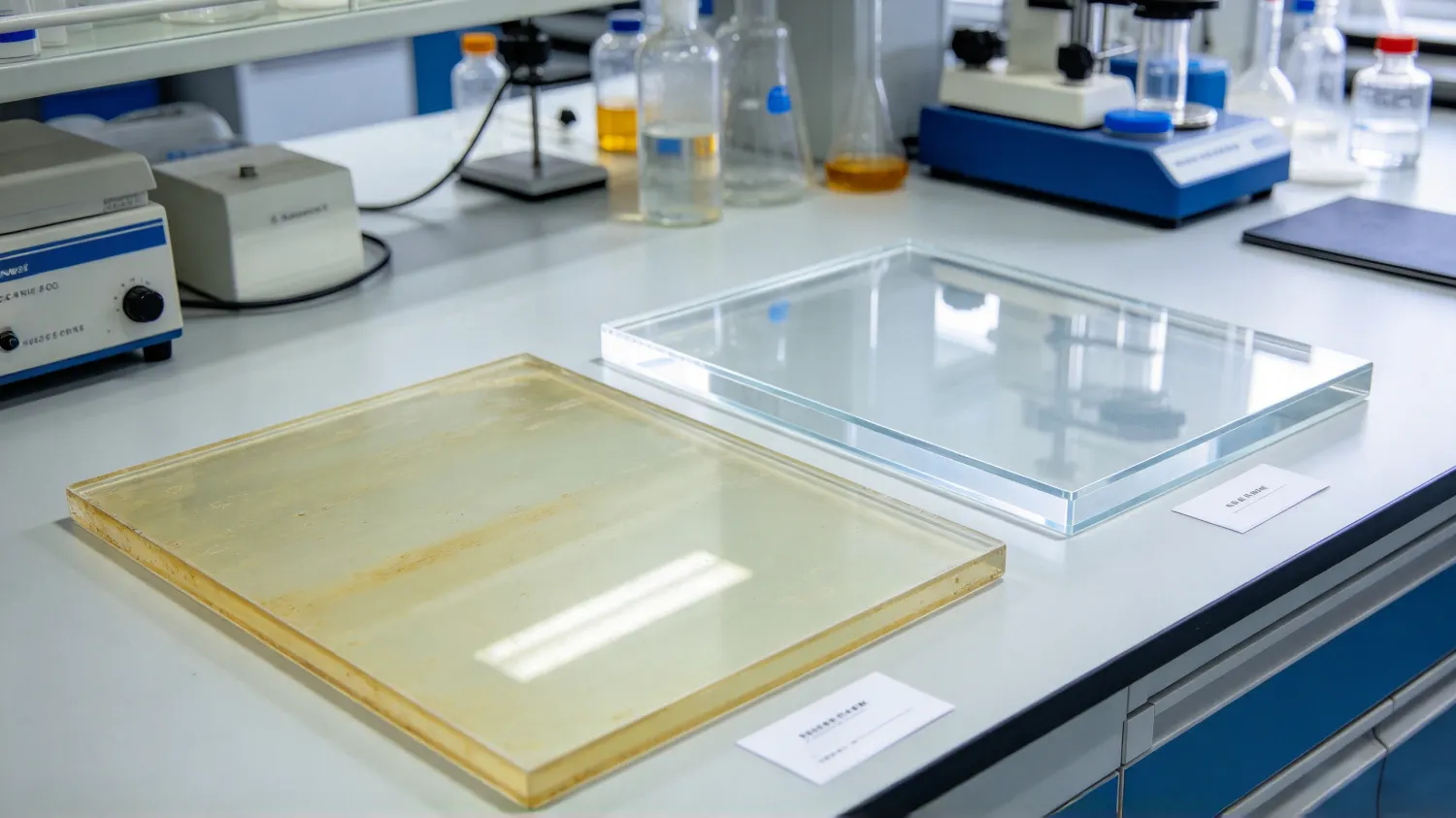
To prevent yellowing, you need to know where yellowing comes from. Acrylic (polymethyl methacrylate, PMMA, commonly called organic glass) is a thermoplastic with excellent light transmission. But like all organic polymer materials, it has one big enemy: ultraviolet (UV) light.
Sunlight contains not only visible light but also large amounts of invisible ultraviolet radiation. UV light carries high energy. When it hits the acrylic surface, it slowly breaks the chemical bonds of the acrylic polymer chains, triggering degradation inside the material. In simple words, it is like slowly “cooking” a transparent plastic sheet in the sun. Over time, colored degradation products form inside the material. On the surface, the sheet turns yellow, dull, and less transparent.
Besides yellowing, UV light brings another more dangerous consequence: aging and brittleness. After degradation, the molecular chains break, material toughness drops, the sheet becomes hard and brittle, and tiny cracks (called crazing or micro-cracks) appear on the surface. When hit by hail, stones, or stressed by temperature differences, the whole sheet may crack or shatter.
So acrylic yellowing is not surface dirt that can be wiped away. It is irreversible chemical aging inside the material caused by UV light. This also explains why outdoor acrylic cannot be restored by washing — the problem is inside the material.
Key keywords: UV aging, acrylic yellowing, light transmission loss, brittleness and cracking — these are the four enemies of acrylic in outdoor use.
2. Ordinary Acrylic vs Weather-Resistant UV Acrylic: What’s the Difference?
Both are called acrylic sheets, but why does one last ten years outdoors while another turns yellow in two or three? The difference lies in the formula and production process. Let’s compare them side by side.
Ordinary Acrylic (Indoor/General Grade)
- Contains almost no UV stabilizers in the formula;
- Designed for indoor use: display covers, picture frames, indoor decoration, light box panels;
- Outdoor performance: UV light attacks directly, visible yellowing and embrittlement usually appear within 1–3 years, depending on local sunshine intensity;
- Low price, perfectly fine for indoor use.
Weather-Resistant UV Acrylic (Outdoor Grade)
- Formula contains UV absorbers and light stabilizers; some products add double-sided UV co-extrusion protective layers;
- Designed for outdoor use: signs, canopies, skylights, outdoor equipment enclosures, bus shelters;
- Outdoor performance: with correct installation, stays clear and non-yellowing for 5–10 years of normal outdoor use;
- Slightly more expensive, but cheaper in the long run when spread over service life.
Here is one important concept: how UV stabilizers are added determines the actual weather resistance. In good outdoor acrylic, UV stabilizers are evenly distributed throughout the whole sheet. Even if the surface is scratched, worn, cut, or polished, the inside still has UV protection. This is called “full-thickness UV protection.”
Some cheap “fake outdoor boards” only have a thin UV coating on the surface. Once that coating is scratched, worn, or damaged during processing, UV protection fails, and the inside of the sheet ages and yellows quickly. So when buying outdoor acrylic, do not just listen to “it has UV.” Ask clearly: is it UV co-extruded / full-formula UV stabilization, or just a thin surface coating?
Key keywords: UV absorber, light stabilizer, UV co-extrusion layer, full-thickness UV protection — always confirm these before ordering.
3. Five Key Factors That Decide Outdoor Service Life of Acrylic
Even among weather-resistant acrylic sheets, outdoor service life can differ by twice as much. The five main factors affecting acrylic weather resistance are listed below. Check each one during procurement and you will rarely go wrong.
1). UV Stabilizer Content
This is the most core factor. The higher the UV absorber content, the stronger the sheet’s ability to absorb UV light, and the longer the protection period. Industry-grade outdoor acrylic usually has clear content requirements. Reputable manufacturers list weather-resistance grades in their product data sheets. Ask the supplier for weather-resistance parameters or aging test data. If they cannot provide it, the sheet is most likely ordinary board with a different label.
2). Sheet Thickness
Many people do not know that the thinner the acrylic, the faster it ages outdoors. Thin sheets store less total UV-protection ingredients, and UV light can more easily “penetrate” the whole thickness, accelerating aging. Even with the same weather-resistant formula, 2mm thin sheets and 6mm thick sheets show obvious service life differences. For large outdoor areas, choose at least 3mm thickness. For long-term outdoor load-bearing structures, use 4mm and above.
3). Sheet Color
Yellowing is most obvious on clear sheets. Milky-white and solid color sheets hide yellowing visually, but the aging and brittleness problems still exist. Dark outdoor sheets (black, dark gray) have another issue: they absorb heat faster, reaching higher surface temperatures in summer, which accelerates heat aging. So outdoor dark acrylic needs even better weather-resistant formulas.
4). Production Process: Cast vs Extruded
Cast acrylic has higher molecular weight, more complete molecular chains, and lower internal stress, offering better weather resistance and crack resistance.
Extruded acrylic has higher production efficiency and a lower price, but lower molecular weight and higher internal stress, making it more prone to yellowing and cracking outdoors. For high-requirement outdoor projects, choose cast weather-resistant acrylic.
5). Double-Sided UV Protection
Better outdoor acrylic has double-sided UV protection (both faces protected), because both sides of an outdoor sheet get sunlight, especially large sheets and curved sheets. A single-sided UV sheet leaves the back face exposed, and the back will age and yellow too. Many customers overlook this detail — the front looks fine while the back is already yellow.
Key keywords: UV content, sheet thickness, cast acrylic, double-sided UV protection — these five points are the core of judging acrylic weather resistance grade.
4. Real Aging Tests: How Is Acrylic Weather Resistance Measured?
Many buyers ask: how do I know if this sheet can really withstand the sun? Waiting to see yellowing with your eyes is too late. There are standard aging test methods that verify the UV resistance and weather performance of a sheet in advance.
1). Natural Weathering Test
Place acrylic samples on an outdoor exposure rack at standard orientation and angle. Periodically measure light transmission and color difference (yellowing index YI), recording how long it takes for visible yellowing. This test is the most realistic, but the cycle is long — usually one to two years or more.
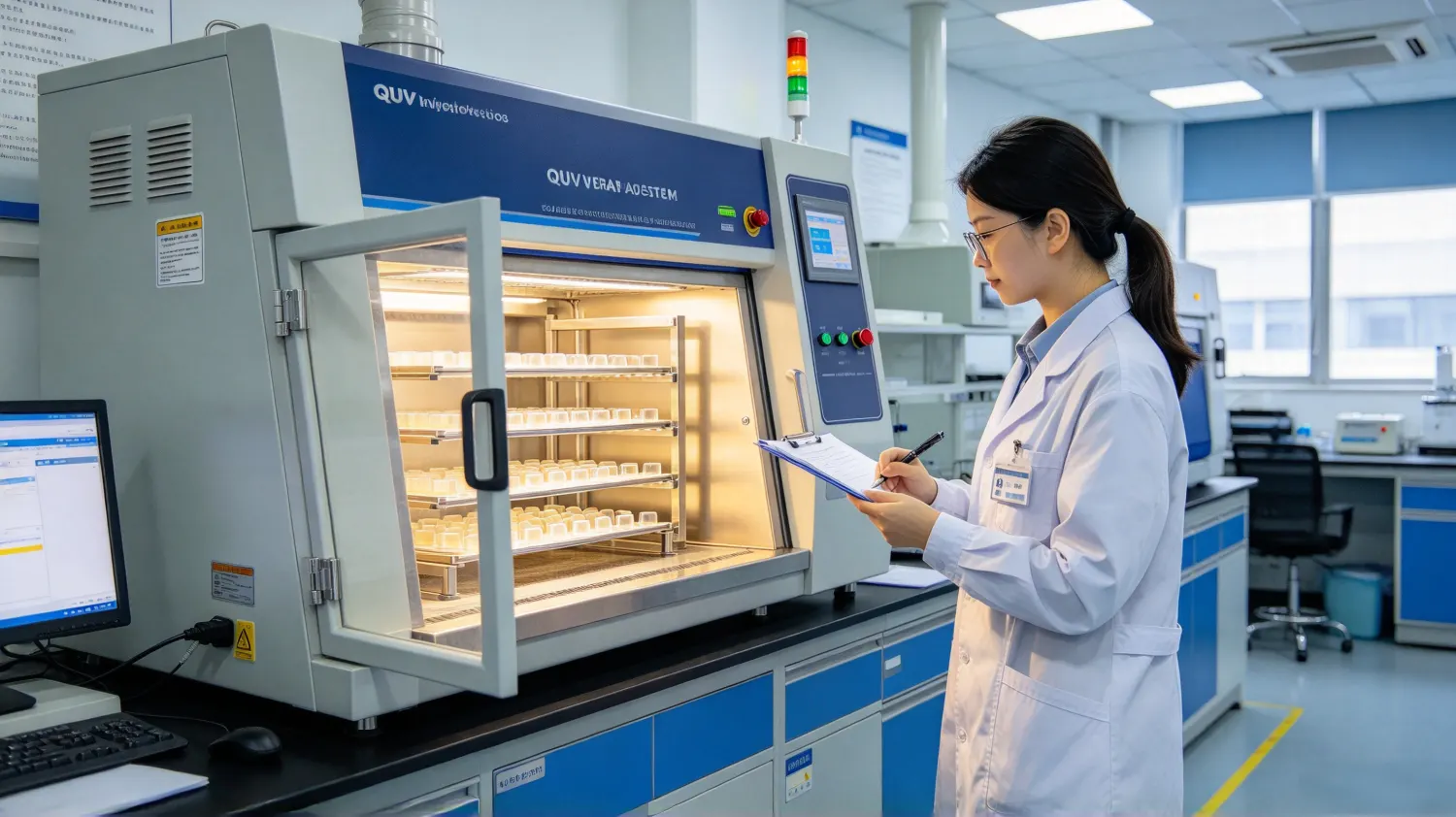
2). Accelerated Aging Test (QUV UV Aging Test)
Use a professional aging chamber (QUV machine) that simulates solar UV, condensation humidity, and high-temperature cycles, compressing years of natural aging into a few hundred hours. The industry-standard approach: after a certain number of QUV hours, compare changes in light transmission, yellowing index, and impact strength. Smaller changes mean better anti-UV weather resistance.
Reputable outdoor acrylic manufacturers can usually provide QUV aging test reports. When buying outdoor sheets, actively request this report. It is worth more than a thousand sales pitches.
3). Two Intuitive Indicators We Use Daily
- Light transmission drop: A new sheet is around 90% transmittance. If it drops below 80% after outdoor service, aging is obvious;
- Yellowing index (YI value): Higher YI means yellower. Weather-resistant outdoor acrylic should maintain a low YI for a long time.
Practical suggestion: if your project has high outdoor life requirements (long-term signs, daylighting projects), ask the fabricator for acrylic weather resistance test data before ordering, and ask about the promised outdoor warranty years. Manufacturers willing to commit to years usually really do use weather-resistant formulas.
5. Acrylic vs PC Sheet: Which Is Better Outdoors?
For outdoor projects, many customers compare acrylic with ألواح البولي كربونات (PC). Let us objectively explain the outdoor performance differences for your selection.
أكريليك (PMMA)
- Higher light transmission (up to 92%+), cleaner optical performance;
- Higher surface hardness, more scratch-resistant;
- More brittle, easy to crack under outdoor impact;
- Weather resistance depends on formula: weather-grade acrylic can last a long time outdoors, but ordinary acrylic yellows fast;
- Moderate price.
PC Sheet (Polycarbonate)
- Impact toughness is dozens of times higher than acrylic, no fear of hail or impact outdoors;
- Weather resistance also depends on formula: PC sheet with UV co-extrusion layer lasts long outdoors, ordinary PC sheet also yellows and ages;
- Lower surface hardness, easy to scratch;
- Higher price.
Outdoor Selection Reference
- Need high transparency and scratch resistance with static display (signs, light box faces, display covers): weather-resistant acrylic is better;
- Need impact resistance, hail protection, load-bearing protection (outdoor equipment enclosures, protective panels, skylights with falling-object risk): PC sheet is better;
- No matter which one, you must use an outdoor weather-grade formula. Ordinary indoor sheets age fast outdoors.
YUCHENG Board Industry supplies both weather-resistant acrylic و UV co-extruded PC sheet. When customers are unsure, we provide comparison proposals and recommendations based on application, load, and budget, instead of pushing just one material.
6. Outdoor Acrylic Non-Yellowing: Selection and Installation Tips
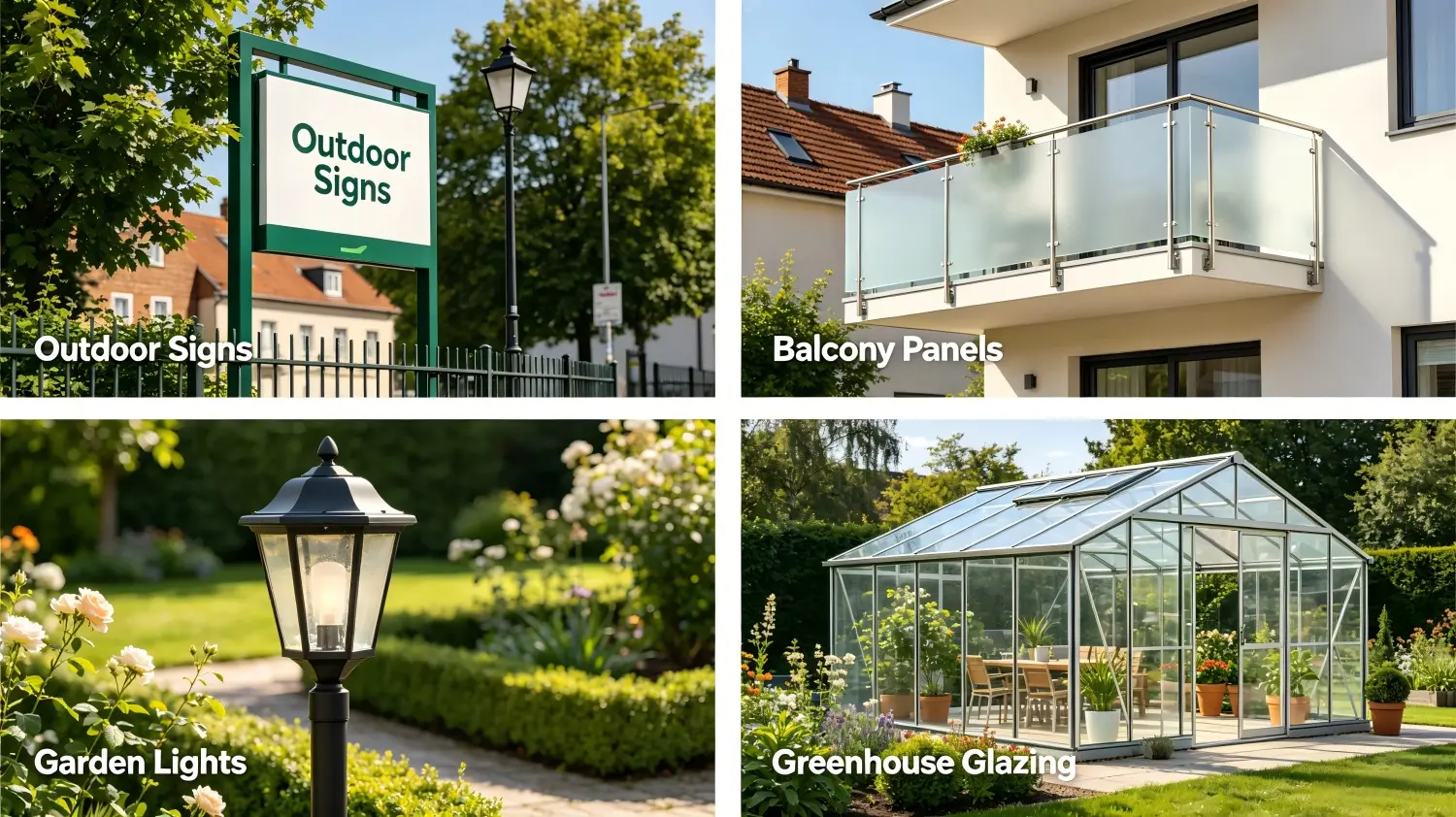
Choosing the right sheet only completes half the job. Wrong installation accelerates yellowing and cracking. These are the points most easily overlooked in outdoor projects.
1). Reserve Expansion Gaps
Acrylic has a large thermal expansion coefficient. Outdoor temperature differences are big (hot in summer, cold in winter). The sheet must have expansion gaps and must not be locked rigidly. Over-tight fixing creates thermal stress that cracks the sheet. Cracks let water and dust in, further accelerating aging. For large outdoor acrylic sheets, reserve 5–10mm expansion allowance at edges, enlarge screw holes, and do not tighten fully.
2). Avoid Direct Contact with Metal
Summer outdoor acrylic surface temperature can reach 60–70℃. If the sheet stays tightly against a metal frame for a long time, the metal absorbs heat and creates localized high temperatures, accelerating localized aging and deformation. Use insulated pads or rubber strips between the sheet and metal.
3). Orientation and Tilt Angle
South-facing and west-facing sheets get the strongest sunlight and age fastest. Tilted installation receives more direct UV than vertical installation. If conditions allow, plan the sheet orientation reasonably to extend service life.
4). Surface Cleaning
Outdoor acrylic surfaces collect dust, but never clean with strong solvents, steel wool, or hard brushes. Acetone and thinners corrode the acrylic surface directly. Steel wool leaves permanent scratches, and scratches accumulate dirt and accelerate aging. Use clean water, neutral detergent, and a soft cloth.
5). Edge Sealing
Cut edges are weak points for aging. If edges are exposed, moisture and UV can penetrate from the end face, accelerating edge yellowing and cracking. Seal or polish outdoor sheet edges to reduce end-face moisture absorption.
Key keywords: expansion gap, insulated pads, soft cloth cleaning, edge sealing — installation details decide whether acrylic’s outdoor life promise comes true.
7. Common Outdoor Acrylic Misunderstandings
Myth 1: Any acrylic works outdoors
Wrong. Ordinary indoor acrylic turns yellow in two or three years outdoors. Outdoor projects must use weather-resistant UV-grade acrylic. This is the biggest myth.
Myth 2: A sheet with surface UV coating is automatically outdoor grade
Not exactly. UV coating is just a thin surface layer. Protection fails once scratched or worn. Full-formula UV-stabilized sheets are truly weather-resistant. Ask clearly when purchasing.
Myth 3: Thicker sheets always age slower
Thickness delays aging, but the formula is the foundation. A 3mm weather-resistant sheet outlasts a 10mm ordinary sheet outdoors. Do not buy only by thickness.
Myth 4: Polishing can fix yellowing
Polishing only handles light surface dullness. UV aging is degradation inside the material. Polishing cannot fix yellowing; it only makes the sheet thinner.
Myth 5: Milky-white sheets don’t yellow, so they’re safe
White and solid color sheets hide yellowing visually, but aging, brittleness, and cracking still happen — the yellowing is just covered by the color.
8. YUCHENG Board Industry: One-Stop Weather-Resistant Acrylic Custom Processing
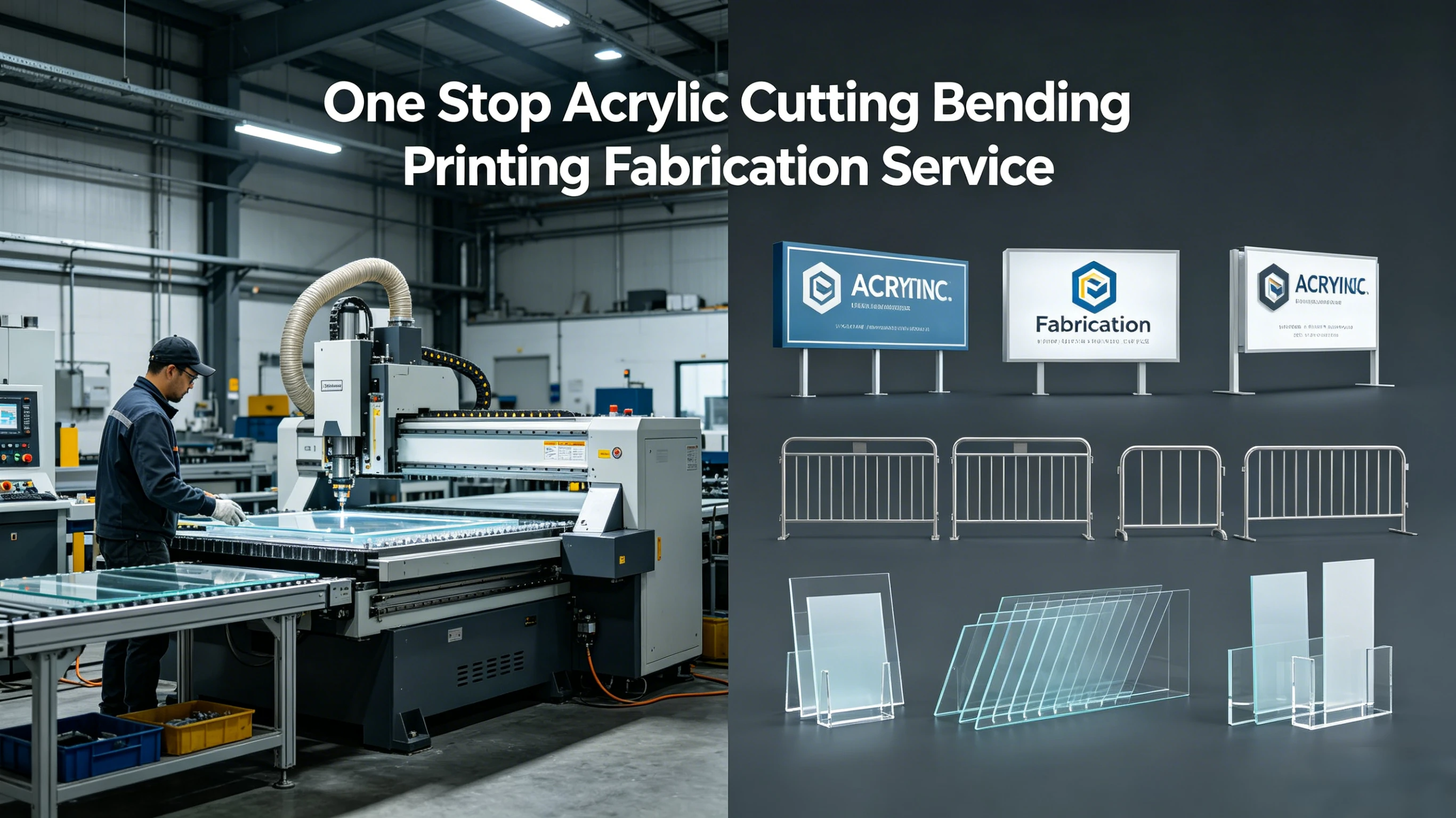
If your outdoor project is looking for weather-resistant anti-UV acrylic sheet and a reliable fabricator, YUCHENG Board Industry offers complete service from sheet selection to finished product delivery.
- Sheet Supply: Outdoor weather-grade cast acrylic in clear, frosted, milky-white, and solid colors, with double-sided UV protection options; also supply UV co-extruded PC sheet for customer comparison.
- Full Processing Capability: CNC precision cutting, drilling, grooving, التشكيل الحراري, الانحناء, laser/UV engraving, silk-screen and UV printing, edge polishing, and edge sealing. We handle all the edge details that matter for outdoor sheets.
- Drawing Support: Customers provide drawings or samples; we do free process evaluation, reminding you about expansion gaps, hole positions, load-bearing structures, and other design issues, so finished products fit on site and deliver full service life.
- Prototyping Support: Before mass orders, prototyping and testing are available to confirm light transmission, color, and dimensions, reducing trial-and-error cost for outdoor projects.
- مراقبة الجودة: We control processing stress throughout, ensuring burr-free edges and no stress cracks, with protective film and proper packaging to minimize transport scratches.
- Industries Served: Advertising signage, outdoor signs, architectural canopies, bus shelters, skylights, outdoor equipment enclosures, light boxes, and display cabinets — we have mature experience in all of them.
If you have an outdoor acrylic project, whether a few samples or a large order, send us your drawings and application environment (orientation, sunshine, temperature difference, load). We will tell you whether to choose weather-resistant acrylic or PC sheet, what thickness, whether double-sided UV is needed, and what to watch during installation, helping you truly achieve “non-yellowing outdoors.”
9. FAQ
Q1: How many years can outdoor acrylic last without yellowing?
A: It depends on formula, thickness, installation environment, and orientation. Regular weather-resistant UV acrylic stays clear for 5–10 years of normal outdoor use in the industry. Ordinary sheets yellow noticeably within 1–3 years. Ask the supplier for weather-resistance data and committed warranty years.
Q2: How much more expensive is UV acrylic than ordinary acrylic?
A: Generally 20%–50% more, depending on formula and thickness. But spread over service life, weather-resistant sheets actually save money because you avoid replacing sheets every two or three years, saving labor and downtime.
Q3: For outdoor skylights, acrylic or PC sheet?
A: If the skylight is large with hail and falling-object risk, prioritize UV co-extruded PC sheet (impact resistance). For small decorative daylighting and display purposes, weather-resistant acrylic looks better. If unsure, send drawings and we will evaluate.
Q4: Can yellowed acrylic be restored?
A: Light surface dullness can be improved by polishing, but yellowing is internal aging and cannot be cured. Sheets with obvious yellowing and brittleness should be replaced directly. Aging sheets may crack at any time and create safety hazards.
Q5: How to tell if a supplier’s sheet is truly weather-resistant?
A: Three checks: 1) See if product data marks weather-resistance grade / outdoor use; 2) Ask the UV stabilization method (full formula vs surface coating); 3) Request a QUV aging test report. If all three pass, you can feel confident.
10. Conclusion
Acrylic weather resistance and UV protection is the first and most important gate for outdoor acrylic projects. Remember these three points:
- Outdoor acrylic must be weather-resistant UV-grade. Ordinary indoor sheets will yellow and crack outdoors, it is just a matter of time;
- Judge by formula, not by surface. Full-formula UV stabilization and double-sided UV protection are what really matter. Do not be fooled by “UV coating”;
- Selecting the right sheet is only half — install it right. Reserve expansion gaps, isolate metal, clean with a soft cloth, seal edges. When details are handled properly, staying clear for ten years outdoors is no dream.
When choosing outdoor sheets, do not only stare at the unit price. One weather-resistant sheet buys you five to ten years of clear appearance and peace of mind. That is the real saving. If you are working on an outdoor project, welcome to contact YUCHENG Board Industry. From sheet selection and processing technology to installation advice, we help you check every step, making “non-yellowing outdoors” more than just empty words.