




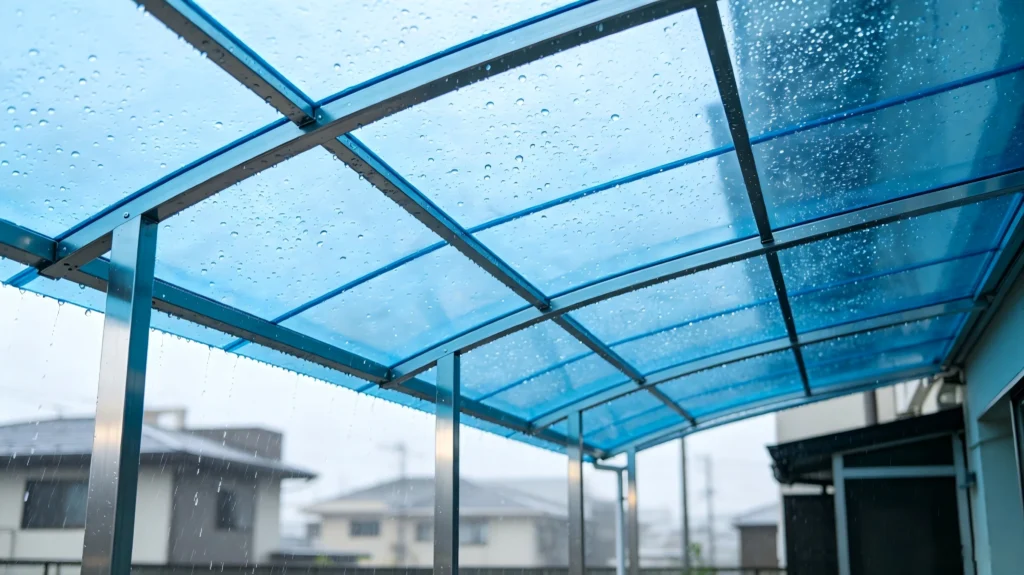
Si buscas un material resistente, transparente y duradero para tu proyecto, ya sea en interiores o al aire libre, policarbonato (PC) resistente a la intemperie hoja es una de las mejores opciones que puedes elegir. Es ligera, irrompible, transparente y está diseñada para resistir el sol, la lluvia, el viento, el frío y el calor. Pero no todas las láminas de policarbonato son iguales. Elegir el tipo equivocado provocará que amarilleamiento, agrietamiento, decoloración o rotura en tan solo unos años.
En esta guía, te explicaremos paso a paso cómo todos los factores importantes Lo que debes saber a la hora de elegir láminas de policarbonato resistentes a la intemperie para aplicaciones en interiores y exteriores. Abordaremos la protección frente a los rayos UV, el grosor, el color, el recubrimiento, la resistencia al impacto, la tolerancia a la temperatura, la clasificación de resistencia al fuego, la dureza de la superficie, consejos de instalación y ejemplos de aplicaciones reales. Al finalizar, sabrás exactamente cómo elegir la lámina de policarbonato adecuada para tu proyecto, y también te mostraremos cómo nuestra empresa puede ofrecerte Servicio integral de procesamiento a medida de láminas de policarbonato para ahorrarte tiempo y dinero.
1. ¿Qué es una lámina de policarbonato resistente a la intemperie?
Resistente a la intemperie policarbonato hoja, también conocido como Lámina de policarbonato con protección contra los rayos UV o apto para uso en exteriores policarbonato sólido hoja, es un material plástico de alto rendimiento fabricado a partir de resina de policarbonato con propiedades especiales Capas de coextrusión estabilizadas frente a los rayos UV en uno o en ambos lados.
Las láminas de policarbonato normales se amarillean, se vuelven quebradizas y pierden resistencia tras 1 a 3 años de exposición al sol en el exterior. Pero resistente a la intemperie policarbonato hoja está diseñado para resistir los rayos ultravioleta, las temperaturas extremas, la lluvia, la humedad e incluso la lluvia ácida. Puede durar De 10 a 15 años al aire libre sin signos evidentes de envejecimiento, amarilleamiento ni pérdida de rendimiento.
Principales ventajas de las láminas de policarbonato resistentes a la intemperie
- Resistencia al impacto extremadamente alta: Entre 250 y 300 veces más resistente que el cristal, y entre 20 y 30 veces más resistente que el acrílico. Se denomina “vidrio irrompible”.
- Alta transmisión de luz: Hasta 88-92% transparencia, casi tan clara como el cristal.
- Excelente resistencia a la intemperie: Resiste De -40 °C a +120 °C sin que se agriete ni se ablande.
- Ligero: Solo la mitad del peso del vidrio, más fáciles de transportar e instalar.
- Retardante de llama: Resistencia al fuego de clase B1, autoextinguible, sin humos tóxicos.
- Buen aislamiento acústico: Reduce el ruido en 30-35 dB en comparación con el vidrio.
- Fácil de procesar: Puede ser cortado, taladrado, doblado en frío, doblado en caliente, grabado, impreso sin romperse.
2. El factor más importante del modelo #1: Protección contra los rayos UV (anti-amarilleamiento)
Para uso en exteriores, La resistencia a los rayos UV es la característica más importante de una buena lámina de policarbonato resistente a la intemperie. La luz solar contiene fuertes rayos ultravioleta (UV) que, con el tiempo, descomponen las moléculas de plástico. Sin una protección adecuada contra los rayos UV, tu lámina de policarbonato:
- Giro amarillo o ámbar en 1 o 2 años
- Conviértete en son frágiles y se rompen con facilidad
- Perder transparencia y brillo
- Reducir resistencia al impacto de manera significativa
Cómo saber si un policarbonato hoja Ofrece una buena protección contra los rayos UV
- Lo mejor es el recubrimiento UV a doble cara: Las láminas de policarbonato para exteriores de la más alta calidad tienen Capas de coextrusión UV en ambos lados. De este modo, la lámina queda protegida independientemente de qué lado esté orientado hacia el sol.
- Comprueba la garantía: Un fabricante de confianza ofrecerá Garantía de 10 años contra el amarilleamiento para láminas de policarbonato aptas para uso en exteriores.
- Solicita los informes de ensayo: Busca Resultados de la prueba de envejecimiento QUV (más de 1000 horas) con un bajo índice de amarilleamiento (ΔE 80%).
- Evita los productos baratos de impresión UV a una sola cara o sin UV hojas: Al aire libre, se estropearán enseguida.
Aspectos a tener en cuenta sobre la radiación UV en interiores
Para uso en interiores, la protección contra los rayos UV no es tan importante, pero se recomienda de todos modos si:
- La zona recibe la luz solar directa que entra por las ventanas
- ¿Quieres claridad a largo plazo (sin amarilleamiento tras más de 5 años)
- El espacio es bien iluminado con una intensa luz ultravioleta artificial (por ejemplo, museos, salas de exposición)
3. Guía para elegir el grosor: uso en interiores frente a uso en exteriores
El grosor de la lámina de policarbonato influye directamente en resistencia, rigidez, resistencia al viento, resistencia a los impactos y coste. Elegir el grosor adecuado permite ahorrar dinero y evita problemas de deformación o rotura.
Opciones habituales de grosor
- 1,5 mm–3 mm: Delgado, flexible y ligero
- 4 mm–6 mm: Uso general estándar en exteriores e interiores
- 8 mm–10 mm: Uso intensivo en exteriores, zonas expuestas a fuertes vientos o impactos
- 12 mm–15 mm: Industrial, seguridad, condiciones climáticas extremas
Recomendaciones sobre el grosor para uso en exteriores
- Cobertizos para coches/bicicletas: 4 mm–6 mm (viento normal, granizo ligero)
- Toldos para patios y balcones: 5 mm–8 mm (viento moderado, lluvia)
- Invernaderos/cubiertas para jardines: 6 mm–10 mm (viento, carga de nieve)
- Paradas de autobús / marquesinas: 8 mm–10 mm (gran impacto público, viento)
- Cubiertas industriales/claraboyas: 10 mm–15 mm (viento fuerte, nieve, granizo)
- Barreras de seguridad / paneles antigranizo: 12 mm–15 mm (impacto extremo)
Recomendaciones sobre el grosor para uso en interiores
- Separadores de ambientes/tabiques: 3 mm–5 mm (ligero, flexible, fácil de instalar)
- Vitrinas y armarios: 4 mm–6 mm (transparente, rígido, seguro)
- Sustitución de ventanas / acristalamiento interior: 5 mm–8 mm (aislamiento, insonorización)
- Protectores de máquinas/protecciones de seguridad: 6 mm–10 mm (protección contra impactos)
4. Elección del color: ¿transparente, tintado u opaco?
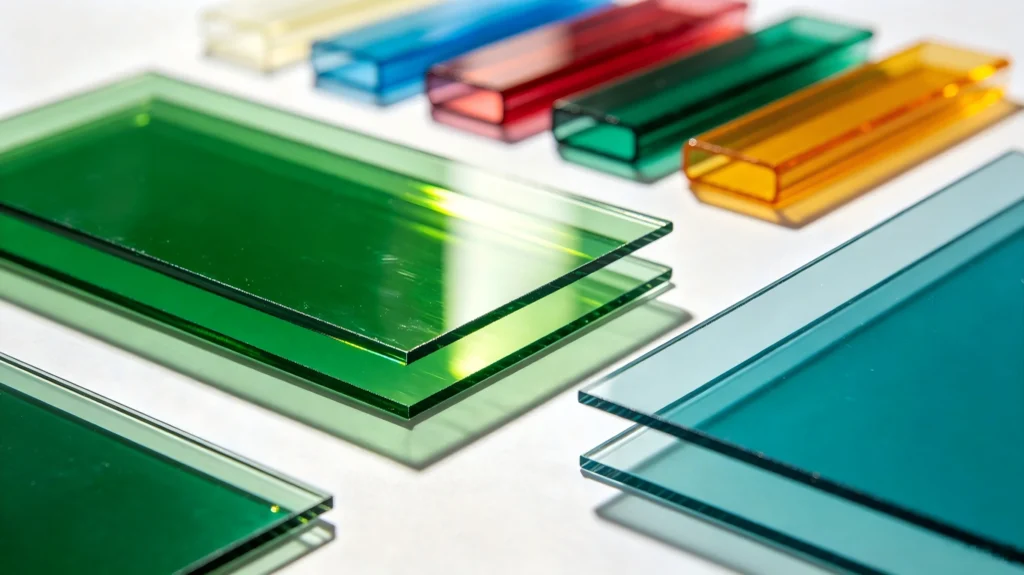
Las láminas de policarbonato resistentes a la intemperie están disponibles en muchos colores. El color adecuado combina transmisión de la luz, control térmico, privacidad y estética.
Transparente / Claro (el más popular)
- Transmisión de la luz: 88-92%
- Ideal para: Invernaderos, claraboyas, cocheras, escaparates, paneles de iluminación interior
- Ventajas: Máxima luz natural, estilo limpio y moderno
- Contras: Aumento de la temperatura por la exposición al sol, falta de intimidad
Azul claro / Azul cielo
- Transmisión de la luz: 70–80%
- Ideal para: Marquesinas para exteriores, terrazas, cubiertas para piscinas
- Ventajas: Reduce el deslumbramiento, mantiene la frescura, tiene un suave tono azulado
- Contras: Un poco menos de luz
Gris / Ahumado
- Transmisión de la luz: 40–60%
- Ideal para: Pantallas de privacidad, cubiertas para balcones, mamparas de oficina
- Ventajas: Buena privacidad, reduce el calor, aspecto moderno
- Contras: Luz más tenue
Verde / Verde oscuro
- Transmisión de la luz: 50–70%
- Ideal para: Estructuras de jardín, cenadores, sistemas de sombreado para exteriores
- Ventajas: Tono verde natural, filtra la luz solar intensa
- Contras: El color puede desvanecerse ligeramente con el paso del tiempo
Blanco / Lechoso / Difuso
- Transmisión de la luz: 20–40%
- Ideal para: Paneles de iluminación para interiores, difusores de techo, mamparas de privacidad
- Ventajas: Suave, incluso ligero, total privacidad
- Contras: Poca luz natural
Consejos sobre colores para interiores y exteriores
- Climas cálidos al aire libre: Elige azul claro o gris para reducir la acumulación de calor
- Invernaderos: Uso transparente o verde claro para un crecimiento óptimo de las plantas
- Se requiere privacidad: Gris humo o blanco
- Espacios interiores luminosos: Transparente o con luz difusa
5. Recubrimientos y tratamientos superficiales: recubrimiento duro, antirreflejos, antivaho
Además de la protección contra los rayos UV, muchas láminas de policarbonato resistentes a la intemperie tienen recubrimientos especiales para superficies para mejorar el rendimiento en entornos específicos.
Recubrimiento duro (antirrayaduras)
- Aporta una capa resistente y a prueba de arañazos
- Ideal para: Zonas de mucho tránsito, protecciones de maquinaria, espacios que requieren una limpieza intensiva
- Beneficios: Resistente a los arañazos, fácil de limpiar, conserva su transparencia durante más tiempo
Antirreflejos (acabado mate)
- Reduce los reflejos y el deslumbramiento
- Ideal para: Mamparas de oficina, pantallas de visualización, paneles de iluminación interior
- Beneficios: Más agradable a la vista, sin reflejos molestos
Antivaho / Antigotas
- Evita la formación de gotas de condensación en la superficie
- Ideal para: Invernaderos, mamparas de baño, zonas interiores con humedad
- Beneficios: Visión nítida, sin manchas de agua, mejor difusión de la luz
UV a doble cara + recubrimiento duro (calidad superior)
- La lámina de policarbonato para exteriores de mayor rendimiento
- Cosechadoras Protección contra los rayos UV + resistencia a los arañazos
- Ideal para: Proyectos de exterior de lujo, zonas costeras, regiones con elevada humedad
6. Resistencia a los impactos y seguridad: aspectos fundamentales para zonas públicas y de mucho tránsito
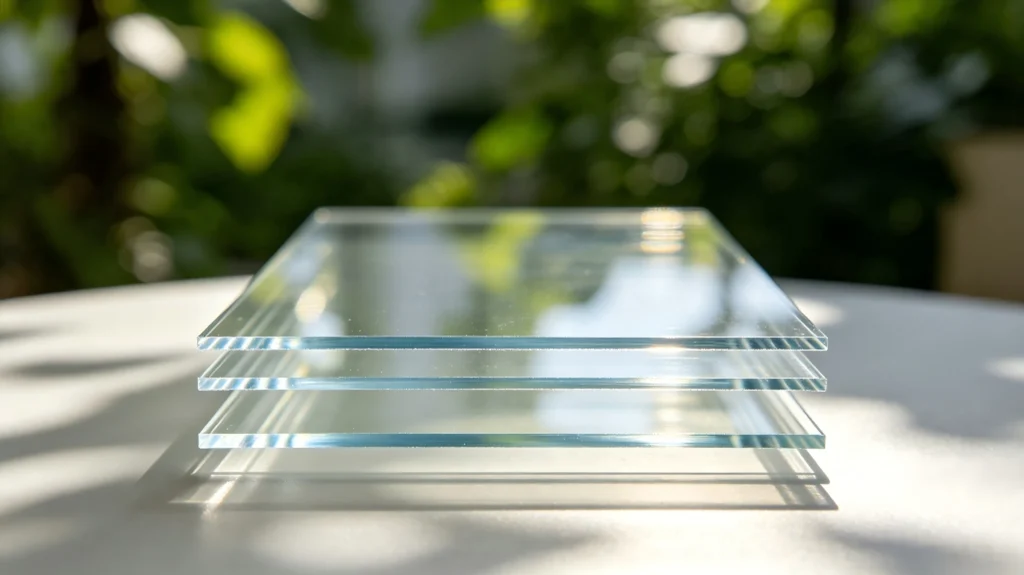
Una de las principales ventajas de las láminas de policarbonato es resistencia al impacto sin igual. A diferencia del cristal, se no romperse en pedazos afilados cuando se rompe, lo que lo hace seguro para su uso en hogares, espacios públicos y aplicaciones industriales.
Datos sobre la resistencia a los impactos
- Entre 250 y 300 veces más resistente que el cristal
- Entre 20 y 30 veces más resistente que el acrílico
- Puede soportar una Se dejó caer un peso de 3 kg desde una altura de 2 metros sin que se agriete
- Resiste el granizo, las lluvias torrenciales, los residuos arrastrados por el viento y los impactos accidentales
Consejos de seguridad
- Para parques infantiles, colegios o refugios públicos, utiliza 6 mm o más de grosor, resistente a la intemperie policarbonato hoja
- Para regiones costeras o propensas a las tormentas, selecciona 8 mm–10 mm, UV a doble cara hojas
- Evita las láminas finas (1,5 mm–2 mm) para aplicaciones de seguridad en exteriores.
7. Tolerancia a la temperatura: comportamiento ante calor y frío extremos
La lámina de policarbonato resistente a la intemperie está diseñada para soportar grandes variaciones de temperatura sin deformarse, agrietarse ni perder resistencia.
Rango de temperatura estándar
- Uso continuado: De -40 °C a +120 °C
- Pico a corto plazo: Hasta 135°C
Aspectos a tener en cuenta sobre la temperatura exterior
- Climas cálidos (desérticos, tropicales): Elige Tintado, estabilizado frente a los rayos UV y reflectante del calor hojas (azul/gris) para reducir la temperatura superficial
- Climas fríos (nieve, hielo): la lámina de policarbonato será no se vuelve quebradizo a -40 °C, a diferencia del cristal o el acrílico
- Expansión térmica: Las láminas de policarbonato se expanden y se contraen con los cambios de temperatura. Deja siempre juntas de dilatación durante la instalación para evitar que se agriete
8. Resistencia al fuego y seguridad contra incendios
Tanto para proyectos en interiores como en exteriores, La seguridad contra incendios es fundamental. La lámina de policarbonato resistente a la intemperie cumple con las estrictas normas contra incendios.
Resistencia al fuego
- Categoría B1 (GB50222-95): Autoextinguible, no gotea, no desprende gases tóxicos
- UL94 V-0 disponible: Para aplicaciones industriales y de alta seguridad
Consejos de seguridad contra incendios
- Utilice Nivel B1 para edificios residenciales y comerciales
- Utilice Calidad V-0 para zonas industriales, eléctricas o de alto riesgo
- Nunca utilices láminas de policarbonato baratas y sin homologar para proyectos en los que el fuego pueda suponer un riesgo.
9. Interior frente a exterior: diferencias clave a la hora de elegir
Resumamos las principales diferencias a la hora de elegir placas de policarbonato para uso interior y exterior, para ayudarte a decidir rápidamente.
Imprescindibles para actividades al aire libre
✅ Recubrimiento UV a doble cara (no negociable)
✅ 4 mm o más de grosor (mínimo para viento/lluvia)
✅ Garantía de 10 años contra el amarilleamiento
✅ Clasificación de resistencia al fuego B1
✅ Buena resistencia a los impactos (granizo, escombros)
Prioridades para el uso en interiores
✅ UV a una cara (opcional) (si no hay sol directo)
✅ 3 mm–6 mm de grosor (ligero, flexible)
✅ Color en función de las necesidades de iluminación y privacidad
✅ Recubrimiento duro opcional (zonas de mucho tránsito)
✅ Opcional: antirreflejos o antivaho
10. Errores comunes que hay que evitar al comprar productos resistentes a la intemperie Policarbonato hoja
Aunque tengan buenos conocimientos, muchos compradores cometen errores que les salen caros. Estos son los más habituales:
Error n.º 1: Elegir un producto barato sin UV o con UV solo por una cara hojas
Resultado: Se amarillea y se agrieta al cabo de 1 o 2 años. Comprueba siempre UV a doble cara para uso en exteriores.
Error n.º 2: Demasiado fino para el viento y la nieve al aire libre
Resultado: Deformación, combadura o rotura bajo la acción del viento o la carga de nieve. Limítate a 4 mm o más en exteriores.
Error n.º 3: No tener en cuenta las juntas de dilatación térmica
Resultado: Se agrieta con el calor del verano o el frío del invierno. Deja Huellas de 3 a 5 mm por metro de longitud.
Error n.º 4: No comprobar la garantía ni los informes de pruebas
Resultado: No se garantiza la calidad. Pide siempre Garantía de 10 años contra el amarilleamiento y Informes de ensayos de envejecimiento QUV.
Error n.º 5: Un color inadecuado para el clima
Resultado: Hace demasiado calor en verano o hay muy poca luz en el interior. Utiliza azul/gris para climas cálidos, apto para invernaderos.
11. Ejemplos de aplicación en la vida real
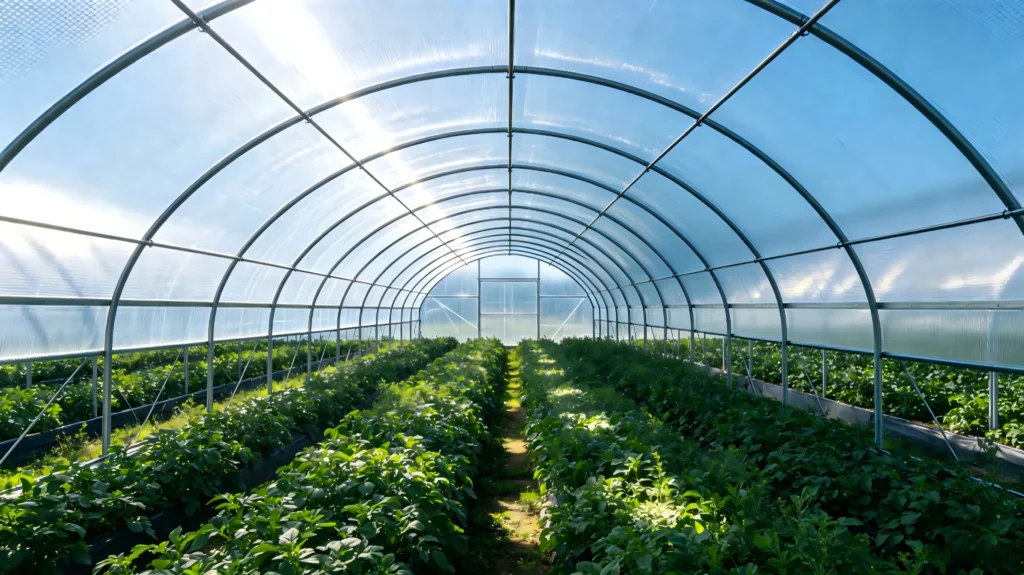
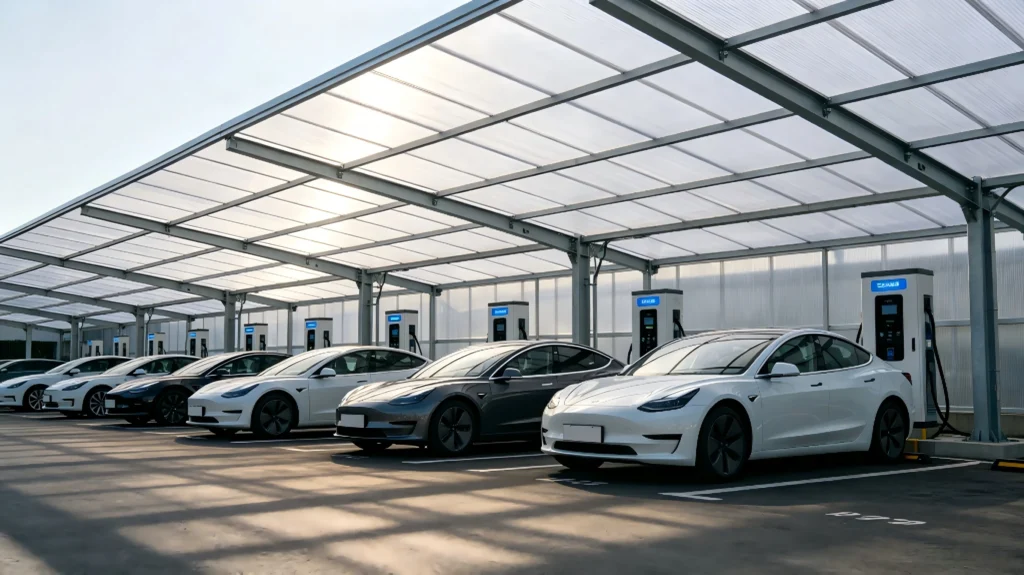
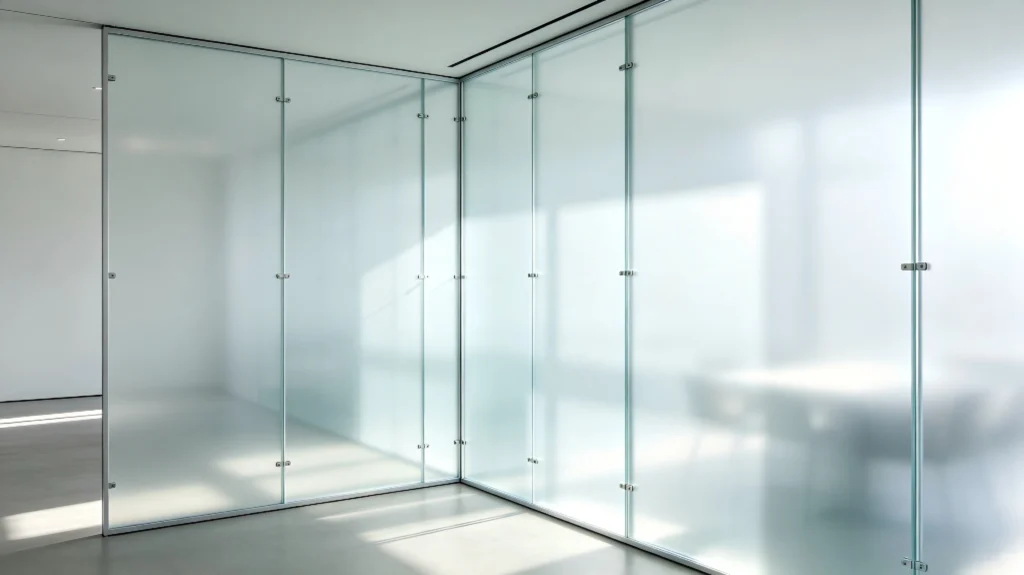
Para que te hagas una idea, a continuación te mostramos algunos proyectos habituales, tanto en interiores como en exteriores, en los que se utiliza láminas de policarbonato resistentes a la intemperie:
Aplicaciones en exteriores
- Cobertizos para coches y marquesinas de aparcamiento: Lámina de policarbonato transparente o azul de 4 mm a 6 mm, ligera y resistente a los golpes
- Invernaderos de jardín: Lámina de policarbonato transparente de 6 mm a 10 mm, alta transmisión de la luz, protección contra los rayos UV para las plantas
- Toldos para balcones y terrazas: Lámina de policarbonato azul/gris de 5 mm a 8 mm, reduce el calor y aporta privacidad
- Paradas de autobús y marquesinas: Lámina de policarbonato transparente o ahumado de 8 mm a 10 mm, segura, resistente y fácil de limpiar
- Cubiertas para piscinas: Lámina de policarbonato transparente de 6 mm a 8 mm, protección contra los rayos UV, resistencia a la corrosión
- Claraboyas y cubiertas industriales: Lámina de policarbonato de 10 mm a 15 mm, resistente al viento, impermeable y de larga duración
Aplicaciones en interiores
- Tabiques de oficina y separadores de espacios: Lámina de policarbonato transparente o ahumado de 3 mm a 5 mm, de estilo moderno, que ofrece cierta privacidad
- Vitrinas y vitrinas de museo: Lámina de policarbonato transparente con recubrimiento duro de 4 mm a 6 mm, con protección contra los rayos UV para los objetos expuestos
- Protecciones de seguridad para máquinas: Lámina de policarbonato transparente de 6 mm a 10 mm, resistente a los impactos, buena visibilidad
- Difusores para lámparas de techo: Lámina de policarbonato difusor blanco de 2 mm a 4 mm, luz suave y uniforme
- Mamparas de ducha para el cuarto de baño: Lámina de policarbonato transparente antivaho de 5 mm a 6 mm, impermeable y fácil de limpiar
12. La ventanilla única de nuestra empresa Policarbonato hoja Servicio de procesamiento a medida
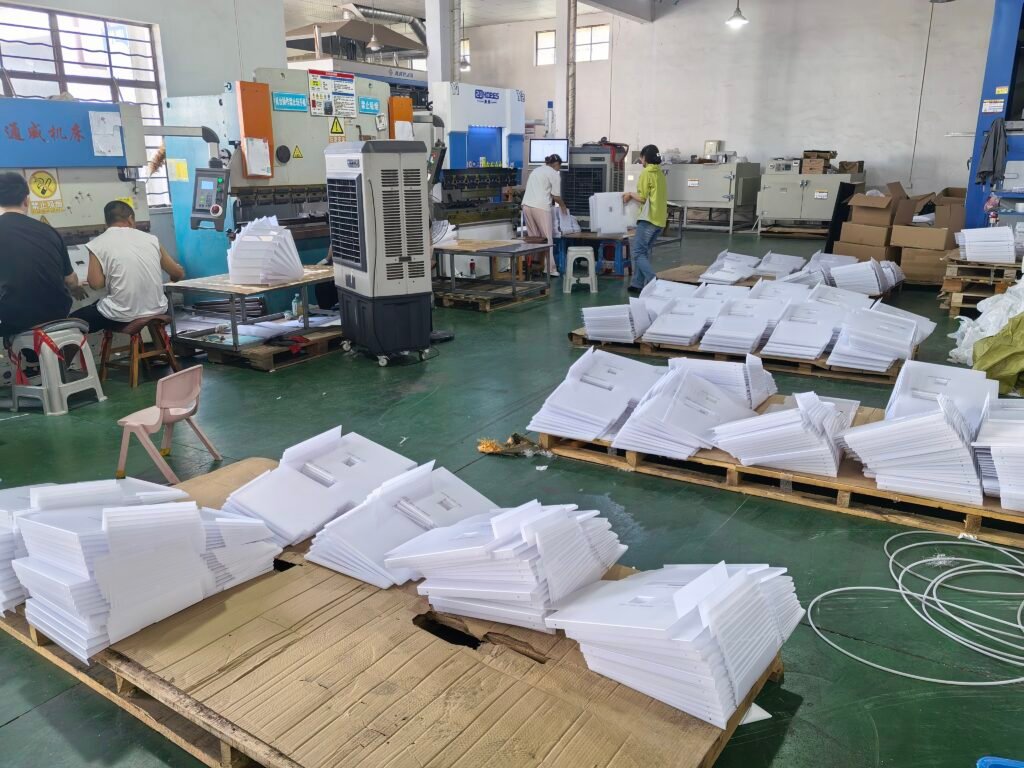
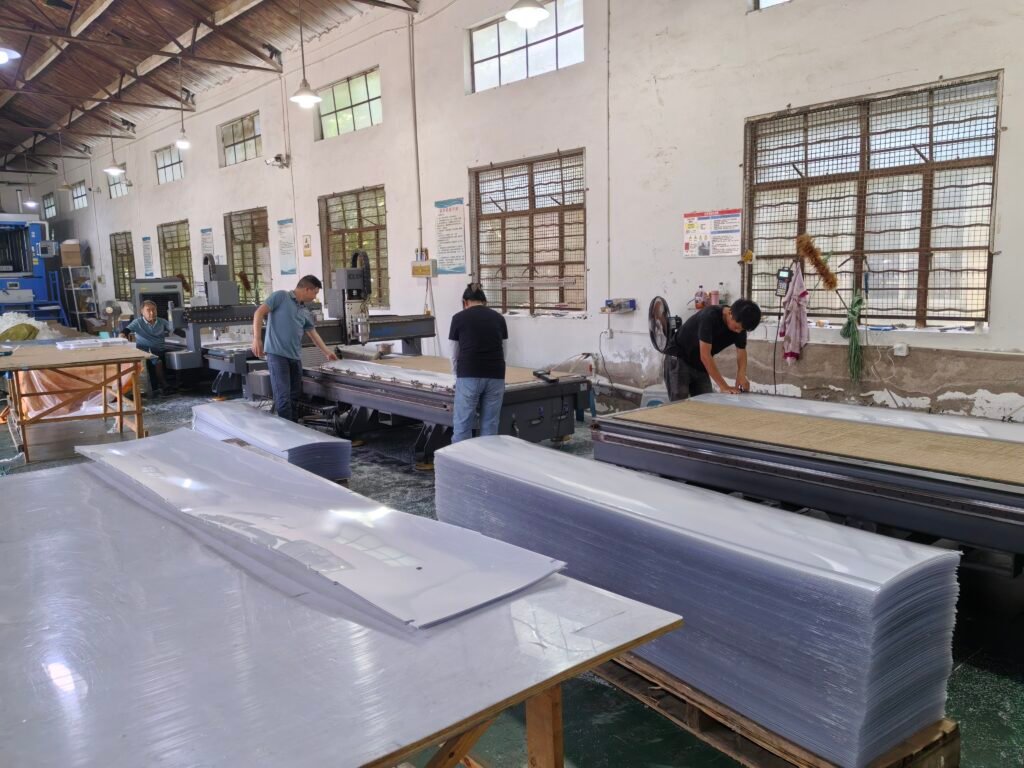
Ahora que ya sabes cómo elegir la lámina de policarbonato resistente a la intemperie más adecuada, queremos presentarte nuestro profesional servicio de fabricación de láminas de policarbonato—Nos encargamos de todo, desde la materia prima hasta el producto acabado, lo que te ahorra tiempo, trabajo y molestias.
Quiénes somos
Somos una especializado policarbonato hoja fabricante y transformador con un taller moderno equipado con:
- 6 fresadoras CNC para cortes, grabados y taladrados de precisión
- 5 máquinas de doblado en frío para el doblado sin problemas de láminas de policarbonato
- 5 máquinas de corte por láser para un corte rápido y preciso
- 2 máquinas de termoformado, 1 máquina de cinco ejes, 3 máquinas de doblado en caliente, 3 taladradoras, y numerosas máquinas de tratamiento de superficies y bordes
Todas nuestras máquinas son actualizado recientemente en 2026 y funcionando a pleno rendimiento. Nos centramos en de alta calidad y resistente a la intemperie policarbonato hoja producción y procesamiento a medida para clientes de todo el mundo.
Qué ofrecemos
- Ventas de láminas de policarbonato: Gama completa de láminas de policarbonato resistentes a la intemperie: transparentes, tintadas, blancas, con recubrimiento duro, antirreflejos y antivaho, con un grosor de entre 1,5 mm y 15 mm
- Corte y grabado de precisión con CNC: Formas personalizadas, orificios, ranuras, logotipos, motivos
- Curvado en frío y curvado en caliente: Arcos, curvas, cúpulas para marquesinas, barandillas y expositores
- Taladrado y perforación: Dimensiones y posiciones exactas de los orificios
- Serigrafía: Logotipos, textos y gráficos personalizados
- Pulido y desbarbado de cantos: Bordes lisos y seguros
- Recubrimiento superficial: Recubrimiento duro, antirreflejos, protección contra los rayos UV
Por qué elegirnos
- Producción íntegramente propia: Todos los procesos se llevan a cabo en nuestro propio taller, con un estricto control de calidad
- Flexibilidad de personalización: Aceptamos tanto pedidos pequeños de muestras como pedidos al por mayor de gran volumen
- Entrega rápida: Disposición eficiente de la maquinaria, sin subcontratación
- Experiencia en exportaciones a nivel mundial: Conocimientos sobre normas internacionales, embalaje y logística
- Asistencia profesional: Nuestro equipo ofrece asesoramiento sobre la elección de materiales, sugerencias de diseño y orientación para la instalación
Cómo hacer un pedido
Solo tienes que enviarnos tu planos, muestras o especificaciones detalladas (tamaño, grosor, color, tipo de acabado, cantidad). Te responderemos en un plazo de 24 horas con un presupuesto detallado y plan de producción.
13. Consejos finales para el uso a largo plazo
- Limpia con regularidad: Utiliza jabón suave y un paño suave; evita los productos químicos agresivos
- Evita las herramientas afiladas: No rayes la superficie con cuchillos ni materiales abrasivos
- Instálalo correctamente: Deja espacios de dilatación y utiliza elementos de fijación compatibles
- Revisar anualmente: Comprueba si hay tornillos sueltos, grietas o daños tras condiciones meteorológicas extremas
Conclusión
Elegir el adecuado resistente a la intemperie policarbonato hoja La elección de productos para uso en interiores y exteriores no resulta difícil una vez que se comprenden los factores clave: Protección contra los rayos UV, espesor, color, recubrimiento, resistencia a los impactos y tolerancia a la temperatura. Si evitas los errores más comunes y sigues nuestra guía de selección, podrás disfrutar de un resistente, transparente, seguro policarbonato hoja que dura entre 10 y 15 años en exteriores e incluso más tiempo en interiores.
Si necesitas lámina de policarbonato de alta calidad resistente a la intemperie o servicio de procesamiento a medida Para su proyecto, estamos aquí para ayudarle. Gracias a nuestro completo equipamiento, nuestro equipo de profesionales y nuestro riguroso control de calidad, podemos ofrecerle la solución perfecta en láminas de policarbonato.
¡Ponte en contacto con nosotros hoy mismo para obtener tu presupuesto gratuito y asesoramiento sobre la elección de materiales!