






Custom Plastic Polishing Services
- Início /
- Polimento
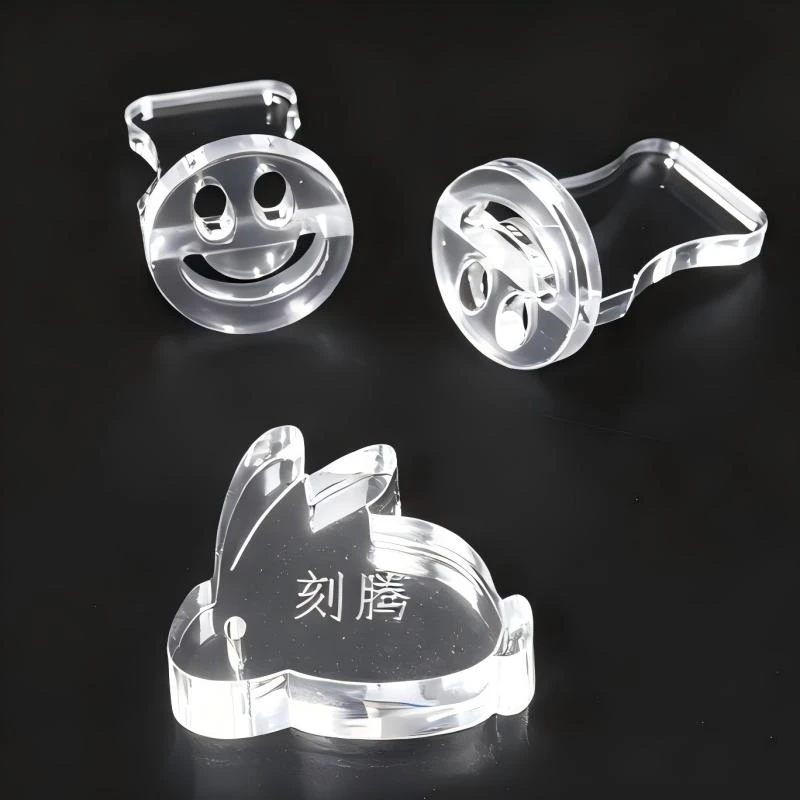
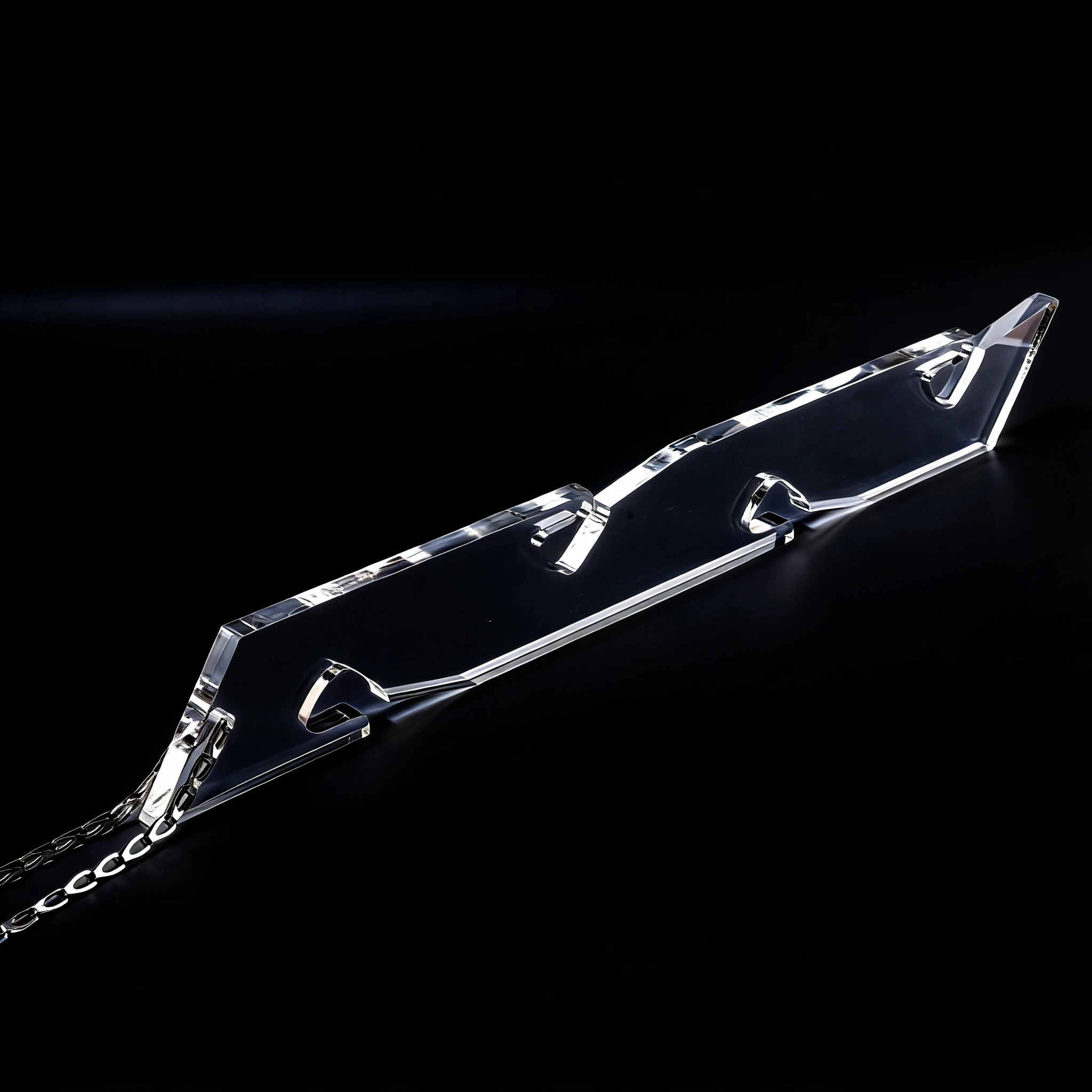
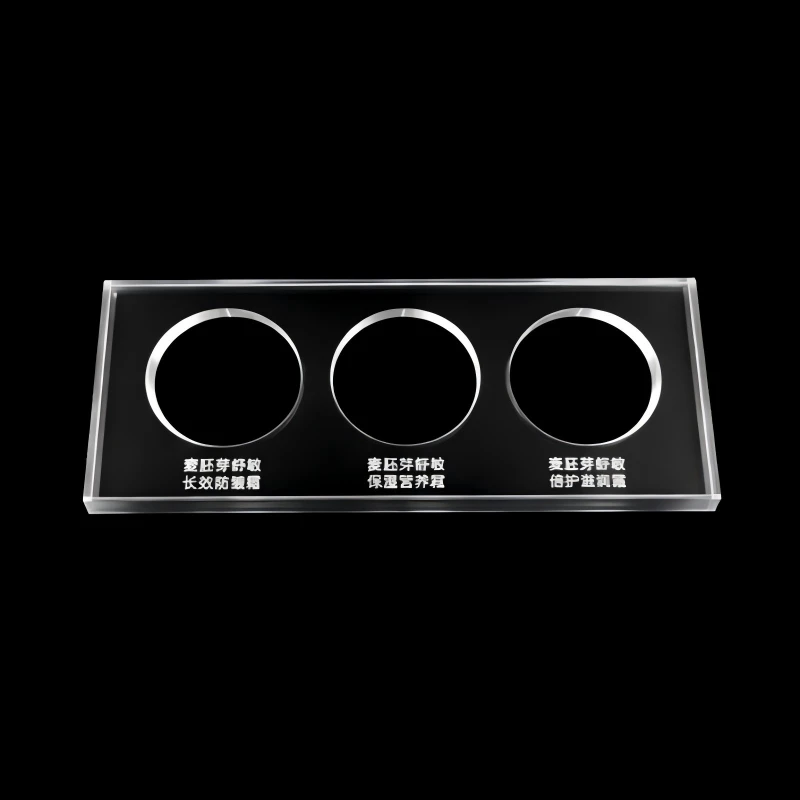
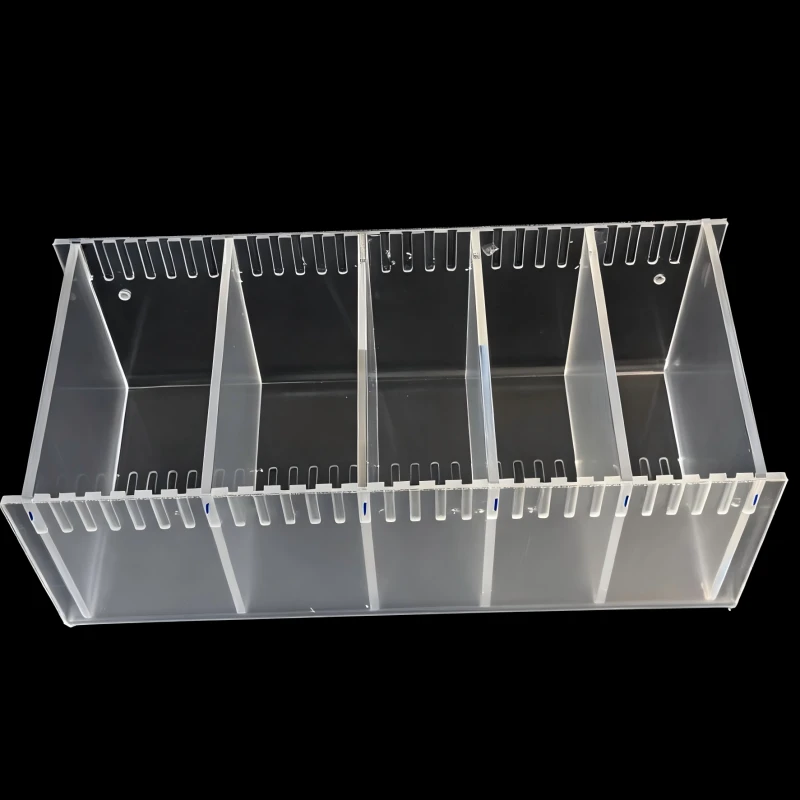
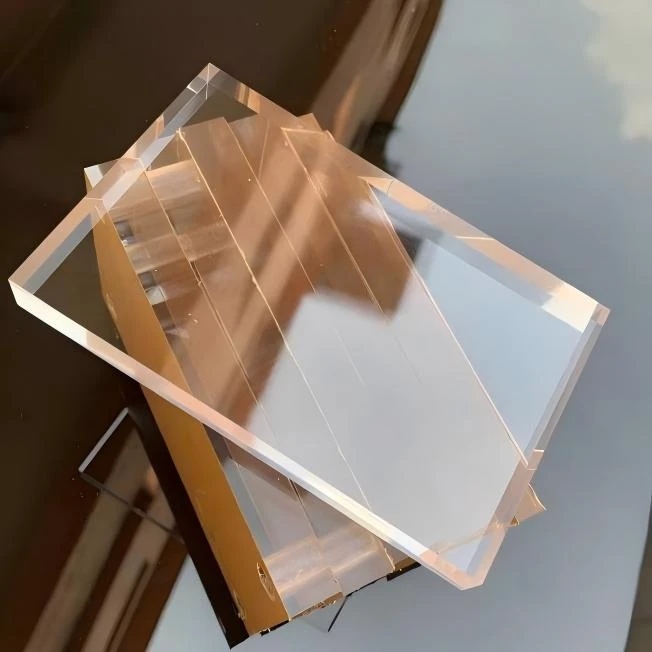
Our Plastic Polishing Services
Plastic polishing is a premium surface-refinement fabrication process used to eliminate machining marks, scratches, and saw-cuts from the edges or faces of thermoplastic components. Because different engineering plastics react uniquely to frictional heat, we utilize a versatile suite of advanced polishing technologies—including flame polishing, diamond edge polishing, buffing wheel polishing, and vapor polishing—to restore absolute optical clarity, smoothness, and a premium high-gloss finish to your custom parts.
We professionally provide premium plastic sheet and component polishing services. Utilizing high-speed automated diamond polishers, precision hydrogen-oxygen flame generators, and chemical vapor chambers, we process high-quality materials including Acrylic (PMMA), Polycarbonate (PC), ABS, PETG, and PS. We can custom-refine museum-grade expositores em acrílico, high-end cosmetic organizers, heavy-duty optical machinery guards, clear medical manifolds, and corporate branded signage elements.
Oferecemos designs personalizados de acordo com as suas desenhos técnicos (STEP, CAD, DXF, DWG) ou amostras. From fast aesthetic prototyping to large-scale wholesale contract production, we offer a true one-stop service including secondary corte a laser, profile fresagem e ranhura, e estruturas compostas por várias partes montagem.
Partilhar:
How It Works (Our Plastic Polishing Processes)
Achieving a crystal-clear, mirror-like finish requires selecting the exact chemical or mechanical polishing method matched to the specific plastic polymer profile.
- Pre-Machining & Edge Squaring: Pre-routing or sawing plastic panels to clean dimensional boundaries to minimize deep gouges before the polishing phase.
- Multi-Stage Mechanical Sanding (For Buffing): Utilizing progressive grit sandpaper (from 400 up to 2000 grit) to remove heavy surface imperfections smoothly.
Targeted Polishing Execution:
Diamond Edge Polishing: Feeding straight sheet edges through a high-speed spinning natural diamond toolhead for instant, perfectly flat, optical-grade edges.
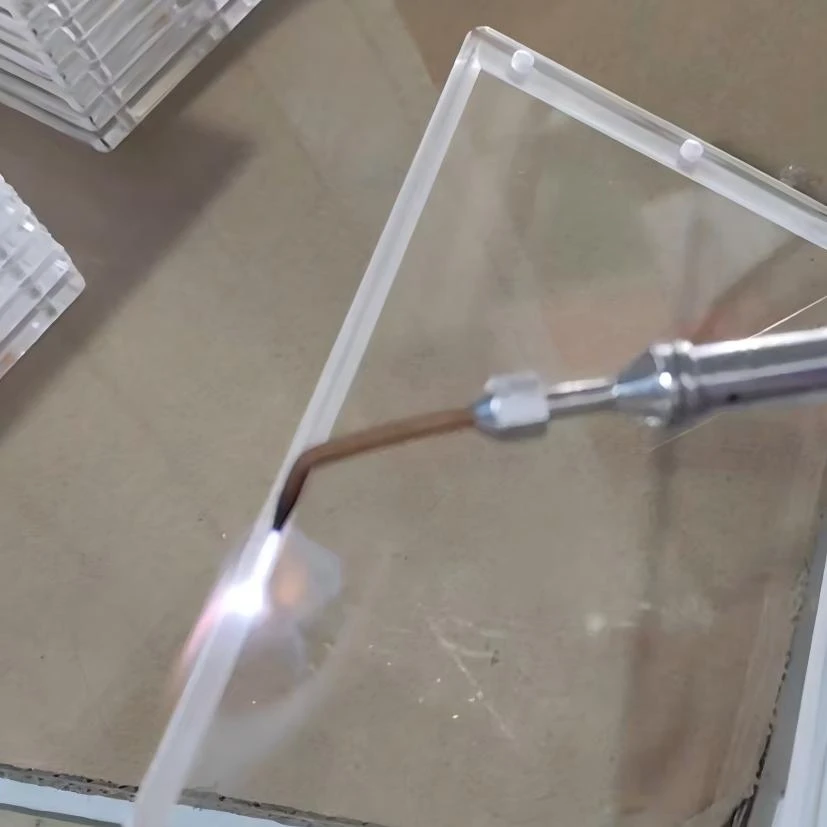
Flame Polishing: Passing a precise high-temperature hydrogen-oxygen flame over acrylic edges to instantly melt away micro-scratches, cooling into a glossy bead.
Vapor Polishing: Exposing complex internal channels or parts (like Polycarbonate) to vaporized solvent chemicals, reflowing the surface layer into a brilliant shine.
Buffing Wheel Polishing: Utilizing soft cloth wheels treated with specialized polishing compounds to buff curved profiles manually or semi-automatically.
Post-Polishing Annealing & QC: Pre-baking parts in thermal ovens to remove internal stresses (preventing micro-cracking), followed by a 100% cosmetic inspection under high-intensity lighting.
Materiais e especificações técnicas
Method & Material Matrix
Acrílico (PMMA): Exceptionally responsive to Diamond, Flame, and Wheel Buffing. Yields completely flawless, crystal-clear, and light-transmitting “invisible” borders.
Polycarbonate (PC) & PETG: Ideal for Vapor Polishing and Wheel Buffing. Excellent for industrial safety panels and optical instrument covers that require deep internal cavity clarity.
ABS / PVC: Responsive to Chemical Vapor or Buffing, turning rough machined surfaces into sleek, satin, or high-gloss cosmetic enclosures.
Technical Capabilities & Finishes
- Polishing Finishes Available: High-Gloss Mirror Finish (Optical Clarity), Satin/Matte Finish, and Semi-Gloss Clean Deburring.
- Maximum Component Capacity: Sheet edges up to $2440\text{mm}$ long on automated diamond polishers; thickness ranges from 2mm to 100mm+ effortlessly.
- Geometric Compatibility: Straight linear edges, external radius curves, complex interior pockets, blind drilled holes, and deep micro-fluidic channels.
Espessura e gama de tamanhos
Aplicações
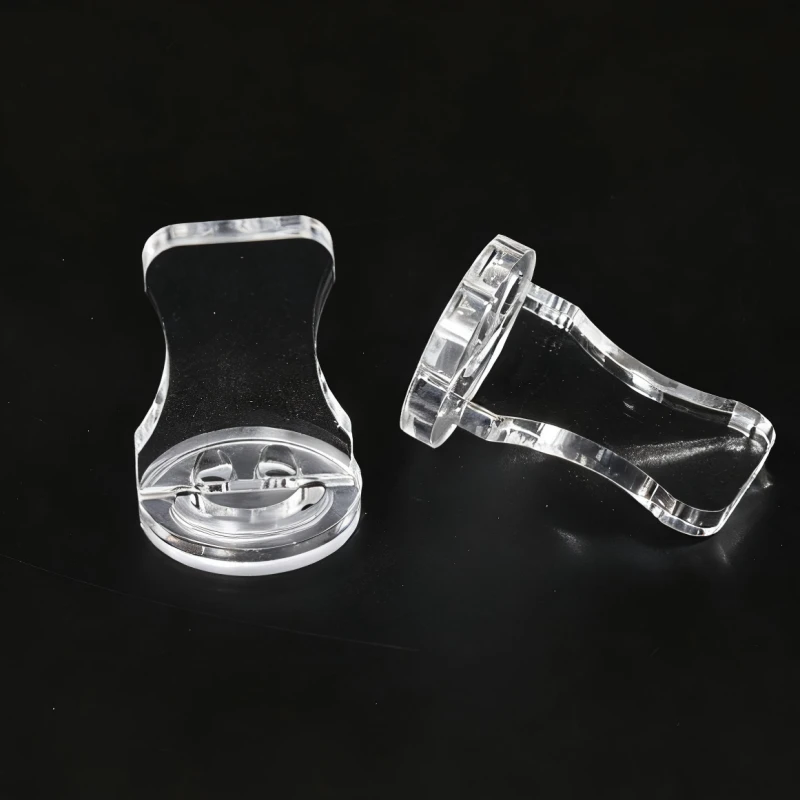
Luxury Cosmetic & Retail Displays: Premium acrylic jewelry blocks, cosmetic counter risers, point-of-purchase logo plates, and clear display showcases.
Industrial & Optical Windows: Heavy-duty polycarbonate machinery shields, clear security panels, instrument lens overlays, and cleanroom viewports.
Medical & Fluid Dynamics Blocks: Specialized transparent manifold blocks with vapor-polished inner fluid channels for clear visual tracking.
Branded Corporate Signage: Thick-gauge acrylic building logos, premium trophies, awards, and edge-lit decorative LED light panels.
Key Advantages of Plastic Polishing
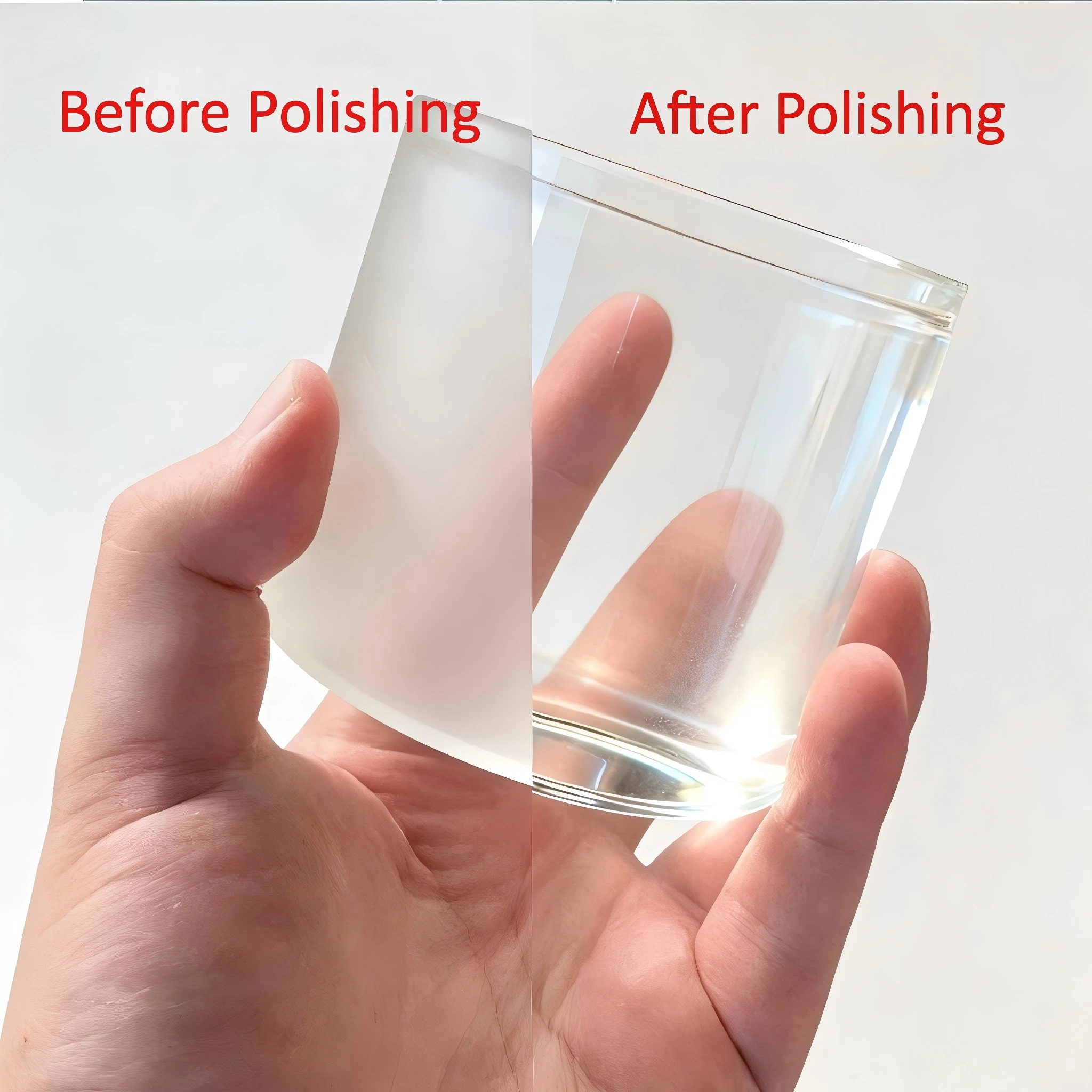
Restores 100% Optical Clarity: Eliminates the frosty or opaque look left behind by multi-axis Fresagem CNC or routing, allowing maximum light transmission—essential for point-of-sale displays and viewports.
Eliminates Structural Stress Risers: Shaving away microscopic jagged peaks along cut sheet edges removes potential fracture points, significantly increasing the plastic’s long-term impact resistance.
Safe & Comfortable to Touch: Creates perfectly smooth, rounded, or chamfered edges, eliminating sharp burrs—highly critical for consumer-facing retail fixtures, handles, and electronic bezels.
Seamless Fabricating Support: Polished edges are perfectly prepared for high-fidelity secondary processes like capillary colagem por adesão or high-visibility impressão serigráfica.
Controlo de qualidade
Component edge inspection → Polymer-specific polishing method selection → Step-down grit calibration → Temperature/Speed-monitored execution → Cross-checking under high-intensity light lines → Dust-free protective film masking application.
We guarantee uniform luster, zero localized heat warping, and an immaculate cosmetic surface finish across your entire production run.
Porquê escolher-nos
13+ Years of Specialized Thermoplastic Surface Treatment: Proved engineering expertise in preventing surface yellowing, melting, or cloudiness across distinct industrial polymers.
Comprehensive Multi-Technology Workstations: Outfitted with automated diamond polishers, hydrogen-oxygen flame stations, and industrial vapor bays under one roof.
Seamless In-House Fabrication Integration: Effortlessly couple your finishing project with companion services like drilling & punching, gravação em plástico, and final hardware fixação mecânica.
Dependable Global B2B Supply Chain: Direct factory-direct competitive pricing, fast response prototyping, and seaworthy/airworthy protective wood-crate packaging for safe transit.
FAQ
Q: What is the main difference between Diamond Polishing and Flame Polishing?
A: Diamond edge polishing uses a natural diamond tool to physically shave straight sheet edges, producing a perfectly flat, highly precise, optical-grade surface—ideal for thick panels and premium displays. Flame polishing uses an active gas torch to briefly melt the surface of acrylic, which is highly economical and excellent for curved edges, cutouts, or thin sheets, though it can leave a minor rounded bead.
Q: Can you polish internal drilled holes or complex deep pockets?
A: Yes! For deep pockets or internal channels where physical buffing wheels or diamond tools cannot fit, we utilize specialized Vapor Polishing. This chemistry process exposes the part to solvent vapors, reflowing the plastic molecules inside enclosed spaces to restore clarity perfectly.
Q: Will polishing cause Acrylic or Polycarbonate to crack later?
A: Polishing creates frictional heat, which can lock residual stress into materials like Acrylic or Polycarbonate. If these parts are later glued or exposed to cleaning chemicals, they can develop “crazing” (micro-cracks). We completely prevent this by baking (annealing) the polished parts in a temperature-controlled oven to relieve all stress before delivery.
Q: What technical files do you require for a polishing quote?
A: For simple edge polishing on flat sheets, standard vector profiles like DXF, DWG, or AI work perfectly. For fully custom machined 3D blocks requiring multi-surface or internal channel polishing, please provide 3D CAD models in STEP, STP, or IGES formats, clearly indicating which specific faces require an optical or gloss finish.