






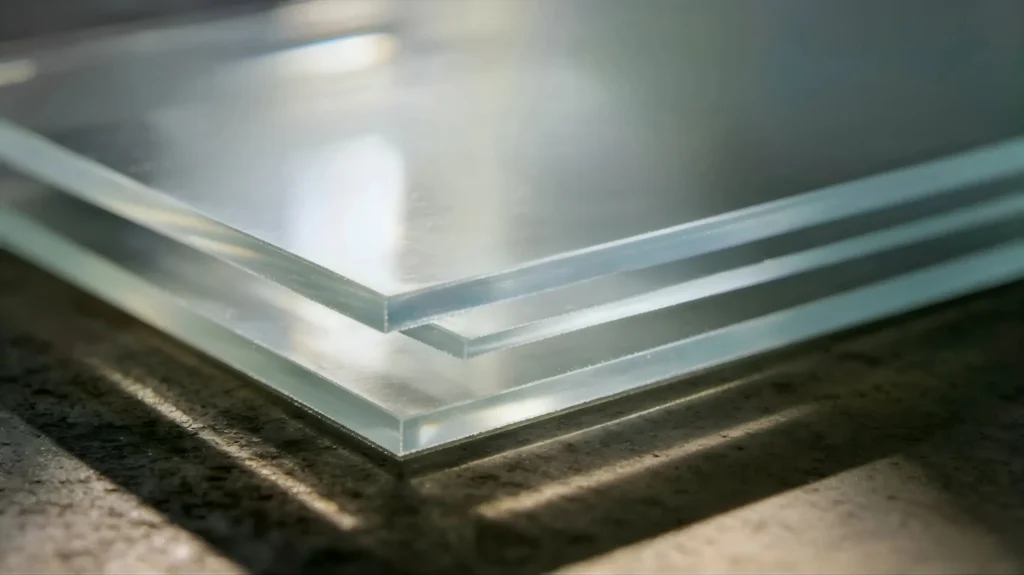
If you work in electrical engineering, electronics manufacturing, renewable energy, automotive, or home appliances, you must have heard about chapa de policarbonato (PC) — a strong, clear, tough engineering plastic that is widely used for electrical insulation and safety components.
Why is polycarbonate sheet so popular in electrical applications? The answer is simple: it combines excellent electrical insulation, high mechanical strength, great heat & moisture resistance, flame retardancy, and easy processability — all in one material. Unlike glass, it won’t shatter; unlike many cheap plastics, it won’t lose insulation properties under high temperature or humidity.
In this guide, we will explain every key insulation property of polycarbonate sheet, compare it with other common materials, show real electrical application cases, and share how to choose the right polycarbonate sheet for your electrical project. At the end, we will also introduce o nosso profissional polycarbonate sheet custom processing service to help you get precise, high-quality insulation parts directly from our workshop.
1. What Is Polycarbonate Folha & Why It’s Good for Electrical Insulation
Polycarbonate (PC) sheet is a high-performance amorphous thermoplastic made from polycarbonate resin. It is transparent or semi-transparent, lightweight, extremely impact-resistant, and electrically non-conductive.
For electrical use, the most important feature is its inherent electrical insulation — it does not allow electric current to flow through it, even under high voltage. This makes polycarbonate sheet a safe, reliable insulator for low-voltage to high-voltage electrical systems.
Core Benefits of Policarbonato Folha for Electrical Use
- Excellent electrical insulation (no current leakage)
- Elevada resistência ao impacto (250× stronger than glass, safe for public use)
- Wide temperature stability (-40°C to +120°C)
- Retardador de chamas (UL94 V-0 / V-2, B1 grade)
- Moisture & humidity resistance (insulation stable in wet environments)
- Transparent & see-through (safety + visibility)
- Fácil de processar (cut, drill, bend, engrave, print)
- Longa vida útil (10–15 years indoors, 8–12 years outdoors)
2. Key Electrical Insulation Properties of Policarbonato Folha (Data & Explanations)
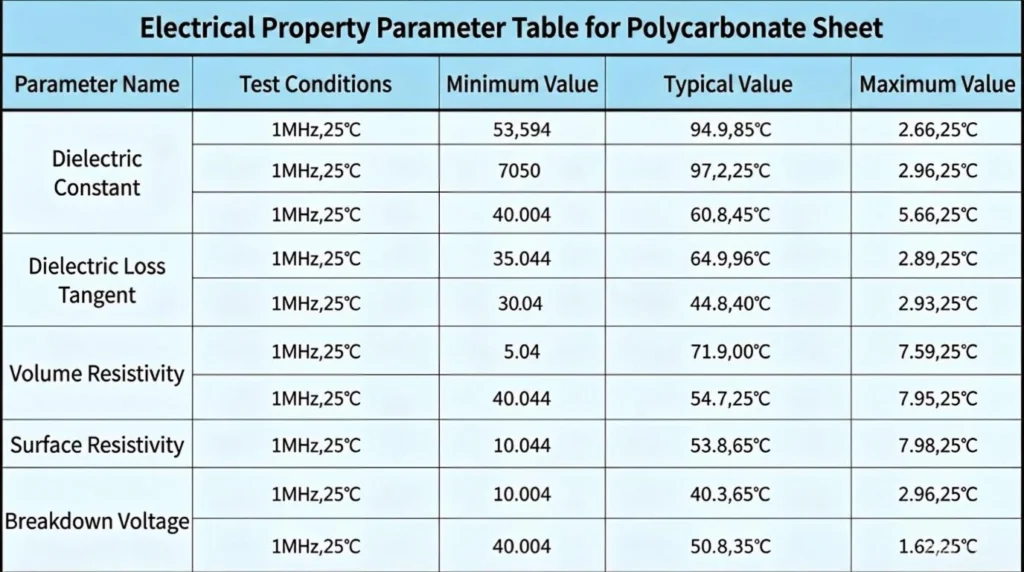
To understand how good polycarbonate sheet is for electrical insulation, we need to look at four critical electrical properties:
- Dielectric Strength (breakdown voltage resistance)
- Volume Resistivity (internal insulation ability)
- Surface Resistivity (surface leakage resistance)
- Arc Resistance (anti-arc burn performance)
We will explain each in simple words, with real test data (ASTM/IEC standards) so you can trust the numbers.
2.1 Dielectric Strength (Most Important for High Voltage)
Dielectric strength means how much voltage the material can withstand before it breaks down and allows current to pass through. Higher value = better high-voltage insulation.
- Policarbonato folha: 30–40 kV/mm (ASTM D149)
- Vidro: 20–30 kV/mm
- Acrílico (PMMA): 15–20 kV/mm
- PVC: 20–25 kV/mm
- ABS: 15–18 kV/mm
What this means: A 1mm thick polycarbonate sheet can resist 30,000–40,000 volts before breakdown. This is more than enough for most low-voltage, medium-voltage, and even some high-voltage electrical applications (e.g., power distribution, EV battery, solar inverter).
2.2 Volume Resistivity (Internal Insulation)
Volume resistivity measures how well the material blocks current from flowing inside the material. Higher value = better internal insulation.
- Policarbonato folha: >10¹⁵ Ω·cm (ASTM D257), often 10¹⁶ Ω·cm
- Vidro: 10¹⁴–10¹⁵ Ω·cm
- Acrílico: 10¹⁴–10¹⁵ Ω·cm
- PVC: 10¹³–10¹⁴ Ω·cm
What this means: polycarbonate sheet is an extremely good insulator — almost no current can pass through its body. Even in high humidity (85%RH) and high temperature (85°C), polycarbonate sheet still keeps 10¹⁵ Ω·cm level, which is critical for long-term safety in electrical equipment.
2.3 Surface Resistivity (Surface Leakage Prevention)
Surface resistivity measures resistance to current flowing on the surface (e.g., due to moisture or dirt). Higher value = less surface leakage.
- Policarbonato folha: >10¹⁴ Ω (65%RH)
- Vidro: 10¹²–10¹³ Ω
- Acrílico: 10¹³–10¹⁴ Ω
What this means: Even if the polycarbonate sheet surface gets wet or dusty, it still resists surface current leakage. This is very important for outdoor electrical boxes, charging stations, and humid-environment equipment.
2.4 Arc Resistance (Anti-Electric-Arc Burn)
Arc resistance means how long the material can resist high-temperature electric arcs before burning and becoming conductive. Higher value = safer for arc-prone parts.
- Policarbonato folha: 120 seconds (ASTM D495)
- Acrílico: 60–80 seconds
- PVC: 80–100 seconds
What this means: If an electric arc occurs (e.g., short circuit, switch spark), polycarbonate sheet can resist arc damage for 2 minutes — enough time for safety devices to cut power, reducing fire risk.
2.5 Other Supporting Electrical Properties
- Dielectric constant (1MHz): 2.9–3.2 (stable across frequency, good for high-frequency circuits)
- Dissipation factor (1MHz): <0.01 (low energy loss, less heat in high-frequency use)
3. Why Policarbonato Folha Is Better Than Other Common Insulation Materials
When choosing electrical insulation materials, people often compare polycarbonate sheet vs. glass, acrylic, PVC, ABS, and epoxy. Below is a simple, clear comparison so you can see why polycarbonate sheet is the best all-round choice.
3.1 Policarbonato Folha vs. Glass
- Policarbonato: Unbreakable, light (50% weight of glass), good impact safety; insulation stable in heat/humidity; can be bent/processed.
- Vidro: Easy to shatter (sharp fragments, dangerous); heavy; cannot bend; insulation drops in moisture.
Winner for electrical safety: chapa de policarbonato
3.2 Policarbonato Folha vs. Acrylic (PMMA)
- Policarbonato: 20–30× stronger impact resistance; better heat resistance (120°C vs. 70°C); higher dielectric strength; better arc resistance.
- Acrílico: Cheaper; clearer; but brittle, low heat resistance, easy to crack under impact.
Winner for industrial/electrical use: chapa de policarbonato
3.3 Policarbonato Folha vs. PVC
- Policarbonato: Higher temperature resistance (120°C vs. 60°C); better UV resistance; non-toxic; can be used for food/medical adjacent areas.
- PVC: Cheap; good flexibility; but low heat resistance, easy to deform, releases toxic gas when burned.
Winner for high-temperature/safety-critical electrical parts: chapa de policarbonato
3.4 Policarbonato Folha vs. ABS
- Policarbonato: Much better insulation, heat resistance, and flame retardancy; higher impact strength.
- ABS: Cheap; easy to mold; but poor insulation in high humidity, low heat resistance, flammable.
Winner for reliable electrical insulation: chapa de policarbonato
3.5 Policarbonato Folha vs. Epoxy
- Policarbonato: Transparent, easy to machine, reusable, low cost; good impact safety.
- Epoxy: Excellent insulation; but opaque, brittle, hard to repair, high cost for large sheets.
Winner for transparent, processable insulation parts: chapa de policarbonato
4. Critical Safety Properties for Electrical Use
Good insulation is not enough — electrical materials must also be safe in fire, heat, and impact. Polycarbonate sheet excels in these areas too.
4.1 Flame Retardancy (Fire Safety)
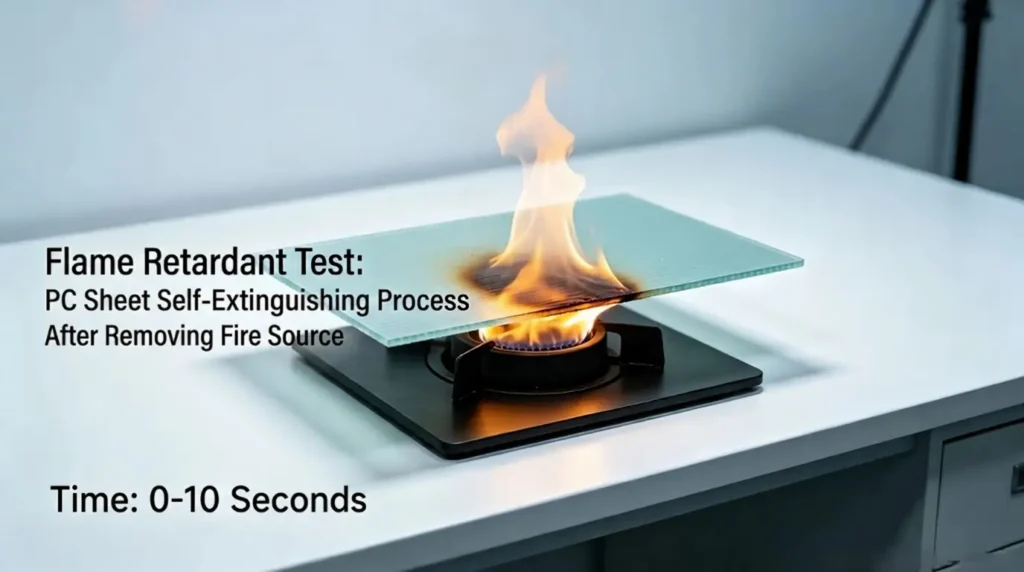
Most electrical fires start from short circuits or overheating. Polycarbonate sheet can be UL94 V-0 / V-2 flame retardant ou Classe B1 (GB50222-95) — self-extinguishing, no dripping, no toxic fumes.
- UL94 V-0: Stops burning within 10 seconds, no flaming drops (highest safety for electrical enclosures).
- Nível B1: Flame-retardant and self-extinguishing when away from fire, suitable for buildings and electrical equipment.
Both standards ensure critical fire safety performance, but UL94 V-0 imposes stricter testing conditions—vertical burning orientation, precise flame application, and zero flaming drips—making it preferred for high-risk electronic housings. B1 grade, while widely accepted in construction, allows limited afterglow and less rigorous drip control. For integrated devices where enclosure integrity directly impacts system reliability, UL94 V-0 remains the benchmark.
4.2 High Temperature Resistance
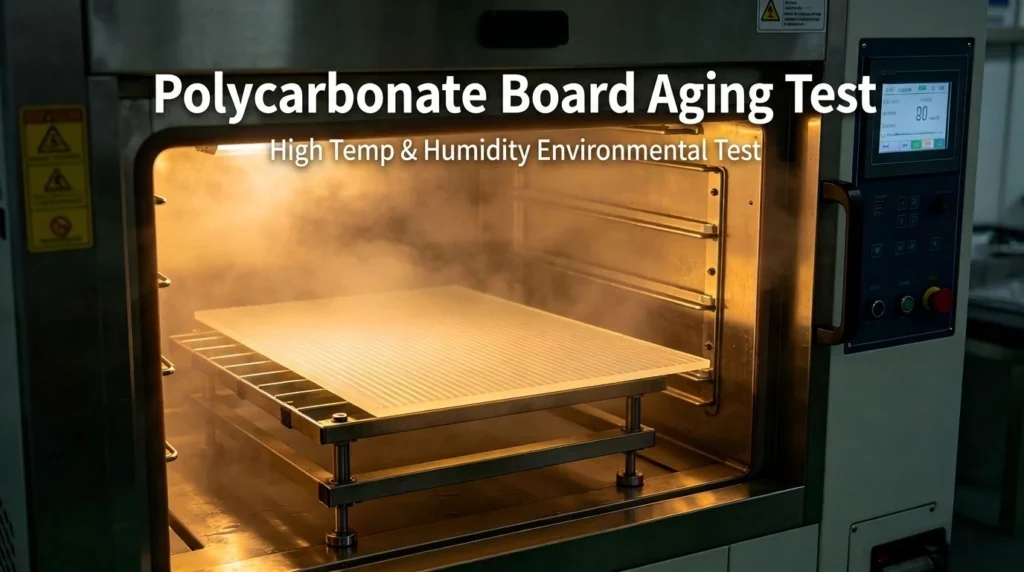
Polycarbonate sheet long-term use temperature: -40 °C a +120 °C; short-term peak: 135 °C.
- It does not soften or deform under normal electrical working temperature (40–80°C).
- It does not lose insulation properties at high temperature — critical for power supplies, inverters, and EV batteries.
4.3 Moisture & Humidity Stability
Em 85°C / 85%RH (worst-case hot & humid environment), polycarbonate sheet still maintains:
- Volume resistivity >10¹⁵ Ω·cm
- Dielectric strength >28 kV/mm
This means no insulation failure in tropical, coastal, or industrial humid areas — a big advantage over many plastics that become conductive when wet.
4.4 Impact Safety (Anti-Breakage)
Electrical enclosures and safety shields must not shatter when hit. Polycarbonate sheet’s ultra-high impact strength ensures:
- No sharp fragments if broken
- Safe for public areas (schools, stations, shopping malls)
- Durable for industrial use (machinery guards, switch boxes)
5. Real-World Electrical Applications of Polycarbonate Sheet
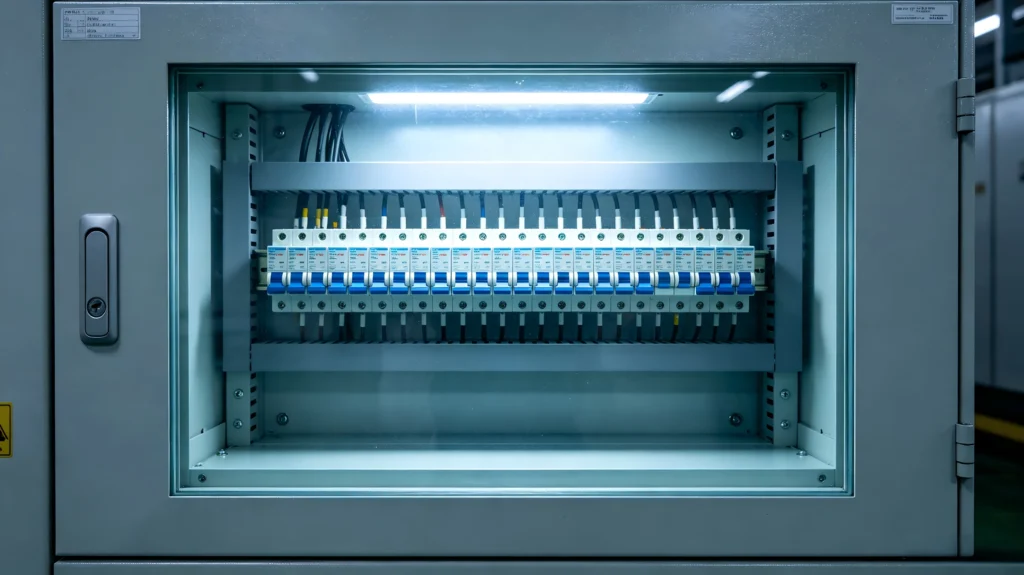
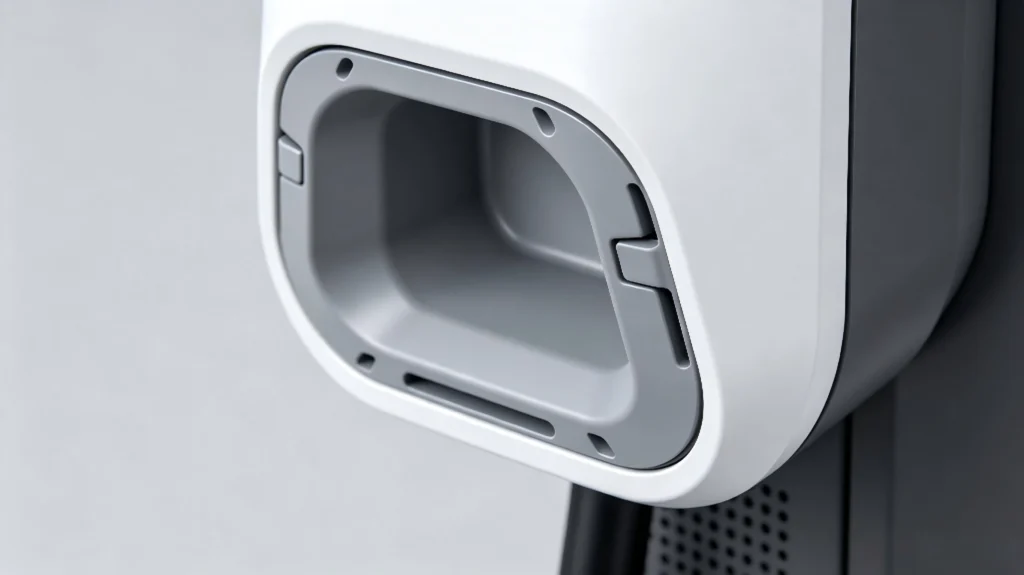
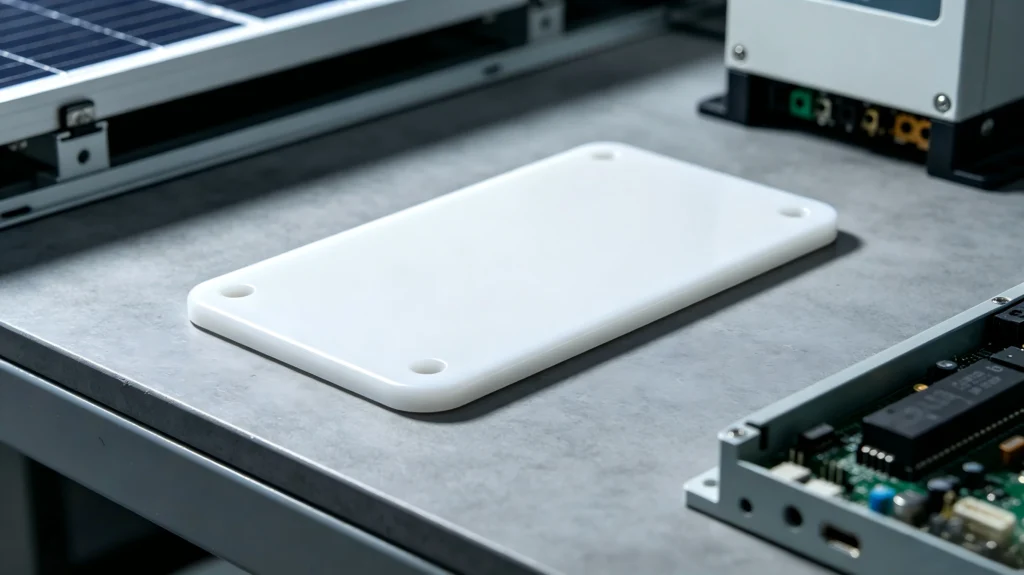
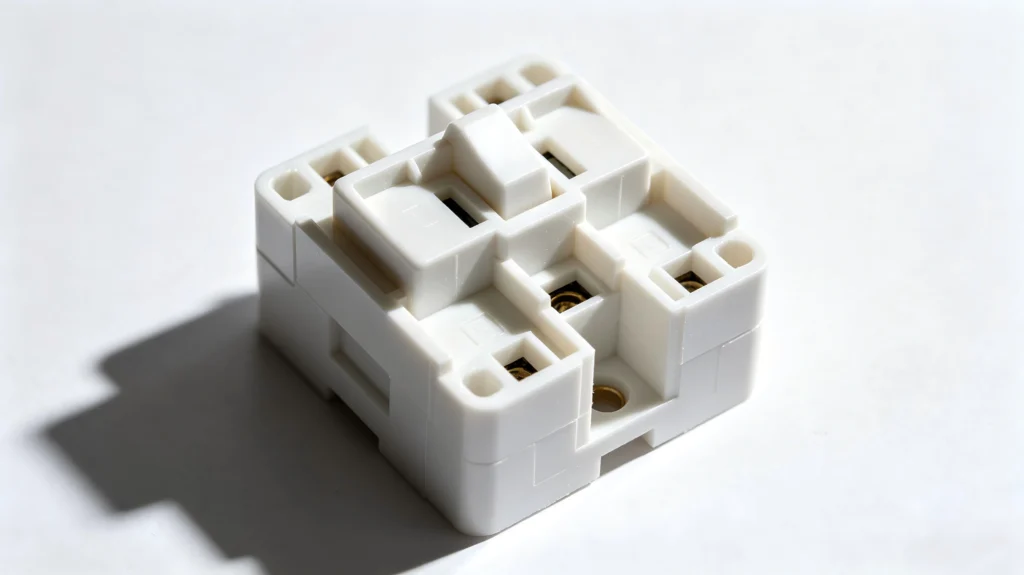
Polycarbonate sheet is used in almost every electrical industry — from small home switches to large EV battery systems. Below are detailed, common application cases to help you visualize where polycarbonate sheet works best.
5.1 Electrical Enclosures & Control Cabinets
- Transparent doors/windows for control panels, distribution boxes, and machine control cabinets.
- Why polycarbonate: See-through monitoring + insulation + impact safety + dust/water resistance.
- Thickness: 3mm–6mm (standard); 8mm for heavy-duty industrial cabinets.
5.2 New Energy Electric Vehicle (EV) Battery Insulation
- Battery module insulation sheets, end plates, separator plates, cover plates.
- Why polycarbonate: High voltage insulation (up to 1000V), flame retardant, heat resistant, impact resistant, non-toxic.
- Thickness: 0.5mm–2mm (thin insulation sheets); 3 mm–5 mm for structural insulation plates.
5.3 Charging Piles & EV Charging Stations
- Front panel, insulation housing, display window, internal insulation baffles.
- Porquê policarbonato: Outdoor weather resistance + insulation + flame retardant + anti impact (vandalism/accident).
- Thickness: 4 mm–6 mm (outdoor panels); 2mm–3mm for internal parts.
5.4 Solar & Photovoltaic (PV) Systems
- Inverter insulation baffles, junction box covers, solar panel edge protectors, insulation spacers.
- Porquê policarbonato: UV resistance + high temperature stability + insulation + flame retardant.
- Thickness: 2mm–4mm.
5.5 Home Appliances & Consumer Electronics
- Switch panels, socket covers, lamp holders, fan guards, TV/monitor back covers, power supply casings.
- Porquê policarbonato: Insulation + flame retardant + heat resistance + transparent/colored options + easy molding.
- Thickness: 1.5 mm–3 mm.
5.6 Industrial Machinery & Equipment
- Machine safety guards, transparent shields, sensor brackets, electrical box covers, wiring duct insulation.
- Why polycarbonate: Impact resistance + insulation + see-through visibility + oil/chemical resistance.
- Thickness: 5mm–10mm (safety guards); 3 mm–5 mm for covers.
5.7 High-Voltage Isolation & Safety Barriers
- High-voltage partition sheets, insulation barriers, live-part shields, test equipment enclosures.
- Porquê policarbonato: 30–40 kV/mm dielectric strength + arc resistance + flame retardant.
- Thickness: 5 mm–15 mm (depending on voltage level).
5.8 Medical & Laboratory Electrical Equipment
- Medical device casings, isolation shields, lab power supply covers, diagnostic equipment parts.
- Why polycarbonate: Insulation + flame retardant + non-toxic + easy to clean + sterilization-safe (low-temperature).
- Thickness: 3mm–6mm.
6. Como escolher o mais adequado Policarbonato Folha for Your Electrical Project
Not all polycarbonate sheets are the same — general-purpose polycarbonate, flame retardant polycarbonate, UV-resistant polycarbonate, and high-temperature polycarbonate have different performance. Below is a simple selection guide for electrical use.
6.1 Choose Grade by Flame Retardancy
- General electrical (low risk): UL94 V-2 (self-extinguishing, no dripping).
- High-risk (battery, inverter, charging pile): UL94 V-0 (highest fire safety).
- Building/indoor cabinets: Nível B1 (national fire standard).
6.2 Choose Thickness by Voltage & Impact
- Low voltage (<100V, home appliances): 1,5 mm–3 mm.
- Medium voltage (100–1000V, EV/battery): 2mm–5mm.
- High voltage (>1000V, industrial): 5mm–15mm.
- Impact-prone areas: Add 2mm–3mm extra thickness.
6.3 Choose Coating by Environment
- Indoor, dry: No coating needed (standard polycarbonate).
- Outdoor, sun exposure: Revestimento UV em ambos os lados (anti-yellowing, long life).
- High-humidity/chemical: Hard coat or anti-fog coating (surface protection).
6.4 Choose Color by Function
- Transparent: See-through monitoring (control cabinets, guards).
- Smoke gray/black: Privacy + UV protection (outdoor charging piles).
- White/opaque: Light insulation + clean look (home appliances).
7. Common Mistakes to Avoid When Using Polycarbonate Folha for Electrical Insulation
Even with good material, wrong use can cause insulation failure, fire, or safety risks. Here are the most common mistakes and how to avoid them.
Mistake 1: Using non-flame-retardant polycarbonate for high-risk parts
Risco: Short circuit → fire → polycarbonate burns and spreads flame.
Fix: Always use UL94 V-0 for battery, charging pile, inverter.
Mistake 2: Too thin for high voltage
Risco: Dielectric breakdown → current leakage → electric shock or fire.
Fix: Follow thickness guide: ≥2mm for >100V, ≥5mm for >1000V.
Mistake 3: Ignoring UV coating for outdoor use
Risco: Sunlight → polycarbonate yellowing/brittle → insulation performance drops → cracks.
Fix: Outdoor electrical parts must use double-sided UV polycarbonate sheet.
Mistake 4: Sharp edges or rough holes
Risco: Sharp points → electric field concentration → partial discharge → insulation aging.
Fix: All edges/holes must be smooth, polished, no burrs.
Mistake 5: Overlooking thermal expansion
Risco: Temperature change → polycarbonate expands/contracts → cracks or loose installation.
Fix: Leave 3–5mm expansion gaps per meter; use flexible fasteners.
8. Our Company’s One-Stop Polycarbonate Sheet Custom Processing Service
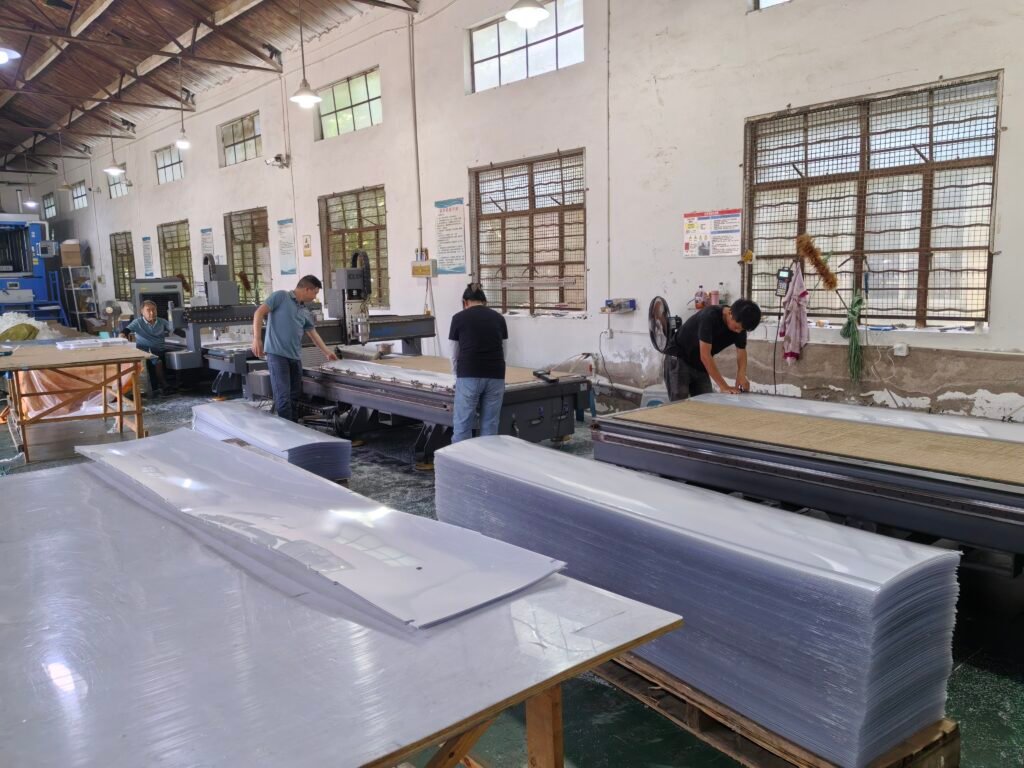
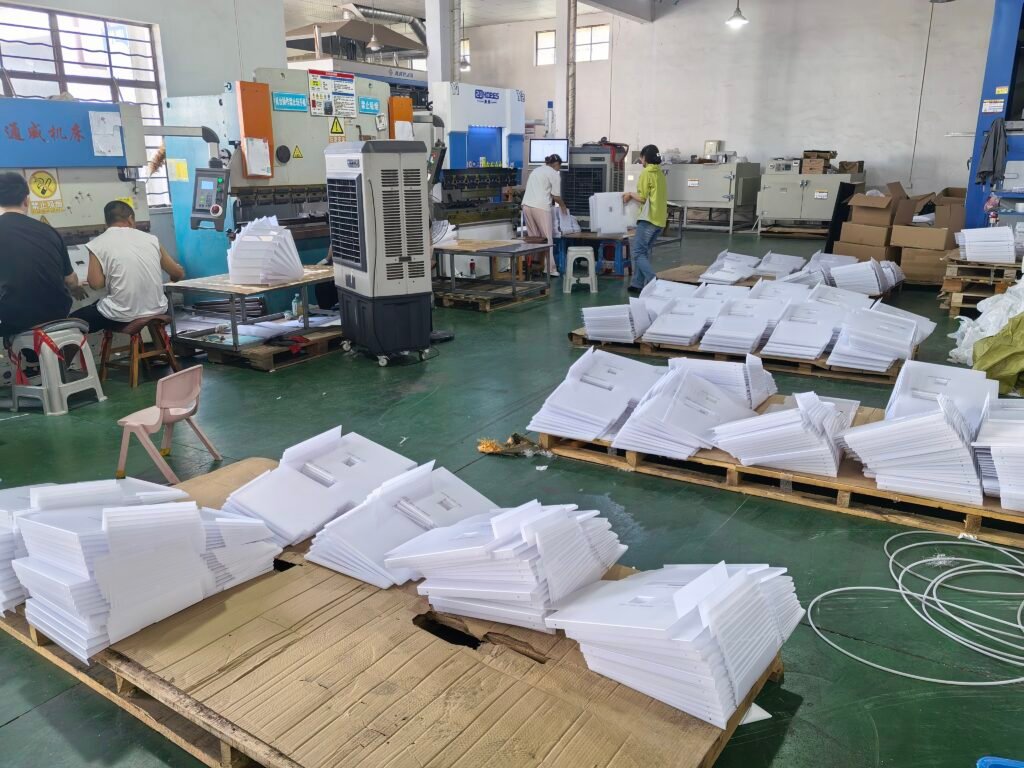
Now you know how great polycarbonate sheet is for electrical insulation — but to get perfect-fit, high-precision insulation parts, you need professional processing. That’s where we come in.
Quem Somos
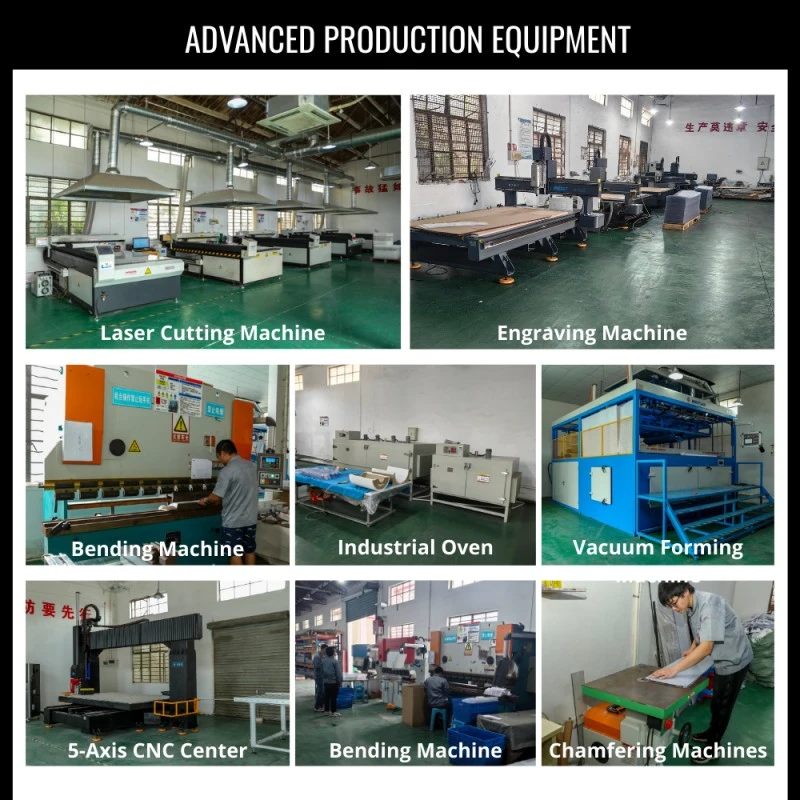
Somos uma especializado policarbonato folha manufacturer and custom processor with a modern workshop in China, equipped with:
- 6 fresadoras CNC (precision cutting, engraving, drilling)
- 5 máquinas de dobragem a frio (smooth bending for enclosures/guards)
- 5 máquinas de corte a laser (fast, accurate cutting for complex shapes)
- 2 thermoforming machines, 1 five-axis machine, 3 hot bending machines, 3 drilling machines, plus many surface/edge processing machines.
All machines were updated and fully operational in June 2026. We focus on high-quality electrical-grade polycarbonate sheet production and precision processing for global electrical, new energy, and electronics clients.
What We Offer for Electrical Insulation Projects
- Electrical-grade polycarbonate sheet supply:
- UL94 V-0 / V-2 flame retardant polycarbonate
- UV-resistant outdoor polycarbonate
- High-temperature stable polycarbonate
- Espessura: 0.5 mm–15 mm, colors: transparent, smoke, black, white, custom.
- CNC cutting & drilling: Exact holes, slots, shapes for battery insulation, enclosures.Cold/heat bending: Arched/angled parts for charging pile housings, guards.Polimento de arestas: Smooth, safe edges (no sharp points for electrical safety).Serigrafia: Custom logos, safety labels, warning signs.
- Revestimento de superfícies: UV, hard coat, anti-fog for different environments.
Why Choose Us for Electrical Insulation Parts
- Electrical-grade quality control: All polycarbonate sheets pass dielectric strength, volume resistivity, and flame retardancy tests before shipping.
- Alta precisão: CNC tolerance ±0,1 mm — perfect for battery modules and precision electrical parts.
- Custom flexibility: Small sample orders (1–10 pcs) to large bulk orders (10,000+ pcs) welcome.
- Entrega rápida: In-house production, no outsourcing — 3–7 days for samples, 7–15 days for bulk.
- Experiência em exportação a nível global: Familiar with international electrical standards, packaging, and shipping.
- Professional technical support: Our team helps you select the right polycarbonate grade, thickness, and processing for your specific electrical application.
Como encomendar
Basta enviar-nos o seu drawings (DXF/PDF), samples, or detailed requirements (size, thickness, color, flame retardancy grade, processing type, quantity). We will reply within 12 hours with a detailed quotation and production plan.
9. Final Tips for Long-Term Electrical Safety
- Regular inspection: Check for cracks, yellowing, or damage after long-term use.
- Clean properly: Use mild soap and soft cloth — avoid harsh chemicals that damage insulation.
- Avoid overheating: Do not install polycarbonate insulation parts too close to high-temperature components.
- Follow standards: Always comply with local electrical safety codes and material standards.
Conclusão
Polycarbonate sheet is one of the best electrical insulation materials available today — it combines superior dielectric strength, ultra-high volume resistivity, excellent arc resistance, reliable flame retardancy, wide temperature stability, and easy processability.
From home switches to EV batteries, charging piles to solar inverters, control cabinets to safety guards, polycarbonate sheet provides safe, durable, cost-effective insulation solutions for almost every electrical application.
Se precisar high-quality electrical-grade polycarbonate sheet ou precision custom processing for your electrical project, we are here to help. With our complete equipment, strict quality control, and professional team, we can deliver the perfect polycarbonate insulation parts for you.
Contacte-nos hoje mesmo para obter o seu orçamento gratuito e aconselhamento na escolha dos materiais!