





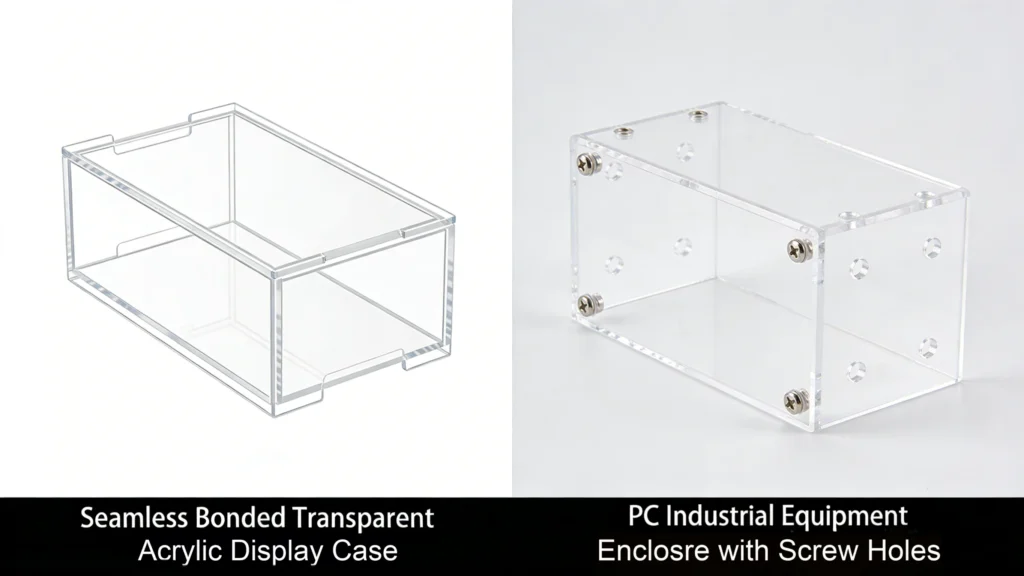
When assembling plastic parts, two of the most common joining methods are adhesive bonding e mechanical fastening.
Both methods are widely used in acrylic, polycarbonate, and fabrico de plásticos por medida, but each offers different advantages depending on your design, strength requirements, appearance, and maintenance needs.
When assembling custom plastic parts — such as acrylic displays, PC machine guards, ABS enclosures, or medical components — choosing the right joining method is critical. Adhesive bonding e mechanical fastening are the two most common plastic assembly technologies. Each method offers unique advantages for appearance, structural strength, production cost, and application scenarios.
In this guide, we compare adhesive bonding vs mechanical fastening for plastic to help you choose the right solution for your project.
What is Adhesive Bonding for Plastic?
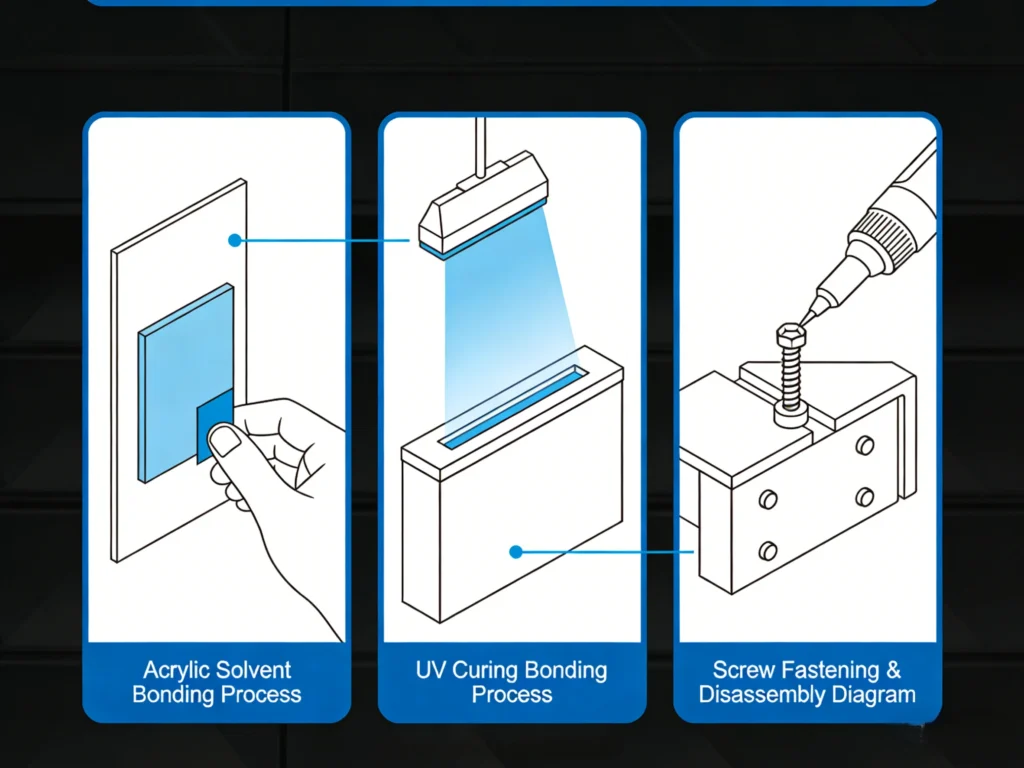
Adhesive bonding uses specialized adhesives (solvent cement, UV-curing adhesive, epoxy, acrylic glue) to fuse plastic surfaces together. It creates a seamless, uniform bond across the contact area, with no visible hardware or punctures on the part surface.
Common types: Solvent bonding (for acrylic/PVC), UV adhesive bonding (for transparent plastics), structural epoxy bonding (for high-strength assemblies).
What is Mechanical Fastening for Plastic?
Mechanical fastening uses physical hardware to join plastic parts, including screws, bolts, rivets, snaps, tabs, and press-fit connectors. This method requires pre-drilled holes or molded features and secures parts through mechanical pressure.
Common types: Self-tapping screws, threaded inserts, snap-fit joints, rivet fastening.
Head-to-Head Comparison: Adhesive Bonding vs Mechanical Fastening
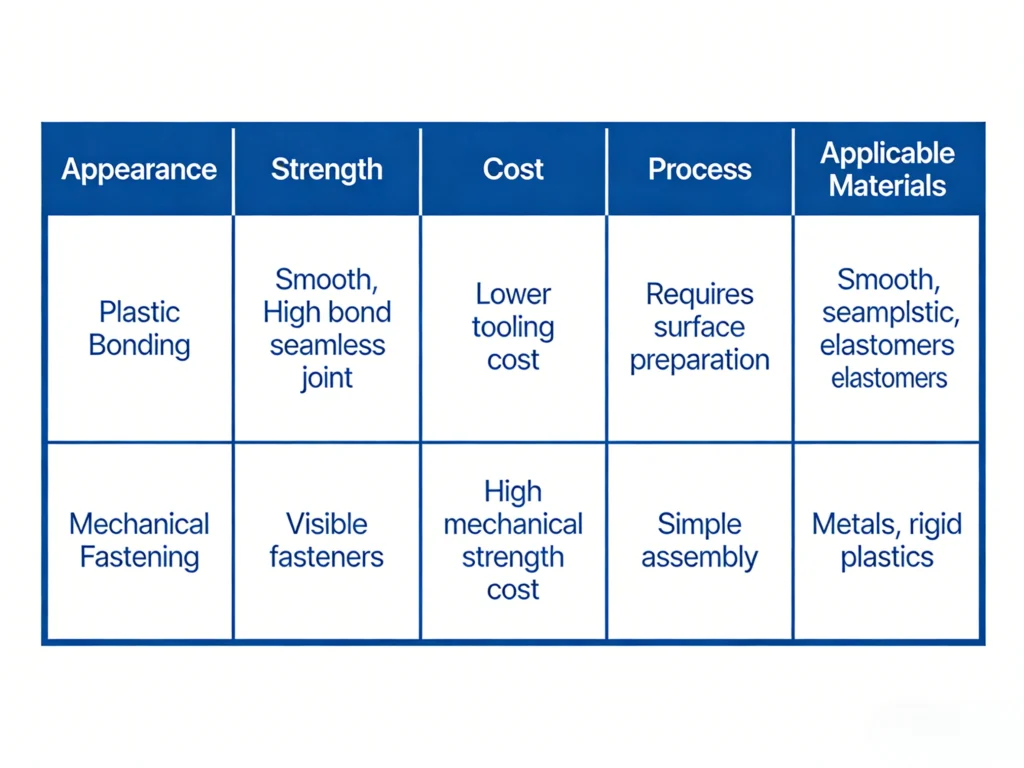
| Comparison Item | Colagem de adesivos | Fixação mecânica |
| Appearance | Seamless, clean, no holes; ideal for transparent/visible parts | Visible screws/rivets; drilled holes may affect aesthetics |
| Stress Distribution | Uniform stress across bonding surface; low risk of cracking | Concentrated stress at holes; easy to cause plastic cracking |
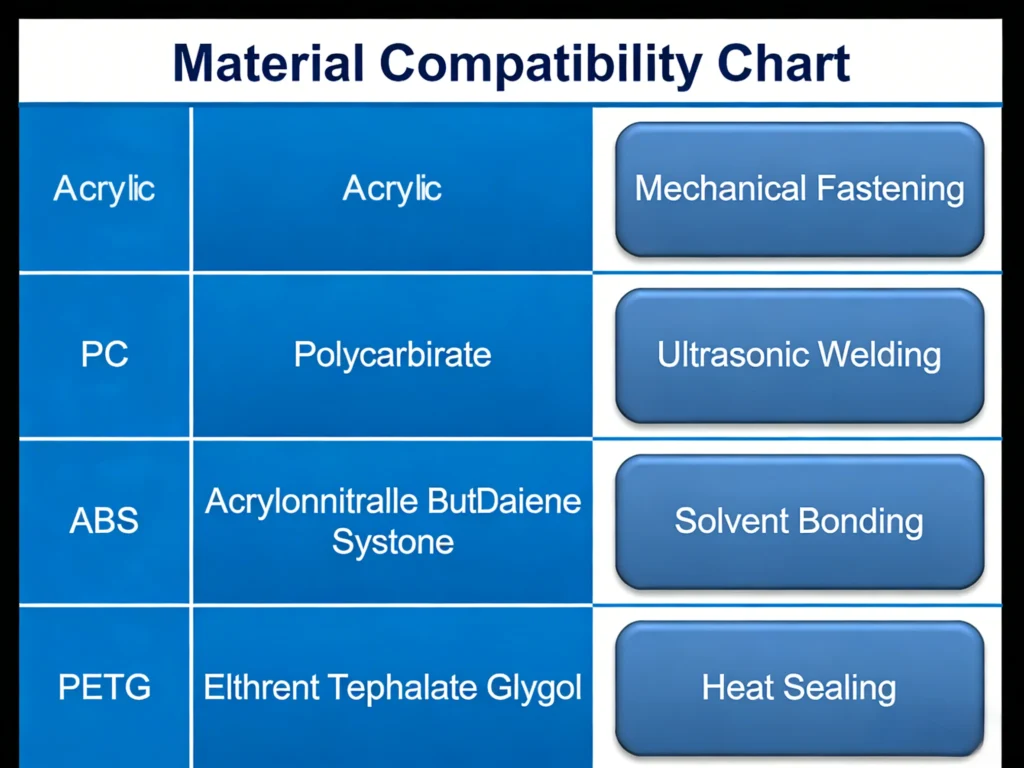
| Compatibilidade de materiais | Best for acrylic, PC, PETG, PVC, ABS | Suitable for all rigid plastics; better for thick/heavy parts |
| Assembly Strength | High structural strength; waterproof & airtight | Adjustable strength; easy to disassemble and maintain |
| Production Cost | Low mold/tooling cost; labor-intensive for precision bonding | Higher processing cost (drilling/tapping); lower material cost |
| Disassemblability | Permanent bond; cannot be disassembled | Reusable; easy to repair or replace parts |
| Sealing Performance | Excellent waterproof & dustproof performance | Gaps may exist; requires additional gaskets for sealing |
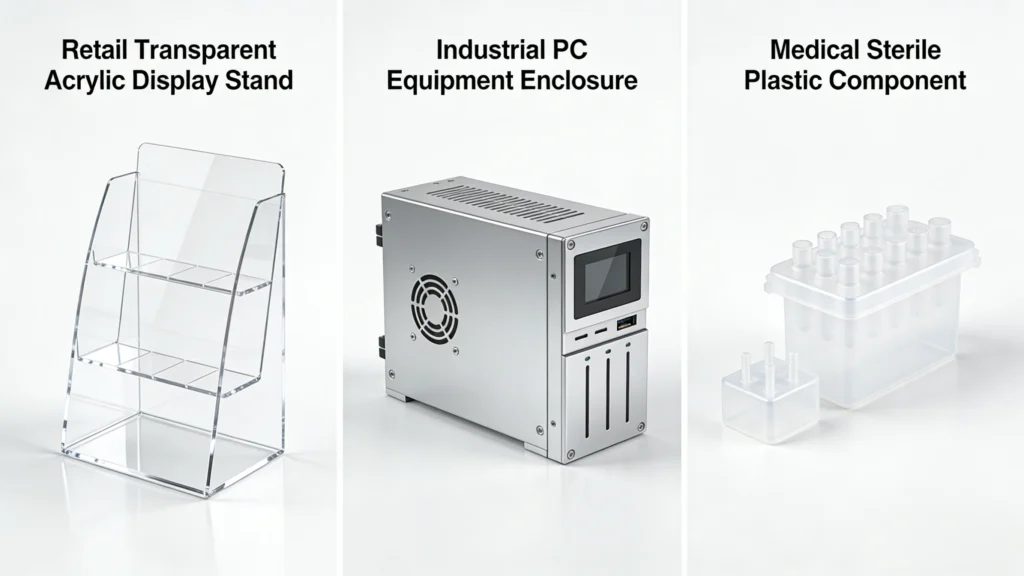
| Suitable Scenarios | Transparent displays, medical parts, aesthetic components | Industrial enclosures, structural parts, maintenance-needed parts |
Key Advantages of Adhesive Bonding
- Perfect Aesthetics: No visible fasteners, ideal for high-end retail displays and transparent acrylic products.
- No Stress Cracking: Avoids hole-induced cracking, especially for brittle plastics like acrylic.
- Airtight & Waterproof: Perfect for fluid-containing devices and outdoor sealed components.
- Lightweight Design: No extra hardware weight, suitable for thin plastic sheets.
Key Advantages of Mechanical Fastening
- High Reliability: Stable connection, not affected by temperature or humidity changes.
- Easy Maintenance: Parts can be disassembled, repaired, or replaced at any time.
- Fast Mass Production: Suitable for automated assembly lines with high efficiency.
- High Load Capacity: Better for heavy-duty structural components and thick plastic parts.
Which Method Should You Choose?
Choose Adhesive Bonding If:
- You need seamless, transparent parts (acrylic boxes, light covers, display stands).
- Airtightness, waterproofing, or clean appearance is a priority.
- You work with thin acrylic, PC, or PETG sheets.
- Your product requires a high-end, polished look.
Choose Mechanical Fastening If:
- You need structural strength and disassemblability (machine guards, equipment enclosures).
- Your parts are thick, heavy, or subject to frequent maintenance.
- You require high repeatability in mass production.
- The plastic material is not suitable for adhesive curing.
Our Core Services:
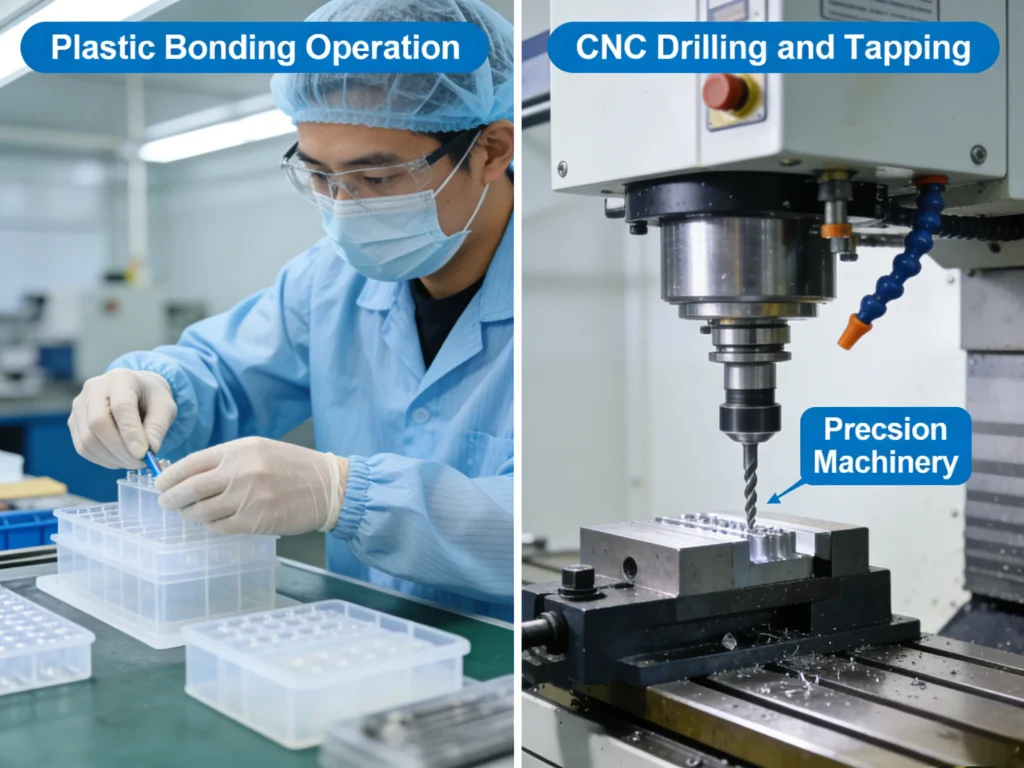
- Precision Adhesive Bonding: Solvent bonding, UV curing bonding, and structural adhesive bonding for seamless plastic parts, with polishing and deburring for a flawless finish.
- Mechanical Fastening Processing: CNC drilling, tapping, threaded insert installation, and automated screw/rivet assembly for industrial plastic components.
- Custom Assembly Solutions: Mixed-process assembly (bonding + fastening) for complex products, with full quality inspection and dimensional testing.
- Material & Design Support: Professional guidance on joining methods, material matching, and structural optimization to reduce costs and improve durability.
Whether you need seamless acrylic displays or heavy-duty industrial plastic enclosures, we deliver tailored assembly services that match your performance, appearance, and budget requirements.
Conclusão
Adhesive bonding and mechanical fastening each dominate different plastic assembly scenarios. Adhesive bonding is the top choice for seamless appearance, airtight performance, and thin transparent plastic parts. Mechanical fastening excels in structural reliability, disassembly, and heavy-duty industrial applications.
By selecting the right method based on your product’s appearance, function, and usage environment, you can greatly improve product quality and reduce production costs.
Partner with Yoochen Plastic for professional plastic joining and assembly services to bring your custom plastic parts to life.