



إذا كنت مصمم منتجات، أو مسؤول مشتريات، أو مهندس مصنع، أو مقاول ديكور، أو موردًا في مجال التجارة الخارجية، فلا بد أنك واجهت سؤالًا محيرًا: هل يجب أن أختار ألواح البولي كربونات (PC) أم ألواح الأكريليك (PMMA) لمشروعي الجديد؟
تُعد هاتان اللوحتان البلاستيكيتان الشفافتان البديلين الشفافين الأكثر شيوعًا للزجاج في جميع القطاعات، بما في ذلك معدات شحن السيارات الكهربائية التي تعمل بالطاقة الجديدة, ، والآلات الصناعية، وخزائن العرض في المتاجر، ومناور المباني، والحواجز الداخلية، وقطع العزل الكهربائي، وديكورات المنازل. ظاهريًّا، يبدو كلاهما شفافًا وخفيف الوزن وسهل المعالجة، ولكن بمجرد التعمق في أدائهما الفعلي، وعمرهما التشغيلي، ومستويات الأمان، وحدود معالجتهما، يتضح أن الفارق بينهما هائل.
يرتكب العديد من المشترين أخطاءً مكلفةً من خلال اختيار الخيار الأرخص بشكل أعمى دون فهم الاختلافات الجوهرية، ليجدوا أنفسهم بعد ذلك في مواجهة مشاكل مثل التشقق، أو الاصفرار، أو الخدوش، أو التغشية، أو مخاطر الحريق، أو تأخيرات التسليم بعد بدء الإنتاج الضخم. سيقوم دليل المقارنة الشامل هذا بتحليل كل بُعد من أبعاد الأداء بين ألواح البولي كربونات وألواح الأكريليك بلغة بسيطة وسهلة الفهم، دون استخدام مصطلحات مهنية معقدة. وسنتناول مقاومة الصدمات، وصلابة السطح ضد الخدش، ومقاومة الأشعة فوق البنفسجية في الأماكن المفتوحة، وتحمل درجات الحرارة، والقدرة على العزل الكهربائي، وسلامة مقاومة اللهب، وأداء الانحناء والمعالجة باستخدام الحاسب الآلي (CNC)، ومقاومة المواد الكيميائية، والوزن، ونفاذية الضوء، وسعر التكلفة، والتركيب والصيانة، بالإضافة إلى مئات الحالات التطبيقية الحقيقية.
في ختام هذا المقال، سنقدم عرضًا شاملاً لخدمة المعالجة المخصصة الشاملة التي يقدمها مصنعنا لكل من ألواح البولي كربونات والأكريليك، مدعومة بمعدات ورشة العمل الكاملة التي تم تحديثها لعام 2026، لمساعدتك في الحصول على قطع مخصصة جاهزة تمامًا دون الحاجة إلى التنسيق مع عدة موردين.
1. التعريف الأساسي ونظرة عامة على الخصائص الأساسية للمواد الخام
1.1 ما هي ألواح البولي كربونات (PC)؟
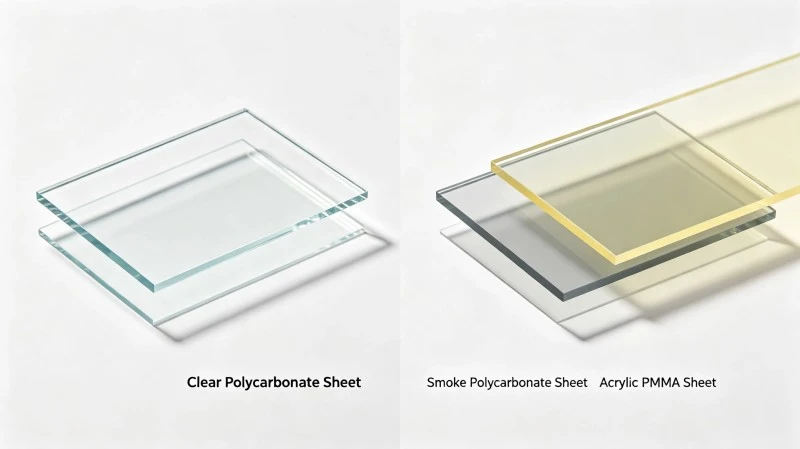
ألواح البولي كربونات (يُشار إليها اختصارًا بـ«ألواح PC»، وتُعرف أيضًا باسم «ألواح التحمل») هي مادة بلاستيكية هندسية حرارية غير متبلورة تُنتج من راتنج البولي كربونات من خلال عملية التشكيل بالبثق المشترك. وتتمثل أهم الخاصية المتأصلة في مادة البولي كربونات الخام في صلابة جزيئية فائقة، مما يجعلها شديدة المقاومة للتصادم والصدمات. يمكننا إنتاج ألواح PC شفافة قياسية، وألواح PC مقاومة للعوامل الجوية والأشعة فوق البنفسجية على الوجهين، وألواح PC المطلية بطبقة صلبة مقاومة للخدش، وألواح PC مقاومة للهب من الدرجة V0/V2، وأغشية PC العازلة الرقيقة، وألواح PC الأمنية الصلبة السميكة، بسمك يتراوح من 0.125 مم إلى 18 مم.
1.2 ما هي ألواح الأكريليك (PMMA)؟
لوح الأكريليك، الاسم الكيميائي PMMA (بولي ميثيل ميثاكريلات), ، وهو نوع من البلاستيك الشفاف العام، ويتم تصنيعه عبر عملية الصب أو البثق. وتكمن ميزته الأساسية في النعومة الفائقة لسطحه، ونفاذية الضوء العالية جدًّا، وصلابة طبيعية تعادل صلابة قلم الرصاص دون الحاجة إلى طلاء إضافي. ومع ذلك، فإن بنيته الجزيئية تفتقر إلى المتانة، لذا فإن المادة هشة بطبيعتها وعرضة للتشقق تحت تأثير الصدمات القوية أو قوى الانحناء. تشمل المنتجات الأكريلية الشائعة ألواح الأكريليك المصبوبة، وألواح الأكريليك المبثوقة، والأكريليك الملون غير اللامع، والأكريليك المضاد للوهج، بسمك يتراوح من 1 مم إلى 30 مم للاستخدامات الزخرفية والعرضية.
1.3 نظرة عامة سريعة على إيجابيات وسلبيات Quick Core
مزايا أساسية لألواح البولي كربونات (PC)
✅ مقاومة للصدمات أعلى بـ250–300 مرة من الزجاج، وأقوى بـ20–30 مرة من الأكريليك
✅ أداء عزل ثابت للتطبيقات الكهربائية ذات الجهد المنخفض والمتوسط والعالي
✅ نطاق واسع لدرجات حرارة التشغيل: من -40 درجة مئوية إلى +120 درجة مئوية للاستخدام المستمر
✅ يمكن إجراء الثني على البارد والثني على الساخن دون حدوث تشققات سطحية
✅ مادة مقاومة للعوامل الجوية من فئة البثق المشترك المقاوم للأشعة فوق البنفسجية، تدوم من 10 إلى 15 عامًا في الأماكن المفتوحة دون أن تتعرض لاصفرار شديد
✅ تتوفر نسخة مقاومة للاشتعال ذاتية الإطفاء وفقًا لمعيار UL94 V0 للمشاريع التي تتطلب مستوى عالٍ من الأمان
✅ خفيف الوزن، يبلغ وزنه نصف وزن الزجاج فقط
أهم نقاط الضعف في ألواح البولي كربونات (PC)
❌ سطح البولي كربونات الخام غير المطلي ناعم (بصلابة قلم رصاص 2B فقط)، ويسهل ترك خدوش دائمة عليه
❌ ستتحول ألواح البولي كربونات الخام إلى اللون الأصفر بسرعة عند تعرضها لأشعة الشمس المباشرة لفترات طويلة دون طلاء مضاد للأشعة فوق البنفسجية على الوجهين
❌ نفاذية ضوئية أقل قليلاً مقارنةً بالأكريليك المصبوب القياسي
❌ سيتعرض للتآكل المبيّض للسطح عند التعرض لمذيبات قوية مثل الأسيتون
مزايا صلبة ألواح الأكريليك (PMMA)
✅ نفاذية ضوئية قصوى تصل إلى 92–93%، وأداء بصري أكثر وضوحًا من مادة البولي كربونات (PC)
✅ تصل صلابة السطح الطبيعية إلى درجة H–2H على مقياس أقلام الرصاص، ومقاومة للخدش دون الحاجة إلى طلاء صلب إضافي
✅ لمعان ممتاز للسطح، ولا يظهر عليه أي ضباب بعد التنظيف الداخلي على المدى الطويل
✅ تكلفة أقل للمواد الخام في المشاريع الزخرفية الداخلية البسيطة والمسطحة
✅ أداء بصري أكثر استقرارًا في بيئة مصادر الضوء عالية التردد
✅ سهولة صقل الحواف للحصول على مظهر أملس كالمرآة
أهم نقاط الضعف في ألواح الأكريليك (PMMA)
❌ شديد الهشاشة، وسوف يتشقق أو يتحطم تمامًا عند التعرض لصدمة شديدة أو لضربات البرد
❌ مقاومة ضعيفة للحرارة، ويحدث تشوه دائم عند درجة حرارة مستمرة تزيد عن 70 درجة مئوية
❌ لا يمكن إجراء عملية الثني على البارد؛ يُسمح فقط بالثني على الساخن بنصف قطر صغير، ويسهل حدوث تشققات أثناء التشكيل
❌ العمر الافتراضي في الأماكن المفتوحة لا يتجاوز 1–2 سنة، مع ظهور اصفرار واضح وهشاشة بعد التعرض لأشعة الشمس
❌ مقاومة ضعيفة للقوس الكهربائي، غير مناسب لمكونات العزل الكهربائي التي تعمل في درجات حرارة عالية
2. مقارنة شاملة جنبًا إلى جنب لأبعاد الأداء الرئيسية
2.1 مقاومة الصدمات (أبرز فارق في الأداء بين البولي كربونات والأكريليك)
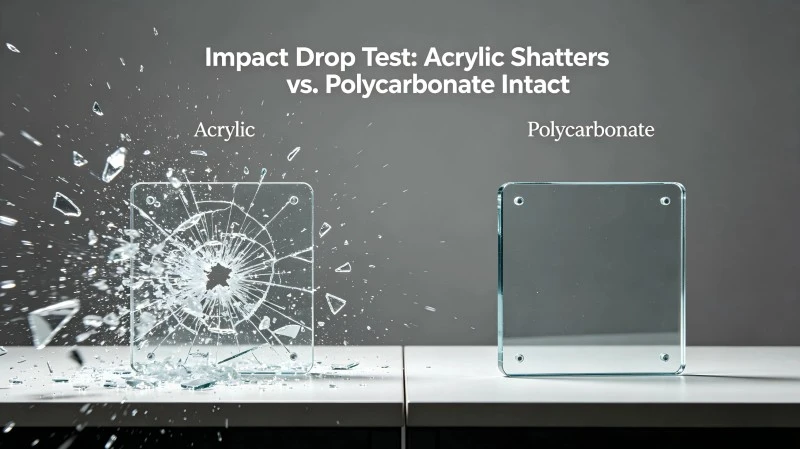
تعد مقاومة الصدمات هي الفارق الجوهري الذي يميز بين هاتين المادتين في المشاريع المتعلقة بالسلامة، ولا يمكن سد هذه الفجوة بأي طلاء سطحي أو عملية تعديل.
معايير الاختبار والبيانات الفعلية
نلتزم بمعيار اختبار الصدمة وفقًا لمعيار ASTM D256 (إيزود) من أجل إجراء مقارنة موحدة:
- ألواح البولي كربونات (PC): مقاومة الصدم وفقًا لاختبار إيزود 80–90 كيلوجول/م²
- ألواح الأكريليك المصبوب (PMMA): مقاومة الصدمات وفقًا لمقياس إيزود تتراوح بين 1.2 و2 كيلوجول/م² فقط
ترجم الأرقام إلى مواقف يومية واقعية:
- ألقِ ثقلًا معدنيًّا وزنه 3 كجم من ارتفاع 2 متر:
- لوح البولي كربونات: يوجد انبعاج طفيف فقط على السطح، ولا توجد شقوق ولا ثقوب
- لوح أكريليك: تحطم تمامًا إلى عشرات الشظايا الحادة
- اختبار مقاومة العواصف الجليدية (كرة جليدية قطرها 10 مم تسقط بسرعة رياح تبلغ 80 كم/ساعة):
- لوحة بولي كربونات (PC) مزدوجة الجوانب ومقاومة للأشعة فوق البنفسجية والعوامل الجوية: لا توجد أي أضرار على السطح على الإطلاق
- لوح أكريليك قياسي: شق يتسم باختراق كامل، وقد انكسر إلى قطع
- حوادث التصادم اليومية العرضية (عربة التسوق، الأدوات المعدنية، الاصطدام بالركاب في الأماكن العامة):
- لوحة الحماية/الواقي للكمبيوتر الشخصي: لا توجد أضرار، ويمكنها تحمل الصدمات الخفيفة المتكررة
- نافذة/حاجز عرض من الأكريليك: ضربة قوية واحدة تؤدي إلى حدوث شق عميق ودائم
قاعدة اختيار التطبيقات بناءً على الطلب المتأثر
اختر صفحة الكمبيوتر الشخصي دون أي شروط إذا كان مشروعك يستوفي أيًا من الشروط التالية:
- المرافق العامة الخارجية: مواقف الحافلات، لوحات محطات شحن السيارات الكهربائية، أسقف مواقف السيارات المغطاة
- معدات الحماية والسلامة: واقيات شفافة للآلات، وألواح دفيئة مقاومة للبرد، وحواجز عازلة لملاعب الأطفال
- الأجزاء المتعلقة بوسائل النقل: الحواجز الداخلية للقطارات، ولوحات العدادات في السيارات، وأغطية العزل للبطاريات
- أي موقع يتعرض بشكل متكرر لخطر التصادم العرضي، أو خطر التخريب، أو التعرض لحبات البرد
اختر الألواح الأكريلية فقط في الحالات التي لا يوجد فيها أي خطر للتعرض للصدمات، وفي حالات الديكور الثابت الداخلي البحت الذي لا يتعرض لملامسة أي أجسام ثقيلة: خزائن عرض المجوهرات الفاخرة، وألواح الجدران الزخرفية الداخلية، وألواح خلفية إطارات الصور، وناشرات الضوء الموضوعة داخل مراكز التسوق دون التعرض لاصطدام من قبل الزوار.
2.2 صلابة السطح ومقاومة التآكل والخدش
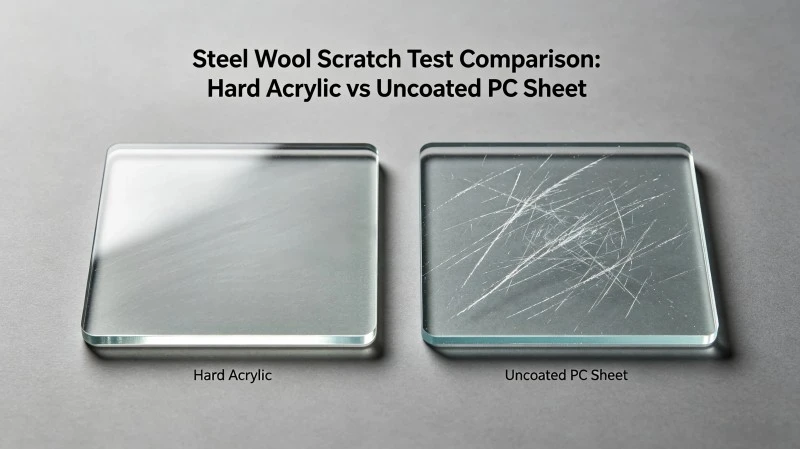
يخلط العديد من العملاء بين مقاومة الخدش في كل من البولي كربونات والأكريليك، ويكمن الفارق الرئيسي في ما إذا كانت المادة تتطلب معالجة إضافية بطبقة صلبة أم لا.
بيانات صلابة المواد الخام غير المطلية
- صفائح البولي كربونات الخام غير المعالجة: صلابة قلم الرصاص 2B, ، ناعمة للغاية. فالمسح بقطعة قماش مختلطة بحبيبات رمل دقيقة سيترك خطوط خدوش غير لامعة دائمة، وبعد أشهر من التنظيف المتكرر، تصبح اللوحة بأكملها ضبابية وتفقد شفافيتها تمامًا.
- ألواح الأكريليك المصبوبة القياسية: صلابة طبيعية بمستوى قلم الرصاص H ~ 2H. المسح اليومي بقطعة قماش من الألياف الدقيقة، والاحتكاك الخفيف بالمعادن لن يترك خدوشًا مرئية، ولا توجد مشكلة في تكوّن الضباب في ظل دورات التنظيف الداخلية المنتظمة.
مقارنة بين الإصدارات المطورة ذات الطلاء الصلب
نحن ننتج لوح بولي كربونات مطلي بطبقة صلبة مع طلاء صلب من السيليكون 3H–5H لإصلاح عيب السطح اللين في مادة البولي كربونات (PC) الخام: بعد الطلاء، تتفوق مقاومة مادة البولي كربونات (PC) للخدش على الأكريليك العادي، مما يجعلها مناسبة للمعدات العامة التي تتعرض للمس المتكرر مثل الشاشات اللمسية في محطات الشحن. يمكن أيضًا معالجة الأكريليك بطبقة صلبة إضافية، لكن الزيادة في التكلفة أعلى بكثير مقارنةً بالبولي كربونات المطلي بطبقة صلبة، كما أن هشاشة مادته الأساسية لا يمكن تحسينها عن طريق الطلاء.
الفرق العملي في الصيانة
- التنظيف الداخلي على المدى الطويل: يتفوق الأكريليك غير المطلي، فلا داعي للقلق بشأن الخدوش الطفيفة أثناء المسح اليومي؛ أما البولي كربونات غير المطلي فسوف يفقد شفافيته بسرعة بعد التنظيف المتكرر في حالة عدم وجود طبقة طلاء صلبة.
- السيناريوهات العامة التي تتطلب اللمس المتكرر (معدات الشحن المشتركة، آلات الدفع الذاتي): يُعد البولي كربونات المطلي بطبقة صلبة الخيار الوحيد الموثوق به، حيث إن الأكريليك يتشقق عند التعرض لصدمة قوية غير متوقعة حتى لو كان مقاومًا للخدش.
2.3 مقاومة الأشعة فوق البنفسجية في الهواء الطلق ومقاومة الاصفرار - العمر التشغيلي
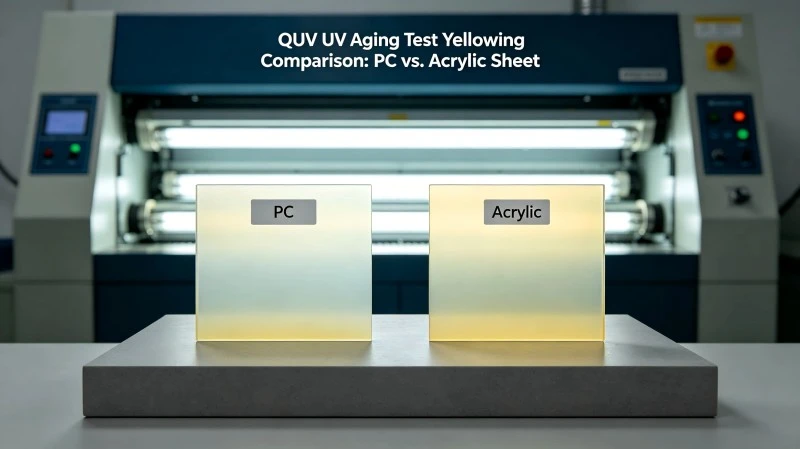
يحدد هذا القسم بشكل مباشر المواد المناسبة للمشاريع المكشوفة في الهواء الطلق، ويُعد هذا مجالًا شائعًا لارتكاب الأخطاء الجسيمة بالنسبة للعديد من المشترين الجدد.
نتيجة اختبار الشيخوخة (اختبار الشيخوخة المعجل بالأشعة فوق البنفسجية QUV، 2000 ساعة تعادل 5–8 سنوات من التعرض لأشعة الشمس الطبيعية)
- ألواح بولي كربونات (PC) محمية من الأشعة فوق البنفسجية ومصنوعة بتقنية البثق المشترك على الوجهين: مؤشر الاصفرار ΔE < 5، انخفاض طفيف في اللمعان، لا توجد هشاشة، وتحتفظ قوة الصدم بأكثر من 80% من القيمة الأصلية. يمكن أن تصل ضمانات المصنع إلى عمر خدمة في الأماكن المفتوحة يتراوح بين 10 و15 سنة.
- ألواح الأكريليك المبثوقة القياسية: مؤشر الاصفرار ΔE > 18 بعد اختبار الأشعة فوق البنفسجية لمدة 2000 ساعة، مع ظهور تغير واضح في اللون إلى الكهرماني، وتصبح المادة هشة، وتنخفض مقاومة الصدمات إلى أقل من 30%، وتكون عرضة للتشقق بسهولة تحت تأثير اهتزازات الرياح الخفيفة. ولا تدوم الألواح الأكريلية العادية في الهواء الطلق سوى 1–2 سنة قبل أن تتعرض لشيخوخة شديدة.
- لوح بولي كربونات (PC) مطلي بالأشعة فوق البنفسجية من جانب واحد: إذا تعرض الجانب غير المطلي لأشعة الشمس، يحدث اصفرار سريع في غضون 2–3 سنوات، ولا يُنصح باستخدامه في حالة التعرض الكامل للعوامل الخارجية.
- الأكريليك الملون المطلي بطبقة شفافة: يتلاشى اللون بسرعة تحت تأثير الأشعة فوق البنفسجية، حيث ينخفض تشبع اللون بأكثر من النصف خلال عام واحد عند التعرض للهواء الطلق.
تفاصيل التكيف مع تغير المناخ
- المناطق الساحلية الاستوائية (أشعة الشمس القوية + رذاذ الملح): لا تصلح سوى ألواح البولي كربونات المقاومة للأشعة فوق البنفسجية على الوجهين، أما الأكريليك فسيتحول لونه إلى الأصفر ويتشقق في غضون 12 شهراً.
- ملاجئ خارجية مناسبة للمناخ المعتدل على مدار الفصول الأربعة: مادة البولي كربونات المقاومة للأشعة فوق البنفسجية (UV PC) تحافظ على ثباتها لأكثر من 10 سنوات؛ أما الأكريليك فيصبح ضبابيًا وهشًا بعد دورتين من الصيف والشتاء.
- عرض نافذة داخلي معرض لأشعة الشمس المباشرة: إذا كنت ترغب في أن تظل اللوحة شفافة لأكثر من 5 سنوات، فاختر لوحات PC المقاومة للأشعة فوق البنفسجية من جانب واحد بدلاً من الأكريليك. فالأكريليك المعرض لأشعة الشمس من النافذة سيتحول إلى اللون الأصفر في غضون 3 سنوات.
2.4 تحمل درجات الحرارة وأداء التشوه الحراري
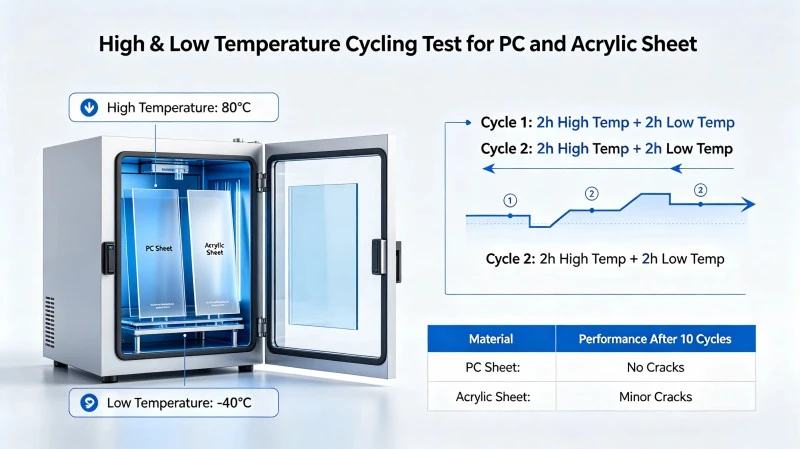
تحد درجة الحرارة القصوى المستدامة للعمل من إمكانية استخدام هذا المنتج في المعدات التي تولد الحرارة، مثل الخزانات الكهربائية، ومعدات البطاريات، وعلب الإضاءة.
بيانات مقاومة درجات الحرارة المستمرة وقصيرة الأجل
- ألواح البولي كربونات (PC): درجة حرارة الاستخدام المستقرة على المدى الطويل -40 درجة مئوية ~ +120 درجة مئوية, ، تصل درجة الحرارة القصوى الفورية قصيرة المدى إلى 135 درجة مئوية، دون حدوث تشوه دائم، ودون انخفاض حاد في أداء العزل تحت درجات الحرارة المرتفعة.
- ألواح الأكريليك (PMMA): درجة حرارة التشغيل المستمر الآمنة فقط 0 درجة مئوية ~ +70 درجة مئوية. بمجرد أن تتجاوز درجة حرارة البيئة 75 درجة مئوية، ستتشوه اللوحة وتنحني وتتعرض لتشوه حراري دائم، بل وقد تنفصل عن إطارات التثبيت. أما عند درجات حرارة أقل من -10 درجة مئوية، فتزداد هشاشة الأكريليك بشكل حاد، ويؤدي أي اصطدام طفيف إلى حدوث تشققات.
دليل اختيار درجات الحرارة في السيناريوهات النموذجية
- البيئات المحيطة بالمعدات المعرضة لحرارة عالية: حواجز العزل الخاصة بالعاكسات، والنوافذ الشفافة لصناديق إمداد الطاقة، وأغطية بطاريات السيارات الكهربائية، وقطع غيار المقصورة الداخلية للسيارات — لا تصلح سوى ألواح البولي كربونات (PC) لهذا الغرض، حيث يتشوه الأكريليك بسرعة تحت تأثير الإشعاع الحراري على المدى الطويل.
- البيئة الخارجية الشمالية الباردة ذات درجات الحرارة المنخفضة في فصل الشتاء: تحافظ ألواح البولي كربونات المقاومة للأشعة فوق البنفسجية على صلابتها عند درجة حرارة -40 درجة مئوية؛ بينما يصبح الأكريليك هشًا وعرضة للتشقق تحت تأثير درجات الحرارة المنخفضة.
- بيئة الديكور الداخلية عند درجة حرارة الغرفة (20–40℃): تعمل كلتا المادتين بشكل طبيعي، ولا يوجد خطر حدوث تشوه حراري للأكريليك.
2.5 العزل الكهربائي، ومقاومة العزل الكهربائي، ومقاومة القوس الكهربائي
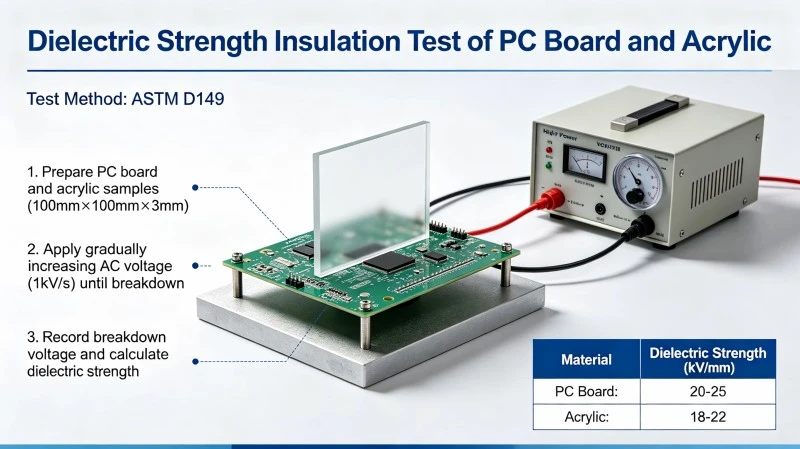
بالنسبة لمشاريع المعدات الكهربائية وبطاريات الطاقة الجديدة ومحطات الشحن ومعدات اختبار الجهد العالي، يُعد أداء العزل معيارًا أمنيًا لا يمكن التنازل عنه.
مقارنة المعلمات الكهربائية الأساسية
- المقاومة الحجمية (قدرة العزل الداخلية):
- صفائح البولي كربونات: >10¹⁶ أوم·سم، وتظل مستقرة عند مستويات تزيد عن 10¹⁵ أوم·سم حتى في ظل درجة حرارة 85 درجة مئوية وظروف الرطوبة العالية لـ 85%RH
- ألواح الأكريليك: 10¹⁴ ~ 10¹⁵ أوم·سم، تنخفض مقاومة العزل بشكل ملحوظ في البيئات الرطبة، مما يؤدي بسهولة إلى حدوث تيار تسرب سطحي
- قوة الانهيار العازل (مقاومة الجهد العالي):
- صفيحة البولي كربونات: 30–40 كيلو فولت/مم
- ألواح الأكريليك: 15–20 كيلو فولت/مم، أي نصف الحد الأقصى لمقاومة الجهد العالي لدى البولي كربونات فقط
- مقاومة القوس الكهربائي (الحماية من احتراق القوس الكهربائي):
- لوح البولي كربونات: مدة مقاومة القوس الكهربائي تبلغ 120 ثانية، وهي مدة كافية لكي يقوم قاطع الدائرة الكهربائية الآمن بقطع التيار أثناء حدوث شرارة الدائرة القصيرة
- ألواح الأكريليك: لا تتحمل القوس الكهربائي سوى لمدة 60–80 ثانية، وهي سهلة الاحتراق وتشكل مسارًا كربونيًّا موصِّلًا تحت تأثير القوس الكهربائي المستمر، مما يزيد من خطر نشوب حريق
معيار اختيار المواد الكهربائية
يجب أن تتوافق جميع أجزاء العزل الكهربائي، وألواح فصل البطاريات، والحواجز الداخلية لمحطات الشحن، وواقيات معدات اختبار الجهد العالي مع ألواح البولي كربونات المقاومة للاشتعال وفقًا لمعيار UL94 V0, ، لا يستوفي الأكريليك معايير السلامة الخاصة بالعزل الكهربائي على المدى الطويل في ظروف الجهد العالي ودرجات الحرارة المرتفعة. ولا يُسمح باستخدام الأكريليك إلا في الأغطية الزخرفية الثابتة لصناديق الإضاءة ذات الجهد المنخفض، شريطة ألا توجد أجزاء موصلة بالتيار خلف اللوحة.
2.6 أداء مقاومة اللهب والسلامة من الحرائق
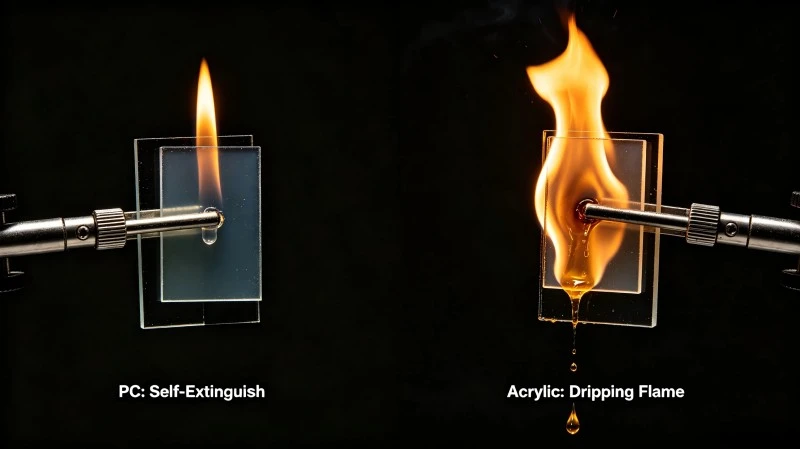
تعد السلامة من الحرائق أمرًا ضروريًا للمباني العامة، ومعدات الطاقة الحديثة، والديكورات التجارية الداخلية.
بيانات درجات اختبار اللهب
- ألواح البولي كربونات (PC): قابلة للتخصيص وفقًا لأعلى درجة مقاومة للاشتعال UL94 V0. عند اشتعالها، تنطفئ من تلقاء نفسها في غضون 10 ثوانٍ، ولا تنتج قطرات منصهرة مشتعلة تسبب انتشار الحريق، وتطلق دخانًا خفيفًا منخفض السمية، وتستوفي معيار مقاومة الحريق B1 الخاص بالبناء.
- ألواح الأكريليك القياسية: درجة قابلية الاشتعال UL94 HB، تستمر في الاحتراق بعد إزالة مصدر النار، وتنتج قطرات منصهرة متساقطة من اللهب تشعل المواد القابلة للاشتعال المحيطة بها، ويصدر دخان أسود كثيف سام أثناء الاحتراق، ولا يمكنها اجتياز اختبار مقاومة الحريق B1 الخاص بالمباني.
قسم تقييم مخاطر الحرائق في مواقع الحوادث
- المشاريع ذات مخاطر الحريق العالية: وحدات بطاريات السيارات الكهربائية، وأغلفة محطات الشحن، وخزانات التحكم الكهربائية، ومرافق الملاجئ العامة في المدارس، وألواح الإضاءة السقفية في مراكز التسوق — يجب اختيار ألواح البولي كربونات (PC) المقاومة للهب من فئة V0، ويُحظر استخدام الأكريليك في هذه الحالات.
- ديكورات داخلية ثابتة منخفضة مخاطر الحريق: خزائن مجوهرات مغلقة، وإطارات صور، وصناديق إضاءة صغيرة داخلية مزودة بعزل مستقل ضد الحريق؛ ويمكن استخدام الأكريليك مع اتخاذ تدابير الفصل الوقائية ضد الحريق.
2.7 القدرة على عمليات الثني والتشكيل الحراري والمعالجة المخصصة باستخدام الحاسب الآلي (CNC)
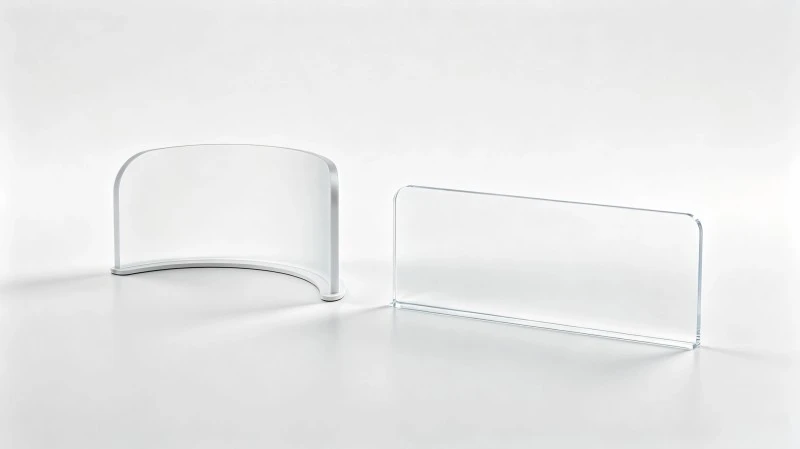
تؤثر جدوى التصنيع بشكل مباشر على صعوبة وتكلفة إنتاج قطعك المخصصة، خاصةً إذا كنت بحاجة إلى مكونات منحنية أو مقوسة أو ذات أشكال خاصة.
القدرة على الثني على البارد (أكبر فرق في المعالجة)
- ألواح البولي كربونات (PC): دعامات الانحناء على البارد في درجة حرارة الغرفة دون تسخين. طالما أن نصف قطر الانحناء ≥ 1.5 × سماكة الصفيحة، فلن تتشقق اللوحة، ولن يتقشر الطلاء في حالة البولي كربونات المطلي بطبقة صلبة بعد إجراء عملية الانحناء البارد القياسية. لدينا 5 آلات مخصصة للانحناء البارد في ورشتنا لإنتاج قطع البولي كربونات المنحنية بكميات كبيرة، مثل الأغطية الواقية المنحنية لمسدسات الشحن، وألواح المرائب المقوسة، وأغطية أجهزة القياس المنحنية.
- ألواح الأكريليك (PMMA): يُعد الثني على البارد مستحيلاً تمامًا. فأي عملية ثني تتم في درجة حرارة الغرفة ستؤدي إلى حدوث تشققات سطحية عميقة وكسور نافذة. ولا يُسمح إلا بالثني الساخن ذي نصف القطر الصغير بعد تليين الألواح في الفرن؛ ولا يمكن تحقيق أشكال قوسية كبيرة ومعقدة، كما أن دورة الإنتاج أطول ومعدل الرفض أعلى مقارنةً بعملية ثني البولي كربونات (PC).
التشكيل على الساخن والتشكيل الحراري
تتميز ألواح البولي كربونات (PC) بنطاق درجات حرارة أوسع للتشكيل الحراري، كما أنها أقل عرضة لحدوث تفاوت في السماكة بعد التشكيل، وهي مناسبة لتصنيع الأغلفة الواقية ثلاثية الأبعاد المصنوعة بالتشكيل العميق باستخدام آلتينا للتشكيل الحراري بالفراغ. أما التشكيل الحراري للأكريليك فيتطلب تحكمًا دقيقًا في درجة الحرارة، كما أنه من السهل أن تظهر فيه مناطق رقيقة وضعيفة عند الزوايا المنحنية، ويؤدي إلى ارتفاع معدل الخردة في الأجزاء ثلاثية الأبعاد المعقدة.
القطع والحفر والنقش بالليزر باستخدام تقنية التحكم الرقمي (CNC)
تدعم كلتا المادتين عمليات النقش باستخدام الحاسب الآلي (CNC) والقطع بالليزر وتثقيب الثقوب وصقل الحواف، حيث يمكن لآلاتنا الستة للتوجيه باستخدام الحاسب الآلي (CNC) وآلات القطع بالليزر الخمس معالجة كلتا المادتين الخام بدقة ضمن تفاوت يبلغ ±0.1 مم.
- ميزة الأكريليك بعد القطع: يمكن صقل الحواف بسهولة للحصول على لمعان شفاف كالمرآة من خلال عملية صقل بسيطة باللهب، وهي تُستخدم على نطاق واسع في لافتات العرض الزخرفية.
- مزايا الألواح البلاستيكية بعد القطع: لا يحدث اصفرار للحواف أثناء القطع بالليزر، وتبقى الحواف المصقولة شفافة دون أي تغير في اللون، كما تتمتع الألواح العازلة الرقيقة ذات الثقوب الصغيرة الكثيفة بمتانة أفضل.
2.8 نفاذية الضوء والوضوح البصري
إذا كان مشروعك يركز على متطلبات العرض والإضاءة والمراقبة البصرية، فإن مؤشر نفاذية الضوء يُعد مرجعاً أساسياً.
- ألواح الأكريليك المصبوب: نفاذية الضوء 92–93%, ، وهي أعلى نسبة بين جميع الألواح البلاستيكية الشفافة، مع تشتت ضوئي منخفض للغاية، وخلوها التام من أي ضبابية، مما يجعلها مثالية لخزائن عرض المنتجات الراقية وصناديق الإضاءة عالية الجودة.
- صفائح البولي كربونات الشفافة القياسية: نفاذية الضوء 88–90%, ، يوجد داخل الراتينج تشتت ضوئي طبيعي دقيق للغاية، ويتميز بتأثير اختراق الضوء الأكثر نعومة قليلاً مقارنة بالأكريليك، ولن ينتج عنه وهج حاد تحت الإضاءة الخلفية القوية.
- الأنواع ذات السطح غير اللامع/المشتت للضوء: يتوفر كل من البولي كربونات والأكريليك بدرجات غير لامعة لتشتيت الضوء، ويُعد مشتت الضوء المصنوع من الأكريليك أكثر اتساقًا في مزج الضوء بالنسبة لمصابيح السقف الداخلية؛ أما ألواح البولي كربونات المشتتة للضوء فتُعد الأفضل في صناديق الإضاءة الخارجية المعرضة للأشعة فوق البنفسجية.
2.9 مقاومة المواد الكيميائية والمذيبات
تؤدي مواد التنظيف والمطهرات والمواد الكيميائية الصناعية المختلفة إلى تآكل هاتين المادتين بدرجات متفاوتة.
أداء ألواح البولي كربونات (PC) من حيث المقاومة الكيميائية
- مقاوم لـ: الماء والصابون المحايد، والكحول، والإيزوبروبانول، والمطهرات الحمضية والقلوية الضعيفة المخففة (المطهرات الشائعة المستخدمة في المستشفيات والمحطات العامة)
- تتآكل بفعل: الأسيتون، ومذيب ثنائي كلورو الميثان القوي، والأحماض القوية المركزة / القلويات القوية — يؤدي التلامس إلى تبييض السطح، وظهور ضبابية، وظهور شقوق دقيقة (تشققات إجهادية)
يُحسّن البولي كربونات المطلي بطبقة صلبة من المقاومة للمذيبات بشكل كبير، حيث تعمل طبقة الطلاء على عزل معظم سوائل التنظيف ذات التأثير التآكلي الضعيف، ويُستخدم على نطاق واسع في معدات الشحن العامة التي تخضع للتطهير المتكرر.
أداء ألواح الأكريليك (PMMA) من حيث المقاومة الكيميائية
- مقاوم لـ: سائل التنظيف المحايد ذي الأساس المائي، والكحول منخفض التركيز
- تتسبب في تآكل المادة: الكحول عند النقع لفترات طويلة، وجميع المذيبات العضوية التي تحتوي على الكيتونات أو الإسترات، وحتى بخاخات المطهرات الشائعة التي تترك علامات ضبابية دائمة على سطح الأكريليك بعد المسح المتكرر. لا يمكن استخدام الأكريليك في البيئات الطبية التي تتطلب تعقيمًا مكثفًا.
2.10 تكلفة المواد الخام والتكاليف طويلة الأجل على مدار دورة الحياة الكاملة
يكتفي العديد من المشترين بمقارنة سعر الوحدة للصفائح الخام، ويتجاهلون تكاليف الصيانة والاستبدال بعد الإنتاج، مما يؤدي إلى ارتفاع إجمالي التكاليف على مدى سنوات الاستخدام.
سعر المواد الخام على المدى القصير (صفائح رقيقة مسطحة للاستخدام الداخلي، بدون طلاء خاص)
تتميز الألواح الأكريليكية المسطحة العادية غير المطلية بسماكة 1 مم بتكلفة أقل للمتر المربع مقارنةً بالألواح الشفافة القياسية المصنوعة من البولي كربونات؛ لذا يمكن لمشاريع الديكور الثابتة البسيطة في الأماكن المغلقة، التي لا تنطوي على أي خطر للتآكل، توفير الميزانية الأولية المخصصة للمواد من خلال اختيار الأكريليك.
حساب التكلفة الكاملة على المدى الطويل طوال دورة الحياة (مثال لمشروع عام في الهواء الطلق)
- ألواح البولي كربونات المطلية بطبقة صلبة مقاومة للأشعة فوق البنفسجية على الوجهين: تكلفة الشراء الأولية أعلى، وعمر الخدمة في الأماكن المفتوحة يتراوح بين 10 و15 عامًا، ولا تكاد تكون هناك أي نفقات للاستبدال أو الصيانة خلال 10 أعوام، مع متوسط تكلفة سنوية منخفضة.
- ألواح الأكريليك القياسية: تكلفة أولية أقل، ولكن يجب استبدالها بالكامل بعد 1–2 سنة من الاستخدام في الهواء الطلق، مما يستلزم شراءها بشكل متكرر ومستمر، كما أن تكلفة اليد العاملة اللازمة للفك وإعادة التركيب تتراكم بسرعة، ويبلغ إجمالي الإنفاق على مدى 10 سنوات ما بين 5 إلى 8 أضعاف تكلفة ألواح البولي كربونات.
الفرق في تكلفة المعالجة المجمعة المخصصة
الأجزاء المنحنية، والألواح الأمنية السميكة، والأجزاء الكهربائية المقاومة للاشتعال: تكلفة المعالجة الإجمالية للبولي كربونات (PC) أقل، ومعدل الرفض منخفض أثناء عمليات الثني والتشكيل؛ أما معالجة الأكريليك المنحني فتتميز بمعدل نفايات مرتفع، مما يؤدي إلى ارتفاع السعر الإجمالي للمنتج النهائي.
3. التصنيف الكامل لسيناريوهات الاستخدام المناسبة
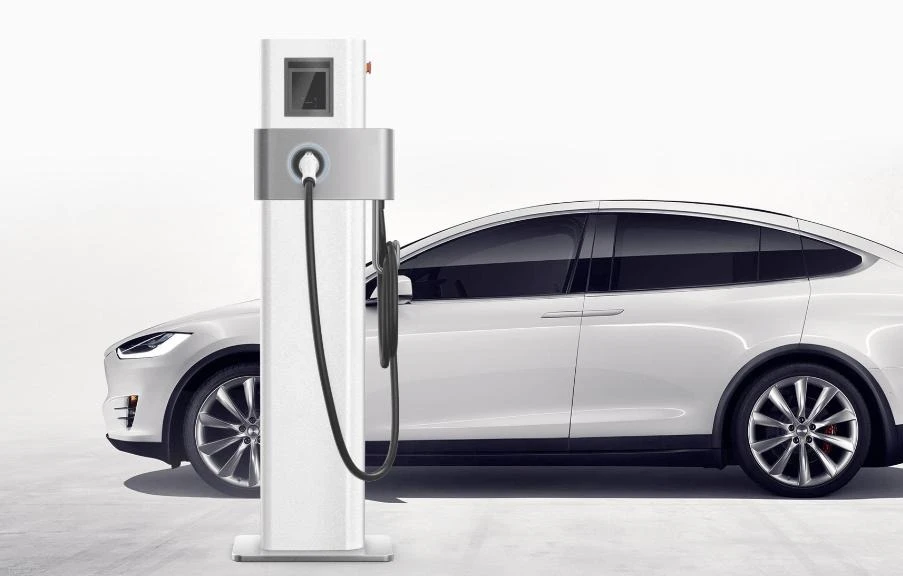
3.1 الحالات التي تُعد فيها ألواح البولي كربونات (PC) الخيار الوحيد الموصى به
- البنية التحتية العامة المكشوفة في الهواء الطلق: مظلات محطات الحافلات، الألواح الأمامية لمحطات شحن السيارات الكهربائية، أسقف مواقف السيارات المغطاة، صناديق الإعلانات المضيئة الخارجية، المناور في البيوت الزجاجية
- معدات الحماية من الصدمات: واقيات أمان شفافة لآلات التصنيع باستخدام الحاسب الآلي (CNC)، وألواح زراعية مقاومة للبرد، وحواجز عزل لمنطقة أنشطة الأطفال، وواقيات من الرذاذ لخطوط الإنتاج في المصانع
- السيارات ومعدات الطاقة التي تعمل بالطاقة الجديدة: ألواح فاصلة عازلة لبطاريات الليثيوم، عدسات أجهزة القياس في السيارات، أغطية واقية منحنية لمسدسات الشحن، حواجز عازلة لمحولات الطاقة الشمسية
- مكونات كهربائية عالية العزل ومقاومة للحريق: نوافذ أجهزة اختبار الجهد العالي، وأبواب المراقبة الشفافة للخزانات الكهربائية، وألواح عزل قنوات الأسلاك الصناعية
- المرافق الخارجية في المناطق الشمالية ذات درجات الحرارة المنخفضة، والمناطق الساحلية المعرضة لرذاذ الملح، والمعدات العامة المشتركة التي تخضع للتطهير المتكرر
- أغلفة واقية منحنية، مقوسة، ثلاثية الأبعاد، مصنوعة بتقنية السحب العميق، تتطلب تشكيلًا بالثني البارد
3.2 الحالات التي تُعد فيها ألواح الأكريليك (PMMA) الخيار الأمثل
- عرض المنتجات الثابتة الراقية في الأماكن المغلقة: خزائن عرض المجوهرات، أسطح عرض متاجر الساعات، منصات عرض مستحضرات التجميل الفاخرة، إطارات العرض المغلقة في المتاحف التي تمنع اصطدام الزوار بها
- الإضاءة الزخرفية الداخلية واللافتات: ألواح توزيع الضوء المثبتة في أسقف مراكز التسوق، وألواح الأكريليك المصقولة الزخرفية المثبتة على الجدران، ولافتات شعارات العلامات التجارية، وإطارات الصور، وحوامل عرض الهدايا التذكارية
- حواجز داخلية تعمل في درجة حرارة الغرفة دون خطر التعرض للصدمات: حواجز زخرفية للمكاتب، وحواجز دش ثابتة لحمامات الفنادق (لا يمكن أن تتعرض لصدمات قوية)
- مواد منصات العرض الداخلية قصيرة الأجل، ولوحات عرض المتاجر المؤقتة التي تتطلب دورة خدمة تتراوح بين سنة وسنتين
- ألواح توجيه الضوء ذات الجودة البصرية، وألواح صناديق الإضاءة الداخلية عالية الدقة التي تتطلب أقصى درجة من نفاذية الضوء وحواف مصقولة بشكل عاكس
3.3 سيناريوهات محايدة اختيارية باستخدام مادتين (يتم الاختيار بناءً على الميزانية ومتطلبات العمر التشغيلي)
أغطية لمعدات الآلات الداخلية لا تنطوي على أي خطر للتصادم، وألواح شفافة للأجهزة المنزلية الصغيرة المستخدمة في الأماكن المغلقة، وصناديق إضاءة داخلية مغلقة لا تتعرض لأشعة الشمس فوق البنفسجية:
- إذا كنت تبحث عن تأثير بصري فائق الوضوح، ومخاطر خدش يومية منخفضة، وتكلفة أولية منخفضة: فاختر الأكريليك
- إذا كنت ترغب في إطالة العمر التشغيلي إلى ما يزيد عن 8 سنوات، أو كنت تواجه خطر التعرض لحوادث تصادم عرضية من حين لآخر، أو كنت بحاجة إلى ترك المجال مفتوحًا لإجراء تعديلات على الشكل المنحني لاحقًا: فاختر ألواح البولي كربونات (PC) المقاومة للأشعة فوق البنفسجية
4. الأخطاء الشائعة في اختيار المواد وتحليل الخسائر
الخطأ الأول: استخدام الألواح الأكريلية في مشاريع الملاجئ الخارجية ومحطات الشحن
الخسارة: اصفرار اللون، وهشاشة المنتج وتشققه في غضون سنة إلى سنتين، مما يستلزم استبدال الدفعة بالكامل، وتكبد تكاليف ضخمة ومتكررة للشراء والتركيب، وتلقي تعليقات سلبية من العملاء بشأن جودة المنتج.
الحل: يجب أن تُصنع جميع الألواح الشفافة الهيكلية المكشوفة في الهواء الطلق من صفائح البولي كربونات (PC) المُصنَّعة بتقنية البثق المشترك المقاومة للأشعة فوق البنفسجية على الوجهين.
الخطأ الثاني: استخدام ألواح البولي كربونات الخام غير المطلية في المعدات الداخلية للخدمة الذاتية التي تتعرض للمس بشكل متكرر
الخسارة: ظهور خدوش دائمة بعد 3–6 أشهر من قيام العملاء بمسح الشاشة، وظهور ضباب على اللوحة بأكملها، وتدهور مظهر المنتج، وارتفاع معدل استبدال المنتجات بعد البيع.
الحل: تتطلب الأسطح التي تتعرض لمعدل استخدام عالٍ لوحات من البولي كربونات (PC) المطلية بطبقة صلبة من 3H إلى 5H بدلاً من البولي كربونات أو الأكريليك العاري.
الخطأ الثالث: اختيار مادة الأكريليك في صناعة البطاريات والخزائن الكهربائية وأجزاء المعدات التي تعمل في درجات حرارة عالية
العيوب: التشوه الحراري تحت تأثير حرارة التشغيل، وأداء العزل الضعيف الذي يؤدي إلى خطر نشوب حريق بسبب التسرب الكهربائي الخفي، وعدم استيفاء معايير شهادات السلامة الكهربائية الدولية.
الإصلاح: تستخدم جميع المكونات الكهربائية المولدة للحرارة ألواحًا من البولي كربونات (PC) المقاومة للاشتعال وفقًا لمعيار UL94 V0.
الخطأ الرابع: محاولة ثني ألواح الأكريليك على البارد لتوفير تكلفة المواد
الخسارة: حدوث تشققات واسعة النطاق أثناء عملية التشكيل، وارتفاع معدل الخردة مقارنةً بـ 40%، وتكلفة المعالجة التي تتجاوز بكثير الوفورات المحققة في سعر المواد الخام الأولية، وتأخر موعد التسليم.
الحل: بالنسبة لأي أجزاء منحنية، اختر ألواح البولي كربونات (PC) القابلة للثني على البارد.
الخطأ الخامس: إعطاء الأولوية لاستخدام الأكريليك الرخيص في حواجز الأمان بالمدارس العامة والملاعب
الخسارة: أدى اصطدام عرضي بين طالبين إلى تحطم لوح أكريليك إلى شظايا حادة، مما تسبب في وقوع إصابات تتعلق بالسلامة ودفع تعويضات بموجب المسؤولية القانونية.
الإجراء التصحيحي: يجب أن تُصنع جميع حواجز العزل الخاصة بالسلامة العامة من ألواح البولي كربونات المقاومة للصدمات.
5. مصنعنا خدمة تصنيع مخصصة شاملة للكمبيوتر الشخصي وألواح الأكريليك
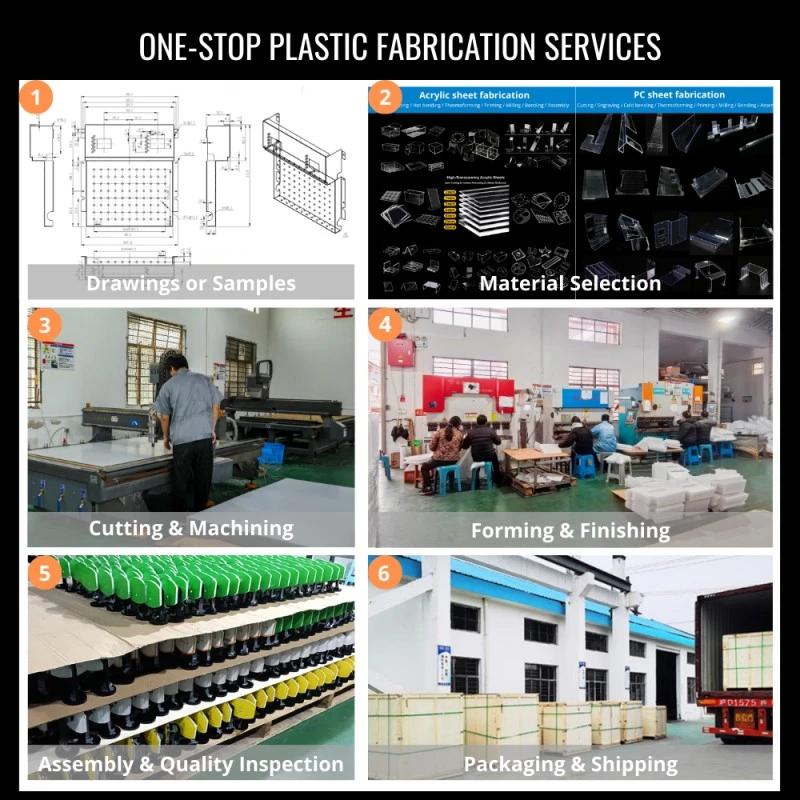
بعد الفهم التام للفجوة في الأداء بين ألواح البولي كربونات والأكريليك، تتمثل الخطوة الحاسمة التالية في العثور على مصنع موثوق به قادر على إنتاج هاتين المادتين ومعالجتهما بشكل متعمق، مزودًا بمعدات كاملة ونظام صارم لمراقبة الجودة. مصنعنا هو شركة متخصصة في تصنيع ألواح البولي كربونات والأكريليك ومعالجتها حسب الطلب، ويقدم خدماته لعملاء التجارة الخارجية في جميع أنحاء العالم، وقد تم تحديث معدات ورشة العمل بالكامل ودخلت حيز التشغيل الكامل في عام 2026.
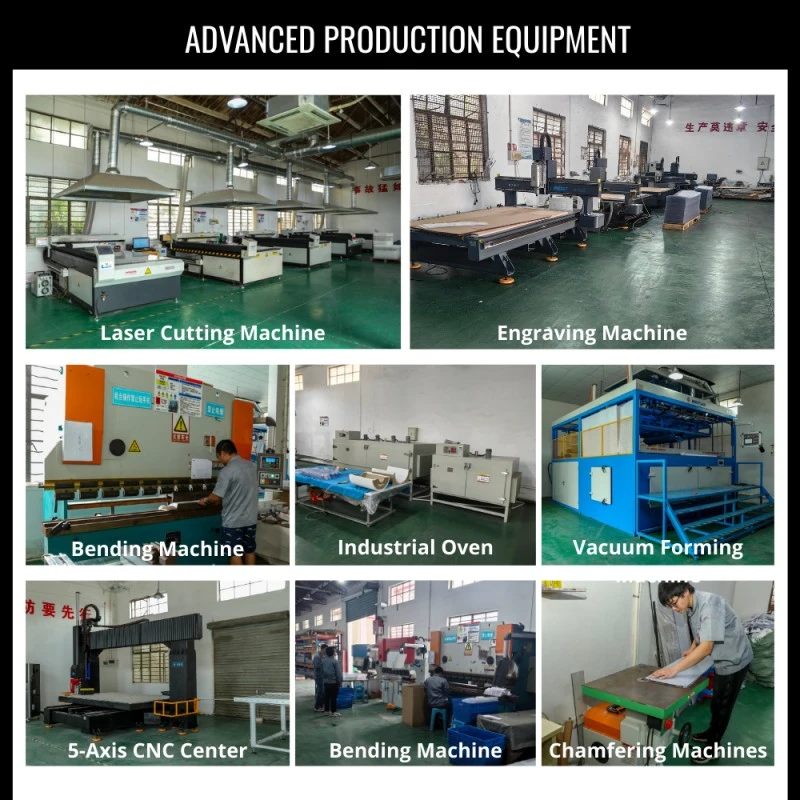
5.1 نطاق معدات الإنتاج والتجهيز الكامل
تمتلك ورشة الإنتاج لدينا مجموعات كاملة من آلات المعالجة تشمل جميع العمليات بدءًا من قص الألواح الخام وحتى تعبئة المنتج النهائي:
- 6 مجموعات من آلات النقش باستخدام الحاسب الآلي (CNC): القطع الدقيق، ونقش الأنماط، وحفر الثقوب والشقوق في مادة البولي كربونات والأكريليك، مع التحكم في تفاوتات التصنيع في حدود ±0.1 مم
- 5 مجموعات من آلات الثني على البارد: متخصصة في التشكيل على البارد في درجة حرارة الغرفة لألواح البولي كربونات بجميع السماكات، وتنتج بكميات كبيرة أغطية واقية وألواح مأوى مقوسة ومنحنية من البولي كربونات دون أن يتقشر الطلاء
- 5 مجموعات من آلات القطع بالليزر: قطع دقيق وعالي السرعة للأجزاء المعقدة ذات الأشكال الخاصة من كلا النوعين من المواد
- جهازي تشكيل حراري بالفراغ، ومركز تصنيع خماسي المحاور، و3 آلات ثني بالحرارة، و3 آلات حفر مخصصة
- مجموعة كاملة من معدات معالجة الأسطح والحواف: آلات تلميع الحواف بالمرآة، وآلات الطباعة بالشاشة الحريرية، وخطوط إنتاج الطلاء الصلب بالأشعة فوق البنفسجية، ومعدات الطلاء المضادة للوهج/المضادة للأشعة فوق البنفسجية، وآلات إزالة الحواف الخشنة
تعمل جميع الآلات بكامل طاقتها في آن واحد، ولا نستعين بأي مصانع خارجية لتنفيذ أي من إجراءات المعالجة. يتم التحكم في كل مرحلة من مراحل الإنتاج داخل ورشتنا الخاصة لضمان جودة منتجات متسقة ودورة تسليم مستقرة.
5.2 نطاق كامل من المواد الخام التي نوفرها
سلسلة ألواح البولي كربونات (PC)
- ألواح بولي كربونات صلبة شفافة قياسية، بسماكة تتراوح بين 1 مم و20 مم
- لوحة من البولي كربونات (PC) مخصصة للاستخدام الخارجي، مقاومة للعوامل الجوية والأشعة فوق البنفسجية على الوجهين (ضمان ضد الاصفرار لمدة 10–15 عامًا)
- ألواح بولي كربونات (PC) مطلية بطبقة صلبة من السيليكون بمقاومة خدش من فئة 3H~5H، مخصصة للمعدات العامة التي تتعرض للمس المتكرر
- لوح عازل من مادة البولي كربونات (PC) من الدرجة الكهربائية ومقاوم للاشتعال وفقًا لمعيار UL94 V0 / V2
- ألواح بولي كربونات ملونة، مطلية بطبقة شفافة متلألئة، شفافة مع تشتت الضوء (رمادي فاتح، دخاني، أبيض حليبي، ألوان مخصصة)
سلسلة ألواح الأكريليك (PMMA)
- ألواح أكريليك شفافة مصبوبة ذات نفاذية عالية، بسماكة تتراوح بين 1 مم و30 مم
- ألواح أكريليك مسطحة رقيقة مبثوقة مخصصة للافتات وصناديق الإضاءة
- لوحة أكريليك زخرفية ملونة، ذات مظهر متجمد وغير لامع
- أكريليك مصقول بلمعة مرآة لخزائن العرض الفاخرة
- أكريليك ناشر للضوء مضاد للوهج، مخصص لتركيبات الإضاءة السقفية الداخلية
5.3 بنود خدمة المعالجة الشاملة والمتكاملة
نقوم بإنجاز جميع الإجراءات الخاصة بالطلبات المخصصة داخل مصنعنا، ولا يتعين على العملاء سوى تزويدنا بالرسومات أو العينات أو المعايير التفصيلية للطلب ليحصلوا على قطع جاهزة تمامًا للتركيب:
- القطع الدقيق باستخدام الحاسب الآلي (CNC)، القطع بالليزر، تشكيل الأشكال الخاصة غير المنتظمة
- الثني البارد، الثني الساخن، التشكيل الحراري بالفراغ للأغلفة المنحنية ثلاثية الأبعاد
- الحفر الدقيق، وشق الأخاديد بمواصفات متعددة، وتجهيز الثقوب الغاطسة
- تلميع الحواف: تلميع شفاف كالمرآة للأكريليك، وحواف ناعمة خالية من النتوءات لأجزاء السلامة المصنوعة من البولي كربونات
- الطباعة بالشاشة الحريرية والطباعة بالوسادة: شعار العميل حسب الطلب، ونصوص تحذيرات السلامة، وأنماط تعليمات التشغيل
- طلاء سطحي مخصص: طبقة أشعة فوق بنفسجية على الوجهين، طبقة صلبة مقاومة للخدش، طبقة غير لامعة مقاومة للانعكاس، طلاء مقاوم للضباب
- تصدير عبوات قياسية مقاومة للرطوبة والصدمات، ودعم ترتيبات الشحن العالمية وفقًا لشروط FOB / CIF / DDP
5.4 مزايا التعاون مع مصنعنا
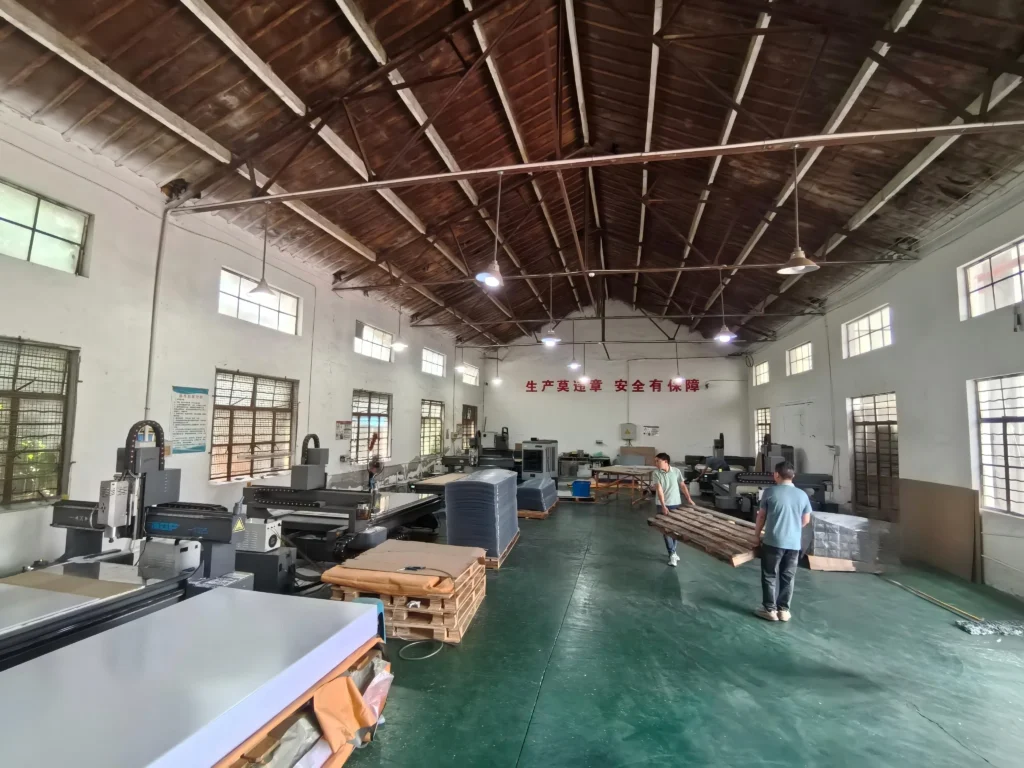
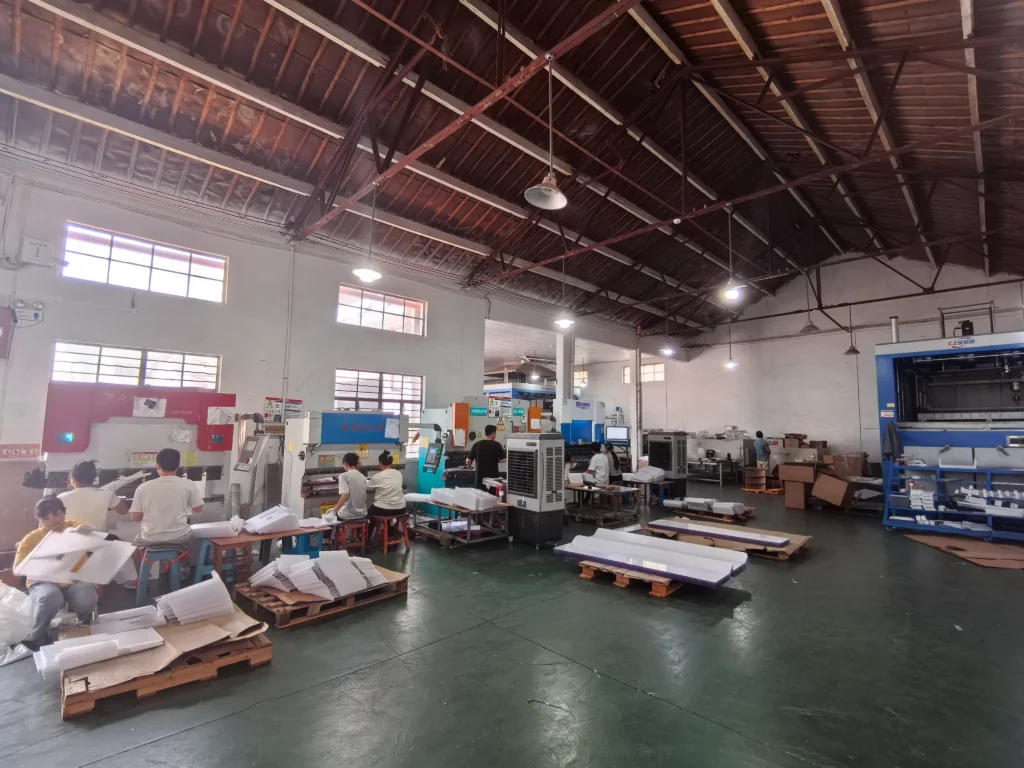
- إنتاج احترافي باستخدام مادتين: نحن نتمتع بخبرة واسعة في تقنيات معالجة كل من مادة البولي كربونات (PC) والأكريليك، ويمكننا تقديم اقتراحات محايدة بشأن اختيار المواد وفقًا لبيئة استخدام مشروعك، ومخاطر التعرض للصدمات، ودرجة الحرارة، والميزانية المخصصة، مما يساعدك على تجنب الخسائر الناجمة عن اختيار المواد غير المناسبة.
- دعم مرن لكميات الطلبات: نقبل طلبات العينات التجريبية الصغيرة (1–10 قطع)، والإنتاج التجريبي للدفعات المتوسطة، وطلبات التعاون طويلة الأجل بكميات كبيرة، مع تطبيق نفس معايير الفحص الصارمة للجودة بغض النظر عن حجم الطلب.
- تسليم سريع وموثوق: خط إنتاج مستقل بالكامل للمعدات، ودورة إنتاج العينات تستغرق من 3 إلى 5 أيام عمل، ودورة إنتاج الطلبات بالجملة تستغرق من 7 إلى 15 يوم عمل، دون أي مخاطر تأخير ناجمة عن الاستعانة بمصادر خارجية.
- خبرة واسعة في مجال التجارة الخارجية العالمية: على دراية بمعايير التعبئة والتغليف الدولية للتصدير، ووثائق التصديق الخاصة بالتخليص الجمركي، ويمكننا توفير تقارير اختبار CE وROHS وREACH وUL وISO9001 وISO/TS16949 من أجل تدقيق مشاريعكم في الخارج.
- الدعم الفني الاحترافي لما بعد البيع: يقدم فريقنا الهندسي خدمات مجانية تشمل تحسين المخططات، وتقديم توصيات بشأن سماكة المواد، وإرشادات حول نصائح التركيب، بالإضافة إلى الرد عبر الإنترنت على مدار 24 ساعة على جميع الاستفسارات الفنية والمتعلقة بعروض الأسعار.
5.5 عملية التعاون البسيطة في مجال الطلبات
- التواصل بشأن الطلب: أرسل إلينا وصفًا لظروف استخدام مشروعك، ونوع المادة المطلوبة (بولي كربونات أو أكريليك)، والحجم، والسماكة، واللون، وطريقة المعالجة، وكمية الطلب، ورسم CAD/PDF أو صورة لعينة فعلية، وسيقوم مهندس المبيعات لدينا بالرد في غضون 24 ساعة بتقديم نصائح محددة حول اختيار المواد وعرض أسعار رسمي مفصل.
- تأكيد العينات: تنظيم إنتاج العينات وفقًا للخطة المؤكدة، وإرسال العينات إلى العميل للتحقق من الأداء والمظهر، وتعديل تفاصيل المعالجة وفقًا للتعليقات الواردة حتى تحقيق الرضا التام.
- الإنتاج الضخم: توقيع عقد تعاون رسمي، ووضع جدول زمني للإنتاج، ومشاركة صور الإنتاج من ورشة العمل ومقاطع فيديو توضح التقدم المحرز بانتظام خلال عملية التصنيع.
- الفحص الشامل للمنتج النهائي: إجراء اختبار شامل للأبعاد والمظهر والأداء على المنتج 100% قبل التعبئة، للتخلص تمامًا من المنتجات المعيبة.
- التعبئة والتسليم: يتم تعبئة القطع الجاهزة في صناديق كرتونية مقاومة للصدمات والرطوبة مخصصة للتصدير، مع استخدام الرغوة، وتوفير رقم تتبع شحني، ومتابعة حالة النقل حتى وصول البضائع إلى وجهة العميل.
6. اقتراحات بشأن استخدام المواد وصيانتها على المدى الطويل
لصيانة ألواح البولي كربونات (PC)
- التنظيف اليومي: استخدم منظفًا معتدلًا ومحايدًا ممزوجًا بالماء النظيف وقطعة قماش ناعمة من الألياف الدقيقة لمسح السطح، وتجنب استخدام الإسفنج الكاشطة ومعجون الأسنان والمنظفات الكيتونية القوية مثل الأسيتون.
- لوحة PC المقاومة للأشعة فوق البنفسجية المثبتة في الهواء الطلق: قم بإجراء فحص سنوي بعد مرور عاصفة أو هطول البرد، وتحقق من وجود خدوش على السطح أو تقشر الطلاء، واستبدل الأجزاء التالفة في الوقت المناسب.
- لوحات اللمس المصنوعة من البولي كربونات ذات الطلاء الصلب: يمكن استخدام الكحول والإيزوبروبانول للمسح والتطهير بانتظام دون أن يتسبب ذلك في تآكل السطح أو ظهور ضباب عليه.
لصيانة ألواح الأكريليك (PMMA)
- لا تستخدم سوى سائل تنظيف محايد ذي أساس مائي للمسح، ويُمنع إجراء عمليات تطهير متكررة باستخدام رذاذ الكحول، حيث سيترك ذلك آثار تآكل ضبابية دائمة.
- تجنب تعرض الألواح لأي صدمات من أجسام ثقيلة أثناء النقل والتركيب، ولا تحاول ثني الألواح الأكريلية في درجة حرارة الغرفة.
- يجب تجنب تركيب ألواح الصناديق الضوئية الأكريلية الداخلية بالقرب من مصادر الحرارة، مثل مصابيح التدفئة ومخارج الهواء الساخن لمكيفات الهواء، وذلك لمنع حدوث تشوهات بسبب الانحناء الحراري.
الخاتمة
بعد قراءة هذه المقارنة الشاملة والمتعددة الأبعاد بين ألواح البولي كربونات (PC) وألواح الأكريليك (PMMA)، يمكنك التمييز بوضوح بين المزايا الأساسية والقيود التطبيقية لكل مادة:
- اختر ألواح البولي كربونات (PC) عندما يحتاج مشروعك إلى مستوى فائق من السلامة ضد الصدمات، ومقاومة طويلة الأمد للعوامل الجوية في الأماكن المفتوحة، وعزل كهربائي للجهد العالي والمتوسط، ومقاومة لدرجات الحرارة العالية، وتشكيل بالثني على البارد، ودورة خدمة طويلة مع تكلفة صيانة إجمالية منخفضة. إنها اللوحة البلاستيكية الشفافة متعددة الوظائف والشاملة، والمصممة خصيصًا لمشاريع الصناعة والطاقة الجديدة والمرافق العامة وحماية السلامة.
- اختر ألواح الأكريليك (PMMA) عندما يكون مشروعك عبارة عن ديكور ثابت داخلي بحت، أو عرض لمنتجات راقية، أو لافتات إضاءة داخلية لا تنطوي على أي خطر للتصادم، وتتطلب نفاذية ضوئية فائقة وتأثير حواف مصقولة كالمرآة، مع دورة خدمة قصيرة تتراوح بين سنة و3 سنوات وميزانية محدودة لتكلفة المواد الخام الأولية.
بغض النظر عن المادة التي يختارها مشروعك في النهاية، يمكن لمصنعنا توفير إمدادات كاملة من الألواح الخام وخدمة معالجة مخصصة متكاملة، مدعومة بمعدات ورشة العمل المحدثة بالكامل لعام 2026. نحن نخلص العملاء من عناء الاتصال بموردي المواد ومصانع المعالجة بشكل منفصل، ونقدم حلاً شاملاً من تصميم المخططات وحتى البضائع النهائية الجاهزة للتصدير.
إذا كان لديك أي تساؤلات بشأن اختيار المواد، أو متطلبات خاصة بمعالجة الرسومات، أو استفسار عن عرض أسعار للأجزاء المخصصة المصنوعة من ألواح البولي كربونات أو الأكريليك، فنرحب بإرسال رسوماتك ومتطلباتك التفصيلية إلينا في أي وقت. سيقوم فريقنا الهندسي وفريق المبيعات المحترف بالرد عليك في غضون 24 ساعة بتقديم إرشادات مجانية حول اختيار المواد وعرض أسعار تنافسي، ونحن نتطلع بصدق إلى إقامة علاقات تعاونية طويلة الأمد تعود بالفائدة على جميع الأطراف مع المشترين من جميع أنحاء العالم!