






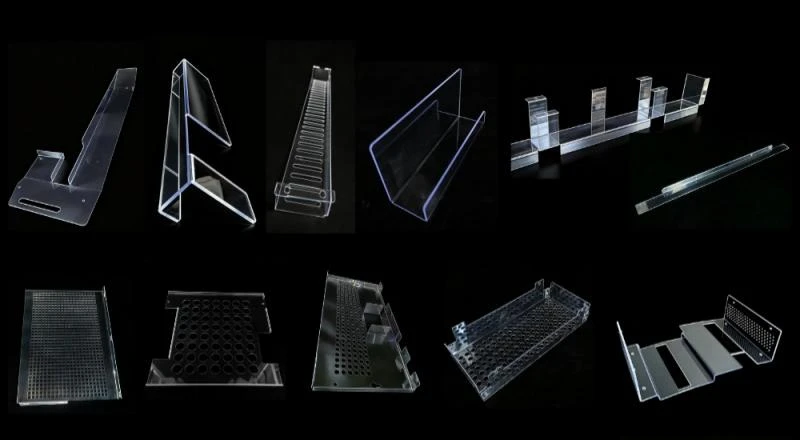
Introducción
When fabricating curved parts from polycarbonate sheets (PC solid sheets), many fabricators, project contractors and buyers choose curvado en frío. Cold bending means forming curves at room temperature without heating equipment. It can even be done on-site during installation. Cold bending offers faster processing speed, no yellowing or bubble defects caused by high-temperature heating, and lower production costs compared with hot bending.
However, countless real-world cases show that most processing failures come from polycarbonate sheet cold bending springback. Many operators get a perfect curved shape right after bending, yet once clamps are released, polycarbonate springs back and changes angle or radius. Some workpieces look fine right after production, but gradually spring back days later after delivery to construction sites, leading to dimension mismatch with metal frames, even full-batch scrap and financial losses.
This article answers three core questions: Will polycarbonate sheet spring back after cold bending? Can springback cold-bent polycarbonate parts still be used? What practical solutions fix cold bending springback? We will cover material mechanisms, root causes, usability judgment, key influencing factors, practical on-site solutions, typical mistakes, cold bending vs hot-bending comparison, real-industry case studies and a detailed FAQ section. Meanwhile, we will introduce the full set of polycarbonate sheet fabrication services offered by Sector de tableros de Yucheng, helping international clients avoid springback, stress cracking and dimensional deviation from the beginning of production.
1. What Is Polycarbonate Cold Bending & Why Springback Always Happens
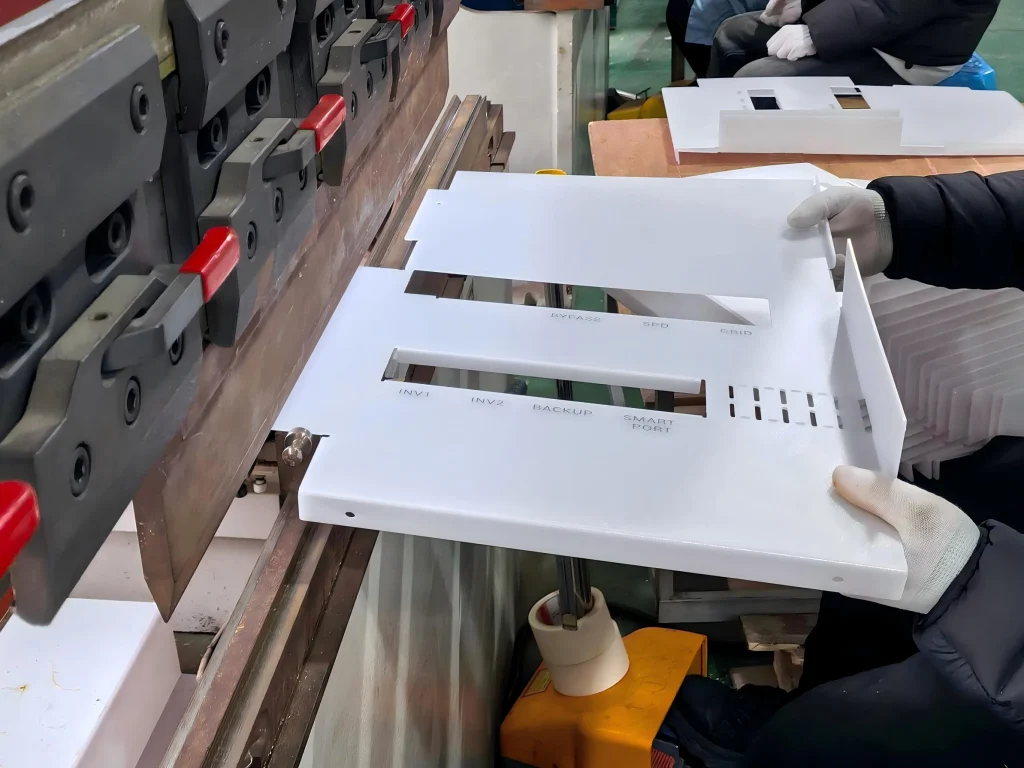
1.1 Definition of PC sheet cold bending
Polycarbonate cold bending is a forming process done at room temperature without external heating. It relies on polycarbonate’s excellent inherent toughness. Fabricators use press brake machines, custom molds or controlled external force to bend flat PC sheets into curved or angled profiles.
Important note in bold: Cold bending is NOT simply forcing sheets to bend manually. Cold bending of polycarbonate has strict limits. It is mainly suitable for thin sheets below 4mm thickness. You must follow minimum cold bending radius rules: for virgin polycarbonate sheet, minimum cold bending radius ≥ sheet thickness ×150 times. For hard-coated or UV-coated polycarbonate sheet, minimum cold bending radius should reach ≥ sheet thickness ×175 times. If you bend below this value, stress whitening and invisible micro-cracks will appear along bend lines, parts will crack in later service life.
Two typical cold bending application scenarios:
- Factory batch machining: press brake and forming molds for mass curved components.
- On-site construction cold bending: greenhouse glazing, curved canopy roofing. Workers bend flat polycarbonate panels directly on-site before installation.
One common misunderstanding: PMMA acrylic sheet cannot be cold bent. Acrylic will crack or shatter under room-temperature bending. Only polycarbonate PC sheet supports cold forming, but the springback effect is unavoidable for PC sheet as well.
1.2 Will polycarbonate sheet springback after cold bending?
✅ Clear conclusion: Every cold-bent polycarbonate sheet will generate springback force once external pressure is removed. Zero-springback cold bending does not exist for PC sheet.
Bold key point: Springback comes from the material’s “elastic memory”. It is NOT a sign of poor sheet quality or unskilled operators.
Polycarbonate belongs to the high-molecular-weight polymer. When cold bending PC sheet, two types of deformation occur at bend zones:
- Plastic deformation: permanent curved shape we want for finished parts.
- Elastic deformation: the root cause of springback. Polymer chains get stretched and compressed during bending. Once the force disappears, molecular chains tend to return to the original flat shape, this observable bounce-back effect is known as polycarbonate cold bending springback.
Why does hot bending have much less springback? During hot bending, the polycarbonate sheet is heated to a softening temperature. Polymer chains fully relax before forming. The shape is locked while cooling, elastic recovery is largely eliminated. Cold bending runs completely at ambient temperature, polymer chains stay unsoftened, and a large amount of residual internal stress remains trapped inside the material; springback cannot be avoided.
Two springback modes you will meet in real production: ① Immediate springback: Right after releasing clamps or press brake molds, angle and radius bounce back immediately, dimension goes out-of-tolerance. ② Delayed springback: The workpiece looks perfectly curved after cold bending, but it slowly springs back within hours to 2-7 days. Some installed panels keep gradually deforming under cyclic temperature change, this hidden trap causes many project complaints.
Many manufacturers only check immediate springback during sampling. They ignore delayed springback, so samples pass inspection, but bulk goods deform after delivery to end-users.
1.3 How much degree will cold–bent polycarbonate spring back?
Springback value is not a fixed constant. It varies according to sheet thickness, bending radius, material formula and ambient temperature.
- Gentle large-radius cold bending: springback angle about 2-5°.
- Sharp-angle cold line bending with small radius: springback can reach 8-15°.
- Thick sheets or a low-temperature working environment will further increase springback amplitude.
Bold reminder: Polycarbonate cold bending springback increases significantly under cold winter temperatures. Brittle risk also rises. Recommended working temperature for cold bending ≥10℃. Avoid cold bending below 0℃ on construction sites.
2. Can Springback Cold-Bent Polycarbonate Sheet Still Be Put Into Service?
This is one of the most-asked questions by global buyers: after springback happens, can we still use this cold-formed polycarbonate workpiece?
Bold core conclusion: Springback does not equal direct scrap. You need to evaluate three dimensions: springback deviation, surface damage on bend line, and end-use working conditions.
2.1 Conditions that allow re-using springback cold-bent polycarbonate parts
- After springback, the final radius or angle deviation falls within the drawing tolerance requirement.
- No stress whitening, no micro-cracks, no peeling coating along the bending zone.
- Later installation can apply frames, pressure profiles and fasteners to mechanically lock the profile and counteract the permanent internal springback force.
Typical suitable application: curved canopy glazing, greenhouse polycarbonate panels. If springback error stays acceptable, firmly clamped by a complete framing system, parts can work for long-term outdoor service.
Important technical knowledge: Even when cold-bent polycarbonate sheet is well-fixed by frames, residual stress remains inside the material permanently. The material always stores inner force trying to go back flat, all shape retention depends entirely on external mechanical constraint.
2.2 Conditions requiring scrap & re-production for springback polycarbonate workpieces
- Large springback deviation, finished dimension cannot fit mounting frame, and workers try to force-bend panels into installation position.
❌ Never force springback polycarbonate into frames! Forced assembly magnifies residual stress. Under UV exposure and temperature cycles, bend lines will crack within months. A large share of real-world polycarbonate cracking failures are caused by forced installation of springback parts.
- Stress whitening appears on the bend area: foggy milky-white haze along the bend line. Stress whitening indicates polymer chains are over-stretched; micro-voids and invisible micro-cracks have formed inside the material. Even without visible cracks right now, UV radiation will expand micro-cracks over time, these parts must be discarded regardless of springback level.
- Hard-coating or UV-resistant coating peels or fractures along the bending zone.
- Parts are safety machine guards, medical device components, rail-vehicle interior parts, and high-reliability assemblies. Cold-bent parts with high residual stress are not permitted for these safety-critical applications.
2.3 High-risk operation: drilling or milling on cold-bent springback bend zone
Bold warning: Do NOT drill holes or mill grooves on the cold-bent curved area after cold bending & springback occurs.
The bend zone carries high residual stress. Holes create stress concentration points; radial cracks will spread around holes after a period of usage. All CNC cutting, hole drilling and grooving should be finished before the cold bending operation. This lesson comes from thousands of real-world fabrication failures.
If you are not sure whether your springback polycarbonate samples can go into mass production, technical engineers from Sector de tableros de Yucheng offer a free sample evaluation service. We assess residual-stress risk and give practical advice to prevent mass-production failure after installation. With rich experience in polycarbonate sheet processing, we have witnessed numerous project rework losses caused by mishandling cold bending springback.
3. Key Factors Affecting Cold Bending Springback Amplitude of Polycarbonate Sheet
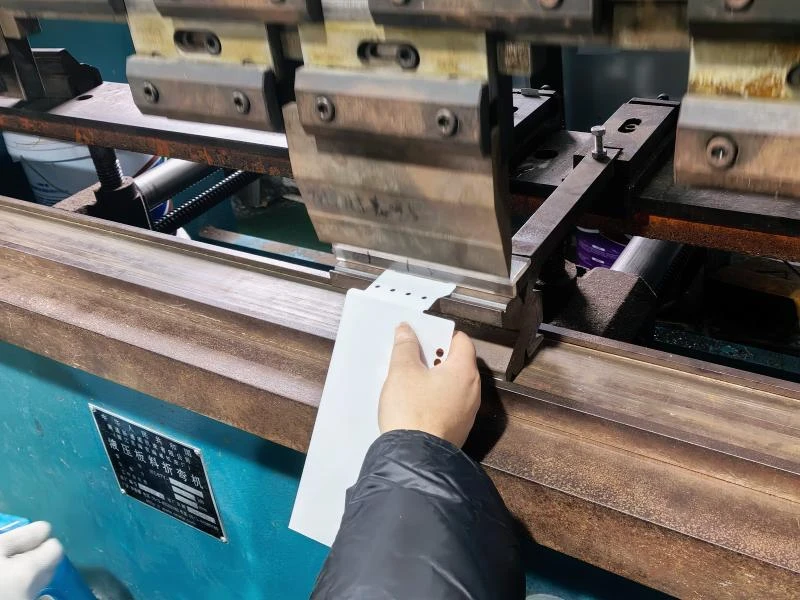
To solve springback, you need to understand what makes springback larger or smaller, and control variables before production starts.
- Sheet thickness: With an identical bending radius, a thicker polycarbonate sheet brings larger springback. Industry practical rule: sheets thicker than 4mm are not recommended for cold bending; hot bending is preferred. Thin sheets 1.5-2mm deliver much better springback controllability.
- Cold bending radius (most critical parameter): A smaller bending radius (tighter curve) means severer local deformation, a higher elastic portion and stronger springback. Gentle large-radius curves produce relatively minor springback.
Non-negotiable practical rule: minimum cold bending radius for standard solid PC sheet ≥ thickness ×150; hard-coated PC sheet ≥ thickness ×175. Going below this threshold triggers sharp springback plus hidden micro-crack risk.
- Raw material & surface coating: Virgin high-purity polycarbonate sheet maintains stable toughness. Recycled or blended polycarbonate sheets deliver unstable springback performance and tend to generate stress whitening. Hard-coated and heavy-UV-protected polycarbonate sheets show larger springback during cold forming. The coating layer has limited flexibility easy to get invisible damage during cold bending. Hot bending is strongly suggested for coated sheets.
- Ambient temperature: A low-temperature environment hardens the polycarbonate polymer, the elastic deformation ratio rises and springback increases. Cold bending performed at 25-30℃ room temperature achieves better springback control. Avoid outdoor cold bending in cold winter weather.
- Bending method: Air-free bending creates the highest springback. Bottom-press mold bending can suppress part of the springback. Manual on-site cold bending leads to uneven force distribution and inconsistent springback from panel to panel. Mass-order projects should adopt press-brake machine bending.
- Delayed springback over storage time. Do NOT measure final dimension immediately after cold bending. Polycarbonate will keep slow delayed springback after clamp release. Best practice: store cold-bent samples for 48 hours before final dimension checking. This measured dimension reflects the real stable profile. Many sampling mistakes ignore the delayed springback effect.
4. Complete Practical Solutions For Polycarbonate Cold Bending Springback
No single magic trick can fully eliminate cold bending springback. Real-world production combines multiple solutions: over-bending compensation, mechanical constraint clamping, annealing stress-relief treatment, and switching to hot bending process.
Solution 1: Over-bending Compensation (Most widely used springback countermeasure)
Working principle: Predict springback angle. Bend workpiece past target angle. When springback happens, the final shape lands exactly at your desired radius or angle. Example: Target finished angle 30°, testing shows material will springback 20°, so bend raw sheet to 50-70°; after bounce-back final angle reaches 30° as designed.
Bold practical reminders:
- Always run sample test first! Springback performance differs among different sheet batches and thicknesses. Never start bulk production purely from experience. Test on identical sheet material, keep the sample for 48 hours, and record the real springback value to set the over-bending offset parameter. Then proceed with mass manufacturing.
- Do NOT over-bend to such an extreme that the bending radius drops below the minimum allowable cold bending radius, otherwise, stress whitening and micro-cracks occur.
- Over-bending compensation can reduce but cannot eliminate delayed springback completely.
En Yucheng, for every new polycarbonate bending order, we produce a test sample first and measure real springback offset parameters before mass-production launch, preventing batch-wise dimension deviation losses.
Solution 2: Mechanical Constraint, lock springback force by structural framing
If residual stress cannot be removed after cold bending, use external frames, pressure profiles, fixtures and fasteners to provide reverse clamping force, counteract springback inner force and lock the curved shape permanently.
Practical operation tips:
- For curved glazing projects, cold-bent polycarbonate panels need a full-set pressure-bar framing system. Sparse single-point screw fixing is not acceptable.
- Drill oversized mounting holes: hole diameter larger than screw shank. Polycarbonate expands and contracts with temperature change. If screws fit holes tightly, thermal expansion together with residual springback stress will create crack propagation around holes, this is one of the most frequent field failure modes.
- Post-bending mold conditioning: fix cold-bent parts onto forming jigs for 1-3 days before releasing; partial elastic stress will be relaxed to mitigate later delayed springback.
Best-fit scenario: on-site greenhouse or canopy installation, heating equipment unavailable. Mechanical constraint becomes core solution for cold-bent polycarbonate panels.
Solution3: Annealing heat treatment for stress relief, mitigate springback & cracking risk
Annealing is a low-temperature thermal treatment process. Place cold-bent polycarbonate parts inside an oven, hold at the target temperature, and cool down slowly to release residual stress trapped from cold-forming.
After proper annealing, residual stress reduces by 70-90%, delayed springback is greatly suppressed, and long-term cracking risk drops sharply. Annealing is an essential process for high-reliability polycarbonate components.
Reference annealing parameters for polycarbonate sheet: temperature 125-135℃; holding time: 1-2 hours per 3 mm sheet thickness. Slow cooling is mandatory after annealing. Rapid cooling will generate brand–new internal stress.
Limitations for annealing process:
- Hard-coated / UV-coated polycarbonate sheets cannot receive high-temperature annealing; heat will destroy the surface functional coating.
- Annealing needs industrial oven equipment and can only be completed in a factory workshop, making it impossible for on-site construction work.
- Annealing greatly improves performance but cannot eliminate 100% of springback tendency; cold bending elastic memory still partly exists.
Sector de tableros de Yucheng is equipped with professional polycarbonate annealing ovens. For machine safety guards, rail-vehicle parts, and outdoor high-spec polycarbonate bent components, we offer full annealing stress-relief service, delivering low-residual-stress finished products and extending component service life.
Solution4: Change forming process: abandon cold bending, adopt polycarbonate hot bending
Bold key suggestion: If springback is hard to control, the sheet is thick, or parts belong to safety-critical assemblies, give up cold bending and switch to polycarbonate hot bending, this delivers the most reliable outcome.
During hot bending, the polycarbonate sheet is heated to a softening temperature before forming. Polymer chains fully relax. The shape is fixed while cooling. The residual stress level is far lower than cold bending. Springback is minimal. Hot-bending supports smaller bending radius, works well for thick sheets and coated panels, and delivers high dimensional precision.
Quick comparison table
| Items | Polycarbonate Cold Bending | Polycarbonate Hot Bending |
| Springback | Unavoidable, high residual stress | Very limited springback, low residual stress |
| Equipamiento | No heating device required, press-brake enough | Heating oven / hot-bending facility |
| Recommended thickness | Prioritize ≤5mm thin sheet | All thicknesses, especially ≥4 mm thick sheet |
| Surface coating risk | Coating easy to damage | Coating can be well protected |
| Cycle & cost | Fast cycle, lower cost | Longer lead time, higher processing cost |
| Typical products | Large-radius glazing, on-site construction parts, protective covers, separation plates | Machine guards, precision industrial components, safety-related parts, curved viewing windows |
Many clients select cold bending to cut initial cost, but later suffer heavy rework costs caused by springback and cracking. Our technical team will evaluate your drawing, service environment and budget, recommend a suitable forming process (cold or hot bending) and help you avoid costly process-selection mistakes.
Solution5: Raw-material optimization, reduce springback risk at source
- Select virgin polycarbonate solid sheet; avoid heavily recycled blended material. Recycled sheets show unstable springback behavior and a higher stress-whitening tendency.
- If cold bending is mandatory, avoid double-sided hard-coated polycarbonate sheets; choose uncoated standard PC sheet.
- Use thinner sheet grade whenever design condition permits; thinner sheets deliver easier springback control under the same curvature requirement.
5. Common Costly Mistakes In Cold Bending Polycarbonate (Factory & Construction Site)
- ❌ Skip sample test, start mass cold bending directly: springback varies across material batches; mass-order dimension failure occurs. Always test a sample and hold for 48 h before bulk run.
- ❌ Measure dimension right after cold bending and ship goods. Delayed springback happens after parts arrive at the customer site.
- ❌ Force cold bending outdoors under cold low-temperature winter conditions: severe springback plus cracking hazard.
- ❌ Force springback PC panels into mounting frames, planting hidden cracking risk for later service life.
- ❌ Drill holes or mill grooves on cold-bent curved bending zone: stress concentration leads to hole-perimeter cracking.
- ❌ Over-bend too aggressively to compensate for springback; the bending radius falls below the minimum cold bending limit, generating invisible micro-cracks.
- ❌ Cold-bend hard-coated polycarbonate sheets directly; the coating receives invisible internal damage and quickly peels under outdoor UV exposure.
6. Real-World Industry Application Cases & Springback Handling Methods
Case1: Architectural glazing, greenhouse & curved canopy polycarbonate panels
Mostly on-site cold bending with thin sheets and large, gentle radius. Recommended handling: strictly follow minimum cold bending radius rules. After on-site cold bending, install full pressure-bar framing for mechanical locking; drill oversized mounting holes. Small-radius curved parts should be hot-bent inside the factory and shipped as finished components; avoid on-site cold bending.
Case2: Industrial polycarbonate machine safety guards
Machine guards are safety-critical assemblies, cracking risk must be minimized. Our technical suggestion: sheets thicker than 5mm are not suitable for cold bending.
Hot-bending is highly preferred, preventing safety-accident risks from cracked guards.
7. Yucheng Board Industry One–Stop Polycarbonate Fabrication Services
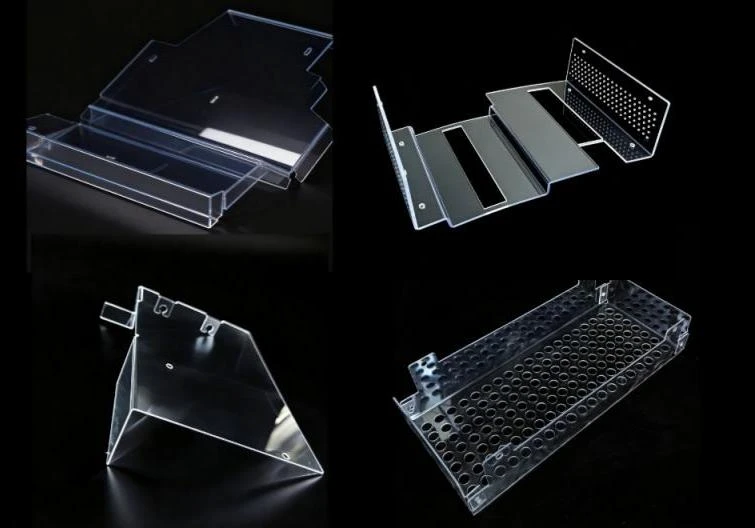
Yucheng Board Industry is an experienced manufacturer specialized in polycarbonate sheet production & custom processing. Besides supplying virgin-material PC solid sheets, we deliver full-range custom fabrication services for global clients, including polycarbonate cold bending, polycarbonate hot bending, annealing stress-relief treatment, CNC cutting, hole drilling & grooving, screen printing & UV printing, flame-retardant PC sheet customization, hard-coated polycarbonate sheet manufacturing.
Focusing on the well-known pain point of PC sheet cold bending springback:
- Pre-order technical assessment: After receiving your drawings, our engineers evaluate whether your part is suitable for cold bending. We check the minimum cold bending radius, forecast springback risk and propose an optimal process solution to prevent defects before production.
- Sample-first policy: For every bending order, we produce a test sample, measure the real springback offset, and observe delayed springback for enough time. Mass production only starts after sample approval.
- Annealing stress-relief capacity: Industrial annealing ovens are available for high-spec components, reducing residual stress and suppressing springback & cracking risks.
- Flexible process selection between cold bending and hot bending. We will truthfully inform you of potential risks if cold bending does not match your working condition, recommend hot-bending instead to avoid expensive rework losses.
- OEM & ODM support. We accept DXF, DWG, STEP, and PDF drawing files, or reverse-engineering production from physical samples. Export orders can be accompanied by a material data report and UL94 flame-retardant test documentation.
Whether you are a project contractor, machine manufacturer or international trading company, if you face springback, cracking, or dimension instability challenges in polycarbonate processing, feel free to contact our technical team. We provide free process evaluation and technical consultation services.
8. FAQ
Q1: Can we achieve zero-springback cold bending for polycarbonate sheet?
A: No. Cold bending works at room temperature. The elastic-memory property belongs to polycarbonate’s intrinsic material characteristics. We can compensate for and suppress springback but cannot eliminate it. If minimal springback is required, hot-bending forming is your best option.
Q2: Will springback keep growing for a longer time after cold bending?
A: Immediate springback takes place right after mold release. The majority of delayed springback completes within 48 hours. Further deformation slows down afterwards, but residual stress remains locked inside the material.
Q3: Can I re-bend springback cold-bent polycarbonate parts to correct radius?
A: Re-bending at the same bend location is not advised. Repeated bending accumulates heavy residual stress; stress whitening and micro-cracks easily appear. If the dimension is wrong, manufacture a new part with a fresh raw sheet.
Q4: After annealing treatment, will cold-bent polycarbonate parts never spring back or deform again?
A: Annealing largely lowers residual stress and improves delayed springback performance, but cannot remove all elastic memory. Proper mechanical mounting structure is still necessary in final installation.
Q5: Can hard–coated polycarbonate sheet be cold–bent?
A: Cold bending for hard-coated PC sheet should be avoided. The coating layer has low flexibility; invisible inner coating damage will occur during cold bending, leading to fast peeling and aging outdoors. If a curved shape is required, hot bending is preferred with a sufficiently large bending radius.
Learn more:
- Medical Isolation Polycarbonate (PC) Barrier: Application in Epidemic Prevention Scenarios
- Acrylic Laser Cutting: Process Features & Processing Advantages
- Acrylic Screen Printing, Engraving & UV Printing: Surface Finishing Process Guide
- Acrylic Weather Resistance & UV Protection: How to Keep Acrylic Sheet from Yellowing Outdoors
- Custom Fabrication of Polycarbonate Insulation Cover for Electrical Enclosures: A Complete Guide to Material Selection, Performance, Processing, Quality Inspection & Customization