

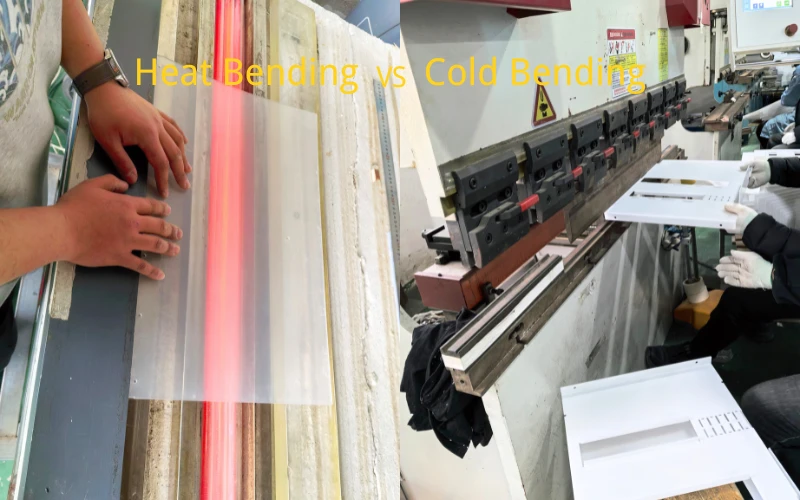
Ao fabricar peças de plástico personalizadas - acrílico, policarbonato (PC), PETG, ABS ou outros termoplásticos - oflexão é um processo fundamental para criar ângulos, curvas, caixas, protecções e ecrãs. Dois métodos principais dominam: curvatura a frio e dobragem por calor. A escolha do equipamento correto tem um impacto direto no custo, no tempo de execução, na qualidade das peças e na durabilidade.
Neste artigo, vamos comparar curvatura a frio vs curvatura a quente de plástico, ajudando-o a escolher o melhor método para o seu projeto.
Também partilhamos como Plástico Yoochen’Os serviços de dobragem de precisão da empresa fornecem soluções personalizadas para o seu projeto.
O que é a curvatura a frio?
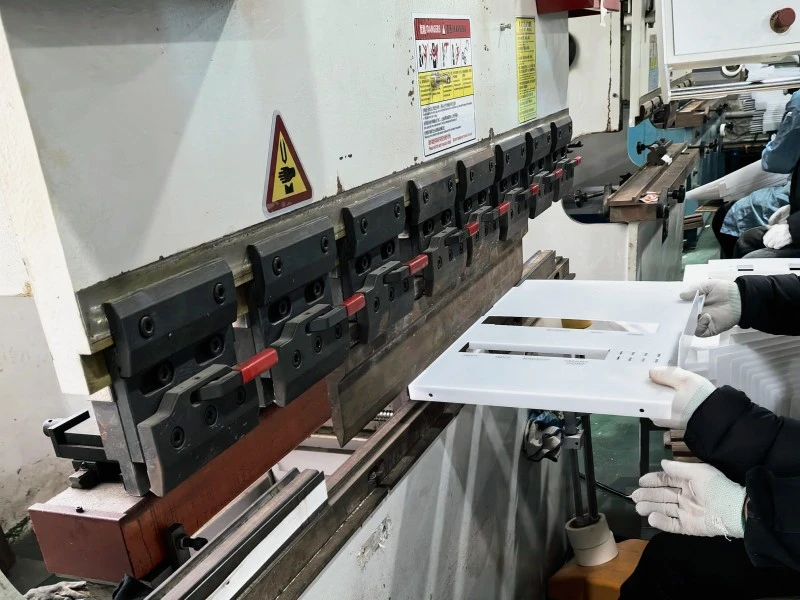
Dobragem a frio é um processo de moldagem à temperatura ambiente que utiliza a força mecânica (prensa dobradeira, gabarito manual ou máquina de dobragem) para dobrar folhas de plástico em formanão necessita de aquecimento. Baseia-se na ductilidade inerente do plástico para se deformar plasticamente e manter a curvatura.
Como funciona
- Fixar a folha de plástico (tipicamente fina, ≤4mm) numa máquina de dobrar.
- Aplicar uma pressão mecânica controlada para criar o ângulo pretendido (90°, 120°, etc.).
- A curvatura é definida imediatamente; não é necessário qualquer tempo de arrefecimento.
Principais vantagens
- Ultrarrápido: Sem aquecimento/arrefecimento - as peças ficam prontas em minutos.
- Baixo custo: Sem equipamento de aquecimento, energia ou mão de obra para o controlo térmico.
- Preserva as propriedades do material: Sem descoloração, deformação ou perda de resistência induzidas pelo calor.
- Bordos limpos: Curvas nítidas e precisas, sem defeitos de superfície.
Limitações
- Restrição da espessura: Ideal para chapas ≤4mm (materiais mais espessos correm o risco de fissuras/fracturas de tensão).
- Limites de ângulo: Dificuldade em obter raios apertados ou curvas complexas; tendência para o retorno elástico.
- Material limitado: Funciona melhor para plásticos dúcteis (PC, PETG, ABS fino); não é ideal para acrílico frágil.
O que é o plástico de dobragem por calor?
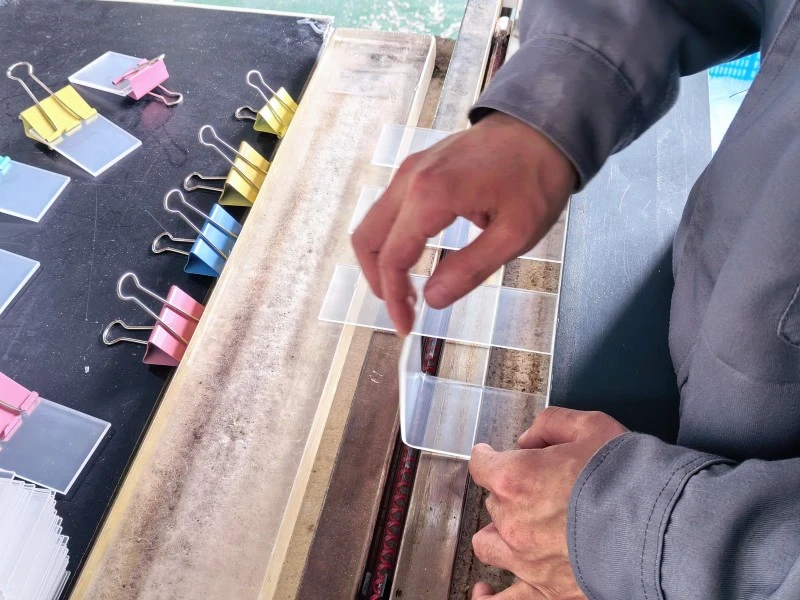
Dobragem por calor (também designada por dobragem de linhas ou dobragem térmica) utiliza calor controlado para amolecer uma tira estreita de plástico, tornando-a maleável para a dobragem. Após a dobragem, o plástico arrefece e endurece, mantendo permanentemente a forma.
Como funciona
- Aquecer a linha de dobragem alvo (fio quente, tira de aquecimento ou pistola de calor) a 100-180°C (dependendo do material).
- Uma vez amolecida, dobrar a folha no ângulo/raio desejado utilizando um gabarito ou uma prensa.
- Manter no lugar até arrefecer completamente para fixar a forma.
Principais vantagens
- Potencial de forma ilimitado: Ângulos agudos, raios apertados, grandes curvas e peças complexas com várias curvas.
- Compatível com material espesso: Funciona para acrílico, PC, ABS até 20 mm de espessura.
- Stress mínimo: O calor alivia a tensão interna, reduzindo a fissuração e o retorno da mola.
- Ajuste largo do material: Ideal para acrílico (PMMA), PC, PETG, ABS, poliestireno e plásticos de engenharia.
Limitações
- Tempo de ciclo mais longo: O aquecimento + arrefecimento acrescenta 10-30 minutos por peça.
- Custo mais elevado: Requer equipamento de aquecimento especializado e operação especializada.
- Risco superficial menor: Um controlo deficiente da temperatura pode provocar uma ligeira descoloração ou turvação.
Dobragem a frio vs. Dobragem a quente: Principais diferenças
| Fator | Dobragem a frio | Dobragem por calor |
| Temperatura | Temperatura ambiente | 100-180°C (específico do material) |
| Gama de espessuras | ≤4mm (ótimo) | 1-20mm+ (todas as espessuras) |
| Tipo de dobra | Ângulos simples (de preferência 90°) | Ângulos agudos, raios apertados, curvas, curvas complexas |
| Tempo de ciclo | 1-5 minutos por peça | 10-30 minutos por peça |
| Custo por peça | Mais baixo (sem custo de aquecimento) | Mais elevado (equipamento + energia) |
| Ajuste do material | PC, PETG, ABS fino; pobre para acrílico | Acrílico, PC, PETG, ABS, todos os termoplásticos |
| Stress e fissuras | Risco mais elevado (materiais espessos/frágeis) | Baixo risco (o calor alivia o stress) |
| Qualidade da superfície | Perfeito (sem marcas de calor) | Excelente (risco menor com fraco controlo) |
| Melhor para | Chapas finas, produção rápida, ângulos simples | Chapas espessas, formas complexas, peças em acrílico |
| Aplicações | Protecções de máquinas e escudos de segurança em PC fino Painéis de instrumentos e caixas electrónicas (≤4mm) Protótipos de torneamento rápido e peças simples em pequenos lotes Prateleiras de exposição e coberturas de proteção em PETG Escudos de proteção | Expositores acrílicos para venda a retalho, suportes para sinais, suportes curvos e caixas Protecções industriais e caixas personalizadas em PC espesso ✅ Invólucros multi-ângulo complexos e componentes para dispositivos médicos Peças plásticas curvas de grande raio e envidraçamento arquitetónico Fabrico de acrílico/PC para uso retalhista, médico e industrial |
| Material plástico | Dobragem a frio | Dobragem por calor | Notas |
| Acrílico (PMMA) | Não recomendado (frágil, racha facilmente) | Excelente (utilização mais comum) | Ideal para expositores, protecções, caixas |
| Policarbonato (PC) | Excelente (dúctil, chapas finas) | Excelente (chapas grossas, curvas complexas) | Resistente a impactos; utilizado para protecções de máquinas |
| PETG | Muito bom | ✅ Excelente | Transparente, durável; peças médicas/de exposição |
| ABS | Bom (fino) | Excelente (espesso) | Peças estruturais, caixas |
| PEAD/PP | Fraco (demasiado flexível) | ✅ Bom | Tanques industriais, tampas |
Quando escolher a curvatura a frio
Escolha a dobragem a frio se:
- São necessárias formas curvas simples
- É necessário um processamento rápido
- O material é flexível (como o policarbonato)
Quando escolher a dobragem por calor
Escolha a dobragem por calor se:
- Precisa de ângulos precisos
- São necessárias formas complexas
- A aparência de alta qualidade é importante
Yoochen Plastic: O seu parceiro de confiança na dobragem de plásticos
Somos especializados em serviços de precisão de curvatura a frio e de curvatura a quente para uma gama completa de termoplásticos - acrílico, PC, PETG, ABS e muito mais. O nosso equipamento avançado e os nossos técnicos especializados garantem tolerâncias apertadas (±0,1 mm), acabamentos limpos e uma qualidade consistente em todos os projectos.
As nossas capacidades de dobragem
- Dobragem a frio: Rápido e económico.
- Dobragem por calor: Curvatura de linha de precisão para acrílico/PC até 20 mm.
- Soluções personalizadas: Orientação na seleção de materiais, otimização da conceção e fabrico completo (corte, dobragem, colagem, montagem).
- Rápida rotação: Peças dobradas a frio em 1-3 dias; peças dobradas a quente em 3-7 dias.
Quer necessite de protecções finas e rápidas dobradas a frio ou de expositores acrílicos espessos e complexos dobrados a quente, fornecemos soluções personalizadas que correspondem ao seu orçamento, prazo e requisitos de qualidade. Contacte-nos hoje para discutir o seu projeto de dobragem de plástico e obter um orçamento gratuito.
Conclusão
A dobragem a frio e a dobragem a quente são ambos processos essenciais de fabrico de plásticos - cada um com pontos fortes únicos. Dobragem a frio destaca-se pela rapidez, baixo custo, dobras simples de chapas finas para materiais dúcteis como PC e PETG. Dobragem por calor é a solução ideal para materiais espessos, formas complexas e peças em acrílico, oferecendo uma flexibilidade de design e uma durabilidade inigualáveis.
Ao fazer corresponder o seu material, espessura, complexidade de dobragem e cronograma ao processo correto, pode otimizar o custo, a qualidade e o prazo de entrega. Para obter serviços profissionais e fiáveis de dobragem de plásticos, faça uma parceria com Plástico Yoochen-a sua fonte única para o fabrico de plásticos por medida.
Contacte-nos hoje para um orçamento gratuito!