





As the 5th day of the 5th lunar month arrives (June 17, 2026, in the Gregorian calendar), China celebrates the Dragon Boat Festival—one of its four major traditional festivals and a UNESCO-listed Intangible Cultural Heritage of Humanity. Beyond the iconic dragon boat races and fragrant zongzi (glutinous rice dumplings), this year’s celebrations highlight how a 2,500-year-old tradition is bridging cultures, engaging youth, and thriving in the modern world.
Roots of the Festival: Legends and Ancient Wisdom
The Dragon Boat Festival, also known as Duanwu Festival, carries layered cultural meanings shaped by history and folklore. The most widely cherished legend honors Qu Yuan (340–278 BCE), a patriotic poet of the Warring States period who drowned himself in the Miluo River after his homeland fell to invaders. To commemorate him, locals rowed boats to search for his body and threw zongzi into the water to deter fish from harming it—a practice that evolved into today’s core customs.
Yet the festival’s origins stretch further back to ancient rituals of warding off evil and promoting health. The 5th lunar month marks the start of summer, a season of high humidity, mosquitoes, and disease in traditional China. People hung mugwort and calamus outside doors (believed to repel insects and negative energy), wore sachets filled with aromatic herbs, and bathed in water boiled with orchids—practices rooted in pre-Qin dynasty health wisdom that science now confirms have mosquito-repellent and antibacterial properties. Other historical tales link the festival to honoring Wu Zixu, a loyal minister of the Wu state, and Cao E, a filial daughter who sacrificed herself to retrieve her father’s body from a river, reflecting the festival’s role as a carrier of Confucian values like loyalty and filial piety.
2026 Celebrations: Tradition Meets Innovation
Across China, this year’s Dragon Boat Festival blends time-honored rituals with creative twists, drawing millions of participants and tourists. According to China’s Ministry of Culture and Tourism, the 2024 holiday (a recent benchmark) saw 110 million domestic trips and 40.35 billion yuan ($5.5 billion) in tourism spending, with similar momentum expected in 2026 as cities roll out immersive cultural events.
Dragon Boat Races: Unity in Motion
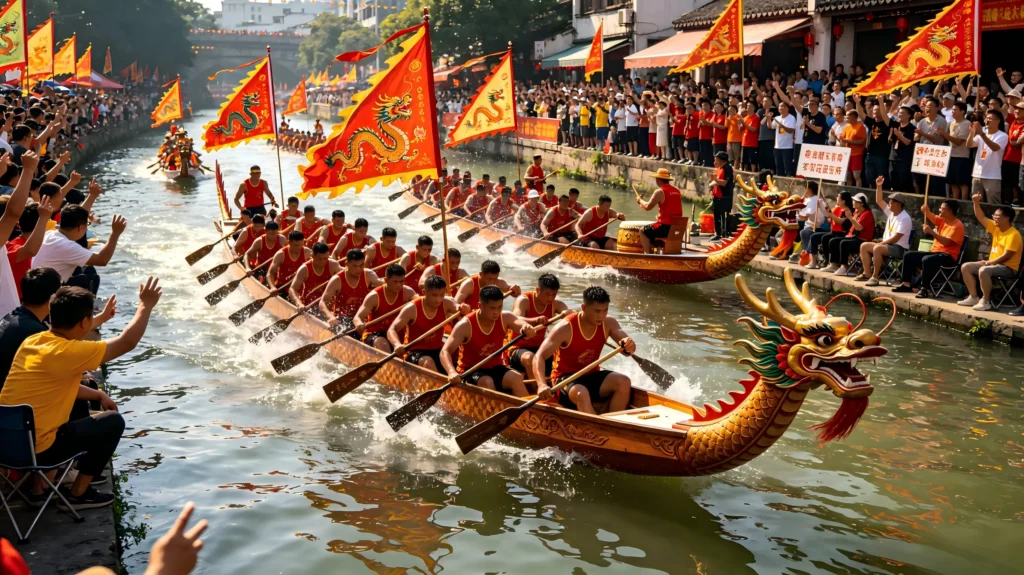
Dragon boat races remain the festival’s centerpiece, with events held in rivers, lakes, and even urban waterways nationwide. In Yichang, Hubei Province—Qu Yuan’s hometown—teams from across China competed in 22-meter-long dragon boats, their synchronized paddling echoing to thunderous drumbeats. Guangdong’s Dongguan, renowned for its competitive racing culture, hosted an international invitational with teams from Singapore, Malaysia, and Australia joining local squads.
A standout moment came in Yuhang District, Hangzhou, where an 8-to-15-year-old youth dragon boat team made their debut, symbolizing the tradition’s intergenerational inheritance. “We trained for a whole year to honor our roots,” said 12-year-old team member Li Ming. “Rowing with my friends makes me proud of our culture.” The event also featured diverse teams of expats, entrepreneurs, and emergency workers, turning the race into a symbol of community cohesion.
Zongzi: A Taste of Regional and Modern Flavors
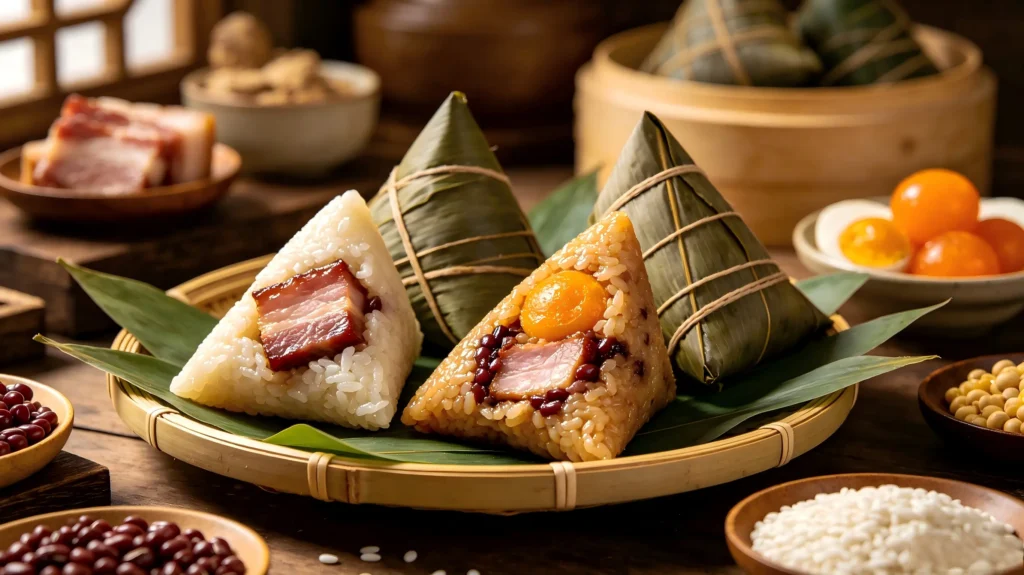
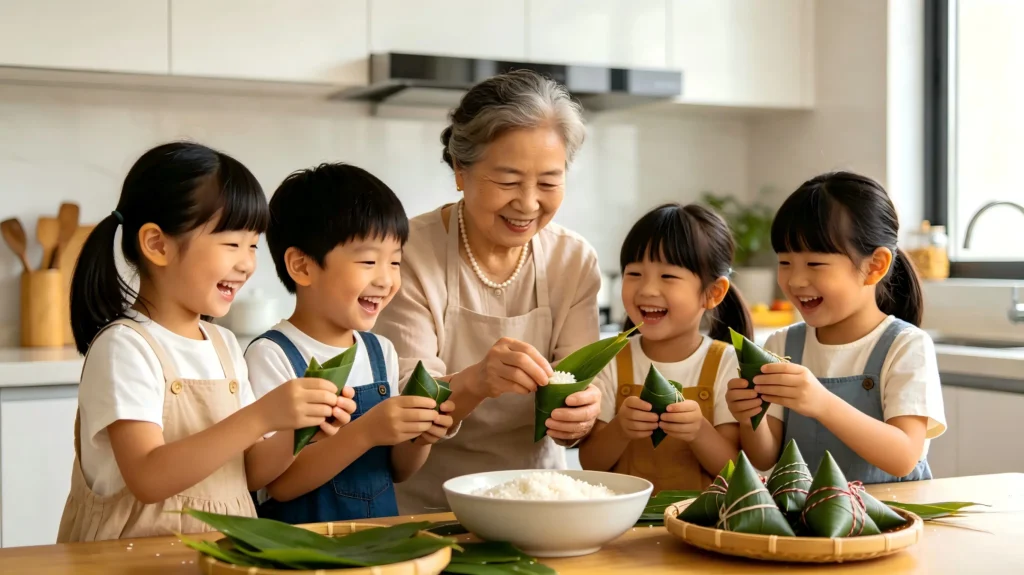
Zongzi, the festival’s signature food, showcases China’s culinary diversity. Northerners prefer sweet zongzi stuffed with red bean paste or jujubes, while southerners savor savory versions filled with pork, salted egg yolks, or ham. In 2026, innovative flavors like matcha, mango, and whole-grain zongzi have gained popularity among younger consumers, while traditional recipes are preserved in family kitchens and local markets. “Making zongzi with my grandma is our annual tradition,” said Shanghai resident Wang Yu. “It’s not just about the food—it’s how we pass down stories and love.”
Immersive Cultural Experiences
Beyond food and racing, cities offered rich cultural activities:
- In Xi’an, visitors learned to make herbal sachets and watched folk performances of “driving away five poisons” (a ritual to ward off misfortune).
- Shanghai’s “Duanwu Cultural Festival” featured museum exhibitions on ancient zongzi-making tools, calligraphy displays of Qu Yuan’s poems, and outdoor concerts blending traditional music with modern genres.
- In Guizhou, ethnic Miao and Dong communities incorporated dragon boat races into their own festivals, adding singing, dancing, and handcraft markets to the celebrations.
Going Global: Dragon Boats as Cultural Ambassadors
This year, the Dragon Boat Festival’s reach extended far beyond China’s borders, cementing its status as a global cultural bridge. In Florence, Italy, a delegation from Yuhang’s Wuchang town participated in the “2026 China Dragon Boat Performance,” racing on the Arno River against backdrops of Renaissance architecture. “The cheers from Italian spectators showed how sports and culture can connect people,” said delegation leader Zhang Wei. “Dragon boating is no longer just a Chinese tradition—it’s a universal language of teamwork.”
In Germany, as part of the 40th anniversary of friendship between Zhejiang Province and Schleswig-Holstein, German delegates visited Wuchang to experience dragon boat rituals, including the traditional “eye-dotting” ceremony (painting a dot on the dragon’s eyes to “awaken” it) and tasting zongzi. “This is more than a festival—it’s a way to understand Chinese values of unity and respect for tradition,” said a German visitor, Thomas Schmidt.
Dragon boat races now take place in over 80 countries, from the United States to Brazil, with international competitions like the “Qu Yuan Cup” attracting athletes worldwide. Meanwhile, zongzi has found its way into global supermarkets, and cultural institutions host workshops teaching foreigners to make sachets and fold zongzi, fostering cross-cultural understanding.
Preserving the Future: Youth and Digital Innovation
To ensure the tradition thrives for another 2,500 years, communities are embracing youth engagement and digital innovation. In Wuchang, a collaboration between local government and tech companies launched a dragon boat-themed mobile game, allowing players to “race” virtually, learn about festival history, and unlock cultural facts. The game has been downloaded over 500,000 times, mostly by young users.
Schools across China now include Dragon Boat Festival activities in their curricula, teaching students to recite Qu Yuan’s poetry, make zongzi, and understand the festival’s ecological and cultural significance. “When kids learn why we hang mugwort or race dragon boats, they don’t just follow a tradition—they carry its spirit forward,” said a primary school teacher in Beijing.
Conclusion: A Festival of Heritage and Harmony
As the 2026 Dragon Boat Festival draws to a close, its celebrations reflect China’s ability to honor the past while embracing the future. From the thunderous races on Chinese rivers to the gentle folding of zongzi in global kitchens, the festival unites people through shared values of unity, respect, and hope for prosperity.
“The Dragon Boat Festival is more than just a day of celebration,” said a cultural expert from China’s National Library. “It’s a living heritage that connects generations, bridges cultures, and reminds us of the wisdom in living in harmony with nature.” As dragon boats continue to sail across rivers and cultures, this ancient festival shows no sign of slowing down—proving that tradition, when nurtured with creativity and openness, can thrive in a rapidly changing world.
Indústria de Painéis de Yucheng wishes everyone a peaceful and healthy Dragon Boat Festival.