






1. Introduction: Why High–Toughness Chapas de policarbonato Are Widely Adopted Across Industries
In industrial manufacturing, equipment production, architectural glazing and new-energy equipment manufacturing, polycarbonate sheet (PC sheet) is a well-known engineering plastic sheet material.
Equipment-housing manufacturers hope panels survive occasional knocks without cracking. Builders for outdoor canopies worry about hail damage. Safety-guard manufacturers need sheets that withstand physical impact. Rail-transport and medical-device clients have strict safety requirements for sheet toughness.
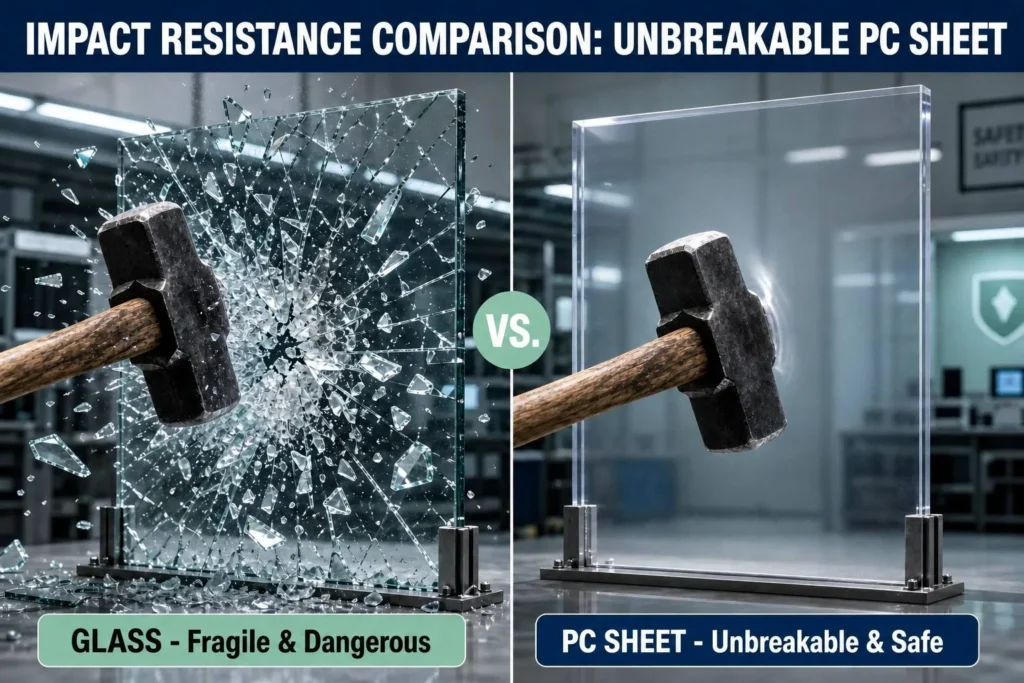
Ordinary float glass and folhas de acrílico (PMMA) often fail to meet these requirements. Glass has high surface hardness yet nearly zero toughness; once impacted, it shatters into sharp, dangerous fragments. Acrylic offers great transparency and ease of processing at a reasonable price, but it is brittle. Heavy blows or low-temperature conditions will trigger sudden cracks.
That makes chapa de policarbonato stand out. When struck by heavy objects, the sheet deforms and dents instead of shattering into pieces. This earns it the reputation of “hard-to-break transparent sheet”.
However, our team at Yucheng Board Industry has encountered countless real-world cases. Two products both named chapa de policarbonato may behave completely differently: one survives heavy knocks, while another cracks after light tapping. Many buyers only compare price and transparency, ignoring critical polycarbonate sheet toughness characteristics. After fabrication or site installation, unexpected cracking leads to material waste, project delays and hidden safety risks. Losses far exceed the small savings on purchasing cost.
To make good use of policarbonato sheets, do not blindly trust marketing slogans like “impact-unbreakable”. You need to understand: Where does polycarbonate sheet toughness show? Why are polycarbonate sheets impact-resistant and hard to break? Which conditions destroy the native excellent toughness of PC sheets? How to avoid risks during material selection and processing?
This article uses plain language without complex chemical formulas. It serves sheet purchasers, design engineers and fabricators to help you select and apply chapa de policarbonato properly.
2. What Is Polycarbonate Sheet? A Simple Explanation of “Toughness” for PC Sheets
Polycarbonate sheet, short for PC sheet, is extruded or calendered from polycarbonate polymer pellets. Common types include solid polycarbonate sheet, matte PC sheet, flame-retardant PC sheet, e UV-protected outdoor PC sheet.
Two concepts are frequently confused: hardness vs toughness.
Hardness: How resistant a surface is against scratching.
Toughness: The ability of a material to deform under impact, compression or bending without immediate fracture. Impact energy gets absorbed through deformation.
For a simple analogy: ceramic bowls have high hardness yet very low toughness; they shatter when dropped. Rubber strips have low hardness yet extremely high toughness; they bend and stretch without breaking.
Polycarbonate sheet sits in–between: medium surface hardness with outstanding toughness. It cannot be folded freely like rubber, yet under sudden impact it deforms rather than shatters like glass or acrylic. That is the most intuitive performance of polycarbonate sheet toughness.
Important misconception correction: Good toughness of PC sheet does not mean unlimited repeated folding. Under forced cyclic bending, polycarbonate sheet will crack and break. Its strength focuses on sudden, instantaneous impact: heavy-object strike, hail hit and accidental collision, without producing sharp flying fragments.
3. Key Polycarbonate Sheet Toughness Characteristics
We list core polycarbonate sheet toughness characteristics, which distinguish PC sheets from other transparent plastic materials:
✅ ① Superior impact resistance: Deforms first instead of shattering under blow
This is the most critical polycarbonate sheet toughness characteristic. When heavy objects hit the PC sheet surface, the material dents and absorbs impact energy rather than cracking instantly. Under equal-thickness comparison, the impact strength of virgin polycarbonate sheet is over 200 times higher than ordinary glass, roughly 30 times higher than acrylic sheet. It resists hail, stone impact and accidental equipment collision in most scenarios.
✅ ② Maintain decent toughness even under low-temperature conditions
Many plastic sheets turn brittle in cold winter weather. High-quality virgin-material chapa de policarbonato retains good toughness under sub-zero temperatures and will not easily shatter. This explains wide adoption for outdoor installations and northern-region projects. Toughness slightly drops as temperature falls, yet it still vastly outperforms acrylic and glass.
✅ ③ Rarely produces sharp flying fragments even when the ultimate breaking point is reached
Broken glass creates numerous sharp shards, causing cutting injury hazards. Cracked acrylic also forms hard, sharp fragments. Even when polycarbonate sheet finally fractures under excessive force, it mostly forms crack openings instead of scattered sharp flying debris, bringing a higher safety level. This is why safety guards and viewing windows widely adopt PC sheet.
✅ ④ Tolerate moderate bending deformation & anti-vibration capability
Under equipment vibration or mild squeezing force, chapa de policarbonato generates elastic deformation and can partially recover after force removal. That makes PC sheet suitable for vibrating-machine guards and rail-transport components to avoid vibration-induced cracking. Please note: cold bending beyond the limit will trigger spring-back stress whitening, which we discussed in our previous article.
✅ ⑤ Toughness heavily depends on raw-material quality: Huge gap between virgin material and recycled material
This is a realistic industry fact. Products marketed as “polycarbonate sheet” vary wildly. Virgin-pellet-produced sheet delivers full toughness. Sheets mixed with a large proportion of recycled regrind look visually similar in transparency, yet toughness drops drastically. They may crack easily even at room temperature, not to mention low-temperature or impact-loading environments.
✅ ⑥ Modification can add flame-retardant, UV-resistant or matte properties at the cost of partial toughness loss
For example, flame-retardant PC sheet adds flame-retardant additives to achieve UL94 rating. Compared with standard virgin PC sheet, a certain amount of toughness will be sacrificed. Outdoor UV-coated PC sheet keeps substrate toughness intact with only a surface protective layer added. Modification expands material functions, while some formulas trade off native polycarbonate sheet toughness.
✅ ⑦ Internal stress & invisible micro-cracks will nullify excellent native toughness
Even premium virgin-material chapa de policarbonato will lose performance if poor drilling, cutting, or hot-bending leaves heavy residual stress and invisible micro-cracks. Under subsequent impact load, cracks spread quickly and cause fracture. Many real-world PC-sheet-failure cases stem from processing damage instead of poor raw-material quality.
4. Core Reasons Why Polycarbonate Sheets Are Impact–Resistant & Hard to Shatter
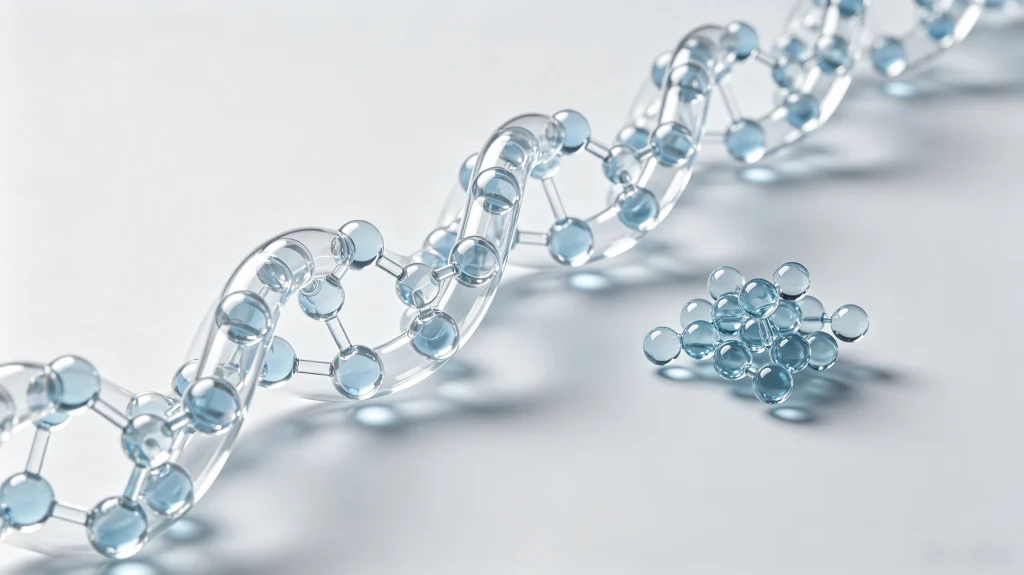
We avoid complex polymer-chemistry jargon and explain in simple terms what makes polycarbonate sheet impact–resistant.
Polycarbonate consists of long polymer molecular chains. Imagine countless long, partially elastic molecular strands tangled and intertwined tightly together to build the whole chapa de policarbonato.
1)Long entangled molecular chains disperse and absorb impact energy
When heavy objects strike the polycarbonate sheet surface, the impact force is not concentrated on one tiny hit spot. Tangled long polymer chains get slightly stretched, shifted and extended. Impact energy disperses across a wider sheet area and gets dissipated by material deformation, instead of concentrating force to split the sheet apart.
Compare with acrylic and glass: Glass is an inorganic material without a stretchable molecular-chain structure; stress concentration triggers instant shattering upon impact. Acrylic has shorter molecular chains with weak entanglement, limited capacity to absorb impact energy, and fractures under moderate external force.
2) Strong intermolecular entanglement prevents immediate complete rupture
Molecular chains inside the polycarbonate sheet interlock tightly with strong intermolecular bonding. Under impact, the material deforms preferentially before massive molecular-chain rupture happens. Only when impact exceeds ultimate load will large-scale chain breakage bring sheet fracture.
3)Amorphous polymer structure reserves deformation space for toughness
Polycarbonate belongs to amorphous polymers without highly ordered tight molecular arrangement. This structure leaves room for molecular-chain stretching and shifting. Highly crystalline plastics have molecules locked rigidly, hardly deform and tend to be brittle under impact. This grants chapa de policarbonato its inborn toughness advantage.
4)Thicker sheets offer more buffer capacity
With identical raw-material grade, thicker chapa de policarbonato contains more polymer substance to share impact force and further lift impact resistance. Thin PC sheet still retains material-level toughness yet tolerates lower impact magnitude.
Critical reminder: All above advantages rely on 100% virgin polycarbonate pellets. Recycled polycarbonate material undergoes repeated high-temperature melting. Long polymer chains break into short fragments. Short chains lose stretch and impact-absorbing capacity. This explains cheap recycled PC sheets that look acceptable yet crack easily upon impact.
Additionally, incompatible chemical solvents penetrate the sheet surface, damage intermolecular bonding, create silver-like crazing cracks and completely ruin polycarbonate sheet toughness.
5. Toughness & Impact–Resistance Comparison: PC Sheet vs Acrylic vs Glass vs PETG Sheet
For intuitive understanding of polycarbonate sheet toughness characteristics, we compare mainstream transparent sheets with a reference thickness of 3 mm.
| Sheet Type | Toughness & Impact–Resistance | Post–break Feature | Main Drawbacks |
| Virgin Polycarbonate Sheet | ⭐⭐⭐⭐⭐ Best toughness, excellent impact resistance, stable performance under low temperatures | Rare sharp flying fragments when broken | Prone to surface scratching; modified grades sacrifice partial toughness |
| Acrylic Sheet PMMA | ⭐ Very brittle, easy to crack under impact or cold temperatures | Generates numerous sharp fragments | High transparency, easy fabrication, low cost yet poor impact performance |
| Vidro temperado | ⭐⭐ High hardness, zero deformability; breaks under sharp-point blow | Granular fragments, cannot be bent | Heavy weight, no bending capacity |
| PETG Sheet | ⭐⭐⭐ Better toughness than acrylic, inferior to PC sheet | Lower crack risk than acrylic, higher risk than PC sheet | Lower heat-resistance limit, prone to outdoor aging |
The comparison table clearly shows: For high-impact-resistance and high-toughness requirements, chapa de policarbonato delivers top performance. This does not mean every project must adopt PC sheet. If no collision risk exists and low-cost, high transparency is a priority, acrylic or PETG remain viable options.
Many customers reach Yucheng Board Industry confused between PC sheet, PETG and acrylic. Our technical team recommends material according to working-environment conditions: operating temperature, outdoor exposure risk, impact possibility, processing requirement and budget. We never push overpriced material blindly.
6. Factors That Reduce Polycarbonate Sheet Toughness & Impact Performance
A widespread misunderstanding: Once you buy chapa de policarbonato, it will never crack. Numerous real-world PC-sheet-cracking failures do not stem from bad raw-material quality, but from external conditions destroying native polycarbonate sheet toughness. Below, we analyze each factor based on real-project cases encountered by Yucheng Board Industry.
6.1 How Sheet Thickness Influences Impact Resistance
With the same raw-material quality, a thicker polycarbonate sheet bears higher impact load. A 1 mm-thin PC sheet still keeps material-level toughness, yet the limited material volume disperses impact; a heavy blow will penetrate it. 8-10 mm solid polycarbonate sheet serves as a safety viewing window against heavy physical strikes.
During material selection, do not pursue ultra-thin sheet for cost savings. Evaluate real-world impact risk. Use thicker grades for protective baffles facing frequent hard-object collision.
6.2 Temperature Impact on PC Sheet Toughness
Temperature is an easily ignored variable.
- Room temperature 20-25℃: Virgin-material chapa de policarbonato achieves optimal polycarbonate sheet toughness.
- Low-temperature environment: Material gradually hardens as the temperature falls; toughness mildly decreases. Still vastly superior to acrylic. Virgin PC sheet works under cold northern outdoor winter conditions down to minus tens Celsius. Recycled low-grade PC turns brittle in cold weather and cracks upon a light knock.
- High-temperature environment: Approaching the heat-deflection temperature, the sheet softens with increased deformation risk. Brittle fracture rarely happens, yet a permanent dent or collapse may occur.
Real-world case: Client purchased cheap recycled PC sheet. In a cold northern winter outdoor installation, cracks appeared without physical impact, purely driven by thermal expansion-contraction due to lost low-temperature toughness.
6.3 Low–Grade Recycled PC Material: Similar Appearance, Poor Toughness
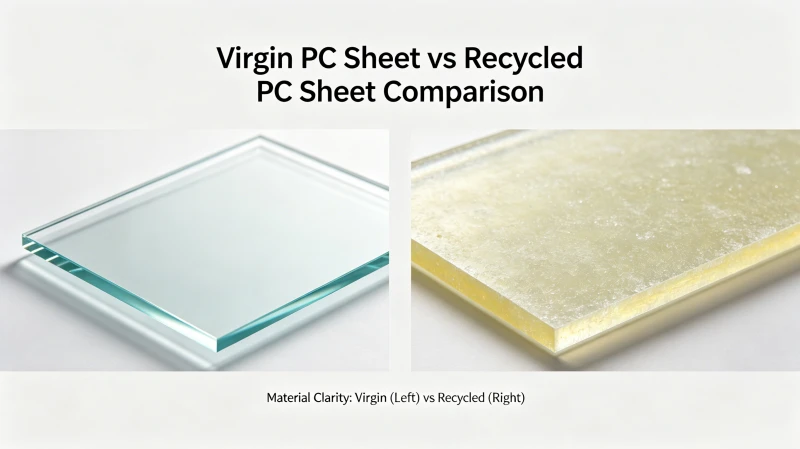
This is the biggest industry pitfall. Recycled PC is remelted from waste PC sheets and production off-cuts. Every high-temperature reprocessing shortens long polycarbonate molecular chains. Shortened chains eliminate core polycarbonate sheet toughness characteristics.
Recycled sheets can achieve acceptable transparency so defects are invisible to the naked eye. In practical application: silver crazing occurs under light tapping; brittle at low temperatures; fractures under moderate impact. Many buyers chase low prices and receive recycled stock, suffering far greater loss later.
Yucheng Board Industry’s chapa de policarbonato adopts 100% virgin pellets from reputable domestic & overseas suppliers, with no recycled blending to guarantee native toughness. Material-spec documents are available upon request.
6.4 Hidden Micro–Cracks Caused by Improper Fabrication
Even premium virgin-material chapa de policarbonato loses toughness with wrong processing. Dull drill bits or improper drilling speed create invisible micro-cracks around holes. Blunt cutting tools bring edge chipping. Improper hot-bending builds massive residual internal stress.
Those micro-cracks and residual stress are invisible to the naked eye, acting like hidden wounds inside the sheet. Under subsequent impact or temperature swing, cracks propagate rapidly and break the sheet.
Many factories purchase high-quality PC sheets yet get impact-test failure caused by processing damage. We provide one-stop custom fabrication service for chapa de policarbonato: CNC cutting, drilling, grooving, chamfering, hot forming. Our well-proven processing workflow minimizes residual stress and micro-cracks to preserve original sheet toughness.
6.5 Chemical Solvent Damage to Internal Polycarbonate Structure
Polycarbonate sheet is sensitive to certain organic solvents. High-concentration alcohol, acetone, certain glue types and paint thinners contacting the PC sheet surface penetrate the subsurface polymer structure, break intermolecular bonding and generate massive silver crazing. The sheet appears intact visually, yet toughness is destroyed; fracture happens easily under light impact.
Numerous cases occur when fabricators pick random adhesive for assembly. Solvent-induced internal damage causes delayed spontaneous cracking after production. Always run a small-sample compatibility test for glue and cleaning agents before mass application on polycarbonate sheet.
6.6 UV Aging Reduces Outdoor PC Sheet Toughness
Non-UV-protected bare chapa de policarbonato under long-term sunlight exposure suffers UV-triggered molecular-chain breakage. The sheet turns yellow and gradually loses toughness and becomes brittle.
For outdoor applications, a co-extruded double-sided UV-protected polycarbonate solid sheet is mandatory. UV-resistant layer blocks ultraviolet radiation, protects the substrate and maintains polycarbonate sheet toughness, delaying aging-induced brittleness. Bare sheet used outdoors turns brittle within a few years and fails under hail strike.
7. Main Application Scenarios for High–Toughness Chapas de policarbonato
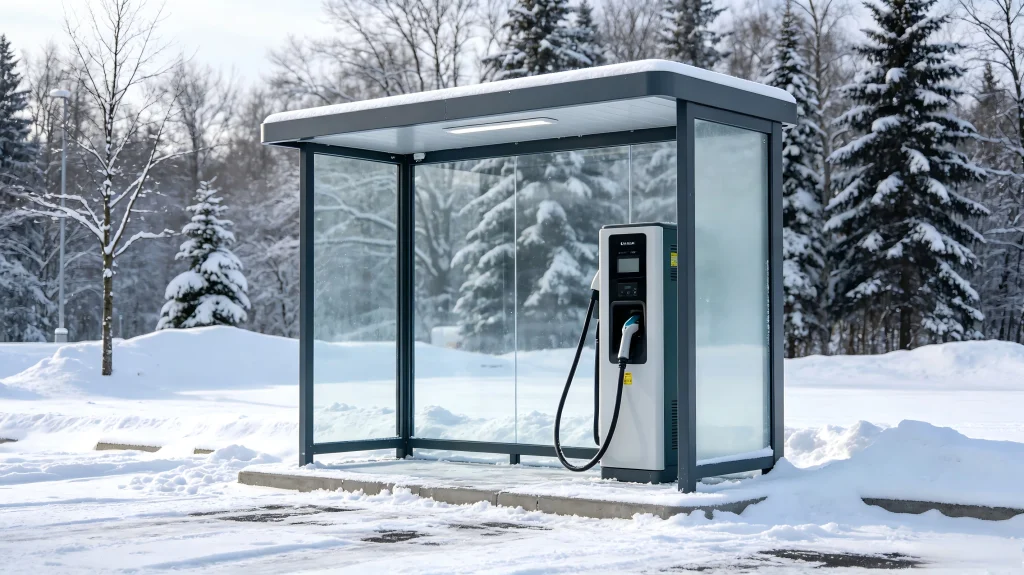
Benefiting from outstanding polycarbonate sheet toughness characteristics and impact resistance, PC sheets are widely adopted in industries requiring safety and anti-collision performance.
7.1 Safety Protection: Machine Guards & View Windows
Machine protective shields, instrument observation windows, safety isolation baffles. Operators observe equipment running while being protected from flying debris. Brittle glass or acrylic creates safety hazards; impact-resistant chapa de policarbonato avoids sharp fragment injury for site personnel.
7.2 New–Energy Industry: Charging Station Panels & Energy–Storage Equipment Covers
Outdoor EV-charging-station faceplates and energy-storage-cabinet viewing panels are exposed to open air year-round: sun exposure, frost, hail and stone splashes. Outdoor-grade chapa de policarbonato with stable toughness handles complex field environments. Yucheng Board Industry supplies custom-processed PC-sheet components for multiple new-energy enterprises.
7.3 Rail–Transport Equipment: Partitions, Guards & Component Housings
Interior partition panels, equipment guards and partial window accessories for rail-transit vehicles. Continuous vibration and occasional impact plus cold-winter conditions forbid brittle sheet material. High-toughness chapa de policarbonato resists vibration-triggered cracking and satisfies safety requirements for rail-transit parts.
7.4 Medical–Device Equipment: Protective Covers & Observation Windows
Viewing-window protective covers for medical devices with occasional collision risk plus strict material-safety requirements. Virgin-material chapa de policarbonato balances transparency and toughness, supports precise CNC machining for medical-equipment housing components.
7.5 Architectural Glazing: Canopies, Skylight Panels & Rain–Shelter Roofs
Car-park canopies, balcony shelters and daylighting roof systems face hail-damage risk. Ordinary glass shatters under hail impact. Polycarbonate solid sheet (multiwall sheet) absorbs hail-strike energy via material deformation without easy fracture, becoming a popular glazing solution. Note UV-protected grade must be selected for outdoor building usage.
7.6 Industrial Equipment, Enclosures & Machine Shields
Industrial chassis and automation-equipment protective covers face frequent on-site object knocks. Using chapa de policarbonato lowers replacement frequency caused by housing fracture.
8. Common Misconception: High Polycarbonate Sheet Toughness Does Not Mean “Unbreakable”
Marketing materials sometimes claim PC sheet is “unbreakable”, which is exaggerated. Polycarbonate sheet delivers excellent toughness yet has performance limits; fracture occurs when load exceeds material capacity. We clarify frequent misunderstandings:
8.1 PC Sheets Resist Blunt–Impact, But Vulnerable to Sharp Point Penetration
Polycarbonate sheet performs well against blunt-surface heavy-object strikes such as hail and stone impact. Sharp-pointed objects like nails or sharp corners concentrate force onto a tiny spot and may pierce or crack PC sheet. It is not material defect, but a different force-loading pattern. Avoid sharp-object direct impact in product design.
8.2 Repeated Bending Causes Material Fatigue & Fracture
Good toughness of PC sheet allows temporary one–time deformation, not cyclic repeated folding. Repeated back-and-forth bending triggers material fatigue. Even moderate force eventually creates cracks after multiple cycles. Do not design structures requiring cyclic folding for polycarbonate sheet.
8.3 Stress Concentration Triggers Cracks Under Impact
Hole openings and sharp cut corners are natural stress-concentration zones. Under identical impact force, flat intact surface survives while sharp-corner hole positions crack first. Apply radius fillets for hole corners in structural design to reduce stress concentration and make full use of polycarbonate sheet toughness.
8.4 Toughness Trade–Off for Flame–Retardant Modified Polycarbonate Sheets
Many projects require both impact resistance and flame retardancy. Flame-retardant additives enable UL94 rating yet bring a certain toughness reduction compared with standard virgin PC sheet. This is an expected performance trade-off from modification instead of defective material. During material-selection communication, Yucheng Board Industry explains the balance between flame-retardant level and toughness, helping clients reconcile fire-safety requirements and impact-resistance demands.
9. Practical Tips to Preserve Original Polycarbonate Sheet Toughness & Prevent Premature Cracking
Even after purchasing premium virgin-material chapa de policarbonato, improper storage, fabrication or installation will waste native material performance. The practical advice below originates from abundant hands-on experience of Yucheng Board Industry.
9.1 Cutting & Drilling: Minimize Internal Residual Stress
Use PC-sheet-special drill bits and keep tools sharp. Control drilling feed rate. Apply fillet radius to hole corners. Use sharp cutting blades to avoid edge squeezing or burning, which produce micro-cracks. If your workshop lacks proper equipment, outsource fabrication work to Yucheng Board Industry to avoid processing-caused damage.
9.2 How Hot–Bending & Cold–Bending Affect PC Sheet Toughness
Hot-bending: Uniform heating under proper temperature and slow-cooling annealing basically preserves sheet toughness. Overheating damages polymer molecular structure and reduces toughness.
Cold-bending: Cold bending introduces internal stress and partially downgrades local impact resistance; cracks easily initiate at the bent position under blow. If impact risk exists for finished parts, hot-bending plus annealing process is highly recommended.
9.3 Installation: Reserve Thermal–Expansion Gap to Avoid Stress Tearing
Polycarbonate sheet expands and contracts with temperature variation. Do not over-tighten fixing screws. Reserve expansion clearance. Fully locked fixation restricts thermal movement and builds heavy internal stress. Spontaneous cracking occurs even without external impact, wasting native polycarbonate sheet toughness.
9.5 Protective–Film Removal & Chemical–Cleaning Precautions
Under high-temperature conditions, adhesive from protective film may transfer onto PC-sheet surface and become extremely difficult to clean. Remove protective film right after fabrication is finished. Do not wipe chapa de policarbonato with unknown-composition cleaning agents. Certain cleaners contain solvents that cause crazing and destroy polycarbonate sheet toughness. Always run small-area compatibility test before full-surface cleaning work.
10. How To Identify High–Quality Virgin–Material Folha de policarbonato, Avoid Recycled Low–Grade Stock
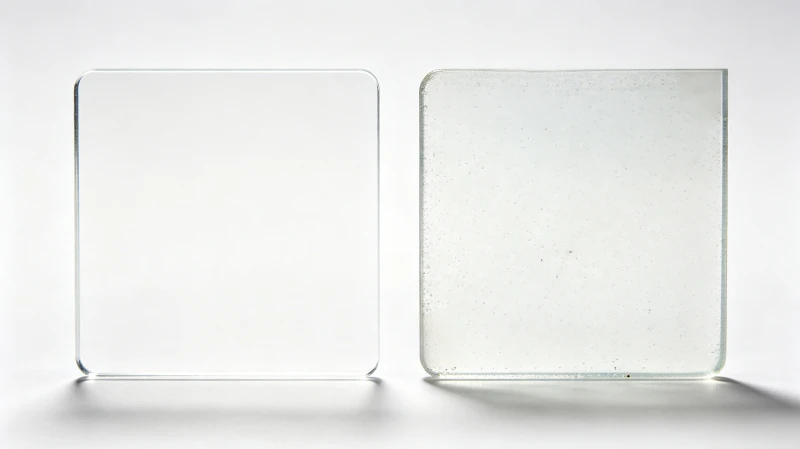
During procurement, apply these practical checks to stay away from recycled sheets and secure genuine polycarbonate sheet toughness:
- Do-not-only-chase-low-unit-price warning: Stay alert if the quotation is far below the normal market range. Virgin raw-material cost sets bottom-line price; abnormally cheap sheets almost always contain recycled blends.
- Carry out physical sample testing: Request physical samples for manual knocking and low-temperature simulation tests. Recycled PC tends to produce crazing and fine cracks under light impact.
- Request raw–material traceability and material data sheets: Qualified suppliers can provide official material reports for polycarbonate pellets.
- Inspect sheet cross-section: Virgin-material chapa de policarbonato shows a clean, transparent cut cross-section. Recycled-content sheets often display yellowish tint, tiny black specks and scattered impurities on the fracture surface.
At Yucheng Board Industry, we supply 100% virgin-based chapa de policarbonato. We support physical sample dispatch for customers to test toughness, light transmission and surface quality before placing bulk orders, lowering your procurement risk.
11. Yucheng Board Industry: One–Stop Folha de policarbonato Supply & Custom Fabrication Service
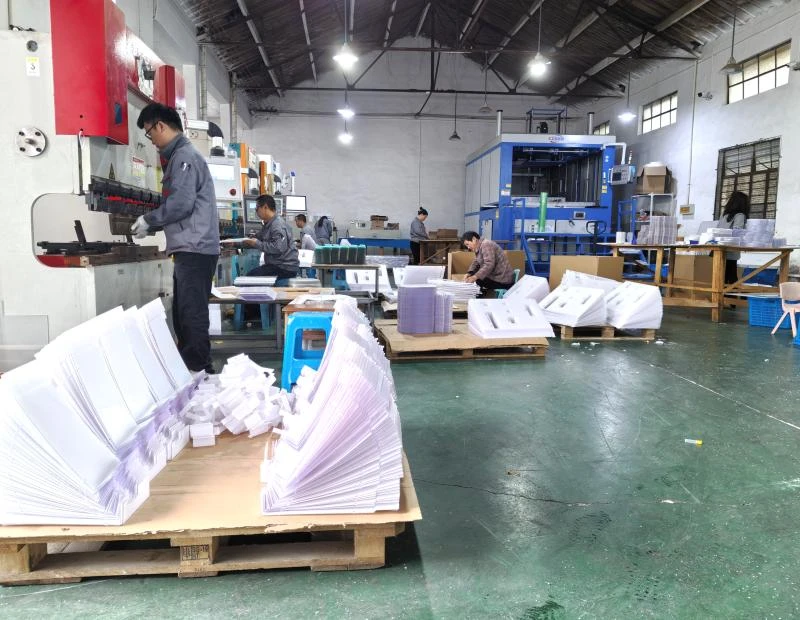
Many buyers only purchase raw blank sheets and finish processing in-house, yet frequently run into equipment limits and process pitfalls that damage polycarbonate sheet toughness, bringing high reject rates for finished parts.
Suzhou Yucheng Board Industry is located in Suzhou, serving domestic and overseas clients with full-chain polycarbonate-sheet solution packages.
✅ Comprehensive sheet portfolio: Virgin solid polycarbonate sheet, outdoor UV-coated PC sheet, matte PC sheet, multiple grades of flame-retardant PC sheet with complete thickness specifications. All substrates adopt brand-new pellets, guaranteeing original polycarbonate sheet toughness and impact resistance, with zero mixed recycled waste material.
✅ Full-range in-house fabrication: CNC precision cutting, drilling, grooving, chamfering, hot bending forming, UV printing and screen printing. Our fabrication workshop fully understands the key points. We strictly control residual stress and micro-cracks throughout production to retain native sheet toughness.
✅ Custom support for diversified industries: We serve new-energy, rail-transport, medical-device, automation-equipment, safety-protection and architectural-glazing customers. Our engineers deliver objective material-selection advice according to real working conditions: clarifying when to pick general-grade PC sheet, when flame-retardant PC sheet is required, how to select UV-resistant grade for outdoor projects and reasonable thickness matching for impact-protection demands.
✅ Sample service available: Physical samples can be sent out for impact testing and prototype verification, helping you confirm toughness, transparency and surface appearance before mass production.
✅ Flexible-volume order acceptance: We handle small-batch prototyping as well as large-scale project deliveries. Foreign-trade export orders are supported to satisfy overseas independent-site buyers’ procurement requirements.
If you are selecting chapa de policarbonato, confused about material grades, worried about recycled-material poor toughness, or you demand finished processed PC components, feel free to contact us. Our technical engineers will provide targeted suggestions based on your application scenarios.
12. Frequently Asked Questions
Q1: Does thicker polycarbonate sheet always equal better toughness?
A: Under identical raw-material quality, thicker sheets deliver higher impact-resistance performance. This precondition is 100% virgin substrate. Even thick recycled-content PC sheet still suffers from poor toughness.
Q2: Does flame–retardant polycarbonate sheet always come with very poor toughness?
A: It will not become extremely brittle, yet a certain toughness reduction exists compared with standard virgin PC sheet. High-toughness modified flame-retardant polycarbonate balances fire-safety requirements and impact resistance at higher material cost. Yucheng Board Industry can offer corresponding grade selection for your project.
Q3: Can high-toughness PC sheet be used directly as a bulletproof panel?
A: Standard solid chapa de policarbonato cannot work as bulletproof material. Bulletproof polycarbonate requires special multi-layer composite lamination technology. Ordinary PC sheet only fulfills general anti-impact protection, do not mix up application requirements.
Q4: How long will toughness degrade for outdoor–used polycarbonate sheet?
A: High-quality PC sheet with co-extruded UV protective layer maintains reliable toughness for years under normal outdoor conditions. Bare PC sheet without UV protection ages and turns brittle quickly.
Q5: Can I keep using polycarbonate sheet once surface silver crazing appears?
A: Silver crazing indicates internal material damage. Polycarbonate sheet toughness drops significantly, cracks will propagate easily under impact. Do not reuse such sheets for applications with impact-loading risks.
13. Conclusion
Polycarbonate sheet toughness characteristics originate from its special long-chain intertwined polymer structure. Upon impact, molecular chains deform to disperse and absorb impact energy, achieving outstanding impact resistance and anti-shatter performance.
Nevertheless, such premium material performance is not permanent. Recycled-material blending, extreme low-temperature environments, chemical-solvent corrosion, micro-cracks & residual stress brought by improper fabrication, and UV exposure without protective layer will all impair polycarbonate sheet toughness and make PC sheet prone to cracking.
To get the best out of polycarbonate sheets: the priority is choosing genuine virgin-material sheets; the second is correct grade-and-thickness material selection matching actual working conditions; the third is avoiding material damage during fabrication, installation and storage.
Choosing a reliable supplier also matters greatly. Suzhou Yucheng Board Industry provides one-stop support covering raw-material supply, custom fabrication and technical material-selection consultation, helping customers make full use of high-toughness chapa de policarbonato and reduce losses caused by sheet cracking and rejects in projects.