






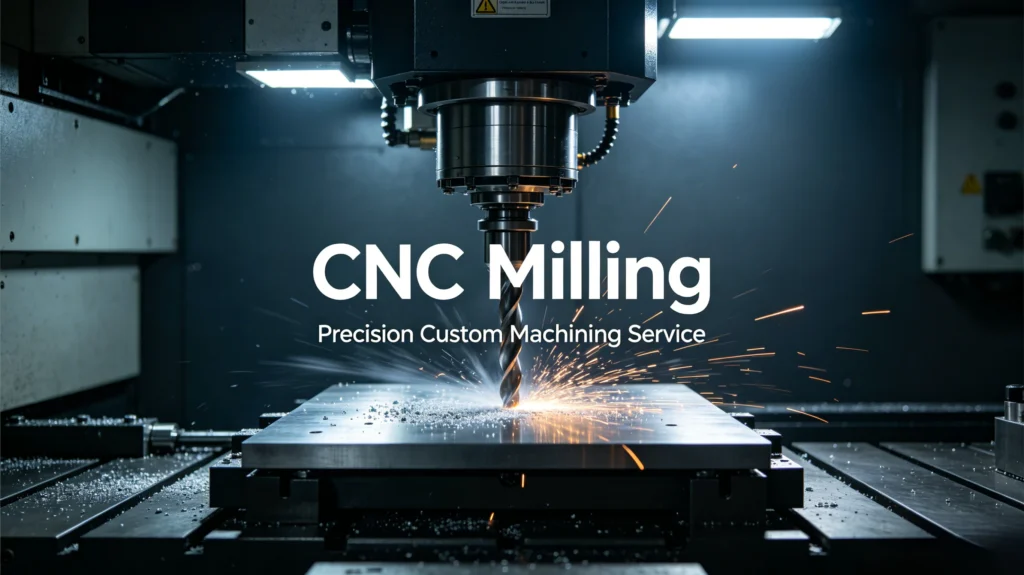
CNC frezeleme en yaygın kullanılan yöntemlerden biridir eksiltici üretim modern endüstrideki süreçler. Malzemeyi katı bir blok veya tabakadan çıkarmak için bilgisayar kontrollü döner kesme aletleri kullanır ve yüksek hassasiyet, sıkı toleranslar ve mükemmel yüzey kalitesi ile karmaşık 2D ve 3D şekiller oluşturur.
İster ihtiyacınız olsun özel plasti̇k parçalar, metal bileşenler, PC kartı gravürü, akrilik panel kesimi veya kalıp boşluğu işleme, CNC frezeleme eşsiz esneklik, doğruluk ve tekrarlanabilirlik sunar.
Bu kapsamlı kılavuzda bilmeniz gereken her şeyi açıklıyoruz: tanım, çalışma prensibi, CNC freze makineleri türleri, malzemeler, avantajlar, sınırlamalar, tipik uygulamalar ve profesyonel CNC freze hizmetimiz.
1. CNC Frezeleme Nedir?
CNC frezeleme (Bilgisayarlı Nümerik Kontrol frezeleme), aşağıdakileri kullanan bir işleme yöntemidir programlanmış komutlar Kesici takımların ve iş parçalarının hareketini kontrol etmek için. İş mili, çok dişli kesicileri (parmak frezeler, küresel uçlu kesiciler, yüzey frezeleri) yüksek hızda dönmeye yönlendirirken, iş parçası malzemeyi çıkarmak ve istenen geometriyi oluşturmak için X, Y, Z eksenleri boyunca hareket eder.
Aksine CNC tornalama (yuvarlak parçalar için), frezeleme aşağıdakiler için idealdir düz yüzeyler, boşluklar, yuvalar, delikler, konturlar ve karmaşık 3B yapılar.
Temel Özellikler
- Dijital kontrol: CAD → CAM → G kodu → CNC makinesi
- Çok eksenli hareket: 3 eksen, 4 eksen, 5 eksen
- Eksiltici süreç: katı stoktan malzeme çıkarma
- Yüksek hassasiyet: tipik tolerans ±0,02 mm ~ ±0,1 mm
2. CNC Frezeleme Nasıl Çalışır? Adım Adım Süreç
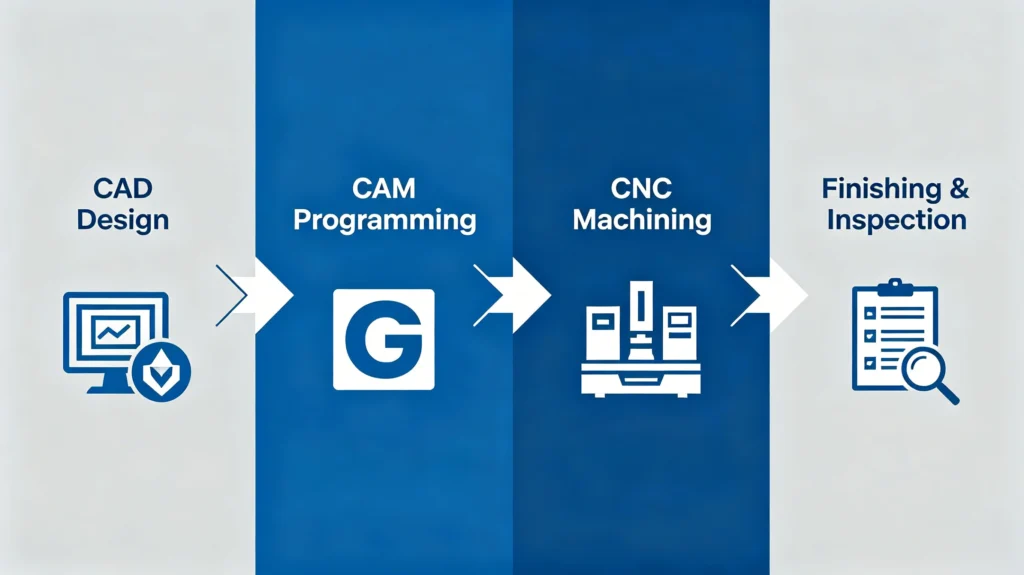
Adım 1: CAD Modeli Tasarlayın
Mühendisler SolidWorks, AutoCAD, UG, Pro/E kullanarak 2D çizimler veya 3D modeller oluşturur.
Adım 2: CAM Programlama
CAM yazılımı (Mastercam, UG CAM, SolidCAM) modeli G-kodu, takım yollarının, iş mili hızının, ilerleme hızının, kesme derinliğinin tanımlanması.
Adım 3: Makine Kurulumu
- İş parçasını masaya sabitleyin (mengene, fikstür, vakum plakası)
- Kesme takımlarını takın (parmak freze, matkap, kılavuz)
- Takım uzunluğunu, çalışma koordinatını, soğutma sıvısı sistemini ayarlayın
Adım 4: Kaba Frezeleme
Büyük kesme derinliği, yüksek ilerleme hızı ile çoğu malzemeyi hızlı bir şekilde çıkarın, finisaj için 0,2-0,5 mm bırakın.
Adım 5: Son Frezeleme
Küçük derinlik, yüksek iş mili hızı, nihai boyut, tolerans ve yüzey pürüzlülüğü (Ra 0,8-3,2 μm) elde etmek için hassas takım yolu.
Adım 6: Çapak Alma ve Muayene
Keskin kenarları çıkarın; boyutları kumpas, mikrometre, CMM ile kontrol edin; gerekirse yüzey işlemi uygulayın.
3. CNC Freze Tezgahı Çeşitleri
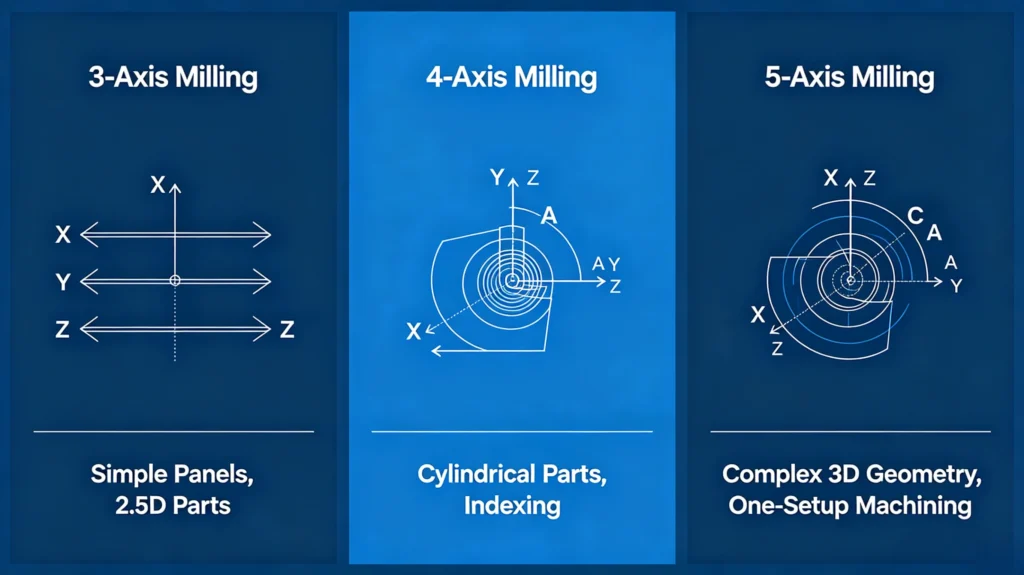
3.1 3 Eksenli CNC Frezeleme
- X, Y, Z doğrusal hareket
- En yaygın, düşük maliyetli
- Düz parçalar, basit boşluklar, PC kartları, akrilik paneller için uygundur
3.2 4 Eksenli CNC Frezeleme
- Bir döner eksen ekleyin (A veya B)
- Döner kesim, helisel kanallar, indeks işleme
- Silindirik parçalar, kalıplar, fikstürler için ideal
3.3 5 Eksenli CNC Frezeleme
- X, Y, Z + iki döner eksen (A/C veya B/C)
- Tek kurulumda karmaşık işleme
- Çarklar, türbin kanatları, havacılık parçaları, karmaşık kalıplar için mükemmel
3.4 Dikey ve Yatay Frezeleme
- Dikey: fener mili dikey, genel parçalar için ortak, PC, akrilik, alüminyum
- Yatay: yatay iş mili, derin boşluklar için iyi, seri üretim, daha iyi talaş kaldırma
4. CNC Frezeleme için Malzemeler
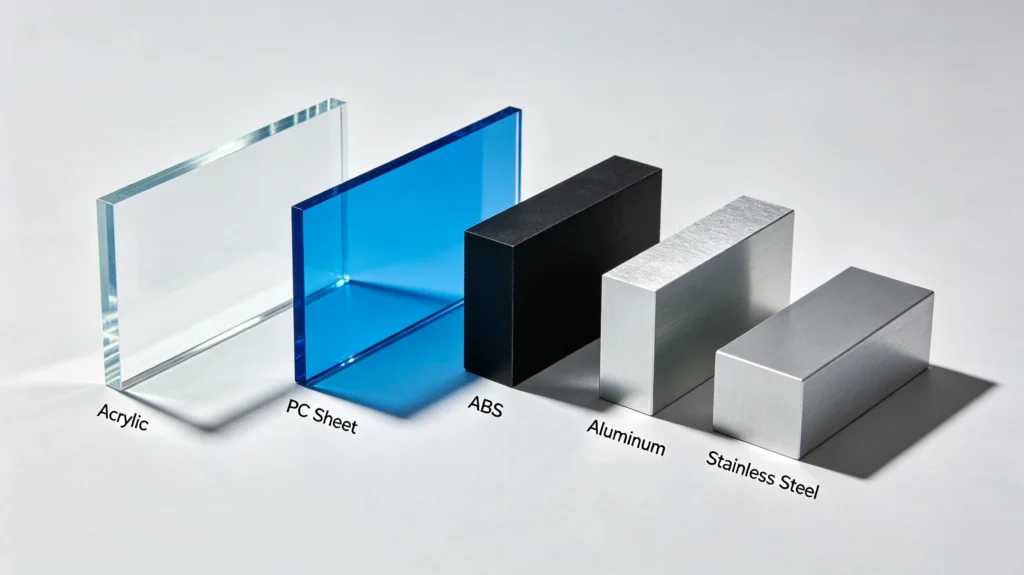
CNC freze destekleri geniş bir plastik ve metal yelpazesi, Her biri belirli kesme parametrelerine sahiptir.
4.1 Plastikler (Hizmetimiz için En Popüler)
- PC (Polikarbonat): yüksek darbe, şeffaf, ısıya dayanıklı; paneller, kapaklar, muhafazalar için
- Akrilik (PMMA): net, parlak, işlenmesi kolay; teşhir, tabela, ışık kılavuzu için
- ABS: sağlam, düşük maliyetli; muhafazalar, kasalar, yapısal parçalar için
- PVC, POM, Naylon: Dişliler, izolatörler, fikstürler için mühendislik plastikleri
4.2 Metaller
- Alüminyum 6061/7075: hafif, yüksek mukavemetli; havacılık, otomotiv, ısı alıcıları
- Paslanmaz Çelik 304/316: korozyona dayanıklı; tıbbi, gıda, denizcilik
- Pirinç, Bakır: elektrikli parçalar, ısı iletimi
- Titanyum: yüksek mukavemetli, biyouyumlu; havacılık, tıbbi implantlar
4.3 Ahşap, Köpük, Kompozit
Prototipler, modeller, jigler, özel fikstürler için.
5. CNC Frezelemenin Temel Avantajları
✅ Yüksek Hassasiyet ve Sıkı Tolerans
Şuna kadar doğruluk ±0,02 mm, Medikal, havacılık, elektronik gibi yüksek talep gören endüstriler için uygundur.
✅ Karmaşık Geometri Yeteneği
Kolayca üretin yuvalar, delikler, cepler, konturlar, 3D yüzeyler manuel işlemenin başaramayacağı bir şey.
✅ Mükemmel Tekrarlanabilirlik
Makine programlandıktan sonra şunları üretebilir 1 veya 10.000 özdeş parça tutarlı kalite ile.
✅ Geniş Malzeme Uyumluluğu
Neredeyse tüm plastik ve metallerle çalışır, çok malzemeli projeler için idealdir.
✅ Hızlı Prototipleme ve Düşük MOQ
Destek 1 parçalı prototip, küçük parti, seri üretim; Kalıp maliyeti yok.
✅ İyi Yüzey İşlemi
Ra 0,8-3,2 μm; doğrudan cilalanabilir, anodize edilebilir, boyanabilir, serigrafi yapılabilir.
6. CNC Frezelemenin Sınırlamaları
- Enjeksiyon kalıplamaya göre daha yüksek maliyet seri üretim (10 bin+)
- Şunlar için verimli değil çok ince duvarlar (<0,5 mm)
- Gerekli CAD/CAM becerisi ve programlama süresi
- 5 eksenli makineler yüksek ekipman maliyetine sahiptir
7. CNC Frezelemenin Endüstriyel Uygulamaları
7.1 Plastik Parçalar ve Elektronik Endüstrisi
- PC kartı, akrilik panel, ekran kapağı, ekipman muhafazası
- Isı emici, izolatör, yapısal braket
- Kontrol paneli, düğme plakası, membran anahtar tabanı
7.2 Havacılık ve Otomotiv
- Alüminyum alaşımlı yapısal parçalar, motor bileşenleri
- Özel braketler, iç döşeme, kalıp parçaları
7.3 Tıbbi Ekipman
- Paslanmaz çelik cerrahi parçalar, titanyum implantlar
- Tıbbi cihaz muhafazaları, hassas fikstürler
7.4 Kalıp ve Alet Yapımı
- Enjeksiyon kalıp boşluğu, maça, sürgü
- Döküm kalıp, damgalama kalıbı, jig ve fikstür
7.5 Reklam ve Dekorasyon
- Akrilik tabela, 3D logo, ışıklı kutu, teşhir standı
- PC şeffaf kapak, dekoratif panel
8. CNC Frezeleme ve Diğer Prosesler
CNC Frezeleme vs Lazer Kesim
- Frezeleme: 3D, derin kesim, yüksek hassasiyet, kalın malzeme
- Lazer: hızlı, ince tabaka, sadece 2D, daha düşük hassasiyet
CNC Frezeleme vs 3D Baskı
- Frezeleme: daha iyi malzeme mukavemeti, yüzey kalitesi, tolerans
- 3D Baskı: karmaşık iç yapı, alet maliyeti yok, kitle için yavaş
CNC Frezeleme vs Enjeksiyon Kalıplama
- Frezeleme: kalıp yok, düşük MOQ, hızlı prototip
- Enjeksiyon Kalıplama: Kütle için düşük birim maliyet, yüksek kalıp maliyeti
9. Firmamızdan Profesyonel CNC Freze Hizmeti
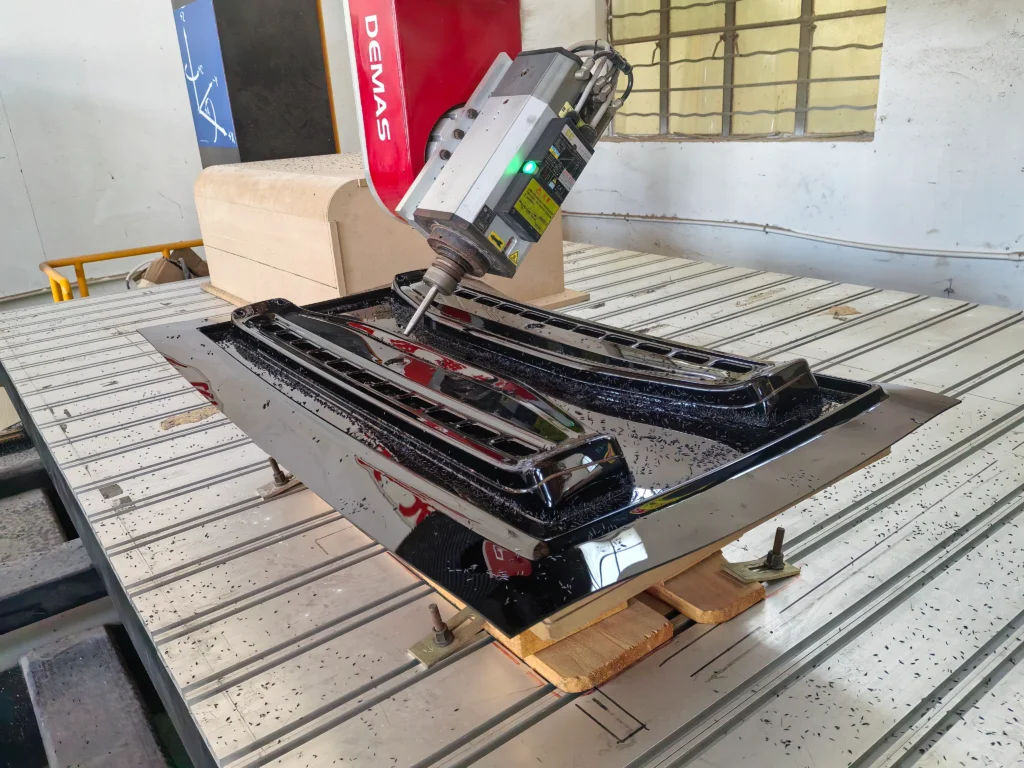
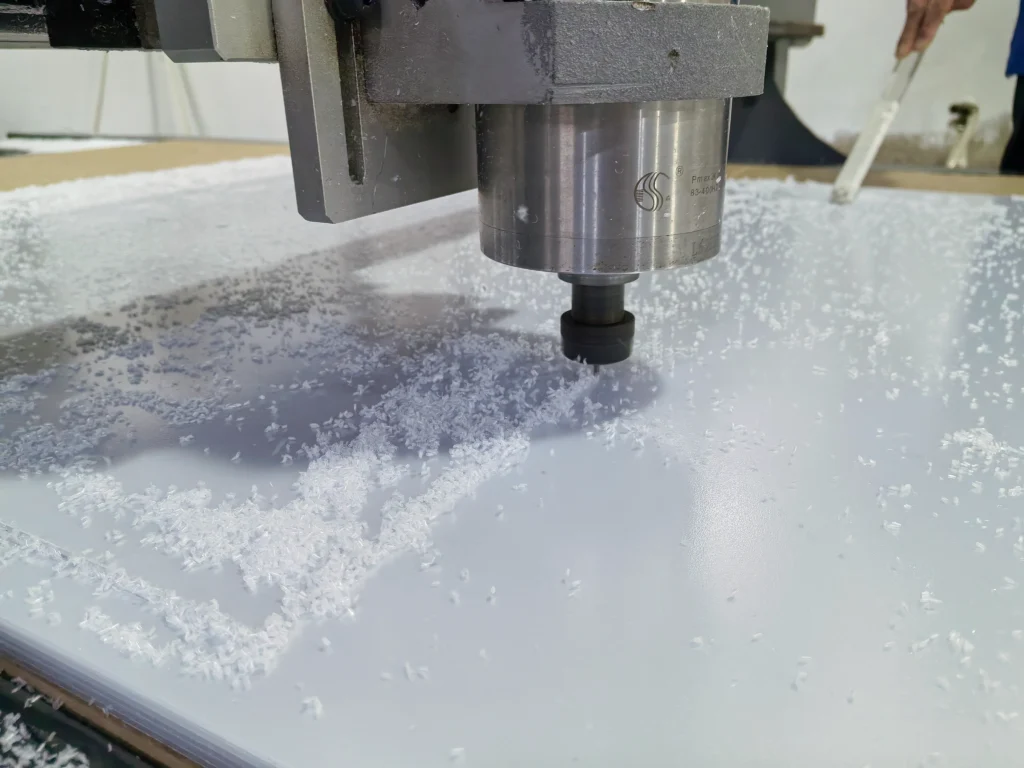
Uzmanlık alanlarımız tek elden CNC frezeleme ve özel i̇şleme hi̇zmeti̇ odaklanarak plastik levhalar için PC, akrilik, ABS hassas imalat.
Hizmet Yelpazemiz
- 3 eksenli ve 5 eksenli CNC frezeleme
- PC kartı gravürleme, akrilik kesme, ABS gövde işleme
- Özel boyutta kesim, delik delme, kanal açma, konturlama
- Yüzey işleme: parlatma, serigrafi, UV baskı
- Tek elden hizmet: CAD tasarımından → CAM programlama → CNC frezeleme → işleme sonrası → kalite kontrol → teslimat
Neden Bizi Seçmelisiniz
- Gelişmiş ekipman: Yüksek hassasiyetli CNC merkezleri, sıkı tolerans kontrolü (±0,02 mm)
- Malzeme uzmanlığı: PC, akrilik, ABS ve diğer plastiklerde derin deneyim
- Düşük MOQ: Destek 1 parçalı prototip seri üretime
- Hızlı teslim süresi: Hızlı programlama, verimli işleme, zamanında teslimat
- Kalite garantisi: 100% boyut denetimi, yüzey kalite kontrolü
- Özel çözüm: Ücretsiz tasarım danışmanlığı, maliyet tasarrufu için optimize edilmiş süreç
Kime Hizmet Veriyoruz
- Elektronik üreticileri: PC panelleri, akrilik ekran kapakları
- Ekipman fabrikaları: muhafazalar, braketler, kontrol panelleri
- Reklam şirketleri: akrilik tabelalar, logolar
- Medikal ve havacılık: muhafazalar, braketler, kontrol panelleri
- Tasarım stüdyoları ve Ar-Ge ekipleri: hızlı prototipleme
İster bir tam çizim ya da sadece bir fikir, malzemenize, boyutunuza, toleransınıza ve uygulama ortamınıza göre uyarlanmış profesyonel CNC frezeleme çözümleri sağlayabiliriz.
Bugün bize ulaşın almak için ücretsiz fiyat teklifi ve tasarım desteği.