





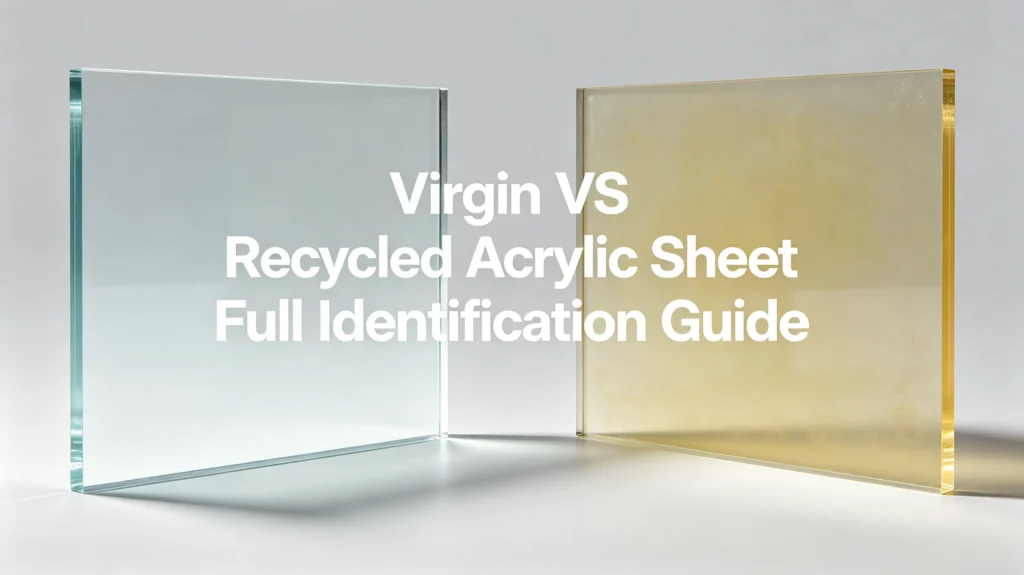
Giriş
Günümüzün küresel akrilik levha satış pazarında, giderek daha fazla alıcı, proje müteahhidi, tabela üreticisi, dekorasyon şirketi ve dış mekan mühendisliği alıcısı, oldukça can sıkıcı bir sorunla karşı karşıya kalmaktadır. Akrilik levhaları toplu olarak satın aldıklarında veya hazır akrilik ürünleri tedarik ettiklerinde, teslim aldıkları ürünlerin hangi malzemeden yapıldığını genellikle ayırt edememektedirler. 100% saf işlenmemiş akrilik hammaddeler, ya da karışık geri dönüştürülmüş malzemeler, ikincil geri dönüştürülmüş malzemeler ve hatta atık artıkları.
Birçok profesyonel olmayan tedarikçi ve küçük fabrika, üretim maliyetini düşürmek ve böylece daha yüksek kâr marjları elde etmek amacıyla geri dönüştürülmüş akrilik malzemeleri işlenmemiş malzemelerle karıştırır. Sektör bilgisine sahip olmayan sıradan alıcılar için, yüksek kaliteli işlenmemiş akrilik fiyatına düşük kaliteli geri dönüştürülmüş akrilik satın almak çok kolaydır ve bu da bir dizi müteakip zarara yol açar.
Dış mekan tabelalarında, balkon korkuluklarında, bahçe süslemelerinde, sera panellerinde, iç mekan vitrinlerinde, ışık kutusu panellerinde ve diğer yerlerde kullanıldıktan sonra, geri dönüştürülmüş akrilik çok kısa bir süre içinde aşağıdakiler gibi çeşitli kalite sorunları ortaya çıkar:
- Hızlı sararma
- Kolay kırılma
- Şeffaflık eksikliği
- Kolay deformasyon
- Düşük tokluk
- Keskin ve tuhaf bir koku
- Kararsız boyut
Bu gizli kalite sorunları, projenin genel güzelliğini etkilemekle kalmayacak, aynı zamanda ileride ortaya çıkacak bakım ve yenileme maliyetlerini artırmak, hatta getirebilir olası güvenlik riskleri bazı güvenlik önlemleri alınması gereken durumlarda.
Çok sayıda müşteri bize mesajlar bıraktı ve özel olarak danıştı. Bu müşteriler, çok profesyonel endüstriyel tespit ekipmanlarına ihtiyaç duymayan, basit, öğrenmesi kolay, pratik ve uygulanabilir bir dizi tanımlama yöntemine sahip olmayı umuyorlar; bu yöntemler sayesinde, çıplak gözle, elle dokunarak, basit testler ve günlük gözlemler yoluyla işlenmemiş akrilik ile geri dönüştürülmüş akriliği hızlı bir şekilde ayırt edebilmeyi hedefliyorlar.
Bu son derece ayrıntılı ve kapsamlı pratik kılavuzda şunları ele alacağız:
- Akrilik hammaddelerinin piyasa durumundan başlayalım
- İşlenmemiş akrilik ile geri dönüştürülmüş akrilik arasındaki temel farkları analiz edin
- Tüm sezgisel tanımlama yöntemlerini sıralayın
- Kötü tedarikçilerin yaygın uygulamaları ve aldatma yöntemleri hakkında konuşun
- Her birinin avantajlarını, dezavantajlarını, kullanım ömrünü, uygulanabilir senaryolarını ve fiyat farklarını analiz edin
- Üretim sürecindeki farklılıklar, işleme performansındaki farklılıklar, dış ortam hava koşullarına dayanıklılık farklılıkları vb. konularını ayrıntılı olarak ele alın.
- Satın alma öncesi sorgulamadan satış sonrası teslim almaya kadar, satın alma tuzaklarından nasıl kaçınacağınızı anlatacağız
- Tanıtım fabrikamızın Uzun vadeli ve istikrarlı işlenmemiş akrilik tedarik hizmeti
1. Temel Genel Bilgi: Saf Akrilik ve Geri Dönüştürülmüş Akrilik Nedir?
Tüm tanımlama becerilerini öğrenmeden önce, öncelikle işlenmemiş akrilik ile geri dönüştürülmüş akrilikin temel tanımını, hammadde kaynağını ve temel üretim yöntemini net bir şekilde anlamamız gerekir.
1.1 İşlenmemiş Akrilik Levhanın Tanımı
Sektörde “saf yeni malzeme akrilik levha” olarak da adlandırılan işlenmemiş akrilik levha, üreticiler tarafından aşağıdakileri kullanarak doğrudan ekstrüde edilen veya döküm yoluyla üretilen akrilik levha ürünlerini ifade eder: yepyeni, saf PMMA akrilik parçacık hammaddeleri Tüm üretim sürecinde hiçbir atık malzeme, artık malzeme, geri dönüştürülmüş kırık malzeme ve ikincil işleme tabi tutulmuş malzeme bulunmamaktadır.
Anahtar özellikler:
- Hammadde parçacıkları, yeni üretilmiş yüksek saflıkta akrilik reçine parçacıklarıdır
- Moleküler yapı tamdır, safsızlık içeriği son derece düşüktür
- Eski akrilik, atık malzeme artıkları veya elenmiş ürünler eklenmez
- Ucuz dolgu tozu veya kalitesiz yardımcı malzemeler karıştırılmamaktadır
- Geleneksel büyük fabrikalar, işlenmemiş akrilik üretimini temel faaliyet alanı olarak benimsemektedir
1.2 Geri Dönüştürülmüş Akrilik Levha Tanımı
Geri dönüştürülmüş malzeme içeren akrilik levha, üretim sürecinde geri dönüştürülmüş atık malzemelerle karıştırılan tüm akrilik levhalar için kullanılan genel bir terimdir. Karıştırma oranına ve hammadde kalitesine göre, bu levhalar üç genel kategoriye ayrılabilir:
- Düşük oranda karışık geri dönüştürülmüş malzeme içeren akrilik
- Yüksek oranda karışık geri dönüştürülmüş malzeme içeren akrilik
- Tamamen geri dönüştürülmüş malzemeden üretilmiş akrilik
Geri dönüştürülmüş akrilikin hammadde kaynakları oldukça karmaşıktır ve şunları içerir:
- İnşaat şantiyelerinden çıkarılan atık akrilik levhalar
- İşleme sonrasında geriye kalan köşe malzemeleri
- Tüccarlar tarafından elden çıkarılan atık akrilik ürünler
- İkinci el piyasasından toplanan kırık akrilik levhalar
- Uzun yıllardır kullanılmış, sararmış eski dış mekan akrilik paneller
Bu atık akrilik hammaddelerin, tekrar levha üretim hattına dahil edilebilmeleri için önce kırma, temizleme, eritme, granülasyon ve diğer yeniden işleme aşamalarından geçmeleri gerekmektedir. Geri kazanım ve yeniden işleme sürecinde, iç kirlilikleri, kalıntı lekeleri, eskimiş moleküler bileşenleri ve karışmış yabancı plastik bileşenleri tamamen ortadan kaldırmak imkânsızdır.
Üretim gücü yetersiz ve pazardaki konumu zayıf olan küçük atölye ve fabrikaların çoğu, geri dönüştürülmüş akriliği ana üretim ürünü olarak benimseyecek ve düşük fiyat avantajını kullanarak alt segment pazarını ele geçirmeyi hedefleyecektir.
1.3 Geri Dönüştürülmüş Akrilik Malzemenin Piyasada Yaygın Olarak Kullanılmasının Başlıca Nedenleri
- Hammadde fiyatlarında büyük fark: Geri dönüştürülmüş malzemelerin kullanılması, üretim maliyetini doğrudan % ila % oranında azaltabilir.
- Düşük üretim eşiği: Sıradan, basit eritme ve ekstrüzyon ekipmanları ile üretim gerçekleştirilebilir; yatırım maliyeti düşüktür.
- Düşük fiyatlara yönelik muazzam talep: Birçok düşük bütçeli proje ve geçici tesis, yalnızca anlık maliyete önem verirken, daha sonra ortaya çıkabilecek kalite sorunlarını hiçe saymaktadır.
- Sıradan alıcılar için yüksek kimlik doğrulama eşiği: Alıcıların çoğunda, malzemelerin tanımlanmasına ilişkin profesyonel bilgi ve test araçları bulunmamaktadır.
- Sektör denetimindeki eksiklikler: Bazı bölgesel pazarlarda, sivil kullanım amaçlı akrilik levhalar için katı ve tek tip bir malzeme denetim standardı bulunmamaktadır.
2. İşlenmemiş Akrilik ile Geri Dönüştürülmüş Akrilik Arasındaki Temel Kalite Farkları
Ancak her yönüyle kalite farklarını net bir şekilde ortaya koyarak, geri dönüştürülmüş akrilik seçmenin körü körüne yapılmasının ciddi sonuçlarını anlayabiliriz.
2.1 Işık Geçirgenliği ve İç Saflık Açısından Fark
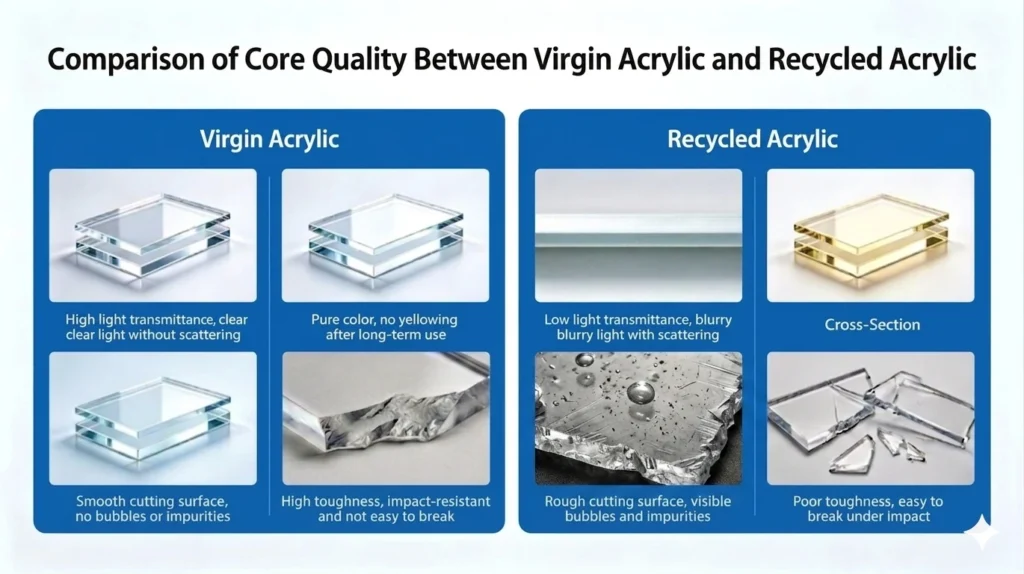
- Saf akrilik: Işık geçirgenliği 92% ile 93% arasında değişebilir; levhanın içi saf ve kusursuzdur; üzerinde minik siyah noktalar veya gri sis etkisi yoktur. İç mekanda uzun süre kalmış olsa bile, yüzeyinde ve iç kısmında gri bir sis oluşmaz.
- Geri dönüştürülmüş akrilik: Geri dönüştürülmüş şeffaf akriliklerin çoğunda belirgin bir gri sis etkisi görülür; ışık geçirgenliği genellikle 85%’den daha düşüktür ve bazı düşük kaliteli tam geri dönüştürülmüş malzemelerde bu değer 80%’nin bile altındadır. Levhanın içinde, minik siyah parçacıklar, çeşitli lekeler, ince çizgili kirlilikler ve bulut benzeri bulanık alanlar belirsiz bir şekilde görülebilir.
2.2 Renk Saflığı ve Uzun Vadeli Renk Kararlılığı Arasındaki Fark
- Saf akrilik: Renk homojendir; aynı partiye ait levhalar arasındaki renk farkı son derece azdır; yüzey rengi doygun ve parlaktır. Uzun süreli iç mekan kullanımından veya UV koruma işlemi uygulanmış olarak dış mekan kullanımından sonra bile, işlenmemiş akrilik orijinal rengini uzun süre koruyabilir.
- Geri dönüştürülmüş akrilik: Geri dönüştürülmüş akrilikin rengi oldukça bozuktur. Süt beyazı levhalar, parlaklıktan yoksun gri-beyaz veya donuk beyaz bir görünüm alabilir. Daha sonraki kullanım sürecinde, geri dönüştürülmüş akrilik hızla solacak ve rengi bozulacaktır.
2.3 Yüzey Pürüzsüzlüğü ve Doku Hissindeki Fark
- Saf akrilik: Yüzey pürüzsüz ve incedir; düzlük derecesi son derece yüksektir; yüzeyde içe veya dışa doğru çıkıntılı doku hissi yoktur; yüzeyde küçük çukurlar veya kabarcık izleri bulunmaz. Levhanın tamamının kalınlığı tekdüzedir ve kesim sonrası kenar düzlüğü düzgündür.
- Geri dönüştürülmüş akrilik: Yüzeyde hafif pürüzlülükler, yer yer pürüzlü bir his, küçük ve sıkı çukurlar ile minik hava kabarcığı çukurları kolayca göze çarpar. Geri dönüştürülmüş akrilikte kalınlık homojenliği zayıftır ve yerel kalınlık sapmaları büyüktür.
2.4 Sertlik, Darbe Dayanımı ve Çatlama Önleme Performansı Açısından Farklılıklar
- Saf akrilik: Genel olarak mükemmel dayanıklılık, iyi eğilme direnci ve yüksek darbe direnci. Profesyonel tavlama işleminden sonra, işlenmemiş akrilikteki iç gerilim dengelenir; bu sayede sıcaklık değişimleri ve mevsimsel soğuk-sıcak geçişleri sırasında iç gerilim çatlaklarının oluşması kolay değildir.
- Geri dönüştürülmüş akrilik: Hammadde moleküllerinin eskimesi ve çeşitli malzemelerin karıştırılması nedeniyle dayanıklılık keskin bir şekilde düşer. Levhanın tamamı nispeten kırılgan hale gelir. Birçok geri dönüştürülmüş akrilik levha, bir süre monte edildikten sonra herhangi bir dış kuvvet etkisi olmaksızın kenarlarından kendiliğinden çatlar.
2.5 Yüksek Sıcaklık Dayanımı, Düşük Sıcaklık Dayanımı ve Deformasyon Dayanımı Arasındaki Fark
- Saf akrilik: Standart çalışma sıcaklık aralığı sabittir; yüksek sıcaklıktaki güneş ışığına maruz kalan ortamlarda kolayca yumuşaması veya hızla deforme olması söz konusu değildir; aynı şekilde, düşük sıcaklıktaki soğuk ortamlarda da hızla sertleşip kırılgan hale gelmez.
- Geri dönüştürülmüş akrilik: Moleküler yapı kararlılığı düşüktür. Aynı yüksek sıcaklık koşullarında yumuşama, kavislenme ve eğrilme eğilimi daha fazladır. Düşük sıcaklıkta ise süneklik kaybı ve kırılganlaşma eğilimi daha fazladır.
2.6 Çevre Koruma Performansı ve Koku Emisyonundaki Fark
- Saf akrilik: Saf işlenmemiş akrilik hammaddeler, zararlı çeşitli bileşenler içermez; levha üretimi, kesim işlemleri ve daha sonraki günlük kullanım sırasında keskin kimyasal koku yayılmaz.
- Geri dönüştürülmüş akrilik: Geri dönüştürülmüş akrilik atık malzemelerin büyük bir kısmı, yeniden eritilip işlendikten sonra eski plastik kokusu, küf kokusu, kimyasal madde kalıntısı kokusu ve çeşitli karışık kokular dahil olmak üzere çeşitli kalıntı kokular yayar.
2.7 Dış Ortam Hava Koşullarına Dayanıklılık ile Gerçek Kullanım Ömrü Arasındaki Fark
- Saf akrilik: UV stabilizatörü eklenmiş yüksek kaliteli saf akrilik, dış mekanda 5 ila 10 yıl boyunca sorunsuz bir şekilde kullanılabilir; UV işlemi uygulanmamış sıradan saf akrilik ise iç mekanlarda ve gölgeli dış mekan alanlarında 3 ila 5 yıldan fazla bir süre boyunca iyi bir performans sergileyebilir.
- Geri dönüştürülmüş akrilik: Eskime hızı oldukça yüksektir. Bazı satıcılar UV koruma işlemi uyguladıklarını iddia etseler bile, ürünün gerçek hava koşullarına dayanıklılığı son derece düşüktür. Açık havada kullanıldığında 1 ila 2 yıl içinde belirgin şekilde sararır, matlaşır ve eskir.
2.8 Sonraki İşleme Performansındaki Fark
- Saf akrilik: Delik açılırken kolayca çatlamaz; sıcak bükme şekillendirme işlemi pürüzsüz bir sonuç verir; parlatıldıktan sonra kenarları parlak ve şeffaftır; kesim yüzeyi çapak içermeyen düzgün bir yapıya sahiptir; baskı mürekkebinin yapışması sağlamdır ve kolayca dökülmez.
- Geri dönüştürülmüş akrilik: Delme ve zımbalama sırasında kolayca çatlar; sıcak bükme işleminde düzensiz kıvrımlar oluşması kolaydır; parlatma kalitesi düşüktür; kesim yüzeyi pürüzlüdür ve üzerinde daha fazla cüruf bulunur; yüzeydeki baskı deseni kolayca dökülür ve solabilir.
3. Saf ve Geri Dönüştürülmüş Akrilikleri Ayırt Etmek İçin Tüm Pratik Tanımlama Yöntemleri (Maliyet Yok, Öğrenmesi Kolay)
Bu bölüm, makalenin tamamının temel uygulamalı içeriğini oluşturmaktadır. Tüm yöntemler, profesyonel test ekipmanı olmadan da kolayca uygulanabilir.
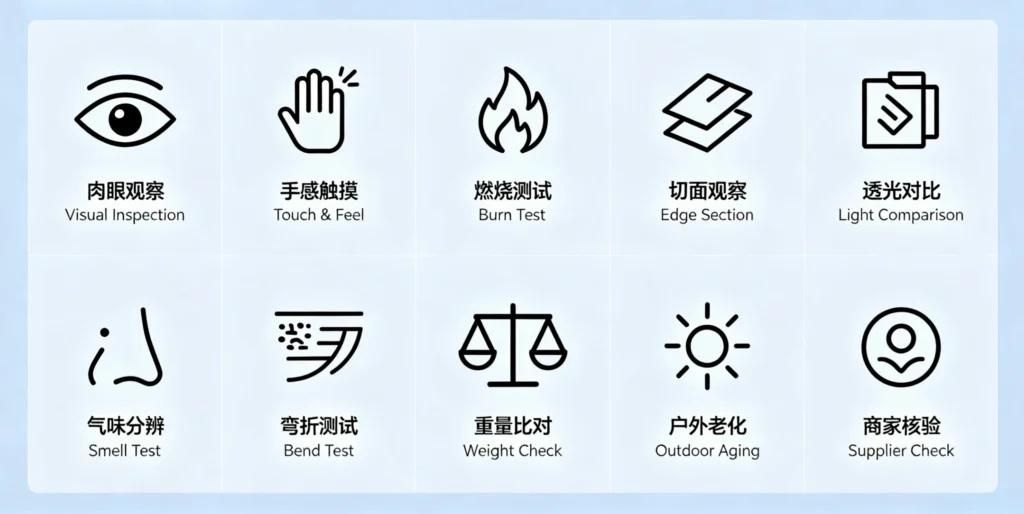
3.1 Çıplak Gözle Doğrudan Gözlem Yöntemi
Akrilik levhayı parlak doğal ışık alan bir ortama yerleştirin ve öncelikle levhanın genel rengini ve iç temizliğini inceleyin.
- Saf akrilik: Kristal berraklığında görünüyor; plakanın tamamı parlak ve şeffaf; gri bir sis benzeri bulanıklık yok; yakından bakıldığında plakanın içinde hiçbir minik siyah nokta, kirlilik parçacığı veya bulanık bulut görülmüyor.
- Geri dönüştürülmüş akrilik: Genel olarak belirgin bir gri sis hissi veriyor. Görünüşte şeffaf olan plaka bile parlak ışık altında incelendiğinde yeterince berrak olmadığı hissi uyandırıyor. İçinde az ya da çok gözle görülür minik kirlilikler ve koyu lekeler bulunuyor.
3.2 El Dokunuşu ve Doku Hissi Ayırt Etme Yöntemi
Temiz parmaklarınızla akrilik levhanın yüzeyine hafifçe dokunup kaydırarak, yüzeyin pürüzsüzlüğünü ve inceliğini hissedin.
- Saf akrilik: Yüzeyi çok pürüzsüz ve narindir; kayma hissi doğal ve akıcıdır; en ufak bir direnç hissi yoktur ve plakanın tamamı elde sıkı ve sağlam bir his verir.
- Geri dönüştürülmüş akrilik: Yüzey genellikle hafif pürüzlüdür ve parmakları üzerinde kaydırdığınızda hafif bir pürüzlü his oluşur. Bazı plakalarda yer yer düzensiz çıkıntı ve çukur hissi vardır; genel olarak elle dokunduğunuzda gevşek ve yeterince sağlam bir his vermez.
3.3 Kenar Kesiti Gözlem Tanımlama Yöntemi
Akrilik levhanın küçük bir köşesini keserek, kesim kenarı bölümünün düzlüğünü, şeffaflığını ve kirlilik durumunu inceleyin; bu, sektörde kabul gören en doğru tanımlama yöntemlerinden biridir.
- Saf akrilik: Kenar kesiti düzgün, pürüzsüz, şeffaflığı yüksek, rengi saf olup, grenli ve gri renkli yabancı tabakalar içermemekte ve kesitin tamamı temiz ve kusursuzdur.
- Geri dönüştürülmüş akrilik: Kenar kesiti genellikle pürüzlüdür; üzerinde belirgin gri renkli çeşitli tabakalar, tanecikli çıkıntılı kirlilikler ve bulanık koyu çizgiler görülür. Geri dönüştürülmüş malzeme oranı ne kadar yüksekse, kesitin dağınık ve düzensiz görünümü o kadar belirgin olur.
3.4 Işık Geçirgenliği Kontrastı Tanımlama Yöntemi
Karşılaştırma numunesi olarak standart, saf ve işlenmemiş akrilik levhadan bir parça hazırlayın; ardından, tanımlanacak levhayı ve numune levhayı yan yana güneş ışığına veya aynı lamba ışığına tutarak ışık geçirgenliği kontrastını inceleyin.
- Saf akrilik: Işık geçirgenlik derecesi ve ışık dağılımının homojenliği temel olarak standart numuneyle uyumludur ve ışık algısında belirgin bir fark yoktur.
- Geri dönüştürülmüş akrilik: Açıkçası daha fazla ışığı engelleyecektir; genel ışık geçirgenliği düşüktür ve levhadan geçen ışık dağınık ve koyu gölgeler oluşturacaktır.
3.5 Koku Ayırt Etme Yöntemi
Öncelikle, orijinal plakanın yüzeyini doğal haliyle koklayın.
- Saf akrilik: Temelde kendine özgü bir kokusu yoktur ya da sadece insan vücudu tarafından tolere edilebilir düzeyde, çok hafif ve doğal plastik kokusu vardır.
- Geri dönüştürülmüş akrilik: Hafif bir eski plastik kokusu, küf kokusu ve çeşitli karışık kokular olacaktır. Plaka uzun süre depolanmışsa, bu kendine özgü koku daha belirgin olacaktır.
3.6 Basit Ateş Yanma Test Yöntemi
Bu, akrilik endüstrisinde klasik ve etkili bir hızlı tanımlama yöntemidir. Ateşleme testi için küçük bir malzeme artığı alın ve işlem sırasında yangın önleme tedbirlerini titizlikle uyguladığınızdan emin olun.
- Saf akrilik: Açık ateşle tutuşturulduğunda, alevin yanma durumu kararlıdır; alev rengi nispeten saftır, duman miktarı azdır ve duman rengi açık beyazdır. Açık ateşten uzaklaştırıldıktan sonra, işlenmemiş akrilik yavaşça kendiliğinden sönebilir; yanan erimiş sıvı ise çok fazla kirlilik içermeden şeffaf ve saftır.
- Geri dönüştürülmüş akrilik: Ateşlendikten sonra alev düzensizdir, duman yoğun ve koyu siyahtır; ateş söndürüldükten sonra kendiliğinden sönmesi kolay değildir ve uzun süre yanmaya devam eder. Yanma sonrası erimiş sıvı çok sayıda safsızlık içerir, rengi bulanık ve koyudur; soğuduktan sonra düzgün bir şekilde yapışması zordur.
3.7 Bükülme Dayanımı Test Yöntemi
5 mm'yi aşmayan ince akrilik levhalar için, dayanıklılık farkını değerlendirmek amacıyla basit bir manuel bükme testi gerçekleştirebiliriz.
- Saf akrilik: İyi bir bükülme dayanıklılığına sahiptir. Makul bir bükülme aralığı içinde, kırılma veya çatlama olmadan nazikçe bükülebilir ve kuvvet kaldırıldıktan sonra yavaşça orijinal haline geri dönebilir; geri kazanım özelliği iyidir.
- Geri dönüştürülmüş akrilik: Kırılganlığı yüksektir. Hafifçe büküldüğünde hemen çatlaklar oluşabilir; hatta bazıları büküldüğü pozisyondan doğrudan kırılabilir ve bükülme sonrası geri kazanım kabiliyeti neredeyse hiç yoktur.
3.8 Ağırlık ve Yoğunluk Kontrast Yöntemi
Aynı boyut, kalınlık ve teknik özelliklerde, saf işlenmemiş akrilikin yoğunluğu homojendir ve standart ağırlığı sabittir.
- Saf akrilik: Standart ağırlık sabittir.
- Geri dönüştürülmüş akrilik: Gerçek ağırlık sabit değildir; ya çok hafif ya da çok ağırdır ve birden fazla plakanın ağırlık hatası büyüktür.
3.9 Açık Havada Yerleştirme Yoluyla Yaşlanma Gözlem Yöntemi
Alıcının yeterli zamanı varsa, iki farklı tür levhadan numune alabilir ve bunları düzenli gözlem ve kayıt amacıyla aynı anda açık havada güneşe maruz kalacak bir ortama yerleştirebilir.
- Saf akrilik: Yarım yıl ile bir yıl arasında, işlenmemiş akrilik numunede neredeyse hiç belirgin sararma ve eskime belirtisi görülmez; genel şeffaflığı ve görünümü iyi bir şekilde korunur.
- Geri dönüştürülmüş akrilik: Birkaç ay içinde kademeli olarak sararacak ve matlaşacak, yüzey parlaklığı hızla azalacak ve çeşitli eskime kusurları arka arkaya ortaya çıkacaktır.
3.10 Tedarikçi Yeterlilik ve Üretim Denetim Yöntemi
Levhaların fiziksel olarak tanımlanmasının yanı sıra, tedarikçilerin gücü ve niteliklerine göre değerlendirme yapmak da geri dönüştürülmüş malzeme satın almaktan kaçınmak için önemli bir yardımcı yöntemdir.
- İşlenmemiş akrilik tedarikçileri: Tam üretim yeterliliklerine, resmi hammadde tedarik kanallarına, markalı hammadde işbirliği sertifikalarına ve eksiksiz ürün kalite denetim raporlarına sahip büyük ölçekli üreticiler, temel olarak işlenmemiş akrilik malzemeyi ana satış ürünü olarak sunmaktadır.
- Geri dönüştürülmüş akrilik tedarikçileri: Tam niteliklere ve resmi hammadde faturalarına sahip olmayan çoğu küçük atölye, ağırlıklı olarak geri dönüştürülmüş malzeme levhaları ile uğraşmaktadır.
4. Geri Dönüştürülmüş Akrilik Malzemesini İşlenmemiş Malzeme Olarak Satarken Sıkça Görülen Hile Yöntemleri
Herkesin satın alma sürecinde dolandırılmasını önlemek amacıyla, piyasadaki kötü niyetli satıcıların en yaygın aldatma yöntemlerini ve gizli hilelerini ortaya koyuyoruz.
- Kafa Karıştıran Kavram Rutini: “Yüksek saflıkta malzemeler”, “geliştirilmiş malzemeler”, “çevre dostu malzemeler” ve “yüksek kaliteli malzemeler” gibi belirsiz ifadeler kullanarak saf işlenmemiş malzemeler kavramının yerine geçmek.
- Örnek Ayırma Prosedürü: İşlenmemiş hammadde numunelerinin gönderilmesi ve geri dönüştürülmüş hammaddenin dökme olarak teslim edilmesi.
- Kalınlık Karışıklığı Rutini: Hammadde maliyetini telafi etmek için kalınlıktan ödün vermek.
- Son İşleme Gizleme Rutini: Geri dönüştürülmüş malzemedeki kusurları gizlemek amacıyla parlatma ve kaplama işlemleri.
- Fiyat Teşvik Rutini: Öncelikle sipariş çekmek için son derece düşük fiyat teklifi sunmak, ardından fiyatı yükseltmek ya da geri dönüştürülmüş ürünler teslim etmek.
- Parametre Tahrif Etme Rutini: Hava koşullarına dayanıklılık ve kullanım ömrü verilerinin tahrif edilmesi.
5. Uygun Senaryoların Seçimi: Ne Zaman Saf Akrilik Kullanılmalı, Geri Dönüştürülmüş Akrilik Ne Zaman Uygun Şekilde Kullanılabilir?
Geri dönüştürülmüş akrilik ürünlerin tamamını reddetmiyoruz. Uygulanabilir senaryoları mantıklı bir şekilde sınıflandırıyoruz; böylece alıcılar, kendi proje bütçelerine ve kullanım ihtiyaçlarına göre malzemeleri makul bir şekilde seçebilsinler.
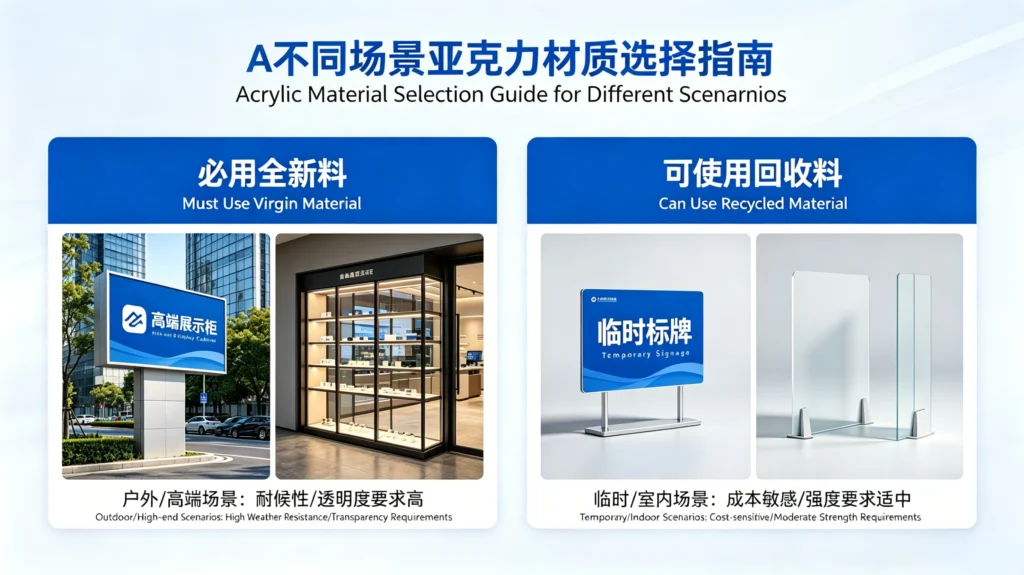
5.1 Saf, işlenmemiş akrilik senaryolar seçilmelidir
- Tüm açık havada uzun süreli kullanım projeleri
- İç mekanlarda kullanılan yüksek kaliteli teşhir uygulamaları, lüks mağaza dekorasyon panelleri, alışveriş merkezi vitrinleri
- Çocuk oyun alanlarındaki şeffaf ayırma panelleri ve merdivenlerdeki şeffaf korkuluklar gibi güvenlik önlemleriyle ilgili kullanım senaryoları
- Daha sonra hassas işleme, sıcak bükme şekillendirme, kenarların yüksek parlaklıkta parlatılması ve yüksek çözünürlüklü baskı gerektiren bitmiş ürünler
- Gıda ile temas eden kullanım alanları, tıbbi ve sağlık yardımcı tesisleri
5.2 Geri Dönüştürülmüş Akrilikin Uygun Şekilde Kullanılabileceği Senaryolar
- Geçici etkinlik tanıtım tabelaları, geçici sergi bölme panelleri gibi kısa süreli geçici kullanım amaçlı tesisler
- İç mekanlarda kullanılan gizli taban plakaları, ekipman içindeki görünmeyen arka plakalar, iç dolgu yalıtım plakaları
- Düşük bütçeli, günlük kullanım amaçlı basit plastik aksesuarlar, sıradan ve basit saklama kutusu bölmeleri
Şunu vurgulamak gerekir ki, talebin düşük olduğu durumlarda bile geri dönüştürülmüş malzemeler kullanılsa bile, üreticilerin düşük oranda karışık geri dönüştürülmüş ürünlerini tercih etmek için elimizden geleni yapmalı ve kalitesi son derece düşük olan, tamamen geri dönüştürülmüş akrilik ürünlerini satın almaktan kaçınmalıyız.
6. Satın Alma Tuzaklarından Nasıl Kaçınılır ve Yüksek Kaliteli Akrilik Tedariki Nasıl Verimli Bir Şekilde Gerçekleştirilir
- Erken Aşamadaki Talep Onayı ve Malzeme Onayı: Talep bilgilerine 100% saf işlenmemiş malzeme gerekliliğini açıkça belirtiniz.
- Birden Fazla Tedarikçiye Yönelik Karşılaştırmalı Sorgulama ve Numune Gönderimi Karşılaştırması: Karşılaştırmalı bir araştırma yapmak üzere 3 ila 5 saygın üretici seçin, aynı teknik özelliklere sahip işlenmemiş akrilikin piyasa ortalama fiyatlarını karşılaştırın, aşırı düşük fiyatlı olağandışı siparişlerden kaçının ve tüm tedarikçilerden karşılaştırma amacıyla fiziksel numune göndermelerini talep edin.
- Sözleşme Malzemesi Maddesindeki Kısıtlamanın Kaldırılması: Sözleşmeye malzeme standartlarına ilişkin net hükümler ekleyin; teslim edilen tüm malların 0% saf işlenmemiş PMMA akrilik malzemelerden oluştuğunu açıkça belirtin; herhangi bir oranda geri dönüştürülmüş atık malzemenin karıştırılmasını yasaklayın ve toplu mallarda geri dönüştürülmüş malzeme tespit edilmesi durumunda iade, değişim ve tazminat çözümünü netleştirin.
- Dökme Mallara İlişkin Sıkı Yerinde Rastgele Denetim ve Kabul İşlemleri: Toplu mallar teslim edildikten sonra, aceleyle teslimat belgesini imzalamayın. Farklı ambalaj kutularından rastgele plakalar seçerek çok yönlü bir inceleme yapın.
- Uzun Vadeli ve İstikrarlı İşbirliği İçinde Çalışılacak İşlenmemiş Hammadde Tedarikçileri Belirlemek: Uzun süreli olarak akrilik levha satın alması gereken alıcılar için, resmi büyük ham akrilik üreticileriyle uzun vadeli ve istikrarlı bir işbirliği kurmak, en az emek gerektiren ve en güvenli yoldur.
7. Profesyonel Bakire Akrilik Özel İşleme Hizmetimiz
13 yılı aşkın deneyime sahip, işlenmemiş akrilik levhaların derinlemesine işlenmesinde uzmanlaşmış profesyonel bir akrilik derin işleme fabrikasıyız. Levha tedarikçilerimiz, SABIC.
En önemli avantajlarımız:
- 100% işlenmemiş hammaddeler: Tüm geleneksel şeffaf akrilik, süt beyazı akrilik, renkli akrilik, UV ışınlarına dayanıklı dış mekan özel akrilik, buzlu akrilik ve çeşitli kalınlıkta akrilik levhalar, üretim sürecinin hiçbir aşamasında geri dönüştürülmüş artık malzemeler, kırık atık malzemeler ve çeşitli geri dönüştürülmüş plastik malzemeler eklenmeksizin, tamamen 100% yeni işlenmemiş hammaddelerden üretilmektedir.
- Tam teknik özellikli tedarik: 1 mm'den 25 mm'ye kadar tüm standart kalınlıklarda, tam genişlik ve uzunluk ölçülerinde işlenmemiş akrilik levhalar sunabiliyoruz ve müşteri ihtiyaçlarına göre sabit boyutlarda özel kesim hizmeti de veriyoruz.
- Tek elden derin işleme hizmeti: Küresel müşterilerimizin ihtiyaç duyduğu tüm akrilik son işlem hizmetlerini sunuyoruz; bunlar arasında hassas CNC kesim, lazer oyma ve kesim, profesyonel kenar parlatma, termoformlama (ısıyla bükme/sıcak presleme), soğuk bükme işlemleri, delme ve diş açma, serigrafi, UV renkli baskı, ürün montajı ve diğer tek elden işleme hizmetleri yer almaktadır.
- Ücretsiz numune hizmeti: Ücretsiz işlenmemiş akrilik numune gönderim hizmeti sunuyoruz. Müşterilerimiz, bu makalede bahsedilen çeşitli tanımlama testleri için öncelikle ücretsiz olarak fiziksel numuneler alabilirler.
- Sağlam ihracat tecrübesi: Uluslararası ihracat ambalajlama konusunda kusursuz bir deneyime ve istikrarlı küresel lojistik dağıtım kanallarına sahibiz. Nakliye mesafesine ve müşterinin varış noktası gereksinimlerine göre neme, darbeye ve basınca dayanıklı profesyonel ambalajlama işlemleri gerçekleştirebiliyoruz.
- Müşteri odaklı hizmet: Profesyonel müşteri hizmetleri ve teknik ekibimiz, size günün 24 saati boyunca ayrıntılı ve sabırlı yanıtlar verecektir.
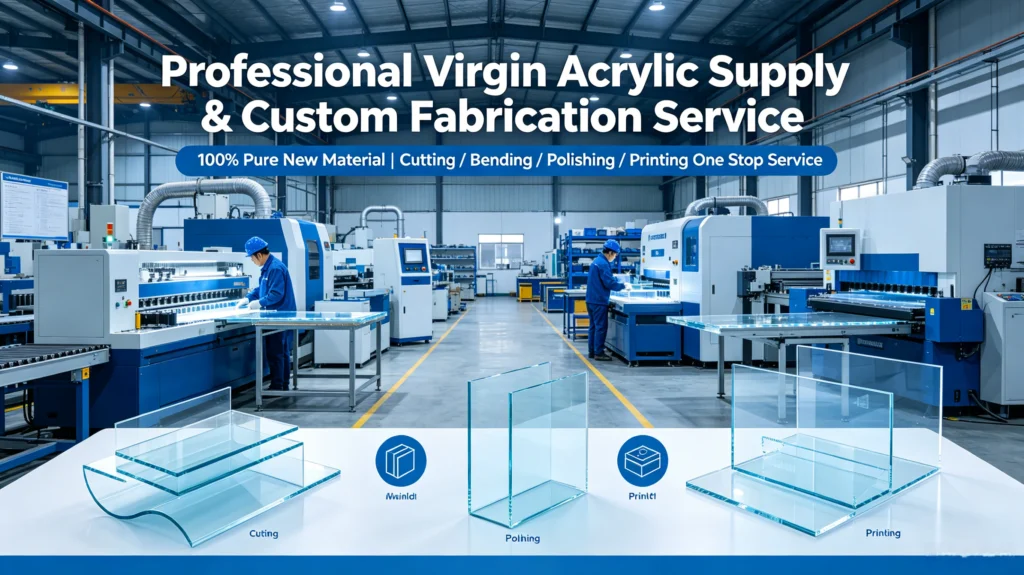
İster dış ticaret toptancısı, mühendislik alıcısı, bitmiş ürün işleyicisi, marka özel üretim satıcısı olun, ister az sayıda yüksek kaliteli akrilik levhaya ihtiyaç duyan bireysel bir kullanıcı olun, sizin için en uygun ürün eşleştirme planını ve fiyat teklifini hazırlayabiliriz.
Fabrikamızın saf işlenmemiş akrilik ürünlerini tercih ederek, geri dönüştürülmüş malzemelerin yol açtığı her türlü kalite sorununa tamamen veda edebilir, akrilik projelerinizin kalitesini istikrarlı hale getirebilir, kullanım ömrünü uzatabilir ve genel görüntüleme etkisini iyileştirebilir, ayrıca ileride ortaya çıkacak toplam kullanım ve bakım maliyetlerini etkili bir şekilde azaltabilirsiniz. Küresel alıcılarla uzun vadeli, samimi ve karşılıklı fayda sağlayan işbirliği ilişkileri kurmayı sabırsızlıkla bekliyoruz.
Son Özet
İşlenmemiş akrilik ile geri dönüştürülmüş akrilik arasındaki ayrım, yalnızca basit bir malzeme tanımlama sorunu değil, aynı zamanda proje kalitesi, kullanım güvenliği, uzun vadeli maliyet kontrolü ve ürünün piyasadaki itibarıyla ilgili kilit bir unsurdur.
Yukarıda belirtilen, hiçbir maliyet gerektirmeyen pratik tanımlama yöntemlerini iyi bir şekilde öğrenmek, her alıcının tedarik sürecinde kalitesiz geri dönüştürülmüş malzemeleri hızla elemesine, kötü niyetli satıcıların çeşitli satış taktikleriyle aldatılmasını önlemesine ve farklı kullanım senaryolarına göre malzemeleri akılcı bir şekilde eşleştirmesine yardımcı olabilir.
Gelecekteki tedarik ve kullanım sürecinde, her zaman malzeme kalitesini öncelikli kriter olarak alın, düşük fiyatlı ve kalitesiz ürünleri körü körüne tercih etmeyin ve her akrilik uygulamasının beklenen kullanım sonucunu sağlayabilmesi için resmi ve güvenilir saf akrilik üreticileriyle işbirliği yapın.