






How to Cut Acrylic Sheet Without Cracking?
Because of the high transparency, durability, and lightweight properties, acrylic sheets (PMMA) are widely used in industries such as signage, display stands, machine guards, lighting panels, and protective covers. However, the sheets may easily crack, chip, or melt if cut improperly—especially for beginners or those using the wrong tools.
If you’re struggling with cracked edges, rough cuts, or broken panels during processing, this guide will show you exactly how to cut acrylic sheet without cracking, using both DIY methods and professional industrial techniques.
Why Do Acrylic Sheets Crack During Cutting
It’s important to understand the main causes of cracking before learning the correct methods.
1. Acrylic is rigid and brittle compared to PC or flexible plastics.
2. Thin sheets (under 3mm) are sensitive to pressure and vibration.
3. Dull tools, high speed, or uneven force lead to stress cracks.
4. Lack of support during cutting causes bending and breaking.
5. Removing the protective film too early exposes the surface to damage.
Safe Methods to Cut Acrylic Sheet Without Cracking
1. Laser Cutting (Most Recommended)
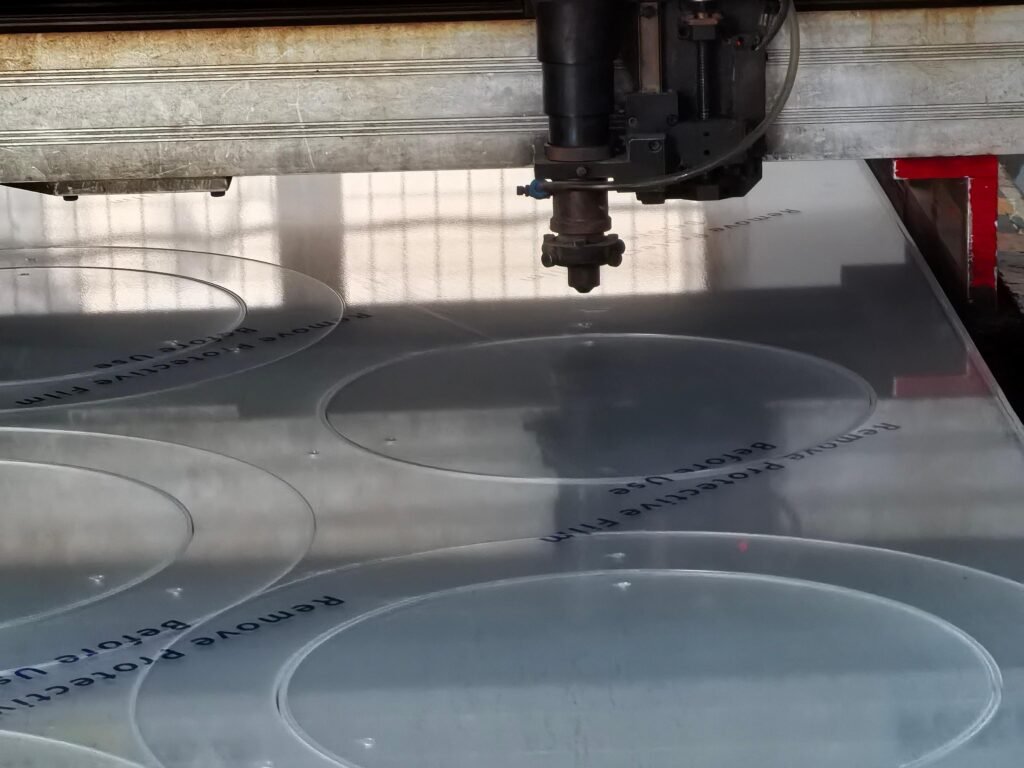
Laser cutting is one of the most precise and clean methods for acrylic fabrication. It produces smooth edges and minimizes the risk of cracking.
Benefits include:
• Zero cracking or chipping
• Ultra-precise dimensions (±0.1mm)
• Clean, smooth edges without polishing
• Support for complex shapes, holes, and engravings
• Fast production
This is why most professional buyers choose custom acrylic cutting from experienced manufacturers to avoid material waste and defective parts.
2. CNC Cutting
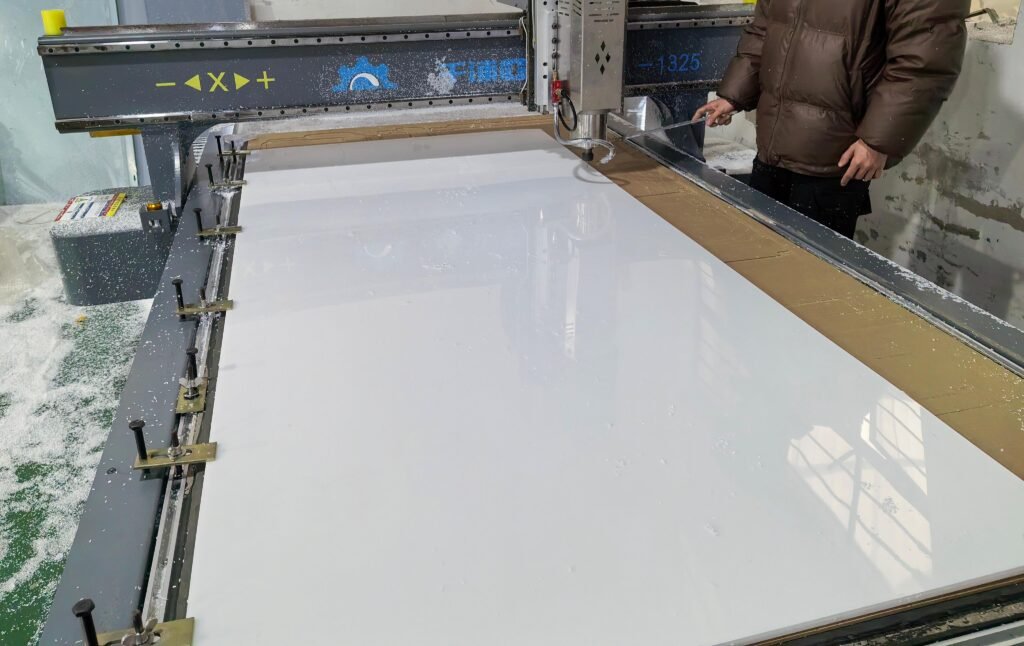
For industrial use, custom parts, thick sheets, or complex shapes, laser cutting and CNC machining are the most reliable solutions.
Advantages:
• Accurate cutting
• Suitable for thick sheets
• Good dimensional stability
3. Scoring and Snapping Method(For Thin Acrylic ≤ 3mm)
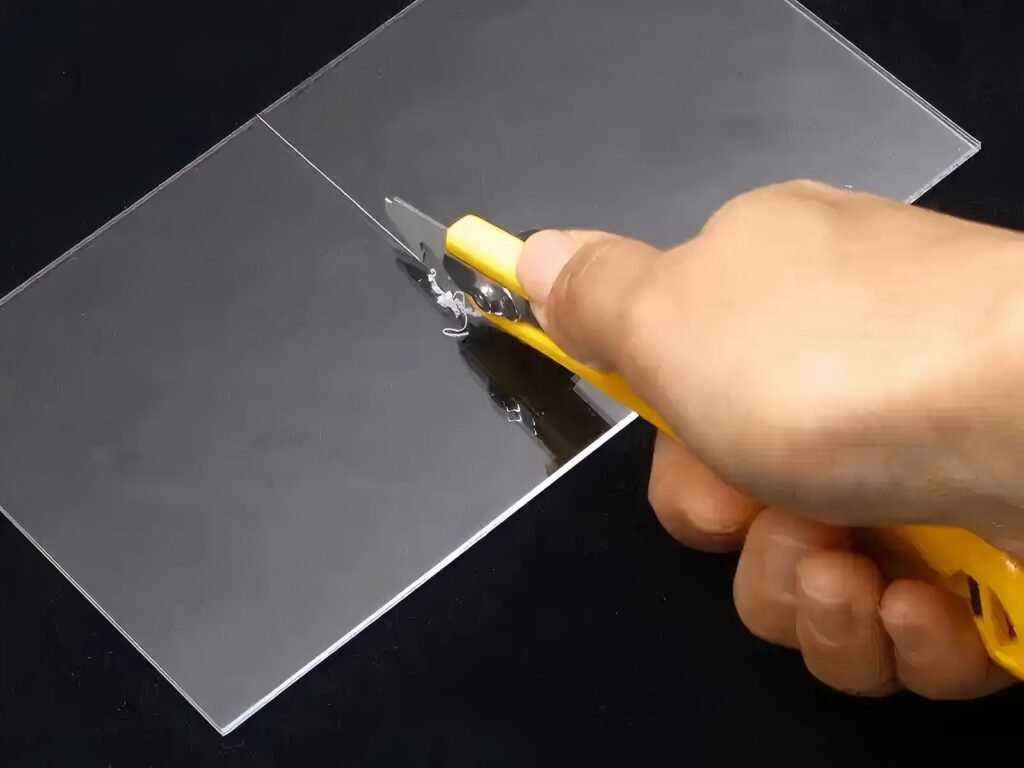
This is the most popular DIY method for straight, clean cuts on thin acrylic sheets.
1. Keep the protective film on both sides to avoid scratches.
2. Measure and mark your cut line with a ruler and marker.
3. Use a sharp acrylic scoring tool or utility knife to score the line repeatedly (5–10 times) until a deep groove forms.
4. Place the sheet along the edge of a table, aligning the score line.
5. Apply firm, even downward pressure to snap the acrylic cleanly.
6. Smooth the edge with sandpaper for a clean finish.
4. Jigsaw / Scroll Saw Cutting (For Medium Thickness 3–8mm)
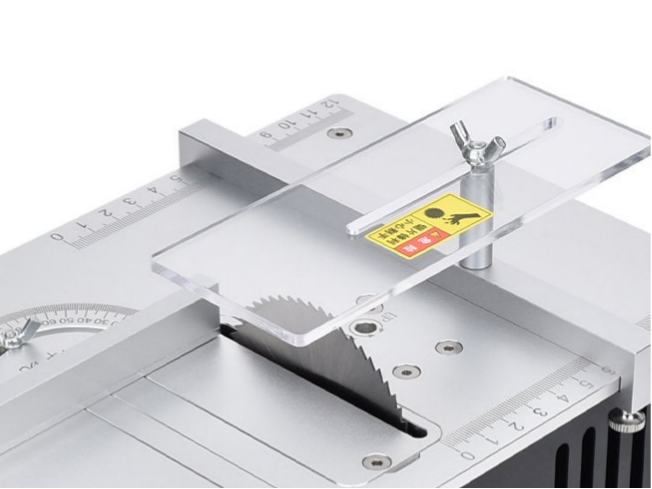
For slightly thicker acrylic, a jigsaw with fine-tooth blades works well.
Tips:
• Use a specialized plastic-cutting blade (10–14 TPI)
• Set the tool to low speed to reduce heat and vibration
• Secure the acrylic sheet tightly to avoid movement
• Cut slowly and steadily without forcing the blade
Top 7 Pro Tips to Prevent Acrylic Cracking
1. Always keep the protective PE film during cutting.
2. Use sharp, high-quality tools designed for plastic.
3. Support the entire sheet to avoid bending or sagging.
4. Cut slowly—speed is the top cause of cracking.
5. Avoid drilling or cutting corners without rounding.
6. Cool the blade if cutting with power tools to prevent melting.
7. For thick or large panels, leave it to professional fabrication.
When to Use Professional Acrylic Fabrication Services
If your project requires:
- Complex shapes
- High precision parts
- Mass production
- Smooth polished edges
It is recommended to work with a professional acrylic fabrication manufacturer.
Get Crack-Free Acrylic Parts from Yoochen Plastic
If you want 100% crack-free, precision-cut acrylic components without the hassle of DIY cutting, Yoochen Plastic provides professional acrylic fabrication services for global clients.
We specialize in custom acrylic cutting, CNC machining, laser cutting, bending, and polishing, ensuring every piece meets high-quality standards with zero defects.
Learn more about our capabilities and request a free quote.
Whether you need small batches or mass production, we deliver clean, accurate, and crack-free acrylic products for lighting, construction, displays, medical devices, and industrial equipment.
So How to Cut Acrylic Sheet Without Cracking?
Conclusion:
Cutting acrylic sheets without cracking requires the right tools, correct techniques, and proper processing conditions.
Among all methods, laser cutting and CNC machining are the most reliable solutions for achieving clean edges and precise shapes.