






1. Was sind die Ursachen für häufige Schäden an PC-Polycarbonatplatten?
Polycarbonat (PC)-Platte gilt weithin als die zäheste und schlagfesteste transparente Kunststoffplatte auf dem Markt. Im Vergleich zu Acryl- und gewöhnlichen Kunststoffplatten zeichnen sich Polycarbonatplatten durch extrem hohe Zähigkeit, Schlagfestigkeit, Hagelbeständigkeit sowie Hitze- und Kältebeständigkeit aus Widerstand. Es ist das gängigste Material für Carports, Wintergärten, Gewächshausdächer, Maschinenschutzvorrichtungen, Überdachungen im Außenbereich und Sicherheitstrennwände.
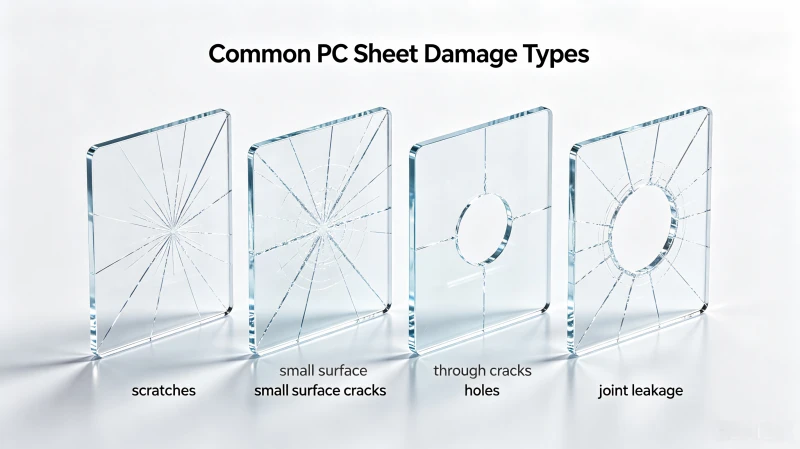
Allerdings kann kein Material Schäden vermeiden, die durch langfristige Witterungseinflüsse, Stöße, unsachgemäße Montage und den natürlichen Alterungsprozess entstehen. Die meisten Schäden an Polycarbonatplatten, die wir in realen Projekten beobachten, lassen sich in fünf häufige Arten einteilen:
1. Kratzer auf der Oberfläche
Verursacht durch tägliche Reinigung mit einem rauen Tuch, Reibung durch Sand und Staub, Kratzer durch Äste sowie Kratzer durch Handwerkzeuge. Leichte Kratzer beeinträchtigen lediglich das Aussehen; tiefe Kratzer sammeln Staub an und verringern die Lichtdurchlässigkeit.
2. Kleine Oberflächenrisse
Verursacht durch leichte Stöße, lokale Spannungskonzentrationen, geringfügige Hagelschäden oder temperaturbedingte Schrumpfung. Diese Risse durchdringen das Blech nicht und führen vorerst nicht zu Wassereintritt.
3. Durch Risse und lange Spalten
Ursachen sind starke Stöße, eine fehlerhafte Montage durch Verbiegen, zu fest angezogene Schrauben oder heftiger Hagel. Die Risse verlaufen über die gesamte Platte, weiten sich bei Temperaturschwankungen leicht aus und führen zu Wassereintritt.
4. Beschädigungen durch Löcher
Dazu gehören kleine Nagellöcher, mittelgroße Schlaglöcher und große Bruchlöcher, die durch schwere Kollisionen entstanden sind. Löcher sind die Hauptursache für Dachundichtigkeiten und das Eindringen von Regenwasser.
5. Risse in den Fugen und Wassereintritt
Tritt meist an Verbindungsfugen von Polycarbonat-Dächern auf. Alterung der Dichtungsmasse, thermische Ausdehnung und Kontraktion sowie Windvibrationen führen dazu, dass sich die Fugen öffnen und Regen eindringt.
Die gute Nachricht ist: Schäden an Polycarbonatplatten, die täglich auftreten (Typ 80%), lassen sich durch eine einfache Reparatur in Eigenregie perfekt beheben., die gesamte Platte muss nicht ausgetauscht werden, wodurch erhebliche Material- und Montagekosten eingespart werden.
2. Entscheidung vor der Reparatur: Wann sollte eine Polycarbonatplatte repariert und wann ausgetauscht werden?
Bevor Sie mit Reparaturarbeiten beginnen, müssen Sie eine klare Entscheidung treffen. Eine unüberlegte Reparatur führt entweder zu Zeitverschwendung oder birgt versteckte Sicherheitsrisiken. Auf der Grundlage unserer langjährigen Erfahrung mit Projekten im Bereich Polycarbonatplatten haben wir die praktischsten Entscheidungskriterien zusammengefasst:
✅ Kann definitiv repariert werden (muss nicht ersetzt werden)
– Alle Oberflächenkratzer (leicht oder tief, nicht durchdringend)
– Kleine, nicht durchgehende Risse innerhalb von 5 cm, in einem Bereich ohne Belastung
– Winzige Nagellöcher und kleine Einschlaglöcher unter 2 cm
– Leichte Undichtigkeit an der Fuge und Versagen der alternden Dichtungsmasse
– Stellenweise geringfügige Abblätterungen und Trübungen der Oberflächenbeschichtung
❌ Die gesamte Polycarbonat-Scheibe muss ausgetauscht werden (eine Reparatur kann die Sicherheit nicht gewährleisten)
– Großflächige Durchgangsrisse an tragenden Bauteilen (Dachmitte, Stützfeldbereich)
– Mehrere sich kreuzende Risse auf einer einzigen Platte
– Lochdurchmesser größer als 5 cm an einer tragenden Stelle
– Starke allgemeine Alterung, weit verbreitete Vergilbung, Sprödigkeit und Verhärtung
– Verformte und verzogene Platte, die nicht fest in den Rahmen passt
Wichtige Erinnerung: Die Reparatur dient lediglich der optischen Wiederherstellung und einer vorübergehenden wasserdichten Abdichtung. Bei tragenden Bauteilen ist ein Austausch die einzige sichere Lösung, sobald deren Festigkeit und Unversehrtheit beeinträchtigt sind.
3. Grundlegende Werkzeuge, die Sie für die Reparatur von Polycarbonatplatten in Eigenregie benötigen
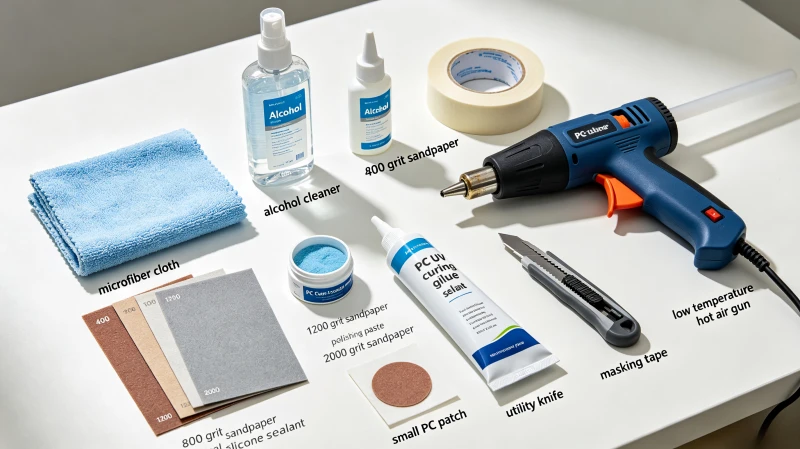
Alle Reparaturmethoden in dieser Anleitung kommen ausschließlich mit handelsüblichen Werkzeugen aus; es ist keine professionelle Industrieausrüstung erforderlich. Sie können alle Arbeitsschritte selbst durchführen:
– Sauberes, weiches Mikrofasertuch (kein raues Handtuch)
– Alkohol oder ein neutrales Reinigungsmittel (zum Entfetten und Reinigen)
– Wasserfestes Schleifpapier der Körnung 400/800/1200/2000
– Polierpaste oder nicht scheuernde Zahnpasta
– Beruflich Spezialkleber für PC (Polycarbonat) / UV-härtender Klebstoff
– Wasserfestes, neutrales Silikondichtmittel (für den Außenbereich, witterungsbeständig)
– Kleines Ausbesserungsmaterial aus Polycarbonat (dünne Polycarbonat-Ersatzplatte)
– Cuttermesser, Schere, Abdeckband, Kunststoffschaber
– Föhn oder kleine Heißluftpistole (auf niedriger Stufe)
Wichtiger Tipp: Verwenden Sie zur Reparatur von Polycarbonat niemals 502-Kleber, stark ätzenden Kleber oder gewöhnlichen Glaskleber. Diese Materialien greifen die Molekularstruktur des Polycarbonats an, verursachen sekundäre Risse und Trübungen und sind nicht beständig gegen UV-Alterung im Außenbereich.
4. Einfache Lösung für leichte und tiefe Kratzer in Polycarbonatplatten (kein Austausch erforderlich)
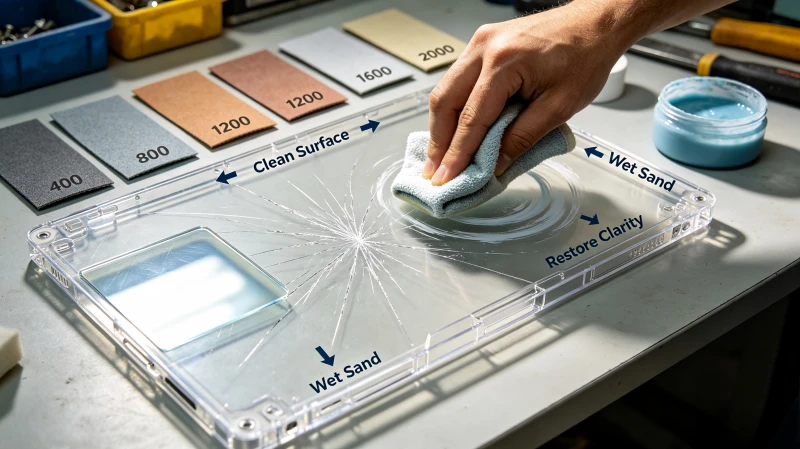
Oberflächenkratzer sind die häufigsten und am einfachsten zu behebenden Schäden an Polycarbonat-PC-Platten. Viele Nutzer tauschen die Folie aufgrund von leichten Kratzern direkt aus, was zu unnötigem Abfall führt. Wir bieten zwei bewährte Reparaturmethoden an, eine für leichte Kratzer und eine für tiefe Kratzer.
Reparaturmethode 1: Reparatur leichter Kratzer (alltägliche, kaum sichtbare Spuren)
Schritt 1: Reinigen Sie die zerkratzte Stelle gründlich mit Alkohol, entfernen Sie Staub, Sand und Ölflecken und trocknen Sie die Oberfläche sorgfältig ab.
Schritt 2: Geben Sie eine angemessene Menge nicht scheuernder Zahnpasta oder Kunststoffpolierpaste auf die verkratzte Oberfläche.
Schritt 3: Mit einem sauberen, weichen Tuch einreiben gleichmäßige Kreisbewegung Wenden Sie nur wenig Kraft an und reiben Sie nicht heftig hin und her.
Schritt 4: Polieren Sie 3–5 Minuten lang ununterbrochen, bis der leichte Kratzer verschwindet.
Schritt 5: Mit Wasser abwischen – schon ist die Transparenz wieder vollständighergestellt.
Reparaturmethode 2: Reparatur tiefer, sichtbarer Kratzer
Schritt 1: Reinigen und trocknen Sie die beschädigte Stelle, um sicherzustellen, dass keine Partikelrückstände zurückbleiben.
Schritt 2: Verwenden Sie für den ersten Nassschliff wasserfestes Schleifpapier der Körnung 400. Halten Sie das Schleifpapier dabei stets feucht und schleifen Sie flach in Richtung der Kratzer. Vermeiden Sie Trockenschliff, da dies neue Schleifspuren verursacht.
Schritt 3: Wechseln Sie schrittweise zu Schleifpapier der Körnung 800, 1200 und schließlich 2000, um eine Feinschliff zu erzielen und Schleifspuren nach und nach zu beseitigen.
Schritt 4: Tragen Sie Polierpaste für die abschließende Aufhellungsbehandlung auf, bis die Oberfläche wieder einen glatten und transparenten Glanz erhält.
Vorteil: Kein Farbunterschied, keine Spuren nach der Reparatur, stellt die ursprüngliche Lichtdurchlässigkeit und das ursprüngliche Aussehen der Polycarbonatplatte vollständig wieder her.
5. So reparieren Sie kleine Oberflächenrisse an Polycarbonatplatten
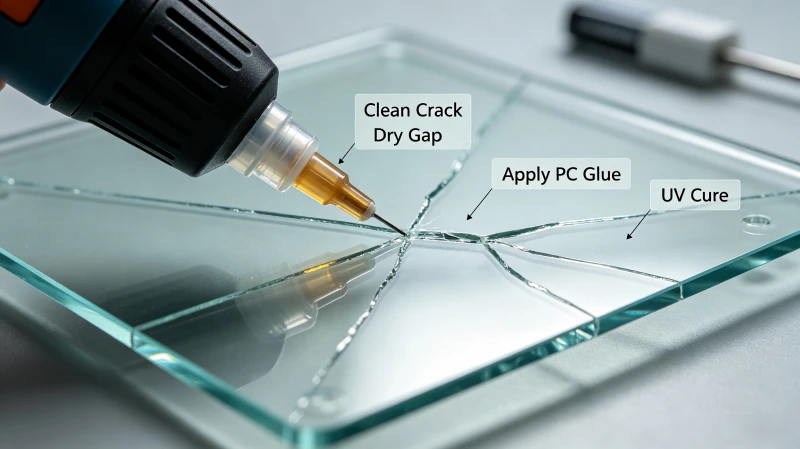
Für kleine, nicht durchgehende Oberflächenrisse (innerhalb von 5 cm, kein Wasseraustritt) – eine fachgerechte Reparatur durch Verfüllen mit Polycarbonat-Kleber ist die kostengünstigste Lösung.
Schritt 1: Reinigen Sie den Rissspalt und den umliegenden Bereich mit Alkohol, um sicherzustellen, dass er völlig staub- und fettfrei ist. Verunreinigungen führen zu einer schlechten Haftung und einem erneuten Aufbrechen des Risses.
Schritt 2: Trocknen Sie den Spalt mit Heißluft bei niedriger Temperatur leicht an und halten Sie die Oberfläche trocken und warm (nicht heiß).
Schritt 3: Mit einem feinen Nadelröhrchen oder einem Kunststoffschaber auftragen spezieller UV-härtender Polycarbonat-Klebstoff gleichmäßig in den Spalt einfüllen, den Spalt vollständig ausfüllen, ohne dass die Masse großflächig überläuft.
Schritt 4: Glätten Sie die Klebefläche, damit sie bündig mit der Plattenoberfläche abschließt.
Schritt 5: Zur schnellen Aushärtung dem Sonnenlicht oder der Strahlung einer UV-Lampe aussetzen.
Schritt 6: Nach dem vollständigen Aushärten die Oberfläche leicht polieren, um Kleberückstände zu entfernen.
Wirkung: Der Riss wird vollständig versiegelt, es kommt zu keiner weiteren Ausdehnung, er ist für den langfristigen Einsatz im Außenbereich geeignet, vergilbt nicht und lässt kein Wasser durch.
6. Umfassende Reparaturanleitung für durchgehende Risse und lange Spalten
Durch Risse sind die problematischsten Schäden an Polycarbonat-Dächern und Wintergartenplatten. Durch Temperaturausdehnung und -kontraktion wird der Riss ständig weiter aufgerissen, was zu einer zunehmenden Spaltung und schwerwiegenden Wassereinbrüchen führt. Das einfache Verfüllen mit Klebstoff reicht nicht aus; Sie benötigen die doppelte Reparaturmethode “Verfüllen mit Klebstoff + Verstärkung durch Flicken”.
Schritt 1: Reinigen Sie den gesamten Riss gründlich und entfernen Sie alte Rückstände sowie versteckten Staub aus dem Spalt.
Schritt 2: Füllen Sie den Riss mit einem professionellen Spezialkleber für Polycarbonat und dichten Sie die durchgehende Fuge vollständig ab, um das Eindringen von Wasser zu verhindern.
Schritt 3: Schneiden Sie ein dünnes Ersatzstück aus einer Polycarbonatplatte zu; die Größe des Ersatzstücks muss auf allen Seiten 2–3 cm größer als der Rissbereich.
Schritt 4: Polieren Sie die Klebefläche des Flickens leicht an, um die Haftreibung zu erhöhen.
Schritt 5: Tragen Sie einen gleichmäßigen Schicht wasserfesten Konstruktionskleber auf die Rückseite des Flickens auf, legen Sie ihn bündig auf die Rissstelle, drücken Sie ihn fest an und befestigen Sie ihn mit Klebeband.
Schritt 6: Lassen Sie das Ganze 24 Stunden lang stehen, damit es vollständig aushärten kann, entfernen Sie das Klebeband und versiegeln Sie die Kanten erneut wasserdicht.
Kernvorteil: Die innere Schicht dichtet Wasserundichtigkeiten ab, die äußere Schicht verstärkt die strukturelle Festigkeit und verhindert so wirksam ein erneutes Aufbrechen von Rissen, das durch Temperaturschwankungen und Windvibrationen verursacht wird.
7. So flicken Sie kleine und große Löcher in Polycarbonatplatten
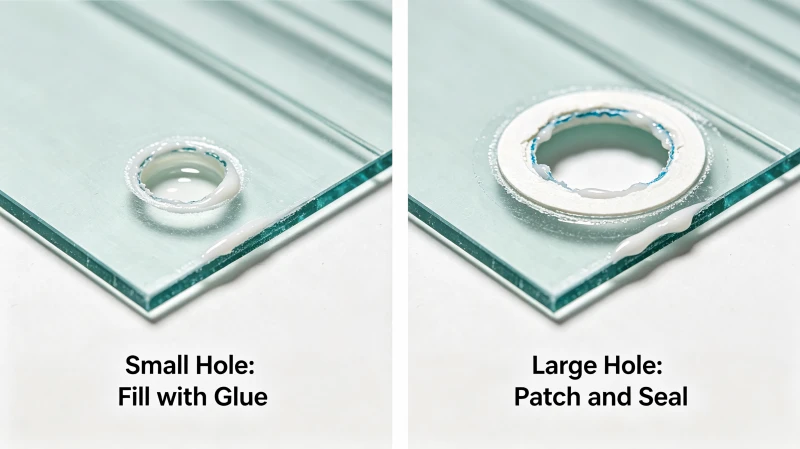
Lochschäden sind die Hauptursache für das Eindringen von Wasser in Polycarbonatplatten. Wir unterteilen die Reparatur von Löchern je nach Lochgröße in zwei Verfahren, was zielgerichteter und effektiver ist.
Schema 1: Reparatur kleiner Löcher (unter 2 cm)
Bei winzigen Nagellöchern und kleinen Einschlaglöchern reicht eine direkte Verklebung aus. Reinigen Sie das Loch, füllen Sie es mit wetterbeständigem Polycarbonat-Reparaturkleber für den Außenbereich, glätten Sie die Oberfläche, lassen Sie den Kleber aushärten und polieren Sie ihn anschließend. So erzielen Sie ein perfekt wasserdichtes und ästhetisches Ergebnis, ohne dass ein Flicken erforderlich ist.
Schema 2: Ausbessern mittlerer und großer Löcher (2 cm–5 cm)
Schritt 1: Schneiden Sie die unregelmäßige Lochkante mit einem Cuttermesser nach, um eine saubere Kante zu erhalten, und vermeiden Sie scharfe Ecken, die zu weiteren Rissen führen könnten.
Schritt 2: Reinigen und entfetten Sie den umliegenden Bereich gründlich.
Schritt 3: Schneiden Sie ein rechteckiges Stück aus Polycarbonat zu, das in allen Richtungen 3 cm größer ist als das Loch.
Schritt 4: Tragen Sie eine dicke und gleichmäßige Schicht wetterbeständigen Baukleber auf das Flickenstück auf.
Schritt 5: Decken Sie das Loch fest ab und drücken Sie gleichmäßig darauf, um Luftblasen im Inneren zu entfernen.
Schritt 6: Mit Klebeband befestigen und 24 Stunden lang an der Luft aushärten lassen.
Schritt 7: Versiegeln Sie nach dem Aushärten den Randkreis der Ausbesserungsstelle erneut, um die Wasserdichtigkeit zu verbessern.
Praktische Auswirkung: Die geflickte Stelle hält Regen, Winddruck und saisonalen Temperaturschwankungen stand und bleibt über viele Jahre hinweg dicht.
8. Schnelle Abhilfe bei Undichtigkeiten an Dächern aus Polycarbonatplatten und an Fugen
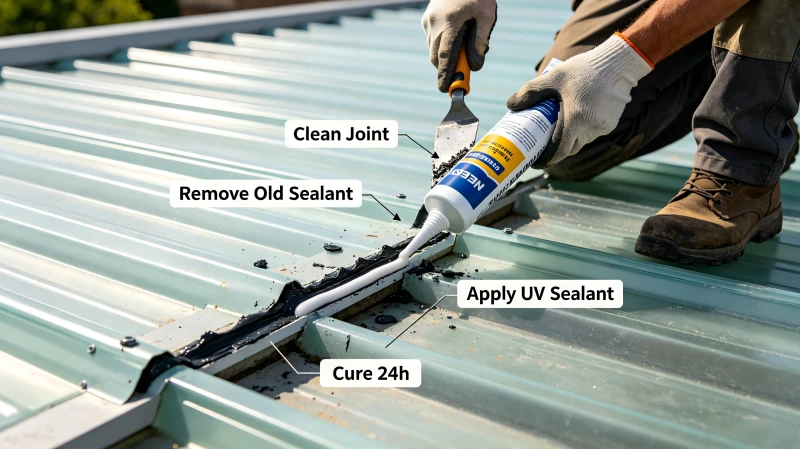
Die meisten Undichtigkeiten bei Polycarbonat-Dächern werden nicht durch Risse in den Platten verursacht, sondern durch Alterung der Dichtungsmasse und Versagen der Verbindungsfuge. Diese Art von Leck lässt sich am einfachsten beheben, ohne dass Kosten für den Austausch anfallen.
Schritt 1: Entfernen Sie die gesamte veraltete, abblätternde und geschwärzte alte Dichtungsmasse vollständig mit einer Schaufel.
Schritt 2: Entfernen Sie Staub, Schimmel und sonstige Verunreinigungen aus der Fuge und halten Sie diese trocken und sauber.
Schritt 3: Erneut auftragen UV-beständiges, neutrales Silikon-Dichtungsmittel für den Außenbereich, füllen Sie die Lücke vollständig aus, ohne sie auszuhöhlen.
Schritt 4: Glätten Sie die Klebefläche, um einen ebenen, wasserdichten Streifen zu bilden.
Schritt 5: Vermeiden Sie das Abwaschen mit Wasser innerhalb von 24 Stunden und warten Sie, bis die Aushärtung vollständig abgeschlossen ist.
Sollte der Spalt zwischen den Fugen zu groß sein, empfehlen wir, vor dem Verkleben eine dünne Polycarbonat-Zwischenlage einzufügen, um die Stabilität zu erhöhen und eine Vergrößerung des Spalts aufgrund thermischer Ausdehnung und Kontraktion zu verhindern.
9. Falsche Reparaturmethoden, die Polycarbonatplatten zerstören (unbedingt vermeiden)
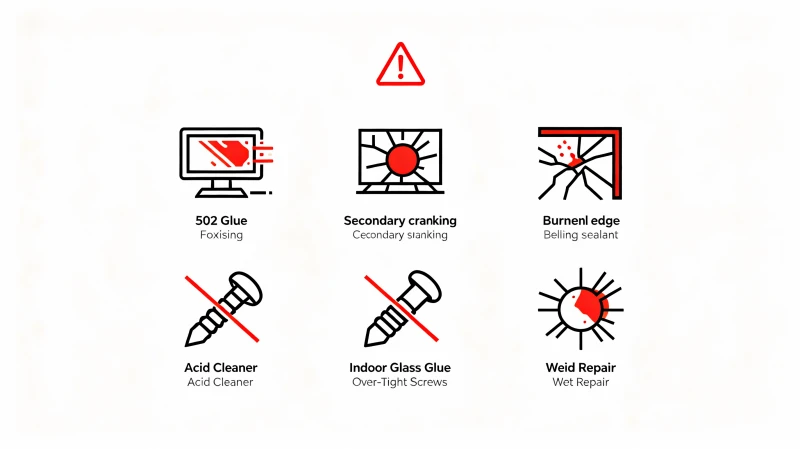
In unserer Zusammenfassung der Kundendienstprojekte geht hervor, dass die meisten Folgeschäden an Polycarbonatplatten durch unsachgemäße Reparaturen in Eigenregie verursacht werden. Wir listen die 6 schwerwiegendsten Fehler auf, damit Sie Verluste vermeiden können:
1. Verwenden Sie 502-Kleber und starken Sekundenkleber
Stark ätzende Stoffe greifen die Molekülstruktur von Polycarbonatplatten an, führen sofort zur Bildung von milchig-weißen Rissen und beschleunigen die Alterung und Sprödigkeit.
2. Verwenden Sie gewöhnlichen Glaskleber für den Innenbereich
Geringe UV-Beständigkeit; im Außenbereich neigt das Material zu Alterung, Abblättern und Rissbildung, was zu wiederholten Undichtigkeiten führt.
3. Trockenschleifen mit grobem Schleifpapier
Kratzer durch dichten Nebel auf der Polycarbonat-Oberfläche zerstören die ursprüngliche UV-Schutzbeschichtung vollständig und sind irreparabel.
4. Schrauben nach der Reparatur zu fest anziehen
Dies führt zu einer lokalen Spannungskonzentration, wodurch im nächsten Temperaturzyklus an der Reparaturstelle neue Risse entstehen.
5. Reparaturen an nassen oder regnerischen Tagen
Feuchtigkeit beeinträchtigt die Haftkraft des Klebstoffs, was zu einer unvollständigen Verklebung und einem erneuten Undichtwerden führen kann.
6. Reinigen Sie die beschädigte Stelle mit einem säurehaltigen Reinigungsmittel.
Die Oberflächenbeschichtung aus Polycarbonat wird angegriffen, was zu irreversibler Trübung und Vergilbung führt.
10. Tipps zur Wartung nach der Reparatur zur Verlängerung der Lebensdauer von Polycarbonatplatten
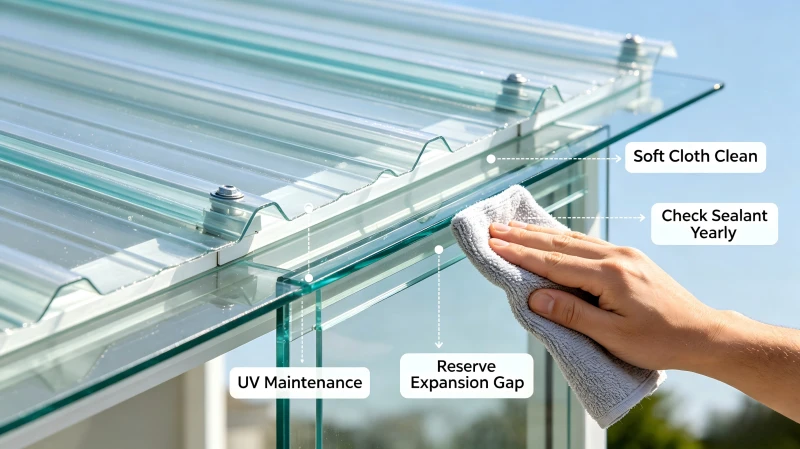
Eine gute Reparatur muss mit der richtigen Pflege einhergehen; andernfalls wird die reparierte Stelle bald wieder beschädigt. Diese Tipps zur täglichen Pflege können die Lebensdauer von Polycarbonat-PC-Platten:
– Reinigen Sie das Produkt regelmäßig mit einem neutralen Reinigungsmittel auf Wasserbasis; verwenden Sie niemals säure- oder alkalihaltige Reinigungsmittel.
– Verwenden Sie zur Reinigung ausschließlich weiche Baumwolltücher; vermeiden Sie harte Bürsten und starke Reibung durch Werkzeuge.
– Überprüfen Sie die Fugenversiegelung jährlich und ersetzen Sie gealterten Klebstoff rechtzeitig.
– Vermeiden Sie Kollisionen mit scharfen Werkzeugen und starken Druck von schweren Gegenständen auf die Blechoberfläche.
– Achten Sie bei der Verlegung darauf, ausreichend Dehnungsfugen vorzusehen, um Spannungsrisse zu vermeiden.
– Bei langfristiger Nutzung im Freien sollten Sie die Oberfläche regelmäßig polieren, um Alterung und Vergilbung zu verzögern.
11. Unser professioneller Service für maßgefertigte und Ersatz-Polycarbonatplatten
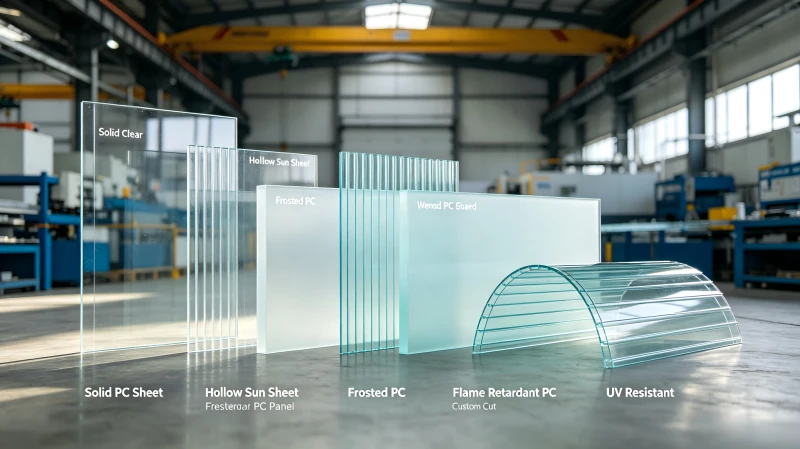
Bei kleinen Schäden ist eine Reparatur in Eigenregie sehr kostengünstig, bei großflächigen Schäden, strukturellen Rissen, allgemeiner Alterung und fehlgeschlagenen Reparaturstellen hingegen, professionelle, maßgeschneiderte Polycarbonatplatten Ersatz ist die sicherste und langfristigste Lösung.
Als Fachmann Hersteller von PC-Platten aus Polycarbonat mit 15 Jahren Erfahrung im Exportgeschäft, bieten wir unseren Kunden weltweit Dienstleistungen aus einer Hand an, darunter die Herstellung von Polycarbonatplatten, die Weiterverarbeitung, die individuelle Anpassung sowie die Nachbetreuung nach Projektabschluss.
1. Komplettes Sortiment an Polycarbonatplatten
Wir stellen hochwertige Produkte her massive Polycarbonatplatten, hohle Sonnenblenden aus Polycarbonat, sowie maßgeschneiderte, funktionale Polycarbonatplatten, darunter UV-beständige Polycarbonatplatten für den Außenbereich, flammhemmende Polycarbonatplatten, hochtransparente, klare Polycarbonatplatten und mattierte Polycarbonatplatten zum Sichtschutz. Die verfügbaren Stärken reichen von 1,5 mm bis 20 mm und decken alle gängigen Anwendungsbereiche ab, wie z. B. Carport-Überdachungen, Wintergartenvergläsungen, Gewächshausplatten für die Landwirtschaft, mechanische Schutzvorrichtungen, Platten für Außenwerbung, Trennwände für die öffentliche Sicherheit sowie technische Dachprojekte.
Im Gegensatz zu den handelsüblichen Polycarbonatplatten von minderer Qualität, die auf dem Markt erhältlich sind, zeichnen sich alle unsere maßgefertigten Polycarbonatplatten durch folgende Merkmale aus: 100%-Rohstoffe aus reinem Polycarbonat ohne recycelte Zusatzstoffe, wodurch eine gleichbleibende Schlagzähigkeit, Lichtdurchlässigkeit und Witterungsbeständigkeit gewährleistet sind. Jede Produktcharge entspricht internationalen Exportstandards und eignet sich somit ideal für den langfristigen Einsatz im Außenbereich sowie in industriellen Umgebungen.
2. Präzise, maßgeschneiderte Weiterverarbeitung
Entsprechend den vor Ort geltenden Maßvorgaben und Zeichnungsanforderungen unserer Kunden führen wir im Werk Laserschneiden, CNC-Sonderformschneiden, Bohren, Kantenbearbeitung, Biegen und die Vorbearbeitung der Fertigprodukte durch. Die Kunden erhalten die Bleche und können diese direkt einbauen; eine Nachbearbeitung ist nicht erforderlich.
3. Garantie für hochwertige Rohstoffe
Alle unsere Polycarbonatplatten werden aus importiertem, reinem Polycarbonat-Rohmaterial der Sorte 100% hergestellt und verfügen über eine beidseitige, coextrudierte UV- und Alterungsschutzbeschichtung, die Sonneneinstrahlung im Außenbereich, Regenerosion und Hagelschlag wirksam widersteht. Die Lebensdauer von Polycarbonatplatten in Außenqualität kann 10 bis 15 Jahre betragen.
4. Flexible Bestellung und schnelle Lieferung
Wir unterstützen sowohl Testbestellungen in kleinen Stückzahlen als auch große Großaufträge für technische Projekte – ohne starre, hohe Mindestbestellmengen. Kurze Produktionszyklen, stabile Qualität, vollständige Exportzertifizierungen und Prüfberichte sowie weltweite Lieferung von Tür zu Tür und die Abstimmung auf technische Projekte.
5. Kostenloser technischer Support
Wir bieten unseren Kunden weltweit eine kostenlose Schadensbegutachtung vor Ort, Empfehlungen zur Materialauswahl, Anleitungen zur Montage sowie die Optimierung von Reparaturkonzepten. Ganz gleich, ob Sie eine Anleitung zur Reparatur in Eigenregie oder einen vollständigen Austausch der Platten benötigen – unser professionelles Team liefert Ihnen passgenaue Lösungen.
12. Abschließende Zusammenfassung und praktischer Leitfaden zur Auswahl
Polycarbonat-PC-Platte ist zwar strapazierfähig, aber nicht unzerstörbar. Kratzer, kleine Risse und kleine Löcher lassen sich mit kostengünstigen Heimwerker-Methoden perfekt beheben, was erheblich Kosten für die Projektwartung einsparen. Bei strukturellen Schäden und großflächigen Defekten birgt eine Reparatur ohne Sichtprüfung jedoch Sicherheitsrisiken, weshalb der rechtzeitige Austausch durch eine hochwertige, maßgefertigte Polycarbonatplatte die zuverlässigste Lösung darstellt.
Wenn Sie die wissenschaftlichen Reparatur- und Wartungsmethoden für Polycarbonatplatten beherrschen, können Sie die Lebensdauer Ihrer vorhandenen Platten maximieren und häufige Austauscharbeiten sowie wiederholte Investitionen vermeiden. Falls Sie sich bei der Schadensbeurteilung unsicher sind, technische Beratung zur Reparatur benötigen oder hochwertige Polycarbonat-Ersatzplatten nach Maß anfertigen lassen möchten, können Sie sich jederzeit gerne an unser Team wenden, um eine eine kostenlose, professionelle Lösung und ein genaues Angebot.