




Acrylic (chemical name: Polymethyl Methacrylate, PMMA), commonly known as Plexiglas®, Lucite®, or Perspex®, is a transparent thermoplastic celebrated for its crystal clarity, lightweight, shatter resistance, and exceptional formability. Acrylic fabrication refers to the entire process of transforming raw acrylic sheets, rods, or blocks into finished, functional, and aesthetic parts using precision manufacturing techniques.
Acrylic fabrication is a widely used manufacturing process for creating custom plastic parts with high clarity, durability, and aesthetic appeal.
From retail displays and industrial machine guards to medical enclosures and automotive components, acrylic fabrication delivers high-quality, cost-effective solutions across industries. This guide breaks down everything you need to know: what acrylic fabrication is, core processes, material benefits, applications, and how professional custom acrylic fabrication services can elevate your project.
What Is Acrylic Fabrication?
Acrylic fabrication refers to the process of cutting, shaping, machining, and assembling acrylic (PMMA) sheets into finished products.
Unlike raw material supply, fabrication involves transforming acrylic sheets into custom-designed components based on drawings or specific requirements.
This process allows manufacturers to produce:
- Custom acrylic displays
- Protective covers
- Machine panels
- Signage products
- Industrial plastic components
What Makes Acrylic Ideal for Fabrication?
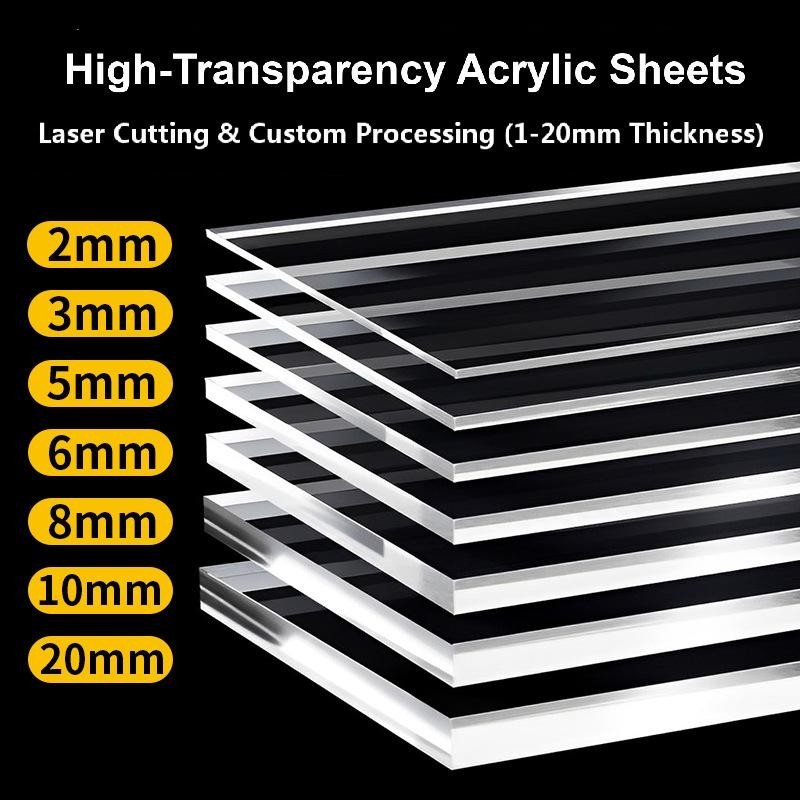
Acrylic stands out as a top choice for fabrication due to its unmatched properties:
- Superior Clarity: Transmittance up to 92%—higher than glass—for crystal-clear visibility.
- Lightweight: 50% lighter than glass, reducing shipping and installation costs.
- Impact Resistance: 10x stronger than glass, shatter-resistant for safety-critical applications.
- UV & Weather Resistance: Resists yellowing and degradation in outdoor environments.
- Easy Fabrication: Compatible with cutting, machining, bending, bonding, and polishing for endless design possibilities.
- Cost-Effective: Lower material and tooling costs compared to glass or high-performance plastics.
Common Acrylic Fabrication Processes
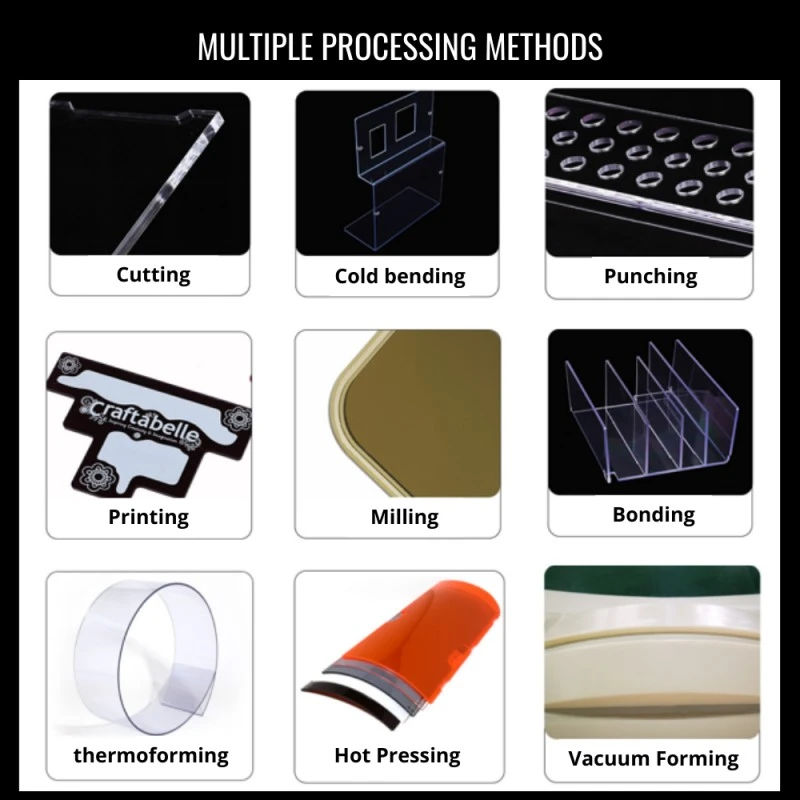
Acrylic fabrication combines multiple precision techniques to achieve desired shapes, finishes, and functions. The first step in fabrication is shaping raw acrylic sheets to size or creating intricate patterns. Below are the most common processes:
1. Laser Cutting
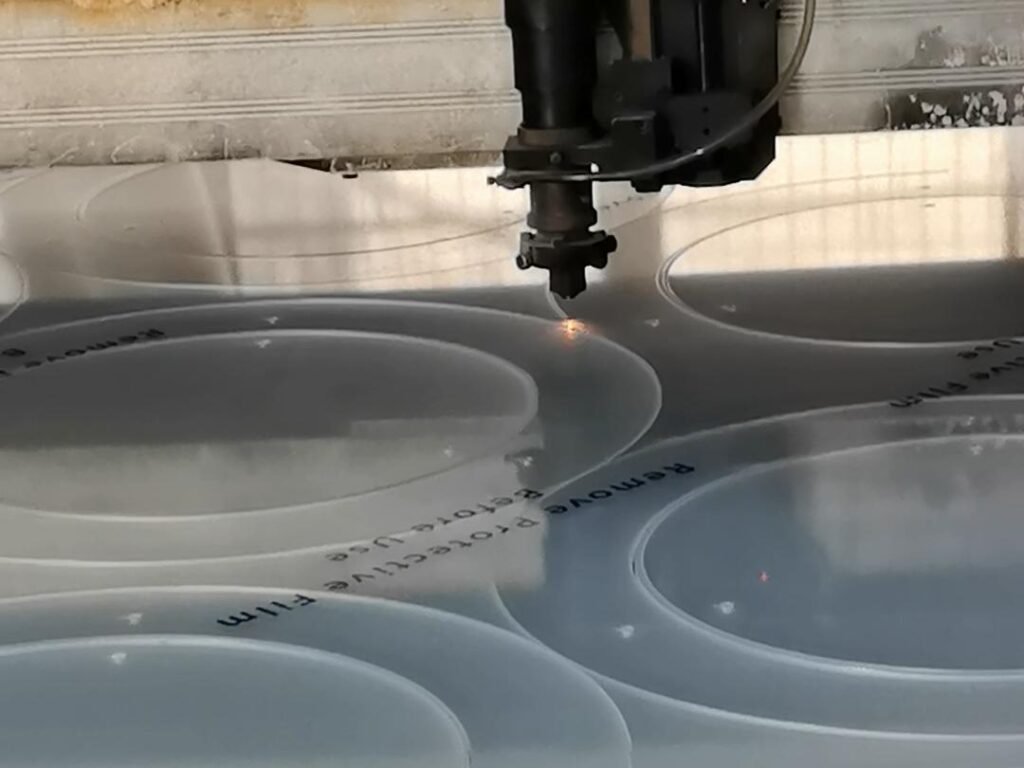
Uses a high-precision CO₂ laser to cut, engrave, or etch acrylic with ±0.1mm accuracy. Ideal for complex 2D designs, logos, and thin sheets (0.5–10mm). Produces clean, burr-free edges with minimal post-processing.
Laser cutting is one of the most popular methods for acrylic fabrication.
- Produces smooth and polished edges
- Ideal for intricate shapes
- High precision and efficiency
2. CNC Machining
Computer-controlled routers/mills perform 2D/3D cutting, drilling, milling, and grooving. Perfect for thick acrylic (3–50mm), structural parts, and tight tolerances (±0.05mm).
CNC machining is used for thicker acrylic sheets and precision parts.
- High-dimensional accuracy
- Suitable for industrial components
- Supports drilling, milling, and grooving
3. Saw Cutting
For straight cuts on large sheets; ideal for bulk production of simple shapes.
Our acrylic laser cutting and acrylic CNC machining services deliver unmatched precision for both prototypes and mass production.
4. Thermoforming & Bending
Acrylic softens at 110–160°C, allowing it to be shaped into curves, angles, or complex forms:
- Line Bending: Localized heating (heating wire) for precise 90°/angled bends—used for display frames, enclosures, and edge trim.
- Vacuum Forming: Heating entire sheets and using vacuum pressure to form them over molds—ideal for large, contoured parts like machine guards and light covers.
- Pressure Forming: For deeper, more detailed shapes with uniform wall thickness.
5. Bonding & Joining
Create seamless, strong assemblies without visible fasteners:
- Solvent Bonding: Uses acrylic-specific solvents (e.g., methylene chloride) to fuse surfaces, resulting in crystal-clear, permanent bonds.
- Adhesive Bonding: UV-curing or acrylic adhesives for high-strength joints on thick or irregular parts.
- Mechanical Fastening: Screws, rivets, or tabs for structural assemblies requiring disassembly.
6. Polishing and Finishing
Polishing improves the appearance and transparency of acrylic edges.
- Flame Polishing: Torch heat melts edges for a glossy, transparent finish—ideal for thin acrylic.
- Diamond/Buffer Polishing: Mechanical polishing for thick parts or large surfaces, delivering mirror-like results.
- Sanding & Buffing: Step-by-step sanding (from coarse to fine grit) followed by buffing for uniform smoothness.
- Surface Treatments: UV coating, anti-scratch coating, or matte finishing for enhanced durability and aesthetics.
7. Printing & Engraving
Add branding, labels, or functional markings:
- UV Printing: Full-color, high-resolution printing directly on acrylic—no plates, fast curing, and durable.
- Screen Printing: For bulk, single-color logos or text with excellent adhesion.
- Laser Engraving: Permanent, precise markings for logos, serial numbers, or decorative patterns.
Key Applications of Acrylic Fabrication
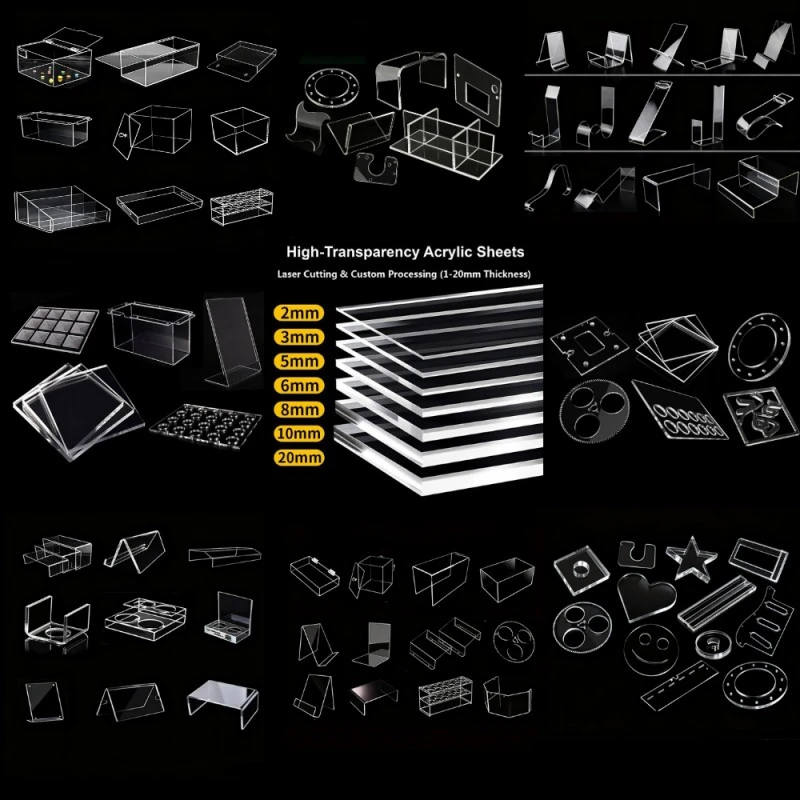
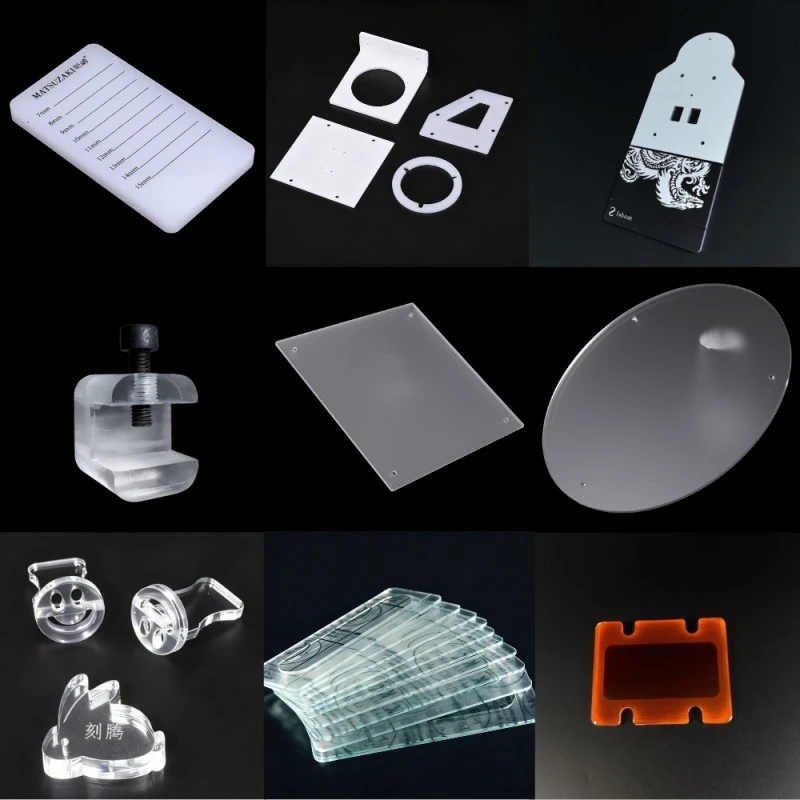
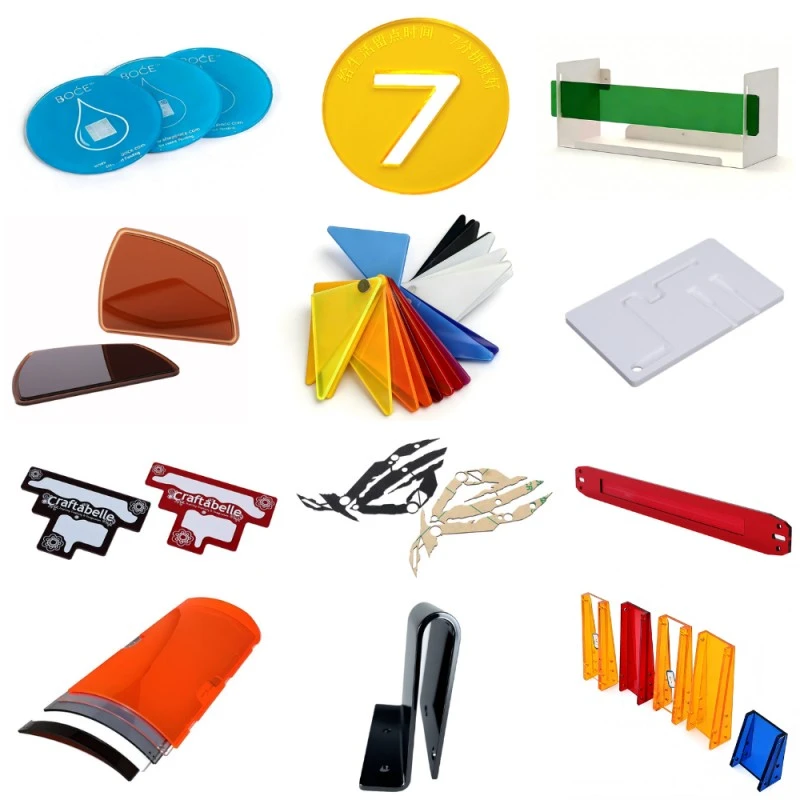
Acrylic fabrication serves nearly every industry with custom, high-performance parts:
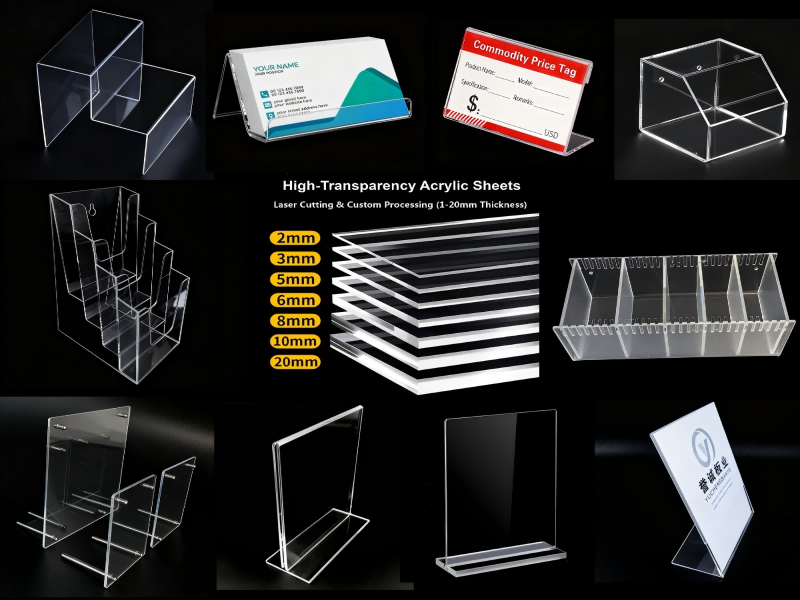
- Retail & Display: POP displays, product stands, brochure holders, jewelry cases, and illuminated signs.
- Industrial: Machine guards, equipment covers, control panels, and safety shields.
- Medical: Sterile enclosures, instrument trays, protective barriers, and diagnostic device components.
- Automotive: Headlight/tail light covers, dashboard panels, and interior trims.
- Architecture & Construction: Skylights, partitions, decorative panels, and weather-resistant glazing.
- Electronics: Device enclosures, touch panels, and light diffusers.
Many businesses rely on custom acrylic fabrication to create unique and functional products.
Acrylic Fabrication vs. Other Materials
| Property | Acrylic | Glass | Polycarbonate (PC) |
| Clarity | Excellent (92%) | Excellent | Good |
| Weight | Light (50% of glass) | Heavy | Light |
| Impact Resistance | High (10x glass) | Low | Very High |
| UV Resistance | Excellent | Very Good | Good |
| Fabrication Ease | Excellent | Difficult | Good |
| Cost | Low-Medium | High | Medium-High |
Why Work With a Professional Acrylic Fabrication Company?
While basic acrylic cutting can be done in-house, professional fabrication ensures:
- Precision & Consistency: Tight tolerances and uniform quality across production runs.
- Material Expertise: Selection of extruded acrylic for optimal performance.
- Advanced Finishing: Mirror polishing, seamless bonding, and custom coatings.
- Design Optimization: Engineering support to reduce costs and improve functionality.
- Scalability: From 1-piece prototypes to 10,000+ mass-produced parts.
We specialize in end-to-end acrylic fabrication services for global clients. Our capabilities include:
- Precision laser cutting & CNC machining (1–20mm acrylic)
- Thermoforming, bending, and vacuum forming
- Solvent bonding & adhesive joining
- Flame/diamond polishing & surface coating
- UV printing, screen printing, and laser engraving
- Custom design, prototyping, and OEM/ODM production
Whether you need retail displays, industrial guards, medical components, or custom acrylic parts, our team delivers high-quality, cost-effective solutions tailored to your specifications.
Conclusion
Acrylic fabrication is a versatile and efficient process for producing high-quality plastic parts.
With its excellent clarity, ease of processing, and wide range of applications, acrylic remains one of the most popular materials in custom manufacturing.
If you need custom acrylic components, working with a professional fabrication partner is the best way to ensure quality and efficiency.
Need Custom Acrylic Parts?
We provide professional acrylic fabrication services, including laser cutting, CNC machining, bending, and polishing.
Contact us today for a free quote!