






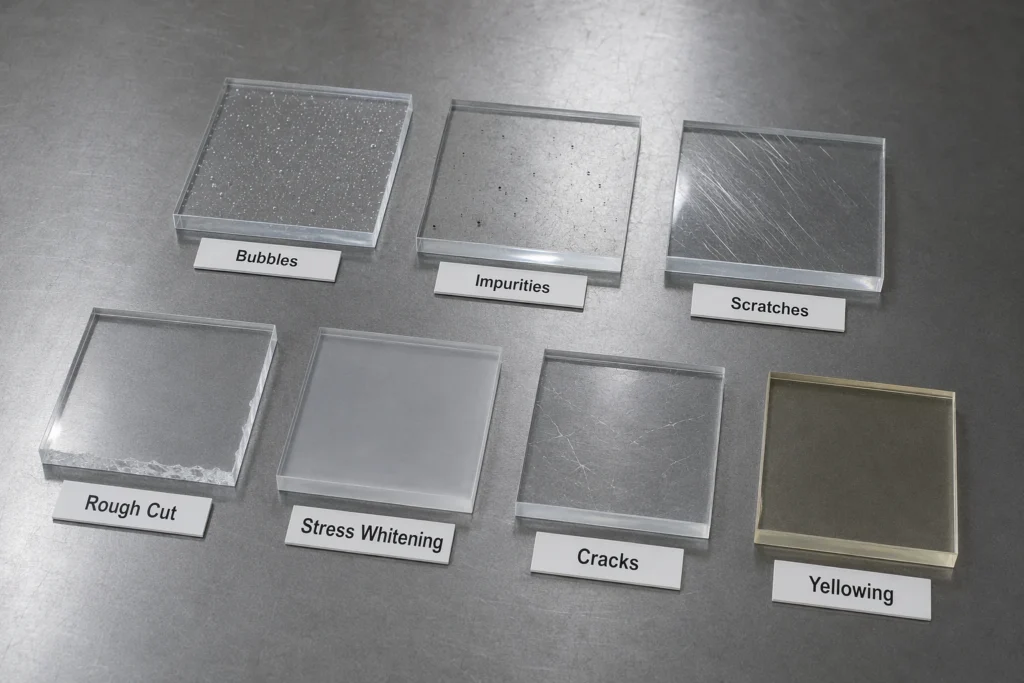
Polycarbonate (PC) sheet is widely adopted for new energy equipment housings, medical protective covers, machinery safety guards, lighting shells, sunroom panels and many industrial transparent components. Compared with ABS, acrylic and PVC, PC material has outstanding impact resistance, wide temperature tolerance and good thermoforming performance.
However, polycarbonate material has unique material characteristics: strong moisture absorption, easy to generate internal stress after heating and shaping, sensitive to temperature changes, and prone to all kinds of visible and hidden defects during cutting, drilling, hot bending and vacuum forming. Many processors only adjust equipment parameters blindly after defective products appear, without finding out the root cause. Small defects will evolve into mass scrap loss, and some hidden stress cracks will only appear weeks after delivery to customers.
This article sorts out almost all common polycarbonate sheet processing defects accumulated from long-term mass production experience. We clearly explain the root cause of each defect and list operable correction & prevention plans, covering raw material inspection, pre-drying, heating forming, CNC machining, surface treatment and finished product packaging. It helps processing factories and purchasing engineers effectively lower reject rate and avoid unnecessary cost waste.
1. Overview: Why Polycarbonate Sheet Is Easy to Produce Processing Defects
Before analyzing specific defects, we need to understand several natural properties of polycarbonate material that lead to processing risks:
- Strong hygroscopicity: polycarbonate absorbs water vapor from the air naturally. Once moisture remains inside the sheet, high-temperature heating will produce bubbles and silver streaks.
- Easy to form residual stress: After heating, stretching and rapid cooling, uneven molecular arrangement creates internal stress. Products may crack when impacted, when cleaned with a chemical liquid, or when used outdoors.
- Narrow stable processing temperature window: Too low a temperature leads to poor fluidity and cracking; overheating causes material degradation, yellowing and surface fogging.
- Surface hardness limitation: Without hard coating, the polycarbonate surface is easy to scratch during transportation and processing.
- Sensitive to sharp force: Sharp edges and rapid local extrusion will create invisible micro-cracks, which expand gradually under temperature alternation.
Many small processing workshops ignore these material features and directly copy processing parameters for acrylic or ABS. This is the primary reason for continuous defective batches of polycarbonate sheet.
2. Defects Caused by Raw Material Quality
No processing technology can compensate for the defects in inferior raw materials. Many hidden troubles start from incoming polycarbonate sheets.
Defect 2.1 Internal impurity dots, black particles and crystal points
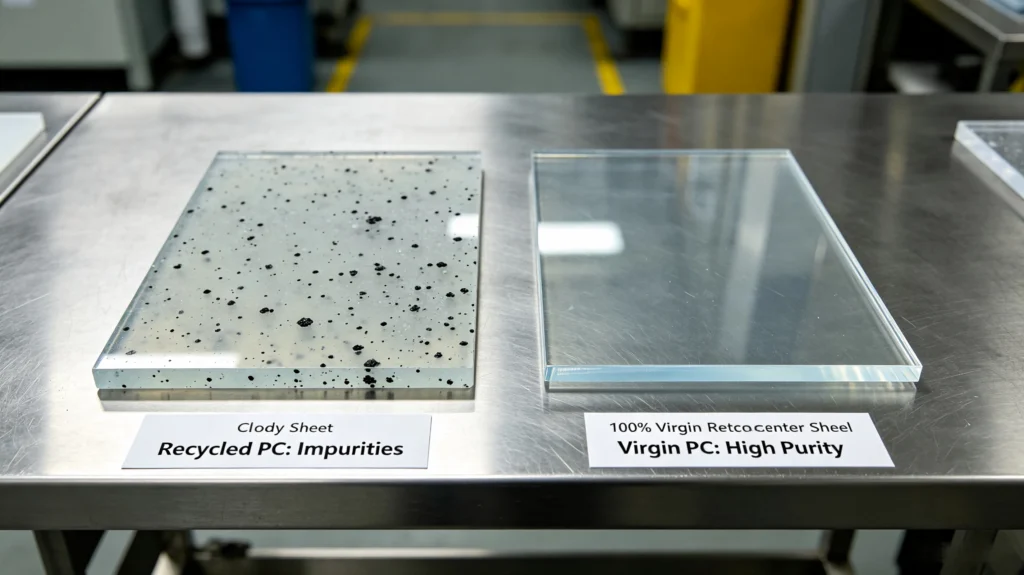
Root Cause
- The manufacturer mixes recycled polycarbonate scrap during extrusion production.
- Raw material particles are contaminated by foreign dust and impurities before extrusion.
- Extrusion filter mesh is damaged, and foreign matter flows into the sheet.
Correction & Prevention
- Strictly require suppliers to provide 100% virgin raw material poli̇karbonat sayfa. Reject products with recycled mixture for medical, outdoor new energy high-standard projects.
- Carry out full surface visual inspection after receiving goods. Do not put sheets with dense crystal points into deep processing.
- Cooperate with formal manufacturers with a complete extrusion quality control system.
Defect 2.2 Sheet thickness unevenness
Root Cause: Unstable extrusion die, unstable traction speed during sheet production. Uneven thickness will lead to inconsistent stretching during vacuum forming, local thin spots and easy cracking.
Correction & Prevention: Check thickness at multiple positions of each sheet before processing. For vacuum forming orders, select polycarbonate sheets with thickness tolerance within ±0.15mm.
Defect 2.3 Poor UV coating adhesion (outdoor grade poli̇karbonat)
Root Cause: Low-quality single-sided spray UV coating instead of co-extruded UV layer. After heating forming, the coating blisters, peels off and loses anti-yellowing function.
Correction & Prevention: Outdoor application must choose a double-sided co-extruded UV-resistant polycarbonate sheet. Avoid ordinary spray-coated polycarbonate for vacuum forming and hot bending.
3. Defects from Pre-Drying & Heating Control (Forming Process)
Pre-drying and heating are the most critical links for thermoforming polycarbonate sheet. More than half of forming defects come from improper moisture removal and temperature control.
Defect 3.1 Surface bubbles, internal air pockets
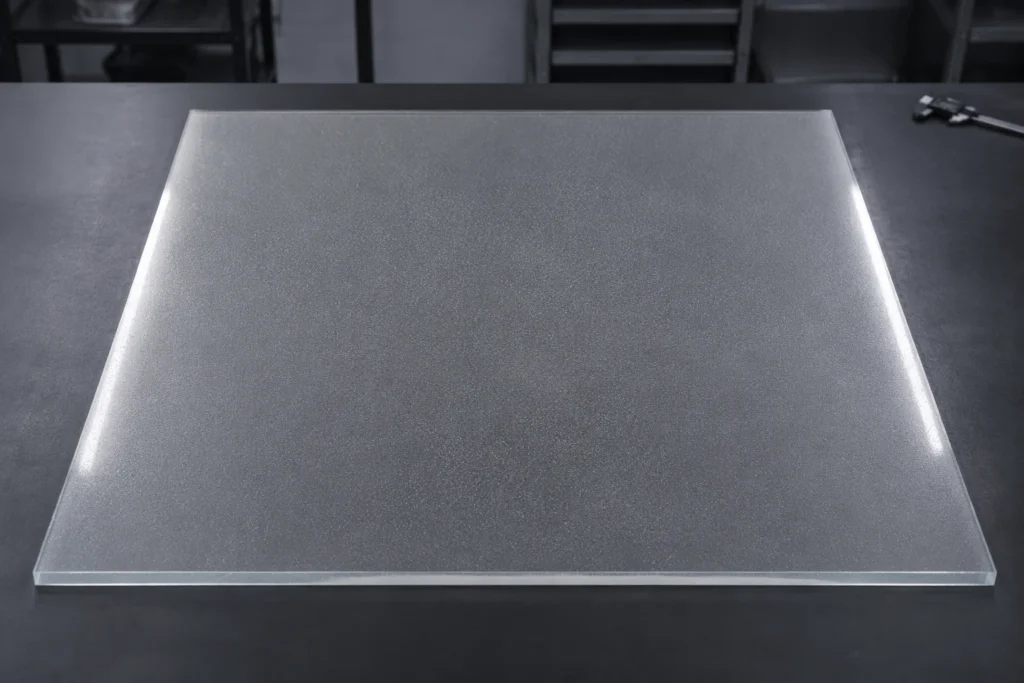
Root Cause: Polycarbonate sheet absorbs moisture during storage. Without sufficient constant temperature drying, water inside turns into steam under high temperature heating and forms bubbles. Many factories skip drying procedures to save working hours.
Correction & Prevention
- Dry polycarbonate sheet in a hot air circulation oven at 120℃~130℃. Follow thickness standard: 1.5~3mm: 4~6h; 4~6mm:8~10h; 7~12mm:12~16h
- After drying, finish forming within 30 minutes. If exposed to air longer than 1 hour, re-dry again.
Defect 3.2 Silver streaks (silver lines) spreading on poli̇karbonat surface
Root Cause: Partial insufficient drying; uneven heating; moisture on mold surface; oil contamination on sheet surface evaporates during heating.
Correction & Prevention: Keep the drying environment dry; clean the polycarbonate sheet surface before clamping; keep the mold dry without water and oil stains; adopt double-sided balanced heating.
Defect 3.3 Sheet yellowing, local discoloration after heating
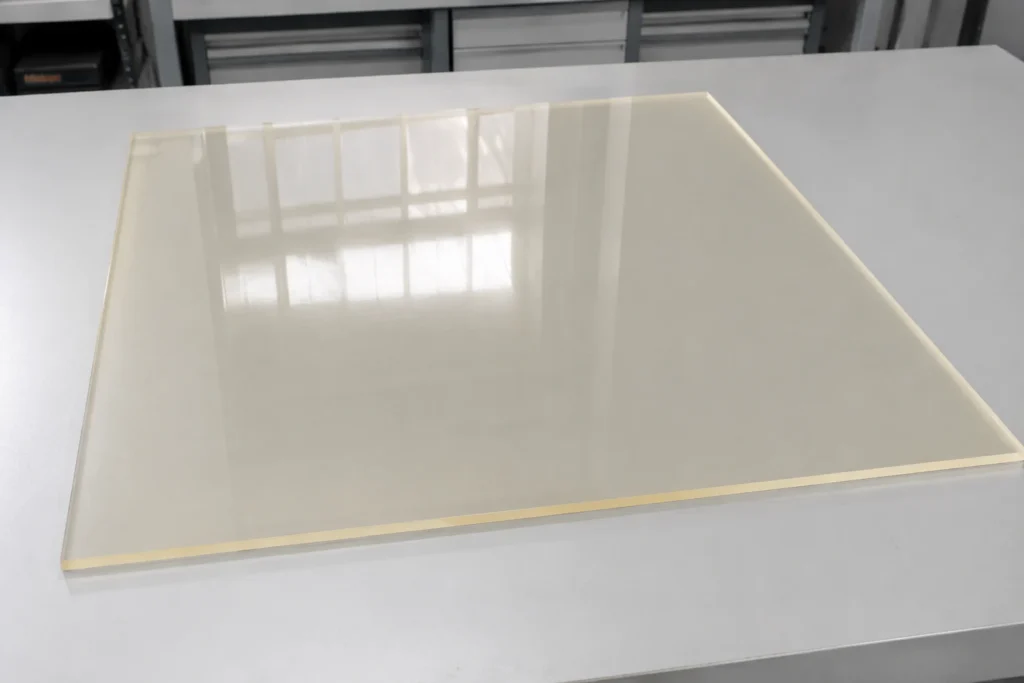
Temel Neden: Heating temperature exceeds 245℃; long-time overheating stay in heating area; recycled polycarbonate raw material with poor thermal stability.
Correction & Prevention: Control heating temperature upper limit at 245℃; reasonably set heating duration; avoid repeated secondary heating on the same polycarbonate blank.
4. Typical Vacuum Forming Defects & Targeted Correction
Defect 4.1 Corner thin spots, penetration and tearing
Root Cause
- Mold right-angle design without fillet, stress concentrates at corners during stretching.
- Drawing depth ratio exceeds the safe 1:1.
- Heating sag is too large, material over-stretched.
- Vacuum pump exhaust speed is too fast.
Correction & Prevention: All inner corners add a fillet radius ≥0.5×sheet thickness; optimize product structure to reduce excessive deep drawing; control self-weight sag within 20~40mm; slowly increase vacuum negative pressure.
Defect 4.2 Surface wrinkle and fold marks
Temel Neden: Loose clamping frame; uneven heating leads to partial premature softening; mold vent holes are too sparse.
Correction & Prevention: Lock four sides of clamping frame evenly; clean infrared heating tubes to eliminate hot spots; increase vent hole distribution on flat mold areas.
Defect 4.3 Incomplete mold pattern transfer, air trapped between sheet and mold
Root Cause: Vent holes blocked by dust; vent hole diameter too small; insufficient vacuum pressure; polycarbonate sheet not softened enough.
Correction & Prevention: Regularly clear mold vent holes; maintain stable vacuum pressure at 0.8~1.0 bar; properly extend heating time.
Defect 4.4 Finished forming part rebound and warping
Temel Neden: Stop vacuum pressure release too early before fully cooling; uneven cooling airflow; large residual stress inside parts.
Correction & Prevention: Keep vacuum holding until surface temperature drops below 60℃; adopt uniform surrounding air cooling; arrange annealing treatment for thick polycarbonate forming components.
5. Defects in Hot Bending, CNC Cutting & Drilling Process
Defect 5.1 Micro cracks on cutting edge and hole periphery
Root Cause: Cutting tool blunt; cutting speed too fast; insufficient chip removal; clamping force too tight squeezing the polycarbonate sheet.
Correction & Prevention: Use sharp dedicated plastic cutting bits; adjust reasonable feed speed; fix sheet with soft cushion to avoid rigid extrusion; remove burrs smoothly without violent scraping.
Defect 5.2 Hot bending surface whitening, cracking at bending position
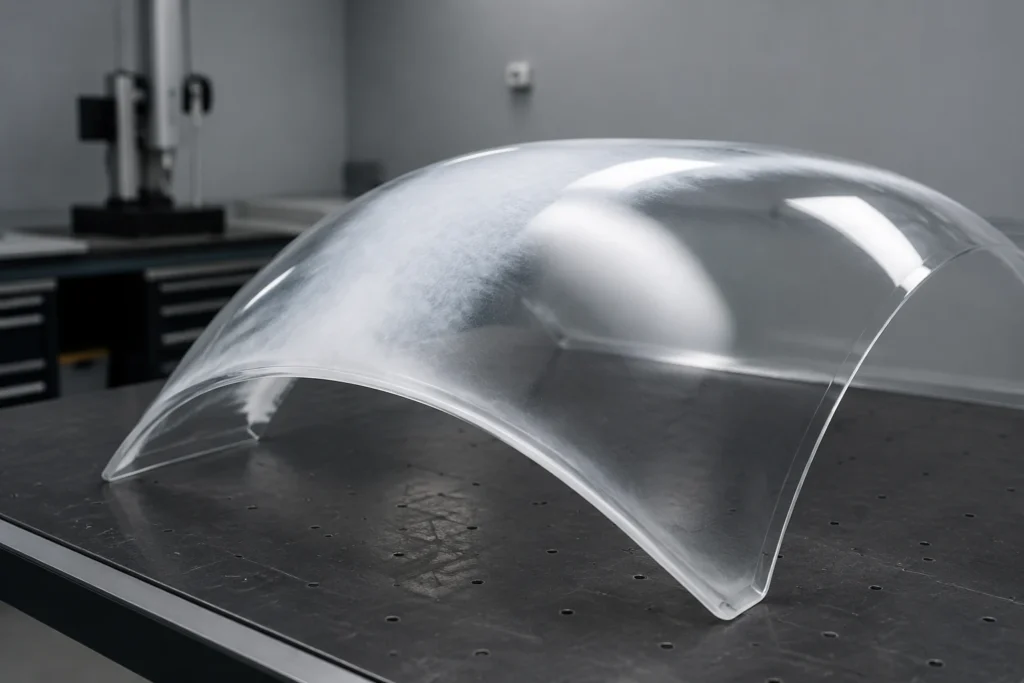
Root Cause: Hot bending temperature too low; bending radius too small; single-sided local heating only.
Correction & Prevention: Set proper hot bending temperature; bending radius should be more than 3 times sheet thickness; heat both sides evenly before bending.
Defect 5.3 Edge burrs and rough cutting surface
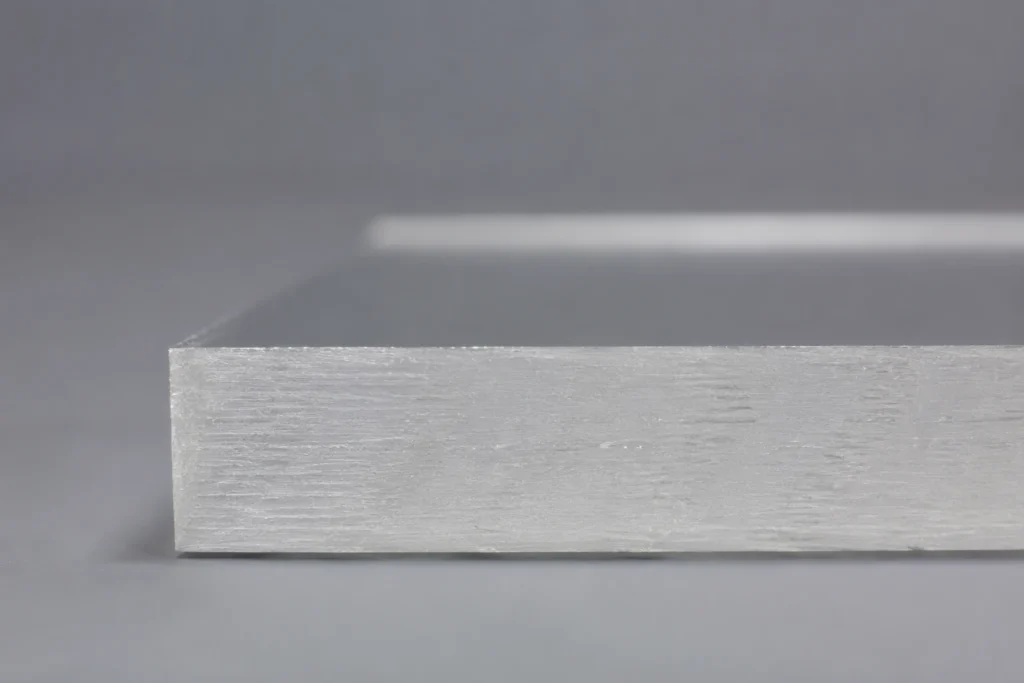
Root Cause: Worn cutter; unstable machine operating parameters; manual rough trimming after forming.
Correction & Prevention: Replace cutting tools regularly; adopt full CNC automatic trimming instead of manual polishing.
6. Surface Defects: Scratches, Fogging, Orange Peel, Dirty Spots
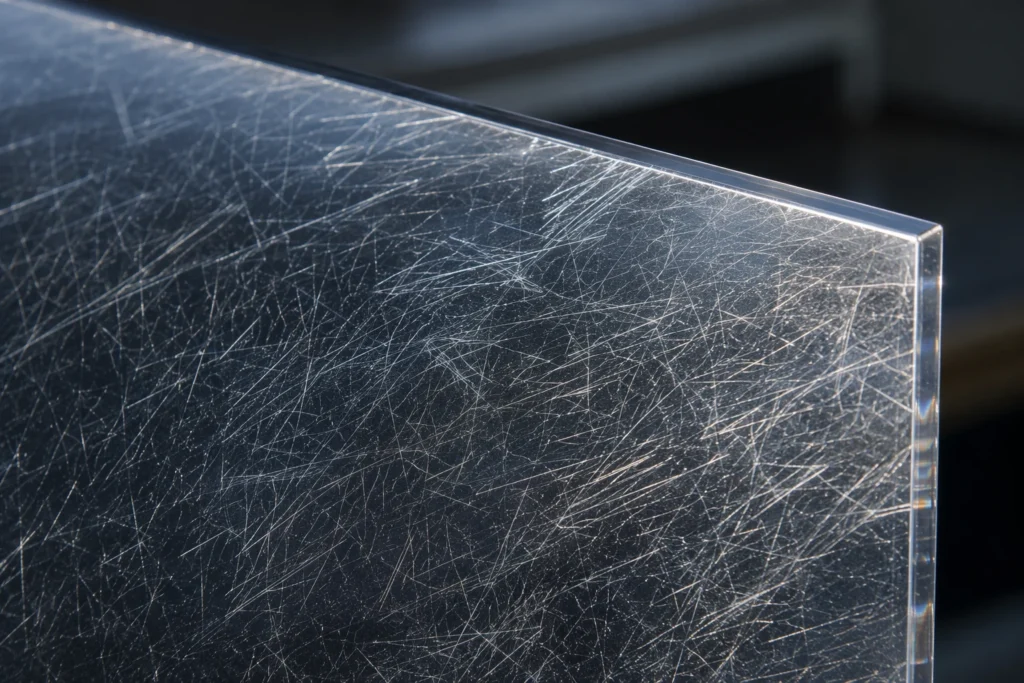
Defect 6.4 Permanent surface scratches
Root Cause: Remove protective film too early during processing; direct friction between polycarbonate sheets without separation film; hard tools contact surface; rough turnover and stacking.
Correction & Prevention: Keep original protective film until nearly finished processing; separate each sheet with isolation paper; avoid hard objects directly touching transparent surface.
Defect 6.5 Surface fogging and whitening
Temel Neden: Overheating during processing; contact with chemical solvent; improper polishing abrasive; long-term storage in a humid environment.
Correction & Prevention: Strict heating parameter control; prohibit cleaning the polycarbonate surface with alcohol, thinner and strong solvent; use a neutral cleaning agent only.
Defect 6.6 Orange peel uneven surface after forming
Temel Neden: Severely uneven heating; mold surface rough; polycarbonate sheet over-sagged before vacuum forming.
Correction & Prevention: Calibrate upper and lower heating temperature; polish mold surface; strictly control heating sag range.
7. Post-Processing Hidden Trouble: Residual Stress & Delayed Cracking
This is the most dangerous hidden defect of polycarbonate products. No crack can be found before delivery, but cracking occurs after transportation, disinfection or outdoor use.
Temel Neden: Heating forming + rapid cooling creates massive internal residual stress; no annealing stress relief treatment. When finished polycarbonate parts contact alcohol, disinfectant, or suffer temperature alternation, stress releases and generates cracks. This problem frequently appears on medical polycarbonate enclosures and charging pile polycarbonate covers.
Correction & Prevention: All thick polycarbonate forming parts and products used in contact with disinfectant must undergo annealing treatment: Constant temperature 110~115℃, keep warm according to thickness, then naturally cool down inside the oven to room temperature slowly. Never take hot parts out for rapid air cooling.
8. Assembly & Secondary Processing Induced Defects
Defect 8.1 Cracking near assembly holes after installation
Temel Neden: Too small hole tolerance; screw over-tightened to generate extrusion stress; no elastic sealing gasket between screw and polycarbonate surface.
Correction & Prevention: Reserve reasonable assembly clearance; use moderate tightening torque; match silicone gasket to disperse pressure.
Defect 8.2 Stress crack after contact with chemical liquid
Temel Neden: Existing residual internal stress, plus chemical solvent penetration causes stress cracking.
Correction & Prevention: Implement annealing; remind end users to only adopt neutral water-based cleaning detergent.
9. Standard Quality Control Workflow to Reduce Polycarbonate Defect Rate
We summarize a set of mature QC procedures suitable for all polycarbonate deep processing factories:
- Incoming inspection: Check thickness, surface purity, UV coating, and appearance defects of raw polycarbonate sheet.
- Pre-production test: Take a small polycarbonate sample to do a heating test, confirm no bubbles and silver lines.
- Parameter locking: After sample verification, fix heating time, temperature, vacuum parameters, and do not change them randomly in mass production.
- First article inspection for each batch: Check appearance, wall thickness, and dimensional accuracy before continuous mass production.
- Semi-finished product turnover: Keep protective film, separate sheets to avoid scratch collision.
- Selective annealing for high-risk products: Medical equipment shells, outdoor forming parts, and thick polycarbonate components are mandatory for annealing.
- Finished product full visual inspection, dimensional sampling test.
- Anti-scratch independent packaging before shipment.
10. How to Choose a Reliable Polycarbonate Sheet Supplier & Processor
Many customers separate raw material purchasing and deep processing, which makes defect responsibility difficult to confirm. It is easier to control quality if selecting integrated manufacturers with polycarbonate extrusion + supporting deep processing capacity. You need to focus on these standards when screening suppliers:
- Whether they use 100% virgin raw material sheet; clearly state whether recycled material will be mixed.
- Complete processing equipment: constant temperature drying oven, double-sided heating forming machine, annealing oven, high-precision CNC equipment.
- Clear standardized process: mandatory drying procedure, annealing scheme for high-standard orders.
- Complete QC system and ability to provide defect analysis and improvement support after problems occur.
11. Our One-Stop Polycarbonate Sheet Production & Deep Processing Service
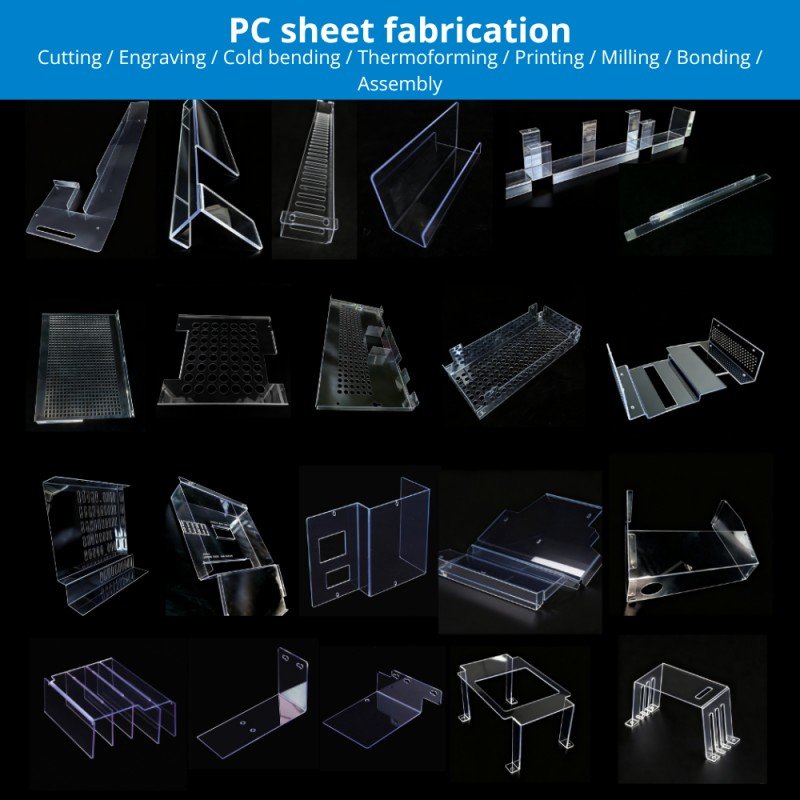
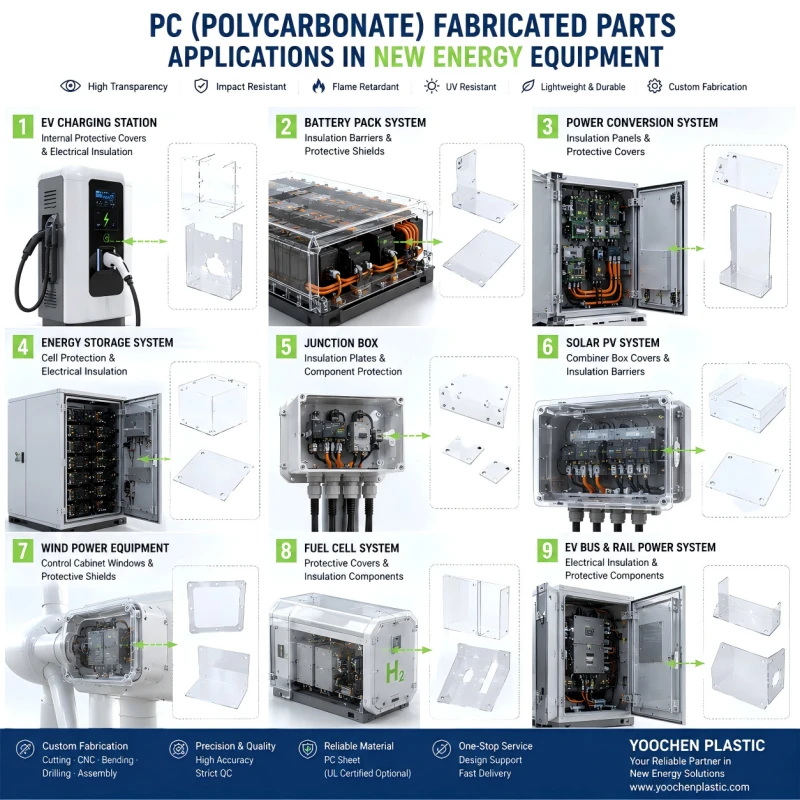
We are an integrated manufacturer focusing on virgin polycarbonate sheet extrusion and full deep processing, serving global customers in new energy, medical equipment, machinery protection and lighting industries. Many clients cooperate with us to solve long-standing polycarbonate processing defect troubles.
1. Strict raw material quality control: All our solid polycarbonate sheets adopt 100% imported virgin polycarbonate pellets. We produce standard transparent, frosted, UV-resistant outdoor-grade, flame-retardant, medical-grade polycarbonate sheets. No recycled material blending for high-end engineering orders. Each batch implements incoming inspection to reduce raw-source defects.
2. Complete supporting processing equipment: Equipped with constant temperature drying ovens, double infrared heating vacuum forming machines, CNC trimming equipment, annealing stress relief ovens, and edge polishing workstations. We can complete the whole process inside our factory without outsourcing, so every processing link can be supervised and adjusted in a timely.
3. Mature standardized processing technical specifications: We have accumulated mass production parameters for different thicknesses and different functional polycarbonate sheets. Our technical team will formulate an exclusive process plan according to the customer’s product application environment (outdoor, medical disinfection, impact requirement). We will remind customers of hidden risks such as residual stress, delayed cracking in advance, and recommend annealing treatment when necessary.
4. Professional quality inspection system: Each production batch carries out first-piece confirmation, online sampling inspection and finished product recheck. Once abnormal defects appear in production, our engineers will quickly analyze root causes and adjust parameters to control reject rate in a low range.
5. Flexible customization & technical support: We support prototype proofing, small trial batch and mass production. For customers’ new product development, we provide free technical consultation: material selection suggestions, structural design optimization to avoid processing difficulties and defect risks. If you encounter a high defect rate during your own processing, you can send samples to us for analysis.
We provide full service including raw polycarbonate sheet supply, vacuum forming, hot bending, CNC cutting, drilling, polishing, surface printing, anti-scratch hard coating and export packaging. If you need stable-quality polycarbonate materials and standardized deep processing, welcome to send drawings and requirements to get a quotation and technical scheme.
12. Summary: Practical Checklist for Polycarbonate Processing Production
Polycarbonate sheet processing defects are rarely caused by a single factor. Raw material quality, drying condition, heating parameter, mold structure, cooling speed and post-processing stress elimination interact with each other. Enterprises that want to control reject rate need to build a complete set of process standards, not only adjust equipment after defective goods appear. Special attention should be paid to hidden residual stress problems. Visible bubbles and scratches can be easily found during production, but delayed cracking will cause greater loss after products are delivered to end customers.
If you are looking for a stable polycarbonate sheet manufacturer with reliable deep processing capacity, we can help you avoid the most common processing defects from the source.