






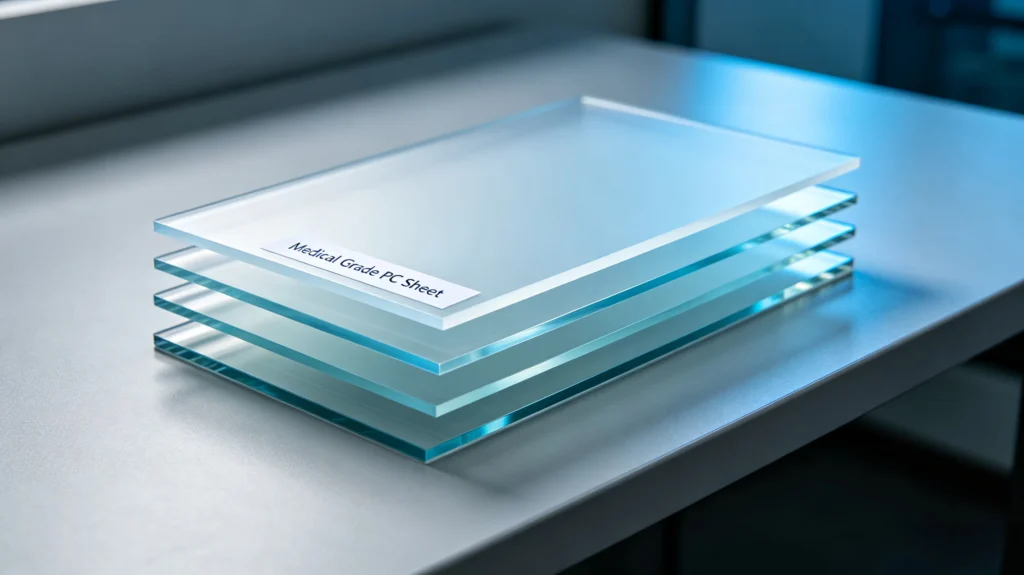
1. Why Medical Devices Adopt Medical-Grade Polycarbonate Enclosures Instead of Ordinary Plastic
Medical equipment is one of the most stringent industrial fields in terms of material safety, sanitation and stability. Unlike civil electronic casings and industrial mechanical shells, medical device polycarbonate enclosures need to directly face hospital sterile environments, frequent high-temperature disinfection, human body contact, long-term running load and strict medical safety certification.
In the past, many low-end medical devices used ordinary ABS, acrylic, or recycled plastic shells. Still, they all exposed fatal problems after clinical use: poor sanitary performance, easy to breed bacteria, unable to withstand repeated sterilization, easy aging and discoloration, brittle cracking, and chemical residue precipitation, which seriously affected medical safety and equipment service life.
At present, medical-grade polycarbonate (PC) material has become the mainstream standard material for global high-end medical equipment Enclosures and protective covers. It is the only plastic material that perfectly integrates biocompatibility, high-temperature sterilization resistance, impact resistance, high transparency, chemical stability and non-toxic environmental protection.
Professional medical polycarbonate enclosures will not produce harmful precipitation, will not react with medical disinfectants, can withstand long-term repeated high-temperature sterilization and chemical wiping, and maintain a stable appearance and structural performance for many years. It fully meets the strict hygiene and safety standards of hospitals, clinics and medical laboratories.
2. Strict Industry Standards for Medical Polycarbonate Enclosure
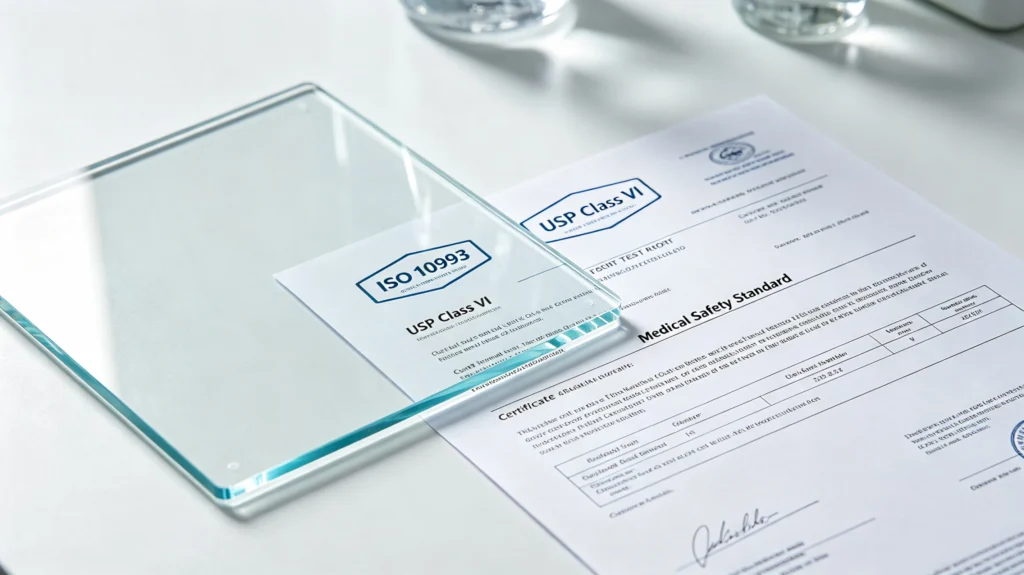
The biggest difference between a medical polycarbonate enclosure and an ordinary industrial polycarbonate shell is that it has mandatory medical certification thresholds, not only relying on appearance and hardness, but also passing professional biological safety and environmental resistance tests.
2.1. ISO 10993 Biological Compatibility Standard (Core Mandatory)
All medical equipment shells that may contact the human body and medical environment must comply with ISO 10993 medical biological safety certification. The material is non-toxic, non-irritating, non-cell-toxic, non-allergenic, non-precipitating harmful substances, and safe for long-term contact with human skin and body fluid environments.
2.2. USP Class VI Medical Grade Certification
It is the highest safety standard for medical plastic materials. Qualified medical polycarbonate sheets have extremely high chemical stability, no dissolution and no deterioration in high-temperature and humid medical environments, suitable for invasive and non-invasive medical auxiliary equipment.
2.3. Multiple Sterilization Resistance Performance
Medical polycarbonate Enclosure must adapt to hospital conventional sterilization methods: 121℃ high-temperature steam sterilization, ETO ethylene oxide sterilization, gamma ray sterilization, ultraviolet disinfection and alcohol chemical wiping disinfection. No deformation, discoloration, cracking or performance attenuation after repeated sterilization.
2.4. Zero Impurity & Zero Recycled Material Standard
Medical grade polycarbonate strictly prohibits mixing recycled materials and miscellaneous materials. It adopts 100% pure imported virgin raw materials, with uniform molecular structure, stable performance, no impurity spots, no crystal points, ensuring a high sanitation level of medical equipment.
2.5. Anti-Bacterial & Easy-to-Clean Surface Performance
The surface of a qualified medical polycarbonate shell is dense and smooth, with no pores, not easy to hide dirt and breed bacteria. It can be repeatedly wiped and cleaned with medical alcohol, disinfectant and hydrogen peroxide without surface corrosion, fogging and whitening.
3. Medical Grade PC VS Ordinary PC / ABS / Acrylic: Full Comparison
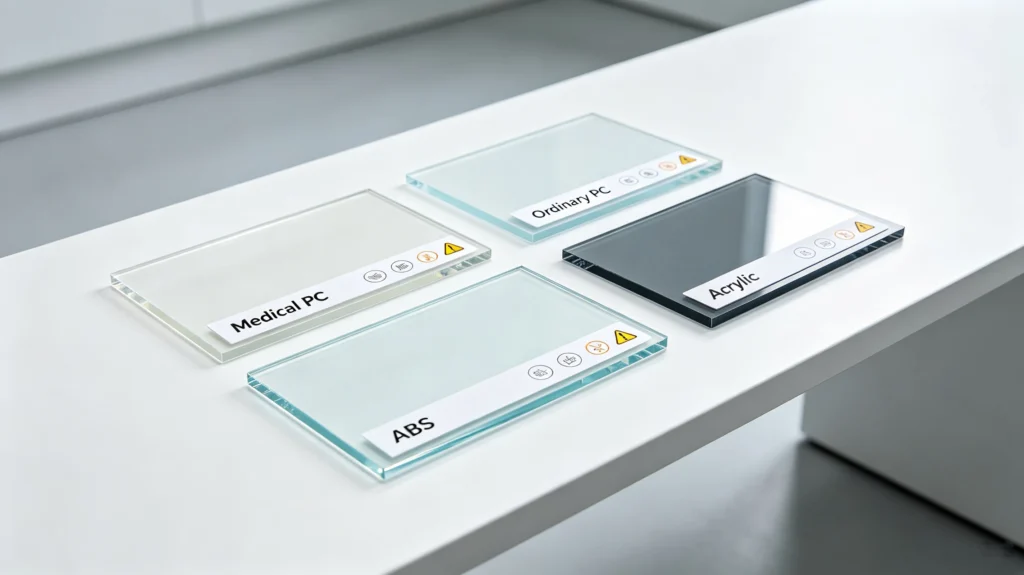
To help medical equipment manufacturers avoid wrong material selection, we make a comprehensive and practical comparison of four common shell materials in the medical industry, clearly distinguishing the essential differences between medical special materials and ordinary materials:
3.1 Ordinary Industrial Polycarbonate Sheet
Disadvantages: No medical biological certification, contains trace additives that do not meet medical standards, cannot withstand repeated high-temperature sterilization, easy to hydrolyze and precipitate substances in a humid medical environment, easy to yellow and age, not allowed to be used in formal medical equipment.
Applicable scenario: Ordinary industrial protective cover, non-medical civil equipment.
3.2 ABS Plastic Shell
Disadvantages: Poor high-temperature resistance, serious deformation after high-temperature sterilization; poor chemical resistance, easy to be corroded and cracked by medical disinfectant; no biological safety certification, easy to breed bacteria on rough surface, completely unable to meet medical grade standards.
Applicable scenario: Low-end non-medical equipment shell.
3.3 Acrylic (PMMA) Shell
Disadvantages: Extremely poor sterilization resistance; high-temperature disinfection will cause fogging, cracking and transparency attenuation; brittle material, easy to break and produce debris; poor chemical stability, easy to react with medical disinfectants, low safety.
Applicable scenario: Indoor ordinary display baffle, temporary isolation board, not for medical equipment protection.
3.4 Professional Medical Grade poli̇karbonat Levha
Core Exclusive Advantages for Medical Industry
3.4.1. Pass ISO 10993 & USP Class VI medical certification, safe and non-toxic, compliant with global medical equipment access standards.
3.4.2. Resist multiple sterilization methods, no deformation, no discoloration, no cracking after long-term repeated disinfection.
3.4.3. Super chemical stability, resistant to medical alcohol, hydrogen peroxide, disinfectant and various medical reagents corrosion.
3.4.4. High toughness and shatterproof, no fragments falling after impact, avoiding medical pollution caused by broken debris.
3.4.5. High light transmittance and high flatness, clear display of equipment data, beautiful and clean appearance, in line with hospital high-standard visual requirements.
3.4.6. Low temperature and high temperature resistance, stable performance in medical constant temperature laboratory and ultra-low temperature storage environment.
4. How to Select Qualified Polycarbonate Sheet for Different Medical Equipment
Different types of medical devices have different use environments, contact methods and disinfection frequencies. It is necessary to select a targeted medical-grade polycarbonate sheet to balance safety, performance and cost, avoiding over-standard waste or low-standard hidden dangers:
4.1 Diagnostic & Monitoring Equipment (Electrocardiograph, Blood Pressure Monitor, Ultrasound Instrument)
Equipment characteristics: Frequent mobile use, regular surface disinfection, no high-temperature sterilization of the whole machine, high requirements for appearance and transparency.
Recommended poli̇karbonat grade: Standard medical grade transparent poli̇karbonat sayfa, high flatness, high light transmittance, anti-fingerprint, easy to wipe and clean.
4.2 Surgical & Rehabilitation Medical Equipment
Equipment characteristics: Working in a sterile operating room, frequent alcohol and disinfectant wiping, occasional high-temperature disinfection, high anti-collision and anti-fall requirements.
Recommended poli̇karbonat grade: Enhanced chemical-resistant medical poli̇karbonat sayfa, strong disinfectant corrosion resistance, high toughness, not easy to scratch and damage.
4.3 Medical Laboratory & Constant Temperature and Humidity Equipment
Equipment characteristics: Long-term constant temperature and humidity environment, contact with various experimental reagents, strict sanitary and anti-pollution requirements.
Recommended poli̇karbonat grade: High-purity medical poli̇karbonat sheet with zero precipitation, stable molecular structure, no substance precipitation, suitable for laboratory high-standard sterile environment.
4.4 Portable Medical Auxiliary Equipment (Medical Mask Machine, Infusion Pump, Nebulizer)
Equipment characteristics: Small size, high assembly precision requirements, light weight, frequent carrying and vibration.
Recommended poli̇karbonat grade: High-precision low-stress medical poli̇karbonat sayfa, small forming shrinkage, stable dimensional tolerance, no deformation after long-term vibration.
4.5 Medical Isolation & Protective Facilities (Isolation Baffle, Protective Cover, Medical Partition)
Equipment characteristics: Large size, high transparency requirements, long-term exposed use, frequent disinfection and cleaning.
Recommended poli̇karbonat grade: Super anti-aging medical transparent poli̇karbonat sayfa, not easy to yellow and fog after long-term use, durable and easy to maintain.
5. Full Analysis of Medical Equipment Working Environment & Enclosure Requirements
The reason why medical equipment shells cannot use ordinary plastic processing technology is that the medical environment has extremely harsh comprehensive test conditions, and every link will affect the service life and safety of medical polycarbonate enclosures:
5.1. Frequent repeated disinfection test
Hospital equipment needs daily wiping disinfection and regular high-temperature sterilization. Ordinary plastic will cause molecular chain fracture after repeated disinfection, resulting in surface cracking, fogging, hardening and brittleness, while professional medical polycarbonate can resist thousands of times of cyclic disinfection without performance attenuation.
5.2. Strict sterile and dust-free environment
Medical equipment is used in operating rooms, intensive care units and sterile laboratories. The shell surface must be smooth and dense without dust hiding gaps, no static electricity adsorption of dust, no bacteria breeding conditions, to ensure the cleanliness of the medical environment.
5.3. Chemical reagent corrosion environment
Medical sites are filled with alcohol, hydrogen peroxide, chlorine-containing disinfectants and various medical reagents. Ordinary plastic shells are easy to be corroded, faded and peeled, while medical polycarbonate has excellent chemical inertness and will not react with conventional medical disinfection reagents.
5.4. Long-term constant temperature and humidity operation
Medical laboratory and ward equipment run for a long time in a constant temperature and humidity environment. The shell material needs stable structural size, no thermal expansion and contraction deformation, no warping and gap increase, ensuring equipment assembly accuracy and sealing performance.
5.5. Anti-fall and anti-collision safety requirements
Mobile medical equipment is easy to collide and fall during transportation and use. The shell must have high impact resistance, no fragmentation after damage, avoid sharp debris scratching medical staff and patients, and prevent debris from polluting the sterile environment.
6. Complete Standard Processing Flow of Medical Polycarbonate Enclosure Forming
Medical polycarbonate enclosure forming and processing is far more strict than ordinary industrial plastic processing. It is not only simple cutting and bending, but also needs to control sanitation, stress, precision and stability in the whole process. Our factory summarizes the full set of medical-grade standardized production processes suitable for global medical equipment certification:
Step 1: Strict incoming material inspection and medical certification verification
Before warehousing, all medical polycarbonate sheets must undergo inspection of the original medical certification, biological compatibility test report, sterilization resistance test report and raw material purity certificate. Reject all non-medical grade, recycled material and unqualified sheets to ensure that the raw material foundation meets medical standards.
Step 2: Constant temperature and humidity dust-free storage
Medical polycarbonate sheets are stored in a special dust-free constant temperature warehouse, with strictly controlled environmental humidity to prevent the sheets from absorbing moisture and hydrolyzing. The raw materials are sealed and stored in vacuum to avoid dust adsorption and secondary pollution.
Step 3: Professional dehumidification and drying pretreatment
Polycarbonate material is highly hygroscopic. Before forming, it must be dried at a constant temperature of 120℃–130℃ according to the sheet thickness to remove internal moisture, control the moisture content below 0.02%, completely avoid bubbles, silver line and hydrolysis cracking defects of medical shells after high-temperature processing.
Step 4: Dust-free precision cutting and blanking
Cutting and blanking are carried out in a semi-dust-free workshop. Use professional precision cutting equipment to ensure a neat cutting edge, no burrs, no dust residue on the surface, and reserve precise processing tolerance for subsequent forming and assembly.
Step 5: Medical-grade vacuum forming / precise hot bending shaping
According to the shell structure, adopt a medical polycarbonate vacuum-forming process for special-shaped curved shells and a precise hot-bending process for flat-bending parts. Strictly control double-sided balanced heating temperature, forming speed and cooling parameters to ensure uniform material stretching and no internal stress concentration.
Step 6: Annealing stress relief treatment (medical mandatory process)
Different from ordinary plastic processing, all medical polycarbonate forming parts must undergo professional annealing treatment. Through constant temperature heat preservation and slow cooling, eliminate internal processing residual stress, completely solve the hidden danger of later stress cracking and deformation of medical shells after repeated disinfection.
Step 7: CNC high-precision finishing and hole processing
Adopt full CNC automatic precision trimming, drilling, grooving and sinking processing, strictly control the assembly tolerance within ±0.1mm, ensure the perfect matching of medical equipment internal parts, no gap, no shaking, meeting medical high-precision assembly standards.
Step 8: Mirror polishing and surface purification treatment
All cutting edges and forming surfaces are finely polished to mirror smoothness, removing all burrs and sharp edges; conduct professional surface dust removal, oil removal and purification treatment to ensure the shell surface is clean, sterile and free of processing residue.
Step 9: Medical anti-bacterial and anti-fouling surface treatment
According to customer requirements, professional medical-grade anti-bacterial coating and anti-fouling treatment can be added to make the shell surface have lasting anti-bacterial ability, not easy to adsorb dust and dirt, and easier to clean and disinfect daily.
Step 10: Finished product full inspection & dust-free packaging
Inspect surface transparency, flatness, dimensional accuracy, no defects, no residue; test disinfection resistance and structural stability. Adopt medical-grade dust-free packaging, independent sealing protection, avoid secondary pollution during transportation and storage.
7. Key Vacuum Forming & CNC Precision Processing Technical Details
Tıbbi polycarbonate vacuum forming is the core process of medical equipment special-shaped shell processing. The precision and stability requirements are far higher than industrial products. Every parameter adjustment is related to medical safety and product qualification rate:
7.1. Strict double-sided constant temperature heating
Medical polycarbonate forming must use upper and lower double-sided infrared balanced heating; the temperature difference between upper and lower surfaces is controlled within ±5℃, to ensure uniform softening of the sheet inside and outside, avoid local overheating leading to material performance degradation, and ensure the overall sterilization resistance and toughness consistency of the shell.
7.2. Low-stress mold design
All molds for medical polycarbonate parts adopt full fillet transition and smooth draft angle design, with no sharp right angles and dead corners; avoid tension concentration during stretching, reduce internal stress generation, and ensure that the shell will not crack after long-term repeated disinfection and temperature change.
7.3. Slow forming and slow cooling process
Abandon the fast forming and fast cooling process of ordinary plastic products. Adopt gradual vacuum pumping and slow pressure-holding cooling to ensure that the polycarbonate material flows evenly and shapes naturally, effectively reducing surface wrinkles, thin spots and deformation defects, and improving the surface flatness and transparency of the medical shell.
7.4. Ultra-precision CNC secondary finishing
All forming blanks are uniformly processed by CNC precision finishing, without manual trimming and manual grinding, to avoid manual processing causing burrs, scratches and dimensional errors, ensuring the high consistency of batch medical shell products.
7.5. Strict dust-free processing environment
The forming and finishing process is carried out in a closed dust-free workshop to prevent dust, impurities and debris from adhering to the shell surface, ensuring the high cleanliness of medical-grade products and avoiding hidden dangers of medical pollution.
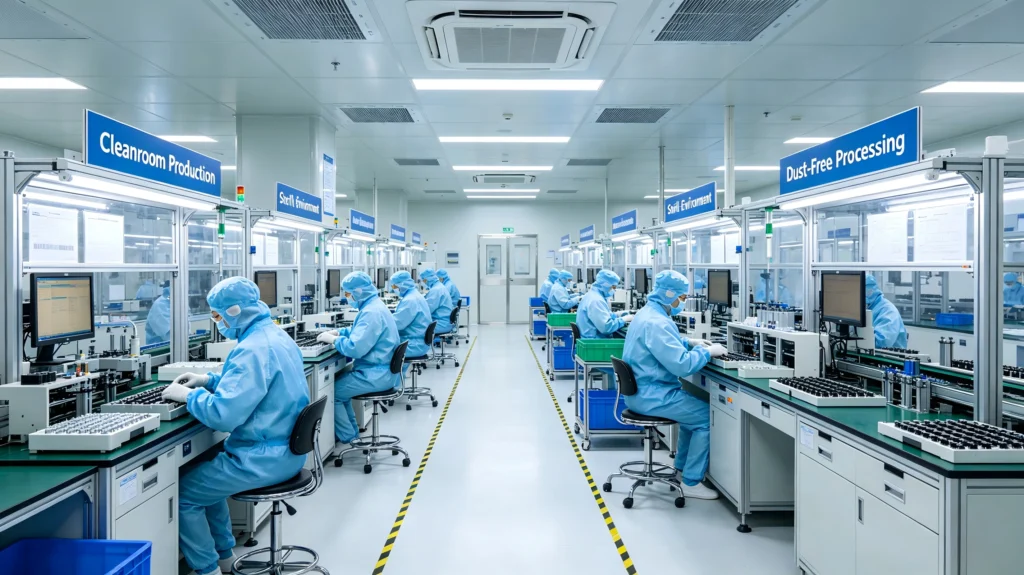
8. Cleanroom Production Requirements for Medical-Grade Polycarbonate Parts
The biggest difference between custom medical polycarbonate enclosures and ordinary industrial shell processing is the cleanroom production standard. Medical equipment parts cannot have any dust, impurity and secondary pollution, which is a hard threshold for medical certification:
8.1. Closed dust-free processing workshop
Our medical-grade processing area adopts a closed, dust-free, purification design, with a constant temperature and humidity system and an air filtration system, to ensure that the air cleanliness of the processing environment meets medical production standards and to avoid dust adsorption on the surface of polycarbonate parts.
8.2. Special production tooling and equipment
Medical polycarbonate processing uses special dedicated equipment and tooling, which are regularly disinfected and cleaned to avoid cross-contamination of ordinary industrial processing residues, ensuring that every production link meets medical sanitation requirements.
8.3. Standardized personnel operation management
Production operators wear medical dust-proof clothing, masks and gloves, strictly standardize operation procedures, avoid direct hand contact with the product surface, and prevent sweat, oil and bacteria from polluting medical parts.
8.4. Independent dust-free packaging area
The finished products are inspected and packaged in an independent dust-free purification area. Each product is sealed and packaged independently with medical-grade dust-free materials to ensure that the products are clean and pollution-free before leaving the factory.
9. Sterilization Resistance Performance & Post-Processing Treatment
Sterilization resistance is the core performance indicator of medical polycarbonate enclosures, and it is also the key reason why ordinary plastic shells cannot be used in medical scenarios. Professional medical polycarbonate parts can adapt to all hospital conventional disinfection and sterilization methods:
9.1. High-temperature steam sterilization resistance (121℃)
Medical-grade polycarbonate sheet has high heat resistance, can withstand repeated 121℃ high-temperature steam sterilization, no thermal deformation, no surface fogging, no molecular hydrolysis, stable structural and optical performance.
9.2. ETO ethylene oxide sterilization adaptation
It is not affected by the ethylene oxide sterilization environment, with no residual gas reaction and no surface discoloration, ensuring the safety and stability of medical equipment after sterilization.
9.3. Gamma ray sterilization resistance
Professional modified medical polycarbonate can resist gamma ray radiation sterilization, with no material aging and performance attenuation, suitable for high-standard sterile medical equipment production.
9.4. Daily chemical wiping and disinfection resistance
Long-term wiping with medical alcohol, hydrogen peroxide and various disinfectants will not cause surface corrosion, peeling, cracking and fading, maintaining a long-term clean and bright appearance.
Post-sterilization auxiliary treatment
After processing, we can provide professional surface aging resistance and anti-precipitation treatment for medical polycarbonate shells, further improving the stability of the product in a long-term medical sterilization environment and extending the service life of medical equipment.
10. 10 Common Defects of Medical Polycarbonate Enclosure & Practical Solutions
Combined with years of medical equipment supporting processing experience, we summarize the 10 most common quality problems of medical polycarbonate shells, with clear causes and targeted solutions to help medical equipment manufacturers avoid batch quality risks and certification failures:
Defect 1: Surface bubbles and silver lines after forming
Cause: The polycarbonate sheet is not fully dried; residual moisture causes hydrolysis and gasification during high-temperature processing.
Solution: Strictly implement a thickness-matched constant-temperature drying process, control moisture content below 0.02%, and prohibit undried sheets from being put into production.
Defect 2: Cracking after repeated disinfection
Cause: Residual internal stress after forming, no annealing stress relief treatment.
Solution: All medical polycarbonate forming parts must be annealed to eliminate internal processing stress.
Defect 3: Surface fogging and transparency decrease
Cause: Ordinary non-medical polycarbonate material; excessive processing temperature causes material aging; surface residue is not cleaned.
Solution: Replace with full medical-grade polycarbonate sheet, strictly control forming temperature, and enhance surface purification treatment.
Defect 4: Assembly gap and shaking
Cause: Manual trimming error, unstable forming size, insufficient precision of reserved holes.
Solution: Full-process CNC precision processing, unified batch tolerance standard.
Defect 5: Surface easy to breed bacteria and hide dirt
Cause: Rough surface, burrs and pores; non-medical surface treatment.
Solution: Mirror polishing overall surface, optional medical anti-bacterial coating treatment.
Defect 6: Deformation after high-temperature sterilization
Cause: Unstable material heat resistance, unreasonable cooling process.
Solution: Select high-temperature resistant medical polycarbonate sheet, optimize slow cooling and shaping parameters.
Defect 7: Surface scratch and low flatness
Cause: Non-dust-free processing environment, unprotected production and transportation.
Solution: Dust-free workshop production, whole-process anti-scratch protection packaging.
Defect 8: Chemical corrosion and discoloration
Cause: Ordinary industrial polycarbonate cannot resist medical disinfectant corrosion.
Solution: Use enhanced chemical-resistant medical special polycarbonate material.
Defect 9: Batch color difference and inconsistent transparency
Cause: Mixed raw materials, unstable processing temperature parameters.
Solution: Unified batch virgin medical raw materials and fixed standardized processing parameters.
Defect 10: Dust and impurity spots on the surface
Cause: Non-dust-free production, raw material impurity, processing residue pollution.
Solution: Strict raw material inspection, full dust-free processing and purification treatment.
11. Dimensional Tolerance & Assembly Precision Control Standard
Medical equipment belongs to high-precision electromechanical integration equipment, and the assembly precision of medical polycarbonate enclosure directly affects the equipment operation stability and sealing performance. Our factory implements unified medical-grade precision tolerance standards:
1. Overall shell size tolerance: ±0.1mm
2. Assembly hole and positioning groove tolerance: ±0.05mm
3. Flatness of transparent cover surface: ≤0.03mm/m
4. Edge flatness and verticality: full mirror neatness, no warping
5. Batch product consistency: zero color difference, zero size deviation
All precision standards fully meet the assembly requirements of high-end medical equipment, avoiding equipment failure and sealing leakage caused by dimensional errors.
12. Wide Application Scenarios of Custom Medical Polycarbonate Enclosure
Medical-grade polycarbonate enclosure is widely used in almost all fields of modern medical equipment, covering diagnosis, treatment, rehabilitation, laboratory and public medical protection:
12.1. Medical diagnostic equipment: Ultrasound machine shell, electrocardiograph shell, blood pressure monitor protective cover, medical detector outer casing, data display transparent window.
12.2. Surgical treatment equipment: Surgical instrument protective cover, minimally invasive equipment outer shell, laser medical equipment protective baffle, operating room auxiliary equipment shell.
12.3. Rehabilitation and nursing equipment: Medical nebulizer shell, infusion pump protective cover, rehabilitation training equipment outer casing, home medical equipment shell.
12.4. Medical laboratory equipment: Constant temperature and humidity box transparent door, experimental equipment isolation cover, medical detection instrument shell, sterile laboratory protective baffle.
12.5. Public medical isolation facilities: Hospital anti-epidemic isolation baffle, medical consultation partition, ward protective barrier, sterile operation transparent baffle.
12.6. Medical auxiliary equipment: Medical mask machine protective cover, disinfection equipment shell, medical storage equipment transparent cover, mobile medical trolley guard plate.
13. Our One-Stop Custom Medical Device Polycarbonate Enclosure Manufacturing Service
As a professional manufacturer integrating medical-grade polycarbonate sheet production and medical equipment shell precision processing, we have 15 years of experience in supporting global medical equipment manufacturers. We deeply understand the high-standard requirements of medical products in terms of safety, certification, precision and sanitation, and provide truly worry-free one-stop customized solutions for medical industry customers.
13.1. 100% certified medical-grade polycarbonate raw material guarantee
We independently produce full-series medical-grade polycarbonate sheets, all adopting imported virgin raw materials, zero recycled materials, and zero impurity precipitation. All products are equipped with complete ISO 10993 biological compatibility certification, USP Class VI medical certification, sterilization resistance test report, which can directly pass medical equipment project certification and inspection.
We support customized production of anti-bacterial medical polycarbonate, high-temperature resistant medical polycarbonate, chemical corrosion resistant medical polycarbonate and high-transparent medical polycarbonate sheets to meet the differentiated needs of different medical equipment scenarios.
13.2. Professional dust-free medical grade production system
We have an independent medical dust-free processing workshop, special medical production equipment and a standardized purification operation process. The whole process from raw material storage, drying, forming, finishing to packaging is carried out in a dust-free environment to ensure that each batch of medical polycarbonate Enclosure meets medical sanitation standards and avoids secondary pollution.
13.3. Mature medical poli̇karbonat vacuum forming & precision processing technology
We have summed up a set of exclusive low-stress forming processes for medical parts through long-term supporting experience. Strictly control drying parameters, heating temperature, forming speed and annealing process to completely solve common problems such as post-disinfection cracking, deformation, fogging and poor flatness of medical shells in the industry.
Support complex special-shaped curved shell vacuum forming, ultra-precision CNC trimming, drilling, grooving, mirror polishing and surface anti-bacterial treatment, with perfect product appearance and precise assembly size.
13.4. Strict full-process quality inspection & certification support
We implement a three-inspection system of incoming material inspection, process inspection and finished product inspection. Each batch of products has complete quality records and test reports. We can provide all certification documents required for global medical equipment sales and project bidding, helping customers quickly pass product registration and market access.
13.5. Flexible order mechanism & fast medical proofing
Support medical product prototype proofing, small-batch trial production and large-scale mass production, no high MOQ limit. For new medical equipment research and development projects, we provide fast proofing service to shorten the customer’s product research and development cycle and accelerate market launch.
13.6. Free professional medical process technical support
Our professional medical material and processing technical team provides customers with free material selection guidance, structural design optimization, process defect prevention and certification matching suggestions. Optimize the shell design and processing scheme according to the customer’s equipment use environment and disinfection method, reduce product certification risks and comprehensive costs.
14. Final Purchasing Guide for Global Medical Equipment Manufacturers
Medical device polycarbonate enclosure is not an ordinary plastic shell, but a functional safety part related to medical safety, equipment certification and product service life. Ordinary industrial PC, ABS and acrylic materials cannot meet the repeated disinfection, biological safety and sanitary standards of medical scenarios.
In the procurement and customization process of medical equipment shells, we must not blindly pursue low prices and ignore medical-grade certification, dust-free production standards and professional forming processes. Unqualified shells will lead to equipment certification failure, clinical use hidden dangers and high later maintenance costs.
Choosing professional medical-grade polycarbonate materials and standardized medical processing technology is the core premise to ensure the long-term stable operation of medical equipment. If you are looking for a stable-quality, fully certified custom medical polycarbonate enclosure supplier, our factory can provide one-stop service from material customization, mold development, precision forming, to finished product certification and delivery. Welcome to send your drawings and project requirements to get free professional medical-grade solutions and accurate quotations.