






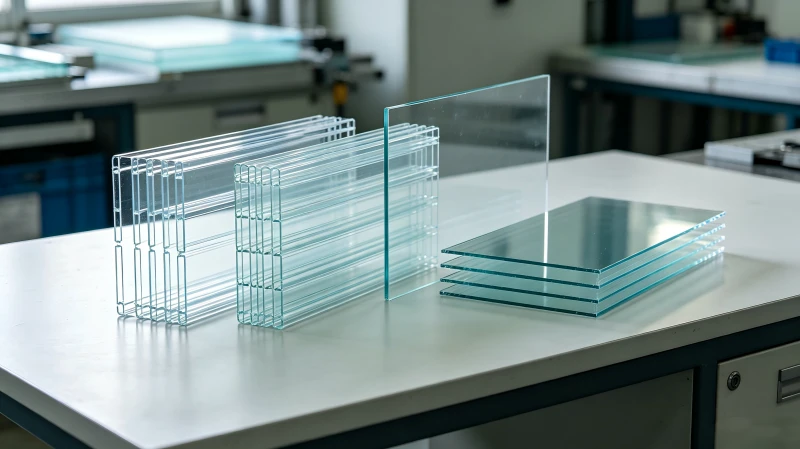
For construction contractors, agricultural greenhouse manufacturers, factory equipment designers, new energy charging station suppliers, residential decoration engineers and global foreign trade procurement buyers, the most confusing material selection problem when purchasing transparent polycarbonate roofing and protective panels is choosing between hollow polycarbonate sheet (twin wall polycarbonate sheet / multiwall polycarbonate sheet) and solid polycarbonate sheet (solid PC sheet).
Both products are manufactured with pure polycarbonate raw resin, equipped with double-sided UV co-extrusion anti-aging coating as outdoor grade, with ultra-high impact resistance, wide temperature adaptability and long outdoor service life up to 10–15 years. On the surface, they are both transparent plastic substitutes for glass, widely applied on skylight roofing, balcony canopy, agricultural greenhouses, safety isolation barriers, carports, bus station shelters and industrial equipment transparent shields.
However, their internal structure is completely different: hollow polycarbonate sheet adopts a multi-layer cellular hollow structure, while solid polycarbonate sheet is a single-layer solid integral plate. This structural difference leads to huge gaps in weight, raw material cost, load-bearing capacity, hail resistance, heat insulation, sound insulation, bending processing performance, installation difficulty and applicable service scenarios.
A large number of buyers blindly pick cheap thin hollow polycarbonate sheet for high wind, heavy snow, high impact safety projects only to save initial material budget. After one or two winter snow seasons or hail storms, the hollow panels crack, collapse and need full batch replacement, bringing massive labor disassembly cost, rework expense and brand reputation loss.
This full-dimensional comparison guide breaks down every core performance index of hollow polycarbonate sheet and solid polycarbonate sheet one by one, including raw price, self-weight, thermal insulation, anti-hail impact, snow load bearing, UV weather resistance, light transmittance, sound insulation, cold & hot bending processing limit, CNC drilling cutting performance, flame retardant safety, chemical resistance, installation difficulty, maintenance cycle and hundreds of real agricultural, residential, commercial, industrial, new energy application cases. All professional test data are interpreted with simple daily words without complex academic terminology.
At the end of this article, we fully introduce our factory’s one-stop deep custom processing service for both hollow multi-wall polycarbonate sheet and solid polycarbonate sheet. Supported by our full set of workshop machines fully upgraded and fully running in 2026, we can complete all cutting, bending, coating, and printing procedures in our own factory, helping global customers get finished installation-ready polycarbonate parts without cooperating with multiple separate material suppliers and processing factories.
Chapter 1 Basic Structural Definition & Core Feature Quick Preview
1.1 What Is Hollow Polycarbonate Sheet (Multi-Wall Polycarbonate Sheet)
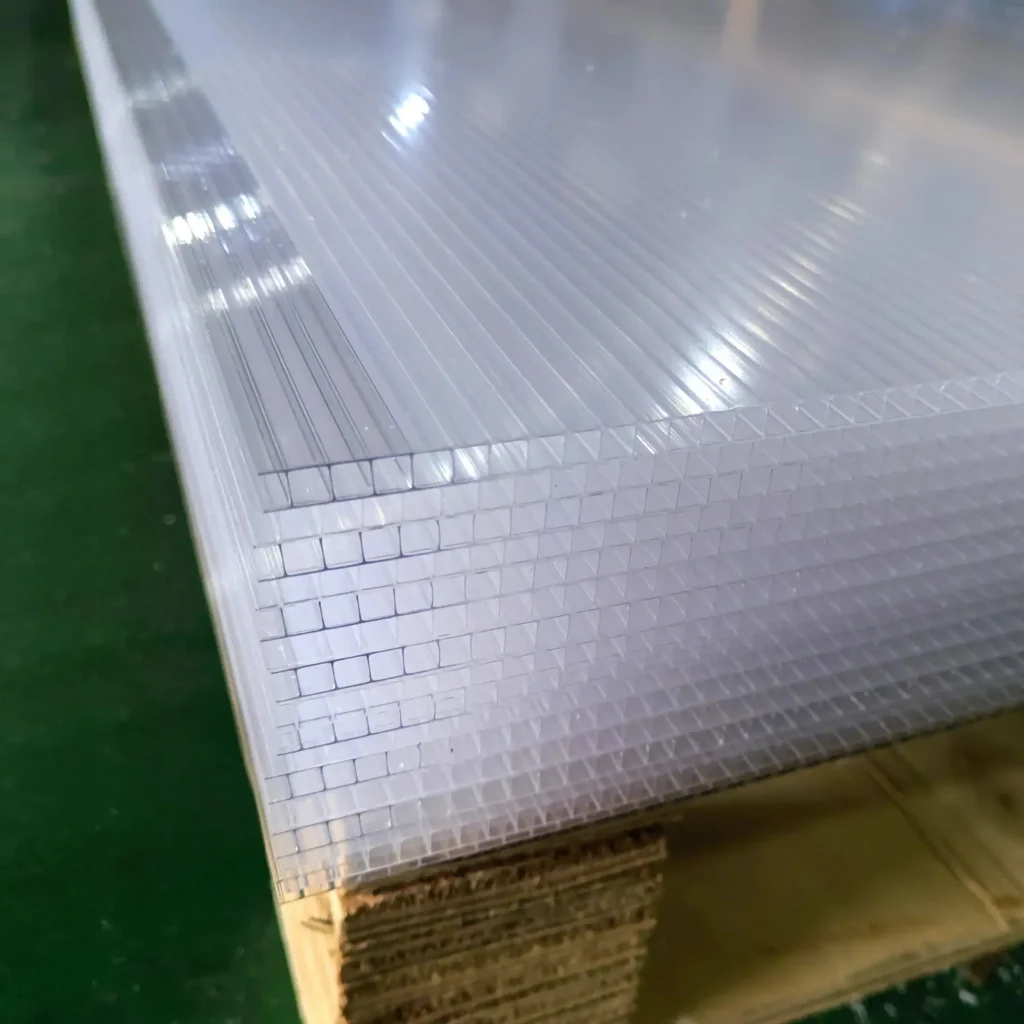
Hollow polycarbonate sheet, short name hollow PC sheet, cellular polycarbonate sheet, is extruded by polycarbonate resin into an integrated multi-layer hollow cellular structure. The mainstream specifications on the market include 2-wall, 4-wall, 6-wall, honeycomb multi-wall hollow sheet, with common overall panel thicknesses from 4mm to 30mm. Each hollow sheet contains parallel vertical rib support strips connecting upper and lower transparent surface layers, forming air-closed hollow interlayers inside the sheet.
The most prominent innate advantages of hollow polycarbonate sheet come from its internal air interlayer structure: ultra-light self-weight, outstanding heat insulation and heat preservation performance, relatively low raw material per square meter cost, convenient manual transportation and installation without large lifting equipment. Its inherent defects are weak snow-load-bearing capacity, limited anti-hail performance, a small minimum cold-bending radius, a tendency to crack if overloaded or struck by large hailstones, and not suitable for high-wind, heavy-load safety-protection projects.
We can produce transparent, smoke gray, milky white, green, and blue hollow polycarbonate sheets; outdoor double-sided UV anti-yellow grade hollow polycarbonate panels; and light-diffusion frosted hollow sheets for greenhouse and skylight construction projects.
1.2 What Is Solid Polycarbonate Sheet (Solid Single-Layer Polycarbonate Sheet)
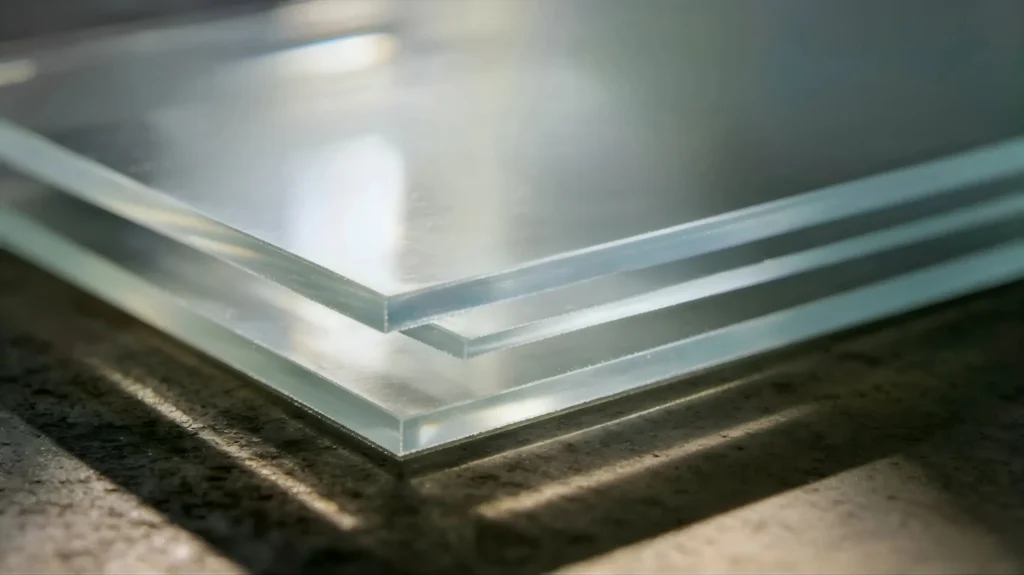
Solid polycarbonate sheet, also known as a polycarbonate endurance sheet, is a single-layer integral solid plate extruded with pure polycarbonate resin without any internal hollow air interlayer. Conventional solid polycarbonate sheet thickness ranges from 0.5mm thin insulating film to 18mm thick heavy-duty safety solid sheet, widely divided into standard transparent solid polycarbonate, double-sided UV weather-resistant solid polycarbonate, 3H–5H hard-coated anti-scratch solid polycarbonate, UL94 V0 flame-retardant electrical-grade solid polycarbonate, frosted light-diffusion solid polycarbonate sheet.
The core inherent strengths of solid polycarbonate sheet are ultra-high overall structural toughness, excellent hail impact resistance, heavy snow and wind load bearing capacity, wide cold bending forming range, stable dimensional deformation resistance under long-term outdoor load, can bear frequent accidental collision and heavy object impact without cracking. Its main weaknesses are heavier self-weight, higher raw material unit price per square meter, poorer thermal insulation effect compared with multi-wall hollow polycarbonate sheet, requiring more auxiliary support frames and labor during transportation and installation construction.
Solid polycarbonate sheet covers all safety protection, new energy, high wind public facility, and high impact industrial equipment application fields that hollow polycarbonate sheet cannot adapt to.
1.3 Quick Pros & Cons Summary Table Preview
Core Advantages of Multi-Wall Polycarbonate Sheet
✅ Ultra-light self-weight, only 1/3 ~ 1/5 weight of solid polycarbonate sheet with the same overall thickness
✅ Closed hollow air interlayer brings excellent heat insulation & heat preservation effect, greatly reduces indoor cooling and heating energy consumption
✅ Lower raw material cost per square meter, saves initial construction material budget for large-area roof projects
✅ Lightweight, easy manual handling, transportation and quick installation, less auxiliary steel support frame required
✅ Multiple wall structures have better medium-frequency sound insulation performance, weakening outdoor rain and wind noise transmission
✅ Rich color options, adjustable light transmittance by selecting frosted or tinted hollow sheet for greenhouses and skylights
✅ Large-area continuous laying for agricultural greenhouses, mall daylight roofs, residential carport can shorten construction period obviously
Main Disadvantages of Hollow Polycarbonate Sheet
❌ Weak load-bearing capacity, thin twin wall polycarbonate sheet is easy to crack and collapse under heavy snow accumulation
❌ Inferior anti-hail impact performance, large size hailstones will pierce the surface layer and break internal support ribs
❌ Small minimum cold bending radius, cannot make tight small arc curved skylight and curved protective covers
❌ Internal hollow ribs will form dirt and water storage gaps after long-term use, hard to fully clean dust and moss
❌ Thin hollow panels are easy to produce wind vibration resonance under strong wind for long time, accelerating aging cracking
❌ Not suitable for high-impact safety isolation, public anti-vandalism barriers, heavy load industrial outdoor protection structures
Core Advantages of Solid Polycarbonate Sheet
✅ Integral solid structure, ultra-high impact & hail resistance, even large hailstones only leave tiny shallow dents without penetration crack
✅ Strong snow and wind load bearing capacity, thick solid polycarbonate can withstand heavy snow and typhoon-level strong wind without deformation or collapse
✅ Wide cold bending forming range, minimum bending radius only 1.5 times sheet thickness, can make small radian curved housings and arc canopies freely
✅ No internal hollow interlayer, flat seamless surface, not easy to store dirt, moss and rainwater, simple daily cleaning maintenance
✅ High overall structural rigidity, no wind resonance vibration under long-term strong wind exposure, slow aging speed
✅ Wide application coverage: outdoor high wind public facilities, machine safety guards, new energy charging pile panels, anti-hail factory roofs, high-rise balcony safety barriers
✅ Hard-coated solid polycarbonate version available, scratch-resistant for high-frequency touch shared equipment
✅ Customizable UL94 V0 highest flame retardant grade for electrical and public building fire safety requirements
Main Disadvantages of Solid Polycarbonate Sheet
❌ Much heavier self-weight than hollow polycarbonate sheet of equal thickness, increases transportation labor and installation steel frame cost
❌ Higher raw material per square meter price, large-area full roof laying will raise total initial construction investment
❌ Single solid layer without air interlayer, thermal insulation and heat preservation performance far lower than multi-wall hollow polycarbonate sheet
❌ Large-area full laying project needs dense auxiliary steel support keel to prevent long-term sagging deformation, more construction auxiliary materials required
Chapter 2 Raw Material Cost & Self-Weight Full Comparison
Most construction buyers only compare the unit price of polycarbonate panels and ignore the subsequent supporting steel frame cost, installation labor expense, snow damage replacement loss in later years. We split the comparison into two dimensions: per square meter raw material purchase cost and self-weight load difference affecting construction auxiliary material investment.
2.1 Per Square Meter Raw Material Price Contrast (Same overall panel thickness 6mm as benchmark)
- Twin wall polycarbonate sheet (6mm total thickness): Lowest raw material cost per square meter, taken as 100% cost baseline
- 4-wall hollow polycarbonate sheet (6mm total thickness): Raw cost 12%–20% higher than twin wall polycarbonate sheet, better heat insulation and load bearing
- Standard transparent solid polycarbonate sheet (6mm thickness): Raw material unit price 45%–75% higher than 6mm twin wall polycarbonate sheet
- Double-sided UV outdoor grade solid polycarbonate sheet: Cost 60%–95% higher than basic twin wall polycarbonate sheet
- UV + hard-coated thick solid polycarbonate safety sheet (8–12mm): Unit price 110%–180% higher than 6mm two-layer hollow polycarbonate panel
Data explanation: For ultra-large area greenhouse, mall daylight roof, low snow load southern residential carport projects without hail disaster risk, selecting hollow polycarbonate sheet can greatly reduce one-time raw material procurement expenditure, which is the biggest economic advantage of hollow multi-wall polycarbonate panel.
2.2 Self-Weight Load Comparison (Per Square Meter Weight Data)
Take 6mm overall thickness as unified comparison standard:
- twin wall polycarbonate sheet: About 0.8–1.1 kg per square meter
- 4-wall hollow polycarbonate sheet: About 1.2–1.5 kg per square meter
- Solid 6mm polycarbonate sheet: About 7.2–7.6 kg per square meter
Weight gap practical influence analysis:
- Transportation & handling: Hollow polycarbonate panel is ultra-light, two workers can carry dozens of square meters of material at one time without lifting machines; solid polycarbonate sheet is heavy, needs forklift and more handling labor, increases freight and labor cost for large orders.
- Auxiliary steel support frame investment: Light hollow polycarbonate only needs sparse aluminum or steel keel support with long interval; heavy solid polycarbonate sheet requires dense thick steel keel to avoid long-term sagging deformation, the additional steel frame investment will offset part of the raw material price advantage of hollow sheet in long-term heavy snow northern projects.
2.3 Full Lifecycle Comprehensive Expense Calculation (Two Typical Engineering Cases)
Case 1: Southern subtropical greenhouse project, light snow, rare hail, expected 10 years service life
- Scheme A: 6mm 4-wall double-sided UV hollow polycarbonate sheet
Low initial raw material + transportation + steel frame total cost, sufficient heat preservation for crop planting, rare heavy snow and hail risk, stable service life 10–12 years, almost no maintenance replacement expense within service cycle, lowest total 10-year comprehensive expenditure.
- Scheme B: 6mm solid UV polycarbonate sheet
Higher upfront raw material and steel keel investment, although hail resistance is stronger, local natural conditions do not need such high load performance, resulting in unnecessary cost waste, total investment 40%–60% higher than hollow polycarbonate scheme.
Case 2: Northern cold region residential carport, annual heavy snow, frequent summer hail, expected 10 years service life
- Scheme A: 6mm two-layer hollow polycarbonate sheet
Cheaper one-time raw material purchase cost, but after the first heavy snow winter, partial hollow panels crack and sag; large hail in summer pierces the surface layer and breaks internal ribs, need partial replacement every 1–2 years. Within 10 years, repeated material purchase, disassembly and reinstall labor cost accumulate continuously, total comprehensive expenditure reaches 5–7 times of solid polycarbonate scheme, plus customer safety complaints and property maintenance disputes.
- Scheme B: 8mm double-sided UV solid polycarbonate sheet
Higher initial raw material and steel frame cost, can bear local heavy snow accumulation and large hail impact without cracking, stable intact use for 10–15 years, zero partial replacement maintenance cost during the whole service cycle, average annual use cost far lower than thin hollow polycarbonate solution.
Chapter 3 Load Bearing, Anti-Hail & Impact Resistance Performance Contrast
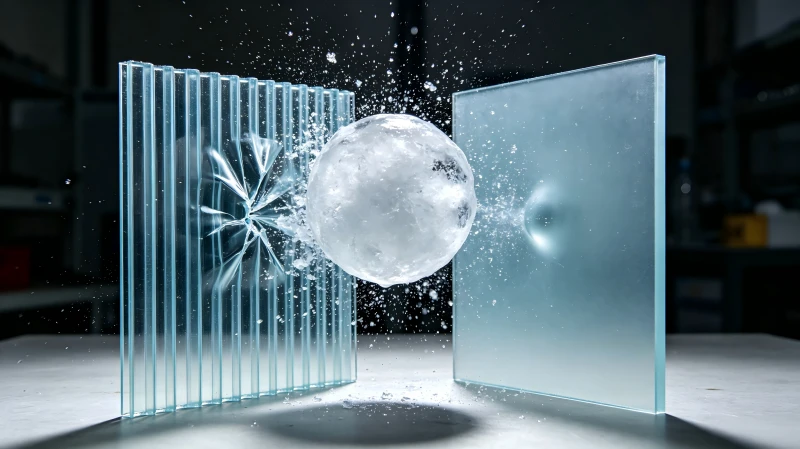
Snow load and hail impact resistance are the most critical dividing lines for northern, alpine, hail-prone area project material selection. The hollow cellular structure inherently limits load capacity, while solid integral sheet has natural advantages in impact and bearing performance.
3.1 Standard Hail Impact Test Data
Unified test condition: 20mm diameter ice ball free fall from 10 meters height, test on 6mm overall thickness panels:
- Solid 6mm UV polycarbonate sheet: Only tiny shallow indentation on surface, no penetrating crack, internal integral structure completely intact, can continue normal use without repair.
- 4-wall hollow 6mm polycarbonate sheet: Local surface layer dent, individual support rib slight crack, need local reinforcement repair after hail hit.
- 2-wall hollow 6mm polycarbonate sheet: Surface layer pierced directly, vertical support strip broken, whole hollow panel loses bearing capacity, must be fully replaced.
Practical scene application rule: All projects located in hail-prone mountainous areas, northern plains with annual hail weather, public outdoor shelters exposed to random heavy impact must select solid polycarbonate sheet; hollow polycarbonate sheet can only be adopted in regions with zero large hail record all year round.
3.2 Snow Load Bearing Test & Practical Engineering Performance
Standard static snow load test index (uniform snow weight per square meter without permanent deformation or crack):
- 2-wall hollow 6mm polycarbonate sheet: Maximum safe snow load ≤ 35kg/㎡
- 4-wall hollow 6mm polycarbonate sheet: Maximum safe snow load ≤ 60kg/㎡
- Solid 6mm polycarbonate sheet: Maximum safe snow load ≥ 180kg/㎡
Scene classification selection standard:
- Northern cold zone with continuous heavy snow in winter (snow accumulation thickness over 10cm): Must choose solid polycarbonate sheet (8mm and above thickness), thin hollow polycarbonate panel cannot bear long-term snow weight, easy to collapse and cause safety accidents.
- Southern warm zone with only occasional light thin snow (snow thickness less than 3cm): 4-wall hollow polycarbonate sheet fully meets snow load demand, no safety hidden danger.
- High-altitude alpine areas with long-term snow coverage over half a year: Forbid using any type of hollow polycarbonate sheet, only thick solid UV polycarbonate sheet qualified.
3.3 Daily Collision & Anti-Vandalism Impact Performance
- Solid polycarbonate sheet: 250 times impact strength of glass, 20–30 times tougher than hollow polycarbonate panel of equal thickness, can resist hand cart collision, stone throwing, accidental heavy tool impact without breaking, suitable for bus stations, school playground isolation barriers, roadside charging pile panels and other public anti-vandalism facilities.
- Hollow polycarbonate sheet: Surface thin layer easy to crack after hard object hitting, internal hollow ribs break once bearing concentrated impact force, cannot be used for public safety protection barriers and anti-vandalism outdoor equipment panels.
Chapter 4 Thermal Insulation, Heat Preservation & Light Transmittance Performance
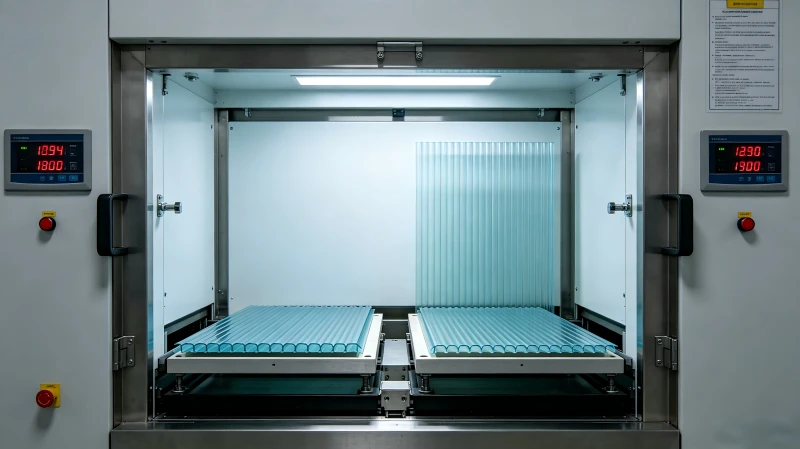
Heat insulation effect is the core advantage of hollow multi-wall polycarbonate sheet, while solid single-layer polycarbonate sheet has better uniform light transmission without light stripe shadow interference.
4.1 Thermal Insulation Coefficient Test Contrast (6mm overall thickness benchmark)
Thermal conductivity K value (smaller K value = better heat preservation & energy saving):
- 4-wall hollow 6mm polycarbonate sheet: K ≈ 1.8 W/(㎡·K), excellent heat insulation effect, indoor heating and air conditioning energy consumption reduced by 30%–45% compared with solid polycarbonate
- 2-wall hollow 6mm polycarbonate sheet: K ≈ 2.4 W/(㎡·K), medium heat preservation performance
- Solid 6mm polycarbonate sheet: K ≈ 3.8 W/(㎡·K), single solid layer without air interlayer, heat transfer fast, poor heat insulation capacity
Scene matching rule: Agricultural greenhouses, constant temperature plant cultivation rooms, mall atrium daylight roofs, residential balcony rooms that need long-term constant indoor temperature and energy-saving heating/cooling must prioritize hollow multi-wall polycarbonate sheet; industrial equipment observation windows, small-area single skylights without heat preservation demand can select solid polycarbonate sheet.
4.2 Light Transmittance & Light Uniformity Difference
- Hollow polycarbonate sheet: Light passes through hollow vertical support ribs to form regular stripe shadow inside the room, multi-wall honeycomb hollow sheet has weaker stripe shadow than 2-wall hollow panel; transparent hollow sheet light transmittance 78%–86%, frosted diffused hollow sheet 35%–60%, suitable for greenhouse crop photosynthesis lighting with acceptable stripe shadow.
- Solid polycarbonate sheet: Integral flat transparent surface without internal rib barrier, light evenly scattered without stripe shadow, transparent solid polycarbonate light transmittance 88%–92%, frosted solid diffusion sheet 20%–55%, perfect for high-end mall daylight roof, exhibition hall skylight, high-grade residential room requiring uniform shadow-free natural light.
4.3 Anti-Glare & Shading Adjustment Function
Both hollow and solid polycarbonate have smoke gray, blue, green, milky white tinted versions to adjust light brightness and block partial solar thermal radiation. Multi-wall polycarbonate sheet has stronger overall heat shielding effect due to air interlayer, suitable for large-area sunshade greenhouse roof; solid tinted polycarbonate sheet has clearer light control effect for small-area precision lighting observation windows.
Chapter 5 Sound Insulation Performance Contrast
The closed hollow air interlayer of multi-wall polycarbonate sheet can absorb medium-frequency rain, wind and traffic noise better than single-layer solid polycarbonate sheet.
Decibel Noise Reduction Test Data (6mm thickness unified standard)
- 4-wall hollow polycarbonate sheet: 32–38 dB medium-frequency noise reduction, obvious effect on blocking outdoor rain tapping, wind roar and road vehicle noise
- 2-wall hollow polycarbonate sheet: 25–30 dB noise reduction performance
- Solid 6mm polycarbonate sheet: Only 16–22 dB noise reduction capacity, single solid layer lacks an air-layer noise-absorption barrier, resulting in poor sound insulation effect
Application scene division: Residential balcony room close to road, mall daylight roof facing busy streets, greenhouses near highway need noise reduction, hollow multi-wall polycarbonate sheet is the preferred material; industrial equipment small observation windows with no noise shielding demand choose solid polycarbonate sheet.
Chapter 6 UV Weather Resistance, Anti-Yellowing & Outdoor Service Life
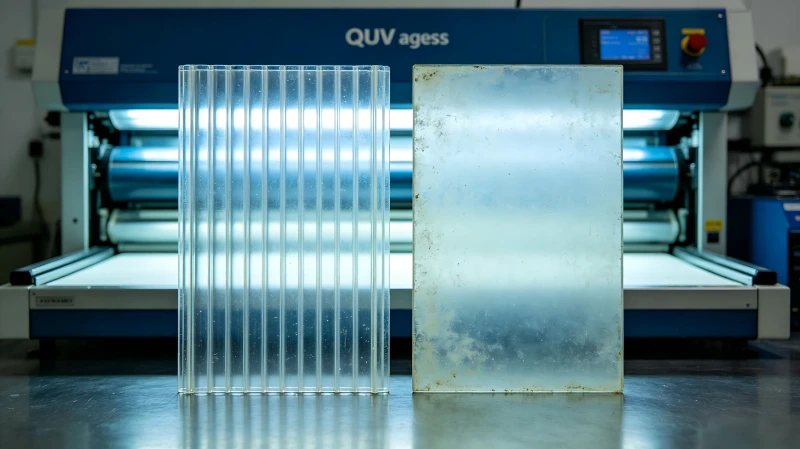
Both hollow and solid polycarbonate sheet can be produced with double-sided co-extrusion UV anti-aging coating, their anti-yellowing long-term outdoor performance is basically consistent, the service life gap mainly comes from structural load damage instead of UV aging itself.
6.1 QUV Accelerated UV Aging Test Result (2000 hours equivalent to 5–8 years natural sunlight)
- Double-sided UV-coated 2-wall / 4-wall hollow polycarbonate sheet: Yellowing index ΔE < 5, slight gloss drop only, raw material impact strength retention over 80%, factory official warranty 10–15 years outdoor service life on the premise of no excessive snow/hail load damage.
- Double-sided UV-coated solid polycarbonate sheet: Yellowing index ΔE < 4, more stable surface flatness after long-term exposure, no internal rib aging cracking hidden trouble, 10–15 years outdoor warranty without load restriction.
- Single-sided UV polycarbonate sheet (hollow & solid both): If the uncoated surface faces direct sunlight, obvious yellowing occurs within 2–3 years, only suitable for indoor indirect light use, forbidden for full outdoor exposure projects.
6.2 Long-Term Outdoor Aging Hidden Trouble Difference
- Hollow polycarbonate sheet hidden risk: After 5–8 years of outdoor use, internal vertical support ribs will gradually become brittle under alternating cold and hot temperature circulation; once encountering heavy snow or large hail, rib breakage and panel collapse happen easily, even if the surface layer does not yellow.
- Solid polycarbonate sheet hidden risk: No internal support rib structure, only single solid flat plate, temperature circulation will not produce internal structural aging fracture, only surface slight gloss attenuation, no collapse safety hazard under normal natural load within 15 years.
Chapter 7 Machining Performance: Cold Bending, CNC Cutting, Drilling & Thermoforming
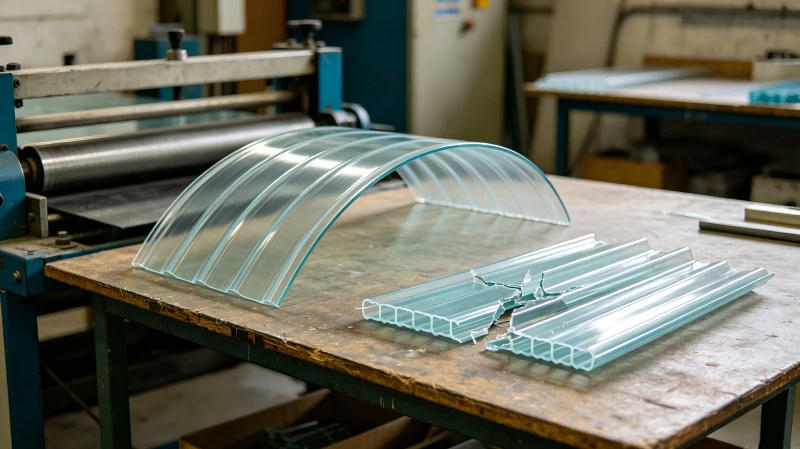
Structural difference leads to obvious limits on bending forming capacity, CNC processing has minor operational differences for hollow and solid polycarbonate.
7.1 Cold Bending Forming Limit (Largest Processing Performance Gap)
- Solid polycarbonate sheet: Supports room temperature cold bending without heating, minimum bending radius only needs 1.5 times sheet thickness, can make small-radius curved skylight, curved charging pile panel, arched machine safety guard freely; hard-coated solid polycarbonate coating will not peel after standard cold forming. Our workshop equips 5 dedicated cold bending machines to mass-produce various curved solid polycarbonate finished parts.
- Hollow multi-wall polycarbonate sheet: Cold bending minimum radius requires minimum 20 times the overall hollow panel thickness, only super large gentle arc can be realized. Small radian tight arcs will crack the upper/lower surface layer and break internal support ribs, scrap rate reaches 100%. All projects requiring small-radius curved components cannot select hollow polycarbonate sheet, must adopt solid polycarbonate sheet.
7.2 CNC Laser Cutting & Precision Drilling
Our 6 CNC routers and 5 laser cutting machines can process both hollow and solid polycarbonate sheet, processing tolerance controlled within ±0.1mm:
- Solid polycarbonate processing advantage: Dense small hole array drilling, special-shaped contour cutting no edge chipping, thick solid plate smooth cutting edge without layer separation.
- Hollow polycarbonate processing attention: Laser cutting hollow panel needs to adjust low-power parameters to avoid melting internal hollow ribs; drilling must use special step drill bit to prevent surface layer edge cracking and hollow layer separation.
7.3 Vacuum Thermoforming
- Solid polycarbonate sheet: Wide thermoforming temperature window, suitable for deep drawing 3D protective housings, supported by our 2 vacuum thermoforming machines for mass deep forming production.
- Hollow polycarbonate sheet: Cannot carry out deep drawing thermoforming, heating softening will lead to hollow interlayer collapse and rib deformation, only flat panel fixed-size cutting available without 3D forming capacity.
Chapter 8 Flame Retardant, Chemical Resistance & Daily Maintenance
8.1 Flame Retardant Safety Performance
Both hollow and solid polycarbonate base materials can be modified to UL94 V0 highest flame retardant grade, self-extinguishing within 10 seconds after ignition, with no flaming molten dripping, reaching the construction B1 fire resistance standard for public buildings. Unmodified standard hollow and solid polycarbonate all reach UL94 V2 self-extinguishing grade, with no continuous burning. For electrical equipment, school public facilities, mall large-area daylight roof projects, we provide customized V0 flame-retardant hollow and solid polycarbonate materials.
8.2 Chemical & Cleaning Agent Resistance
Hollow and solid polycarbonate share consistent raw material chemical resistance performance: resistant to neutral soap water, alcohol, weak acid and weak alkali disinfectant; corroded by acetone, dichloromethane and concentrated strong acid alkali. Hard-coated solid polycarbonate greatly improves solvent resistance for high-frequency disinfection shared equipment, hollow polycarbonate surface without thick hard coating cannot bear long-term repeated alcohol wiping, easy to produce surface fogging micro cracks.
8.3 Daily Cleaning & Maintenance Difficulty
- Hollow polycarbonate sheet defect: Internal hollow interlayer and vertical rib gaps easily store rainwater, dust, dead leaves and moss after long-term outdoor use; the dirt inside hollow layer cannot be completely cleaned from outside, will gradually affect light transmittance and accelerate local aging.
- Solid polycarbonate sheet advantage: Integral flat seamless surface, all dirt, dust and moss only attach to outer surface, wipe clean with soft cloth and neutral detergent easily, no hidden dirt storage gap inside the sheet, long-term maintenance simpler.
Chapter 9 Complete Classification Of Suitable Practical Application Scenarios
We divide all engineering application fields into three clear categories: scenarios where only multi-wall polycarbonate sheet is recommended, scenarios where solid polycarbonate sheet is the only qualified material, and dual-material optional neutral scenarios with clear selection standards.
9.1 Scenarios Where Hollow Multi-Wall Polycarbonate Sheet Is The Best Cost-Effective Choice
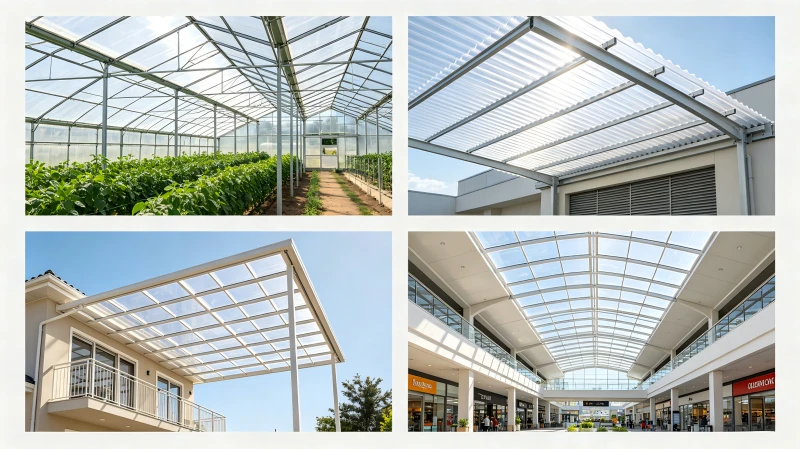
All projects that prioritize light weight, heat preservation, large-area coverage, low snow/hail risk and cost control should pick hollow polycarbonate sheet unconditionally:
- Agricultural planting greenhouses, vegetable seedling raising sheds, flower cultivation sunrooms, fruit tree shading canopie
Multi-wall hollow polycarbonate brings excellent constant temperature heat insulation, cuts greenhouse heating and cooling energy cost by 30%~45%. Lightweight allows quick large-area laying, greatly shortens farm construction cycle. Transparent, frosted, colored hollow sheet can adjust light transmittance to match different crop photosynthesis demands. In southern warm areas with rare heavy snow and hail, 2-layer / 4-layer UV hollow polycarbonate can stably serve 10–12 years with low overall input.
- Commercial mall atrium daylight roof, supermarket overhead skylight, shopping plaza transparent awning
Large-span public building daylight roof needs lightweight panel to reduce main steel frame load. Multi-wall hollow polycarbonate’s sound insulation performance weakens downtown traffic and rain noise inside the mall. Milky white diffused hollow sheet softens harsh direct sunlight, avoids strong glare for shoppers, creates comfortable indoor lighting atmosphere.
- Residential private balcony sunroom, courtyard small carport, garden leisure pavilion ceiling (southern light snow regions)
Hollow polycarbonate is ultra-light, two workers can finish installation without large lifting machines. Closed air layers insulate summer high temperature and winter cold, lower household air conditioning and heating power consumption. Smoke gray, blue tinted hollow sheet provides moderate shading without complete light blocking, perfect for family leisure spaces with low annual snow accumulation.
- Factory workshop low-load daylight roof, logistics warehouse top lighting panels (no heavy snow, no hail disaster records)
Large factory roofs cover thousands of square meters; hollow polycarbonate’s low unit raw cost sharply cuts total construction budget. Light self-weight reduces the specification requirement of main roof steel beams, saves a huge amount of metal frame procurement expense for factory investors.
- Temporary exhibition hall transparent ceiling, outdoor event temporary shading awning, short-cycle landscape transparent enclosure
Low material cost, easy disassembly and reusable hollow panels fit short-term temporary projects with service life demand within 3–5 years. Lightweight feature supports fast assembly and removal for event contractors.
- Noise reduction daylight partition walls beside urban main roads, residential community roadside transparent guard rail (only for noise insulation demand, no anti-collision safety requirement)
4-wall hollow polycarbonate achieves 32–38 dB medium frequency noise reduction, effectively weakens car horn and tire rolling noise transmitted into residential buildings.
9.2 Scenarios Where Solid Polycarbonate Sheet Is The Only Qualified Material
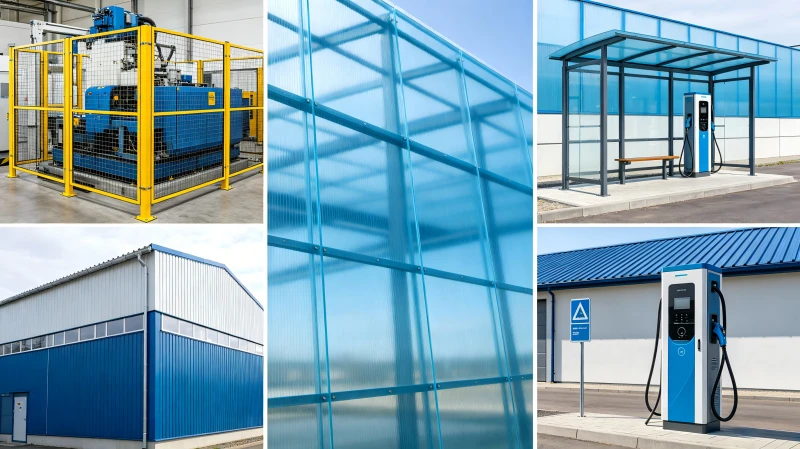
Once the project involves heavy snow, frequent hail, high wind load, public anti-vandal safety protection, small arc curved forming, industrial impact shielding and new energy equipment, solid polycarbonate sheet must be selected without compromise:
- Northern cold zone residential carports, villa courtyard canopies, alpine scenic spot transparent shelters with annual heavy snow and hail
Solid polycarbonate’s 180kg/㎡ snow bearing capacity and powerful anti-hail performance prevent winter collapse and summer ice ball penetration damage. Even after years of temperature alternation, no internal rib brittle fracture hidden danger exists like hollow panels. Recommended thickness: 8mm~12mm double-sided UV solid polycarbonate.
- Public outdoor facilities: city bus station shelters, school playground isolation barriers, roadside EV charging pile outer panels, park pedestrian transparent guardrails
Solid polycarbonate owns 20~30 times higher impact toughness than hollow sheet. Thrown stones, bicycle collisions, accidental heavy knocks will not break solid sheet into sharp fragments, eliminating public safety injury risks. UL94 V0 flame-retardant solid polycarbonate meets municipal public building fire inspection standards.
- Industrial machinery safety transparent guards, production line splash isolation shields, factory anti-hail overhead protective panels
Flying metal scraps, falling tool parts, accidental equipment collisions happen frequently in workshops; solid polycarbonate completely blocks impact damage while maintaining clear equipment observation vision. Thick 10–15mm solid polycarbonate is widely adopted for heavy machinery safety protection.
- High-end commercial curved skylights, arc-shaped sunroom tops, curved charging gun protective covers, arched equipment housings that require small-radius cold bending
Hollow polycarbonate cannot realize tight small arc forming and will crack during bending processing; solid polycarbonate supports room-temperature cold bending with a minimum radius of only 1.5× plate thickness, meeting all curved design demands of architects and product designers.
- New energy equipment accessories: lithium battery insulation partition plates, charging station internal insulation baffles, solar inverter transparent observation windows
Solid polycarbonate features stable high dielectric strength, excellent arc resistance and customizable V0 flame retardant grade, satisfying long-term high temperature and high voltage insulation safety standards of new energy industry. Hollow polycarbonate’s hollow interlayer will cause electric field concentration and hidden leakage risk under a high-voltage environment.
- High-rise residential balcony safety barrier panels, rooftop anti-falling transparent baffles, coastal typhoon zone outdoor transparent enclosures
Solid integral structure resists strong typhoon wind vibration without resonance sagging or cracking; no hollow rib aging failure risk under long-term salt spray and strong wind erosion in coastal areas.
- High-touch shared self-service equipment surface panels, outdoor vending machine transparent windows, community shared charging touch cover 3H~5H hard-coated solid polycarbonate resists daily wiping scratches and repeated alcohol disinfection cleaning; hollow polycarbonate thin surface layer is easy to scratch and fog after frequent disinfection.
9.3 Dual Material Optional Neutral Scenarios (Select Based On Local Climate, Service Life & Core Demand)
Indoor low-load small skylights, indoor plant small cultivation sunrooms, low-heat indoor transparent partition windows, no hail/snow indoor daylight panels:
- Prioritize hollow multi-wall polycarbonate sheet if your core demand is energy-saving heat insulation, large area coverage and budget control, service life within 8 years, no collision load risk;
- Choose solid UV polycarbonate sheet if you need uniform shadow-free light transmission, simple long-term cleaning, service cycle over 10 years, or reserved later curved transformation design.
Chapter 10 Common Wrong Material Selection Mistakes & Corresponding Huge Economic Loss Analysis
Countless construction contractors, greenhouse manufacturers and equipment suppliers suffer heavy financial losses due to confusing hollow polycarbonate sheet and solid polycarbonate sheet’s structural performance limits. We sort out the six most frequent wrong selection mistakes with clear loss consequences and standard correction plans:
Mistake 1: Use thin 2-layer hollow polycarbonate sheet for northern heavy snow & frequent hail area carports and residential canopies
Loss Consequence: After the first winter heavy snow accumulation, hollow panels sag, internal support ribs break, partial roof collapses with safety hazards; summer large hail pierces surface layers in batches, full roof panel replacement required within 1–2 years. Repeated material purchase, disassembly and reinstall labor cost accumulate rapidly, plus resident safety complaints and property compensation disputes.
Correct Fix: All northern cold, hail-prone outdoor load-bearing transparent roofs adopt 8mm+ double-sided UV solid polycarbonate sheet; 4-layer hollow polycarbonate is only auxiliary alternative for southern light snow zero-hail regions.
Mistake 2: Choose hollow polycarbonate sheet for small arc curved skylight and curved charging pile outer shell projects to cut raw material cost
Loss Consequence: During cold bending processing, hollow polycarbonate upper/lower surface layers crack and internal ribs break, processing scrap rate reaches 100%, mass production delivery date is severely delayed, huge order penalty loss occurs, and raw material cost saving is completely offset by waste loss.
Correct Fix: Any project requiring curved arc forming parts unconditionally selects bendable solid polycarbonate sheet, abandon hollow polycarbonate sheet entirely.
Mistake 3: Adopt hollow multi-wall polycarbonate as school, bus station and charging pile public safety isolation barriers
Loss Consequence: Random stone throwing, bicycle collision or student impact easily breaks hollow polycarbonate thin surface layer, produces sharp broken fragments and leads to personal injury accidents, bringing massive product liability compensation and negative public brand reputation impact.
Correct Fix: All public anti-collision safety transparent barriers must use high-toughness solid polycarbonate sheet, brittle hollow panel cannot meet municipal safety acceptance standards.
Mistake 4: Lay hollow polycarbonate sheet for high-voltage new energy battery equipment insulation baffles
Loss Consequence: Hollow internal air interlayer causes uneven electric field distribution under long-term high voltage operation, partial discharge occurs easily, insulation performance declines year by year, hidden electric leakage and fire risks, products fail international electrical safety certification and cannot enter global new energy market sales.
Correct Fix: All electrical insulation components use integral solid flame retardant polycarbonate sheet, hollow polycarbonate is forbidden for live equipment internal separation parts.
Mistake 5: Select hollow polycarbonate sheet for coastal typhoon zone high-rise balcony transparent guardrail and long-term outdoor anti-vandal equipment
Loss Consequence: Long-term typhoon strong wind triggers hollow panel wind vibration resonance, internal support ribs age and turn brittle quickly after 3–5 years, random cracking happens under strong wind impact, potential falling object safety hazard for pedestrians downstairs.
Correct Fix: Coastal strong wind, typhoon-exposed public protection facilities adopt thick solid UV polycarbonate sheet with high structural rigidity.
Mistake 6: Use uncoated single-sided UV hollow/solid polycarbonate sheet for fully outdoor long-term service projects
Loss Consequence: The unprotected side facing direct sunlight rapidly yellows and becomes brittle within 2–3 years, light transmittance drops sharply, whole roof loses daylight function, early full replacement increases extra construction investment.
Correct Fix: All outdoor exposed polycarbonate panels (both hollow and solid) must customize double-sided co-extrusion UV anti-yellow coating, factory 10–15 years anti-aging warranty is mandatory.
Chapter 11 Our Factory One-Stop Custom Deep Processing Service For Hollow Multi-Wall polycarbonate Sheet & Solid polycarbonate Sheet
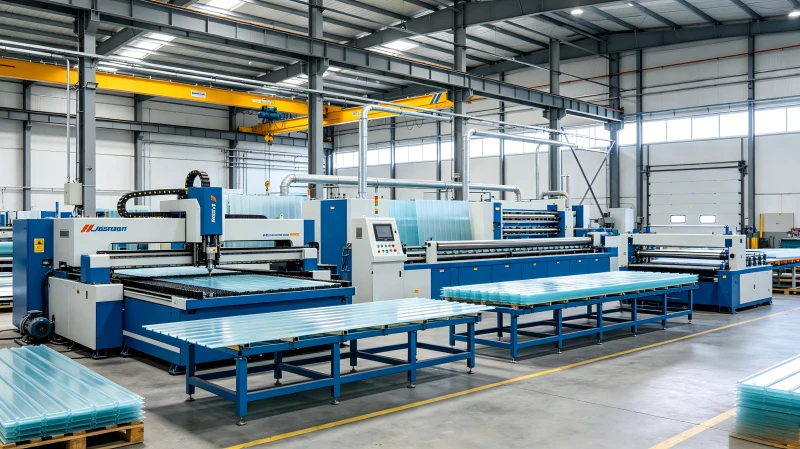
After fully distinguishing the structural, performance and scenario gaps between hollow polycarbonate sheet and solid polycarbonate sheet, global buyers’ biggest demand is to cooperate with an integrated manufacturer that can supply both two types of polycarbonate raw materials and complete all precision deep processing procedures in self-owned workshop without outsourcing to third-party factories. Our factory is a professional polycarbonate sheet production and custom processing manufacturer serving worldwide foreign trade, construction, agriculture and new energy customers. All full-set processing machines were fully upgraded and put into full-load production operation in June 2026.
11.1 Complete Production & Deep Processing Equipment Scale
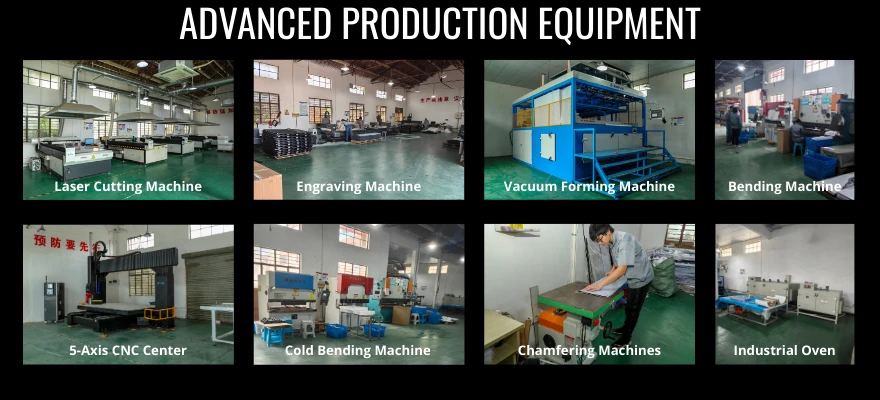
Our production workshop equips full-range processing machines covering all procedures from raw sheet fixed-size cutting to finished export shockproof packaging:
- 6 sets CNC engraving routers: Precision cutting, pattern engraving, multi-spec hole & slot drilling for both hollow polycarbonate panel and solid polycarbonate sheet, machining tolerance strictly controlled within ±0.1mm
- 5 sets special cold bending machines: Dedicated room-temperature cold forming for all thickness solid polycarbonate sheet, mass produce arched curved polycarbonate protective covers, charging pile outer panels, curved skylight components; cold bending function is not applicable for hollow multi-wall polycarbonate sheet
- 5 sets high-speed laser cutting machines: Fast accurate blanking for flat parts of hollow and solid polycarbonate material, adjustable low-power laser parameters specially for hollow polycarbonate cutting to avoid internal rib melting damage
- 2 vacuum thermoforming machines, 1 five-axis machining center, 3 hot bending machines, 3 special precise drilling machines
- Complete supporting surface & edge processing equipment: Edge mirror polishing machines, full-automatic silk screen printing lines, hard coating UV production lines, double-sided UV co-extrusion coating equipment, anti-glare matte coating equipment, deburring grinding machines
All machines operate simultaneously at full capacity, we never outsource any cutting, bending, coating, or printing processes to external cooperative factories, every production link is monitored and inspected in our own workshop to guarantee consistent stable product quality and controllable delivery cycle without outsourcing delay risk.
11.2 Full Series Raw Material Supply We Can Provide
Hollow Multi-Wall polycarbonate Sheet Full Product Line
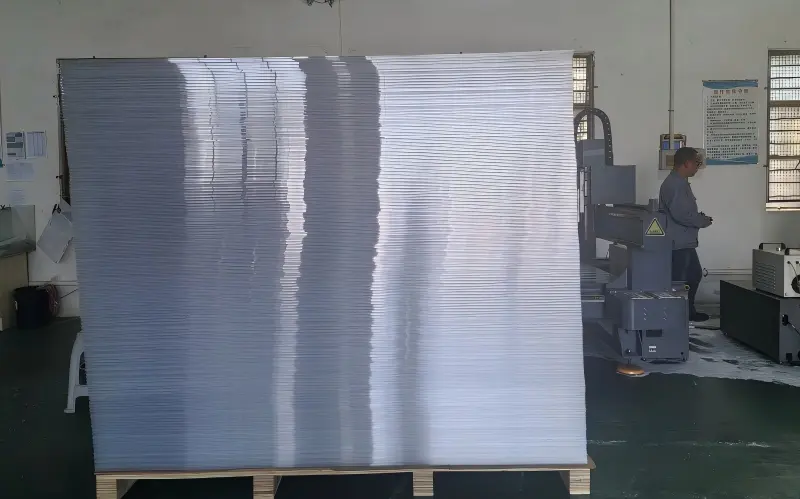
- 2-wall / 4-wall / 6-wall / honeycomb multi-layer hollow polycarbonate panel, total thickness 4mm ~ 30mm, transparent, smoke gray, blue, green, milky white color options
- Double-sided UV co-extrusion outdoor weather-resistant hollow polycarbonate sheet, factory official 10–15 years anti-yellowing warranty for greenhouse and building skylight projects
- Frosted light diffusion hollow polycarbonate sheet, soft uniform light for mall daylight roof and flower planting sheds
- UL94 V0 flame retardant modified hollow polycarbonate panel for public mall large-area ceiling daylight structures
- Food crop safe grade hollow polycarbonate without harmful additives, specially for vegetable and fruit greenhouses
Solid Polycarbonate Sheet Full Product Line
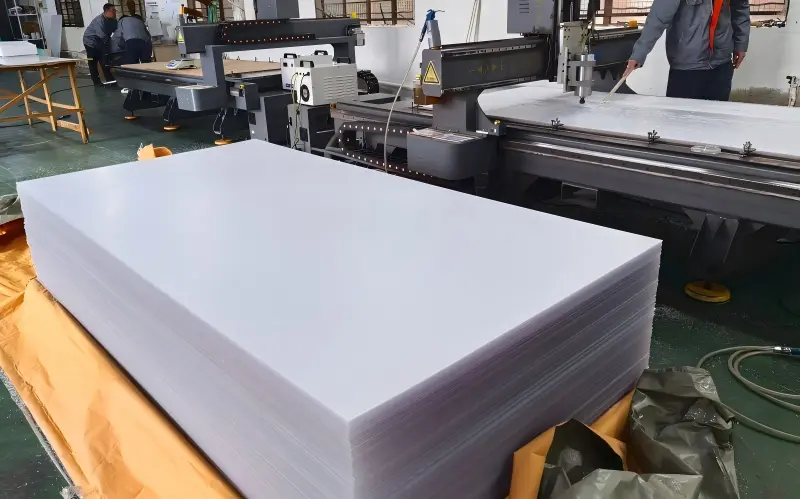
- Standard transparent solid polycarbonate sheet, thickness range 0.5mm ~ 18mm, clear, smoke, black, milky white tinted specifications
- Double-sided UV weather-resistant solid polycarbonate sheet for outdoor carport, bus shelter, hail-prone area projects
- 3H–5H silicone hard-coated anti-scratch solid polycarbonate sheet for high-frequency touch shared self-service equipment
- UL94 V0 / V2 flame retardant electrical insulation grade solid polycarbonate sheet for new energy EV, charging station, electrical cabinet parts
- Frosted anti-glare diffusion solid polycarbonate sheet for high-end exhibition hall shadow-free skylights and equipment observation windows
- Food contact safe solid polycarbonate plate for agricultural food processing isolation protective panels
11.3 All-Inclusive Deep Processing Service Items Completed Inside Our Workshop
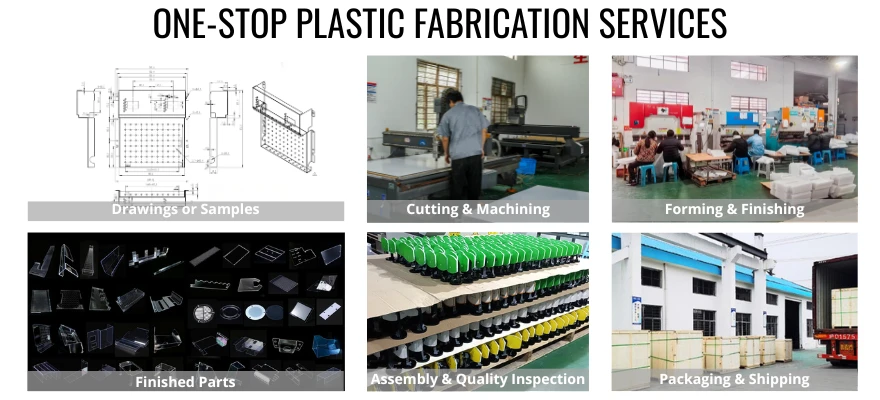
Customers only need to send design drawings (DXF/PDF), physical samples or detailed demand parameters, we will deliver fully finished ready-to-install polycarbonate parts without secondary processing by customer:
- CNC precision cutting, laser blanking, irregular special-shaped contour forming for hollow polycarbonate panel and solid polycarbonate sheet
- Solid polycarbonate exclusive cold bending, universal hot bending for both materials; vacuum deep drawing thermoforming only for solid polycarbonate sheet
- Precision multi-size drilling, countersunk hole, long slot processing, dense small hole array machining, special step drill for hollow polycarbonate to prevent layer cracking
- Edge polishing treatment: smooth deburred safety edge for solid polycarbonate impact protection panels, neat sealed edge trimming for hollow polycarbonate sheet to avoid dust and water infiltration into hollow interlayers
- Silk screen printing & pad printing custom service: customer brand LOGO, safety warning text, operation instruction patterns, decorative color graphics on both hollow and solid polycarbonate surfaces
- Custom surface functional coating: double-sided UV anti-yellow layer, 3H anti-scratch hard coat, anti-glare matte layer for solid polycarbonate sheet; customized single/double UV coating for hollow polycarbonate panels
- Export standard moisture-proof shock-proof foam carton packaging, support FOB / CIF / DDP global sea and air shipping arrangement, complete export customs clearance document supply including CE, ROHS, REACH, UL, ISO9001 test reports
11.4 Core Advantages of Cooperating With Our Integrated Factory
- Dual material professional production capacity: We master complete production and processing technology of both hollow multi-wall polycarbonate sheet and solid polycarbonate sheet. Our engineering sales team can provide unbiased material selection suggestion according to customer’s project local snow/hail climate, wind load, bending design demand, indoor/outdoor environment and raw material budget, help customers avoid heavy losses from wrong material selection at the beginning of project design.
- Flexible order quantity support: Accept small sample trial orders (1–10 pcs), medium batch pilot production and large mass long-term cooperation bulk orders, implement same strict full inspection quality standard regardless of order volume size.
- Fast stable delivery cycle: Full independent self-owned equipment production line without outsourcing links, sample production cycle 3–5 working days, bulk mass order production cycle 7–15 working days, no third-party factory delay risk.
- Mature global foreign trade service experience: Familiar with international export packaging standards, customs clearance certification documents, can supply complete material performance test reports for customer overseas project audit and product market access in Europe, North America, Southeast Asia, Australia and other regions.
- Free professional after-sales technical support: Our engineering team provides free drawing optimization, material thickness recommendation, installation construction keel layout guidance, 24-hour online reply for all technical parameter and quotation inquiry problems.
11.5 Simple Cooperation Order Process
- Demand communication: Send us project usage scene, local climate condition (snow/hail/wind), required material type (hollow polycarbonate sheet or solid polycarbonate sheet), finished product dimension, thickness, color, surface coating demand, processing craft type, order quantity, CAD/PDF drawing or physical sample picture. Our sales engineer replies targeted material selection suggestions and detailed formal quotation within 24 hours.
- Sample confirmation: Arrange sample production strictly according to confirmed material and processing plan, send physical samples to customer for appearance, impact, light transmission, heat resistance performance verification, adjust processing details according to customer feedback until fully satisfied.
- Mass formal production: Sign official cooperation sales contract, lock material specification, processing standard and delivery date, regularly share workshop real-time production photos and video progress updates during mass production cycle.
- Finished product full inspection before shipment: 100% full dimensional tolerance, surface appearance and key performance test for all finished parts before packaging, completely eliminate defective goods mixed into shipment.
- Export packaging & logistics delivery: Pack finished parts with export standard moisture-shock-resistant foam and cartons, provide logistics tracking number after shipment, follow up whole transportation status until goods arrive customer designated destination warehouse.
Chapter 12 Long-Term Material Use & Daily Maintenance Standard Suggestions
12.1 Hollow Multi-Wall polycarbonate Sheet Maintenance Specification
- Daily cleaning operation: Mix neutral mild detergent with clean water, wipe outer surface with soft microfiber cloth, prohibit abrasive scouring pad, toothpaste and strong ketone solvent cleaner such as acetone. Hollow internal rib gaps store dust and moss easily, regular seasonal deep cleaning once every 6 months to maintain light transmittance.
- Installation maintenance tip: All hollow polycarbonate panel cutting edges must be sealed with special aluminum sealing tape during construction, prevent rainwater, dust, insect debris from entering hollow interlayers and accelerating internal rib aging brittleness. Leave 3–5mm thermal expansion gap per meter length to avoid thermal extrusion cracking in summer high temperatures.
- Seasonal inspection rule: After winter snow melting and summer hail thunderstorm seasons, conduct full roof inspection to check internal support rib cracking and surface layer penetration damage, replace damaged hollow panels timely to prevent collapse risk.
- Disinfection limit: Hollow polycarbonate surface has no thick hard coating layer, long-term repeated alcohol disinfection wiping will produce foggy microcracks, not suitable for high-frequency disinfection shared equipment cover.
12.2 Solid Polycarbonate Sheet Maintenance Specification
- Daily cleaning operation: Wipe flat seamless surface with neutral detergent and soft cloth; hard-coated solid polycarbonate can use medical alcohol and isopropanol for regular disinfection wiping without surface fogging corrosion, no hidden dirt storage gap inside the sheet, cleaning operation simpler than hollow polycarbonate.
- Installation maintenance tip: Leave 3–5mm thermal expansion gap per meter, use EPDM rubber sealing strips for frame joint to avoid water leakage and wind vibration. Thick solid polycarbonate heavy plate needs dense steel keel support with short interval to prevent long-term self-weight sagging deformation.
- Seasonal inspection rule: Only check surface scratch and coating peeling condition after extreme weather, no internal rib aging hidden trouble, maintenance frequency can reduce to once per year.
- Bending part maintenance: Curved cold-formed solid polycarbonate parts avoid concentrated heavy impact on bending radian position, prevent local indentation deformation after long-term load.
Final Conclusion
After reading this full-dimensional complete comparison between hollow multi-wall polycarbonate sheet and solid polycarbonate sheet centered on structural difference, load bearing, heat insulation, processing performance and practical application scenarios, you can clearly sort out the core advantages and applicable limitation boundary of each material:
- Choose multi-wall polycarbonate sheet (2-wall / 4-wall / honeycomb hollow panel) only when your project meets all below core conditions simultaneously: large-area roof coverage demand, southern warm region with light snow and zero frequent hail records, main demand is heat preservation energy saving and noise reduction, no small arc curved forming design, no public anti-collision safety protection requirement, strict initial raw material budget control, service cycle within 10 years. Its core competitive advantage is ultra-light self-weight, outstanding heat insulation performance and low per-square-meter raw material cost for large-span daylight roofing and agricultural greenhouse construction projects.
- Choose solid polycarbonate sheet for all other projects including northern heavy snow/hail zones, typhoon coastal areas, public safety isolation barriers, small-radius curved arc parts, new energy electrical insulation components, high-touch shared disinfection equipment, high wind load industrial protective roofs, high-rise anti-falling transparent baffles. Although solid polycarbonate’s initial raw material and supporting steel frame investment cost is higher than hollow polycarbonate sheet, its integral solid structure brings ultra-high hail/snow bearing capacity, stable long-term dimensional performance, no internal aging collapse hidden danger, simpler daily cleaning maintenance and wider processing forming range. For long-term 10–15 years outdoor operation projects, solid polycarbonate’s low annual average comprehensive cost and zero batch replacement loss can completely offset the upfront material price gap, fundamentally avoid safety accidents and huge rework economic loss caused by wrong hollow polycarbonate selection.
No matter which polycarbonate material your project finally confirms to adopt, our factory can provide complete raw sheet supply and full-set deep custom processing service supported by our full 2026 upgraded self-owned workshop equipment. We solve customers’ trouble of contacting separate material suppliers and independent processing factories respectively, and realize a one-stop integrated solution from drawing design to finished export-qualified goods.
If you have any material selection confusion, drawing custom processing demand or quotation inquiry for hollow polycarbonate sheet or solid polycarbonate sheet finished parts, welcome to send your CAD drawings, physical samples and detailed demand parameters to us at any time. Our professional engineering and foreign trade sales team will reply you within 24 hours with free targeted material selection guidance and a competitive formal quotation. We are sincerely looking forward to establishing long-term stable win-win cooperative relations with global buyers from construction, agriculture, new energy, machinery and equipment and decoration industries!